

What is the Fullness Factor?
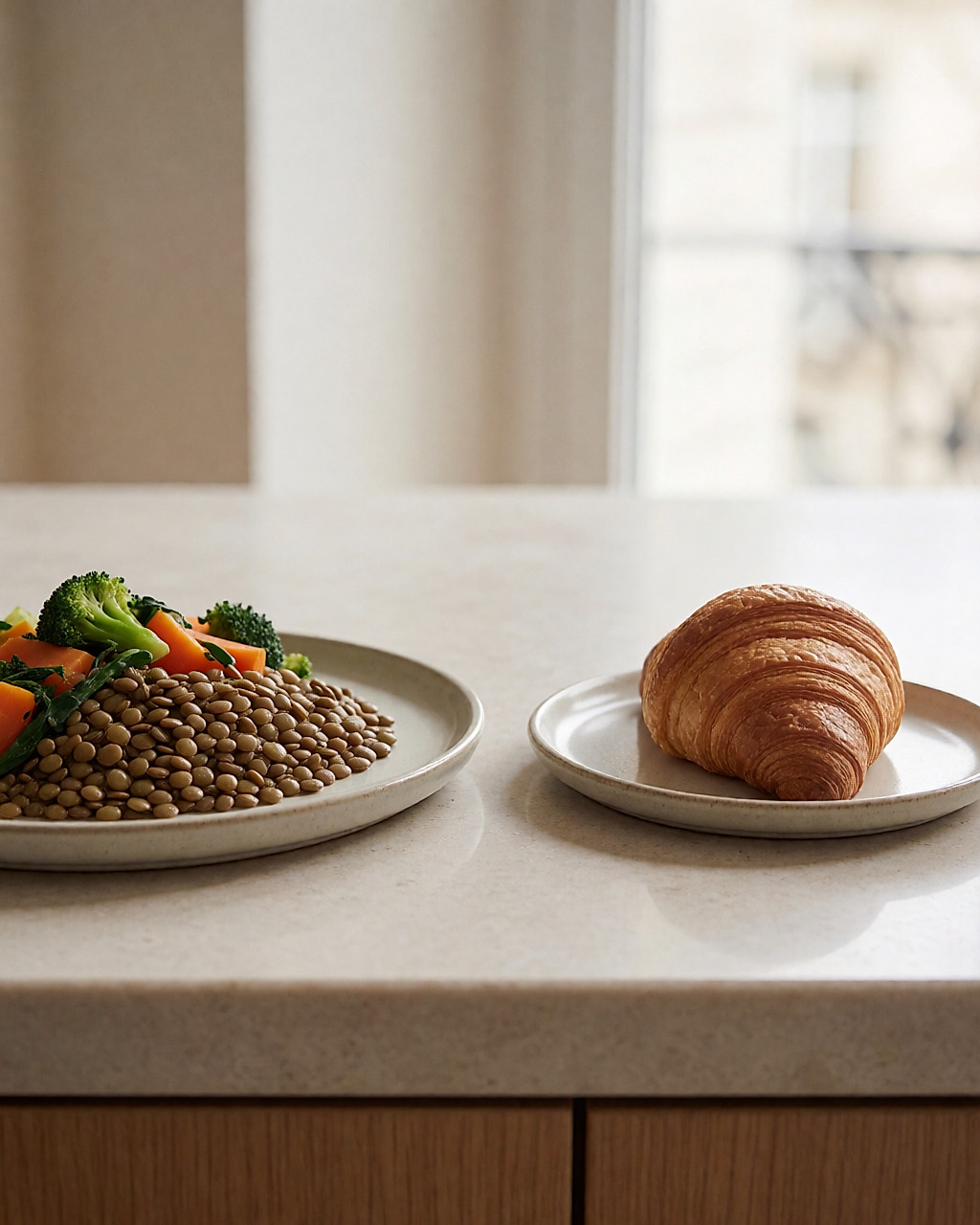
An apple keeps you fuller for longer than a croissant, usually for fewer calories. You may have noticed it without ever putting it into words. It isn't a hunch: every food has its own filling power, and researchers have tried to put a figure on it. How did they go about it, and what does it really change on your plate?
Where does this index come from?
In the mid-1990s, a team of Australian researchers ranked around thirty foods by their effect on hunger. White bread was the reference point. That work gave rise to a satiety index. Later, other consumer-facing tables offered a fullness index — or Fullness Factor. The higher the score, the longer the food is meant to keep you going.
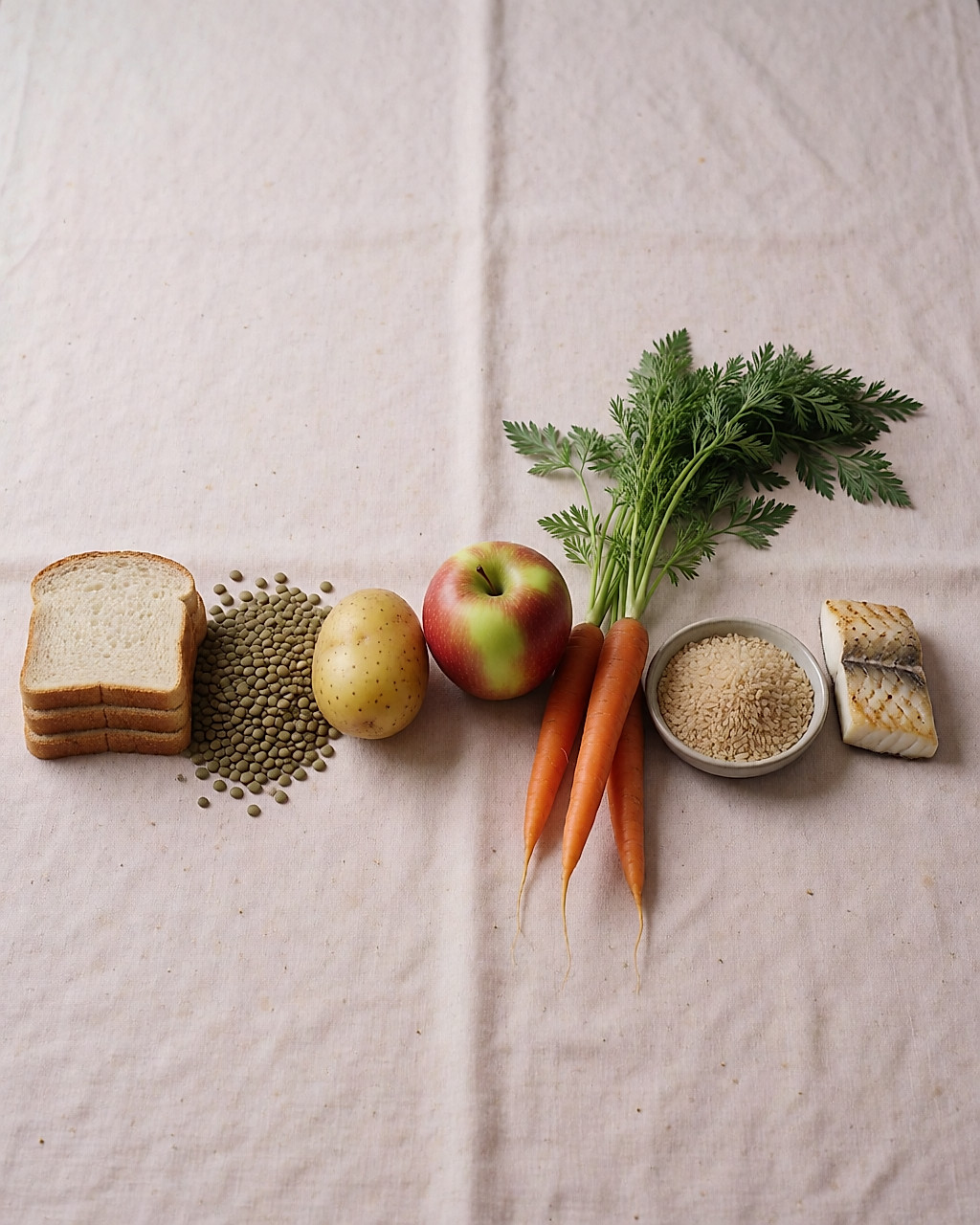
The starting idea is appealing: instead of counting calories one by one, you would build your plate around what fills you up for longer. Admittedly, that would change things when it comes to filling your trolley.
What the formula takes into account
In these tables, the score isn't limited to calories: it also factors in protein, fibre and a share of fat. On the plate, the volume and the water content of a food also affect how filling it feels. In other words, two 300-calorie portions don't leave you in anything like the same state. On one side, a bowl of lentils takes up space in the stomach and slows digestion; on the other, a pastry slips down quickly and hunger is back before lunch.
What the current evidence suggests
A word of caution, though: these rankings come from studies involving few people, with foods tested in isolation and over just a few hours. Enough to inform, not enough to settle the question. Satiety also depends on the energy density of the dish, how long you spend chewing, sleep, stress and the atmosphere of the meal. And feeling full isn't the same as losing weight: it's a lever, not a guarantee.
On your plate, in practice
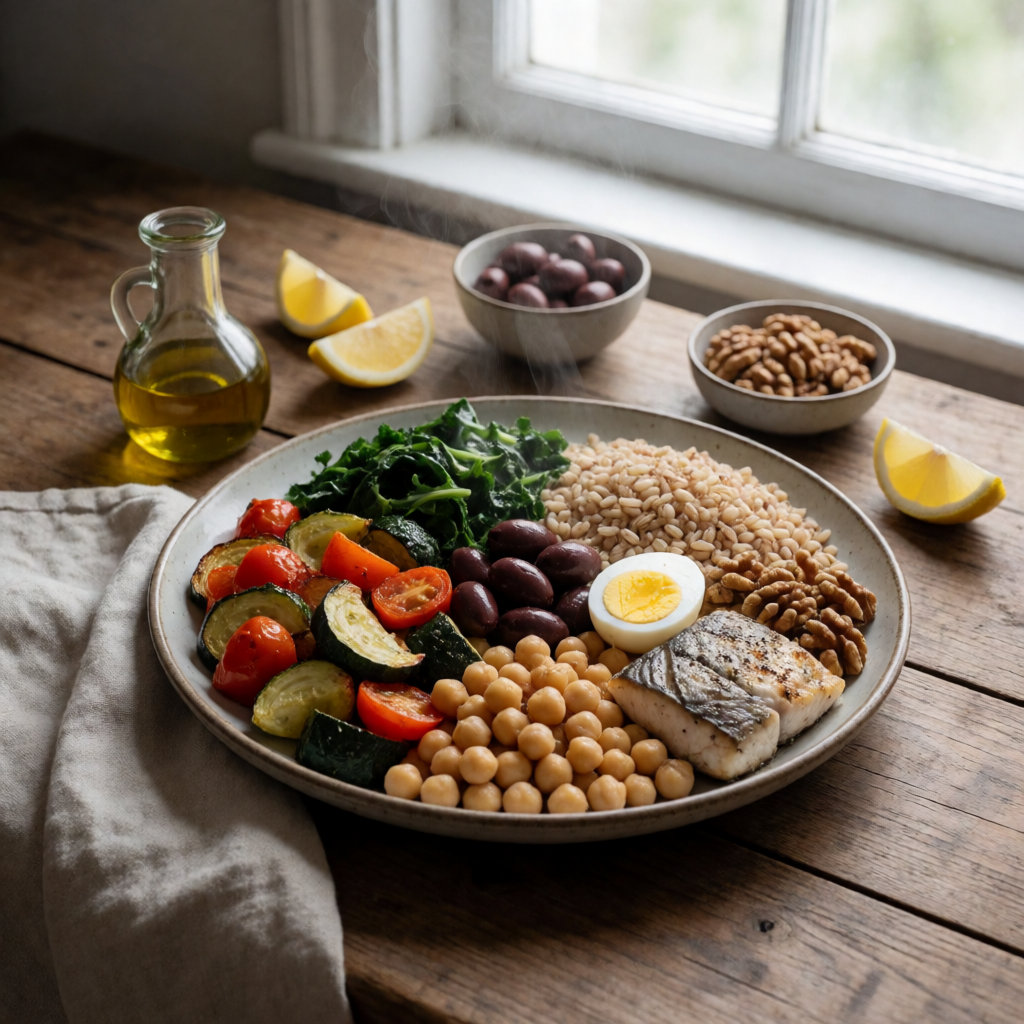
A few markers drawn from these tables, for guidance only: potatoes, brown rice, carrots, oranges, grilled fish, apples and chicken breast often come out among the most filling foods; white rice, white bread and chocolate bars rank lower. These rankings remain rough orders of magnitude: they shift with the variety, the cooking method and the version of the food tested.
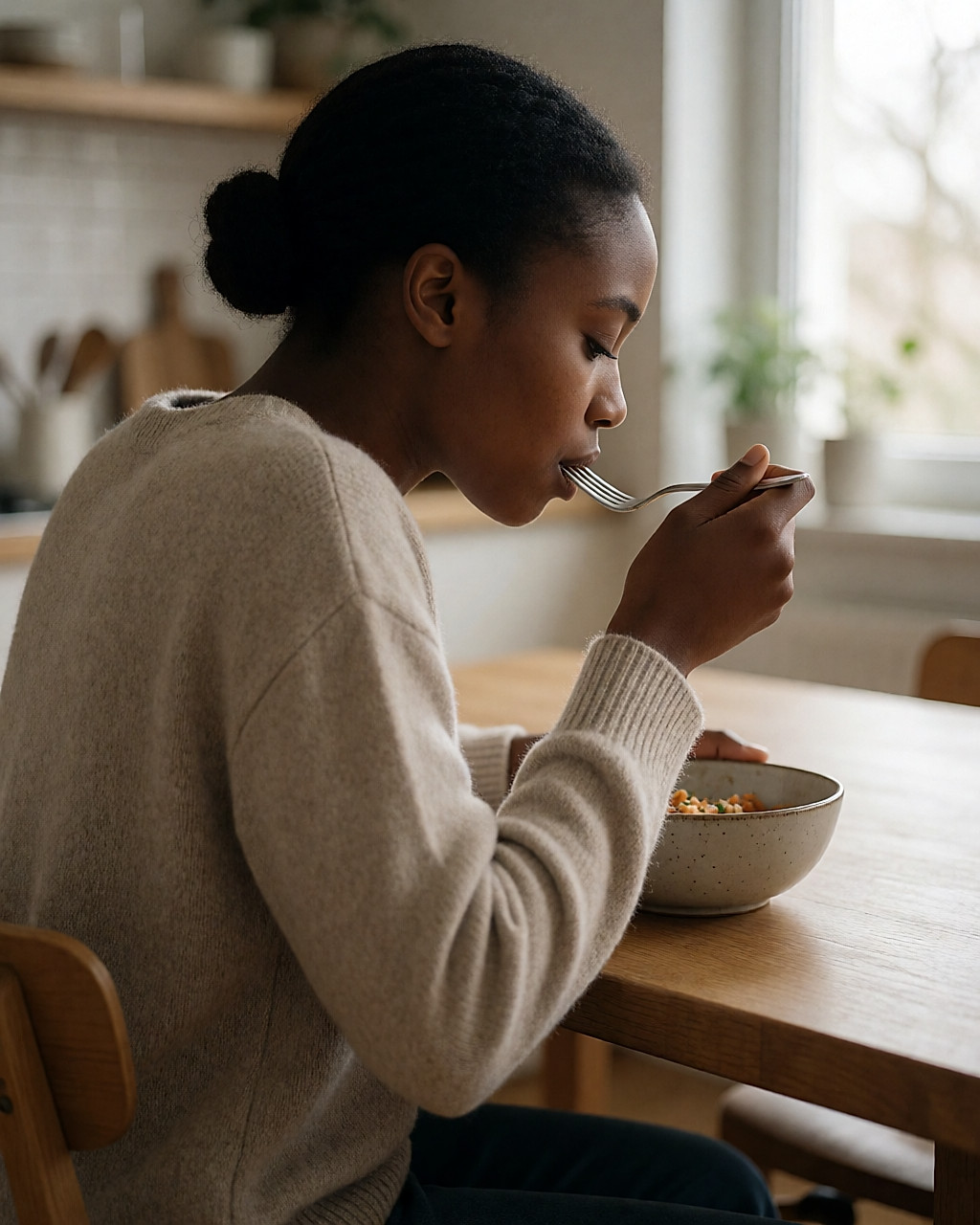
Within the same family, choose the least refined version: brown rice rather than white, a whole apple rather than a juice, pulses rather than a chocolate bar. For the rest, a few simple moves are enough. Fill half your plate with vegetables, a quarter with wholegrain starchy foods and a quarter with protein. Keep your meal times regular, and take the time to chew.
On the product side, here's an example of a swap. The low-fat yoghurt of the old tables has a simpler equivalent today: a plain yoghurt, made with whole or semi-skimmed milk, whose label lists only milk and live cultures. Organic certification, meanwhile, sets the rules on synthetic pesticides and GM crops. And if the pot is returnable glass, it goes back to the producer instead of the bin. In practice, nothing suggests a 0% fat yoghurt keeps you fuller.
A high score doesn't make a menu. Eating only the most filling foods exposes you to nutrient gaps and a monotonous diet. If your relationship with food feels difficult, or if you want to lose weight for health reasons, talk to your GP or a registered dietitian: they are the ones who adapt the guidance to your situation.
Budget
Good news: these foods are often among the cheapest on the shelf. In the UK, expect around £2 to £4 a kilo for pulses — lentils, chickpeas, beans — loose or in bags. Potatoes stay between £1 and £2.50 a kilo, a real treat for the wallet. Seasonal fruit, from £2 to £4 a kilo, a little more for organic. Brown rice hovers around £2 to £4 a kilo, against £12 to £25 for fresh fish depending on the species; plain frozen fish stays more affordable. Prices move with the season, the origin, the certification and where you shop — market, supermarket, health food shop, click and collect or online. On labels, two useful markers: organic certification, and Red Tractor assurance for British produce.
You've got it: no need to break the bank to eat in a way that fills you up. The foods that keep you going longest are also among the cheapest, which is rather good news when you shop every week. So next time hunger catches you at 11 in the morning, think of the apple rather than the croissant — your plate, and your budget, will thank you.
Sources
- Holt SHA, Brand Miller JC, Petocz P, Farmakalidis E., "A satiety index of common foods", European Journal of Clinical Nutrition, 1995.
- NHS, The Eatwell Guide, 2016.
- World Health Organization, fact sheet "Healthy diet".


Comments
Your opinion matters: rate the article, react and reply to comments.
Comments are moderated; AI-assisted comments are flagged. Text emoticons (8-), :-), <3…) are automatically shown as images.