

The satiety index approach begins with a useful distinction: judging a food only by the calories it provides per 100g misses part of the picture. You also need to consider how filling it is, both at the time and over the next few hours. Calorie for calorie, one food can keep you satisfied for much longer than another, which is why comparing two products on their calorie label alone tells you very little about the effect on your hunger.

Researchers have tried to measure the filling power of foods – fruit, vegetables, cereals, meat, sweets and more – by looking at how satisfying they are in relation to their make-up (sugars, fats, protein and so on). Each food is given a satiety index score: the higher the score, the more filling it is considered to be.
These scores were developed in a specific context. In everyday life, your fullness also depends on sleep, stress, activity during the day and your usual habits. A table of satiety index values is therefore a general guide, not a personal verdict.

There are charts listing the satiety index of various foods, which can be handy for getting your bearings.
But the score alone is not the whole story. A rich, sauce-based dish can deliver a lot of calories without being proportionately filling. The point of the satiety index approach is to look at the relationship between fullness and calories.
The key is to choose foods, and combinations of foods, according to their satiety index relative to their calories (per 100g). That way you assess both essential pieces of information: energy content and filling power.
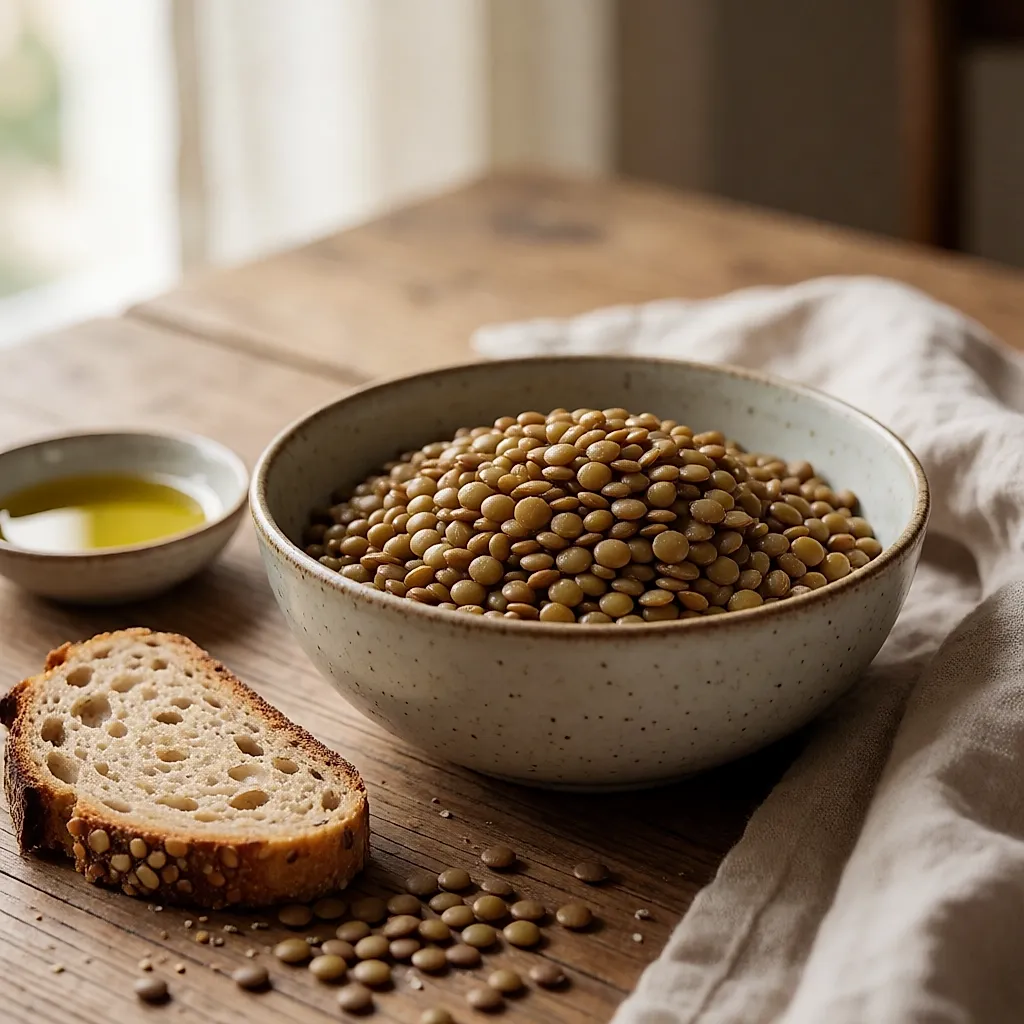
The most useful foods are those with the highest satiety index-to-calorie ratio. Wholemeal bread, for example, has a good ratio: it can keep you full for a decent stretch without being excessively calorific. Lentils are another strong example: they are very filling while remaining relatively low in calories.
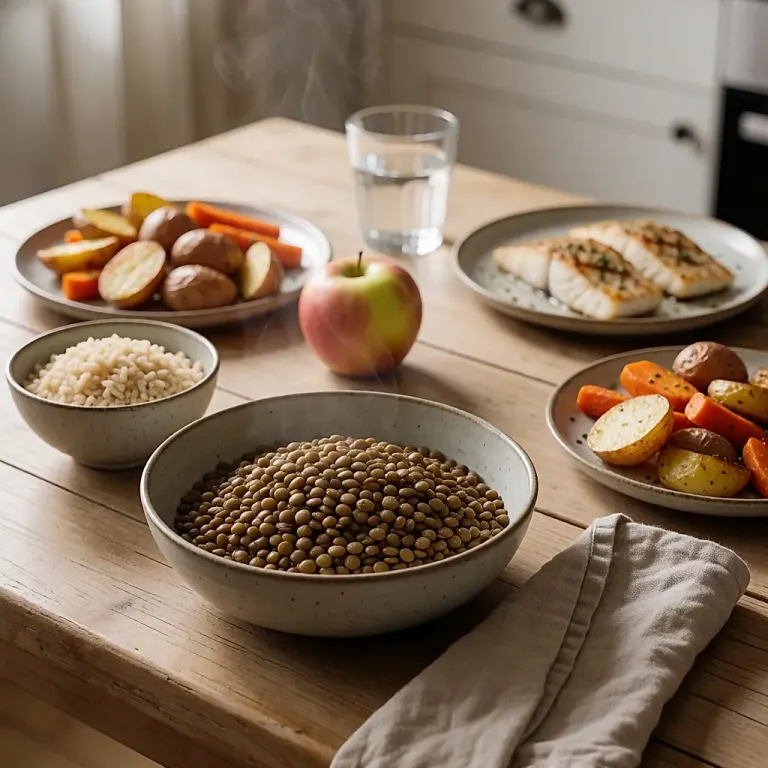
If you would rather not calculate the ratios yourself, there are ready-made tables showing energy values, satiety index scores and the ratio between the two for almost every food. You can then combine the best options as you like, aiming for balanced meals: protein plus fruit and vegetables plus a wholegrain carbohydrate.
The advantage of the satiety index approach is that it is designed to avoid deprivation and cravings. It also gives a sensible base for learning to eat balanced, thoughtful meals: it steers you away from very fatty foods and calorie-dense items that offer little in return in terms of fullness.
A simple example: you eat at a well-known fast-food chain (which we won't name), ordering a burger, chips and a cola. The calorie load is high in both carbohydrates and fat, yet you are hungry again barely two hours later. It is a reminder that the richest foods are not necessarily the most filling; those are precisely the foods to limit, because they can contribute to weight gain.
One practical tip makes a real difference: take your time over a meal. Fullness takes around 20 minutes to register. If you gulp your food down, you miss it. A vegetable soup to start and an apple to finish can already change how hungry you feel.
Finally, if you decide to try the satiety index approach, choosing foods well is essential, but so is eating as varied a diet as possible, having three meals a day at regular times and not skipping meals. Skipping a meal is one of the surest ways to set off cravings later.
For more satiety index values, look for a book on the subject or charts published online; there is plenty of information available on different foods.
This approach requires no special purchases, but support may help. A dietitian can adapt it to your situation, especially if you are taking medication or have a health condition. If in doubt, speak to a healthcare professional.

It is an approach based on common sense: favouring foods that are low in calories while being as filling as possible. That is a golden rule many diets lack, and it can help you manage hunger and portions while still enjoying your food and eating a balanced diet. To be clear, this is an eating approach whose effect on weight is not demonstrated by the cited sources. The pattern is familiar: most diets end in a binge because they push calorie reduction as far as possible without regard for the body's energy needs. The result is hunger, irritability and caving in, undoing days of needless restriction and any hopes of a flatter stomach.
Budget
Expect to pay roughly £50–£90 for a private consultation with a dietitian; the fee varies by city and length of follow-up, and some private health insurers may reimburse part of the cost. For reading, a guide to the satiety index costs around £10–£20 in bookshops or as an e-book. Everything else – vegetables, pulses, poultry, fish – requires no special spending: it is ordinary grocery shopping, chosen according to the season.
Sources
- Susanna H. Holt, Janette C. Brand Miller, Peter Petocz, Eleni Farmakalidis, “A satiety index of common foods”, European Journal of Clinical Nutrition, 1995; 49(9): 675–690.
- Santé publique France – National Nutrition and Health Programme (PNNS), mangerbouger.fr.


Comments
Your opinion matters: rate the article, react and reply to comments.
Comments are moderated; AI-assisted comments are flagged. Text emoticons (8-), :-), <3…) are automatically shown as images.