
You've come across the headlines promising that a single food will banish orange-peel skin. The evidence says something rather different — and that's oddly good news, because it means you can stop chasing a mythical shopping list. Cellulite is a feature of the subcutaneous tissue: fat cells held in fibrous bands, slower microcirculation, plus hormonal and genetic factors that carry a lot of weight. It affects the vast majority of women after puberty, whatever their size.
No food dismantles those fibrous chambers. What your diet does influence is two very real levers: water retention, which makes the area look puffier, and weight gain, which makes it more noticeable. That's not nothing, and it's something you can work on day to day.
Water-rich vegetables, fibre and potassium
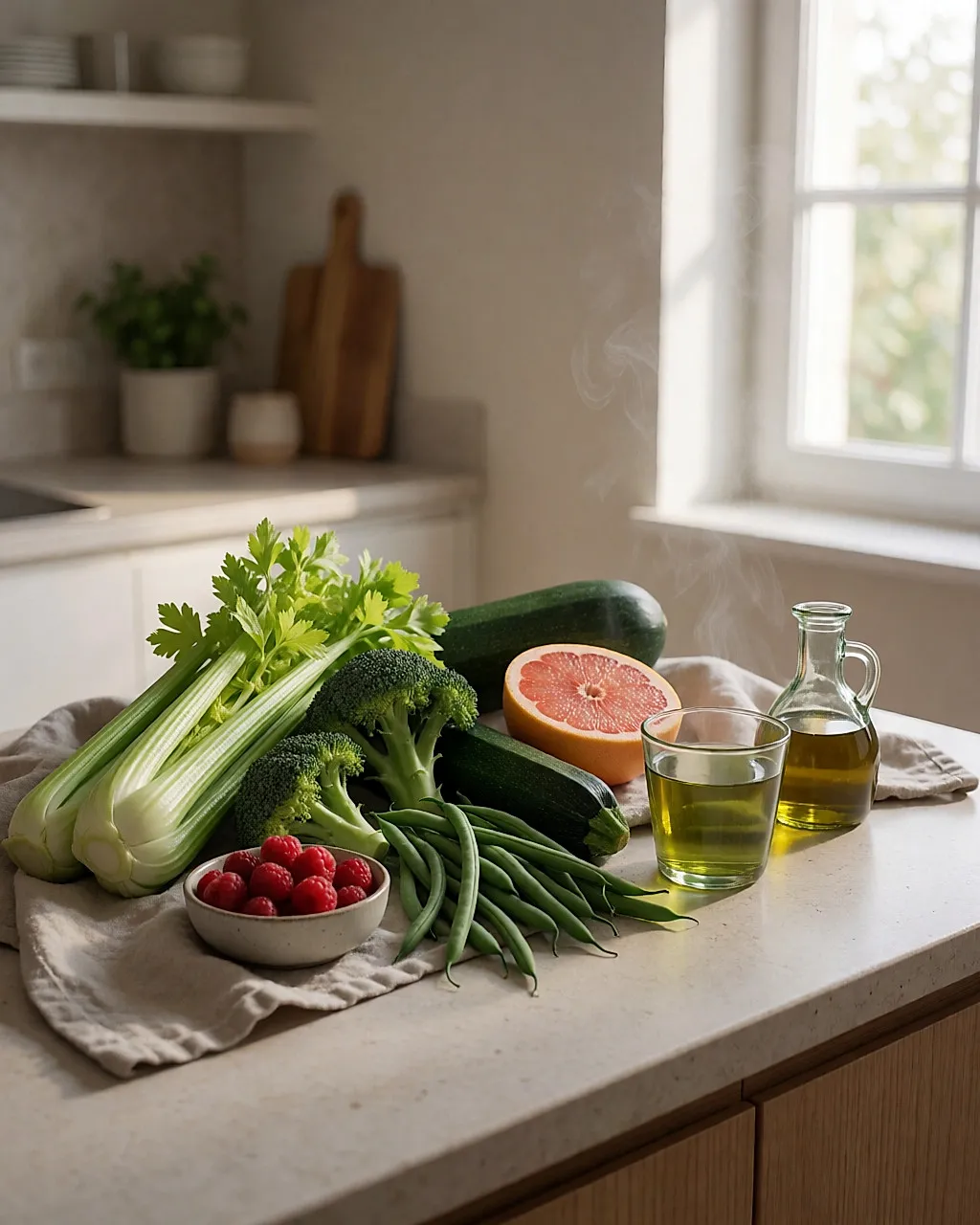
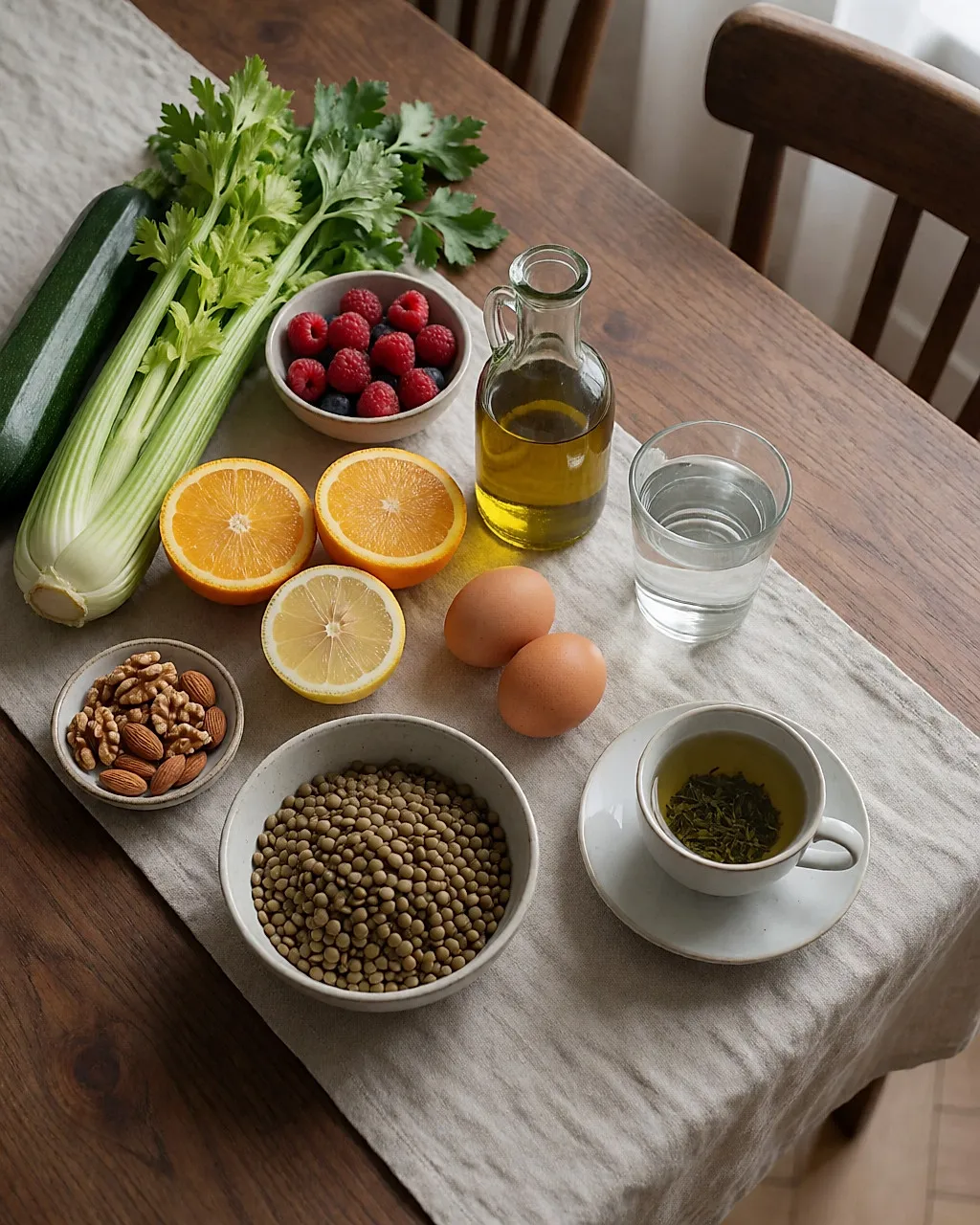
These earn first place in your trolley: celery, green beans, asparagus, broccoli, leeks, courgette. They fill a plate, bring potassium and fibre, and cost very few calories. Celery is often sold as a fat-burner — no claim of that kind is authorised in the UK or the EU, because the evidence simply isn't there. It's still an excellent vegetable to crunch on, and that's all.
Berries — strawberries, raspberries, blueberries, blackcurrants — supply polyphenols and vitamin C. Frozen, they keep most of what matters and are often cheaper out of season, which counts for something at the end of the month.
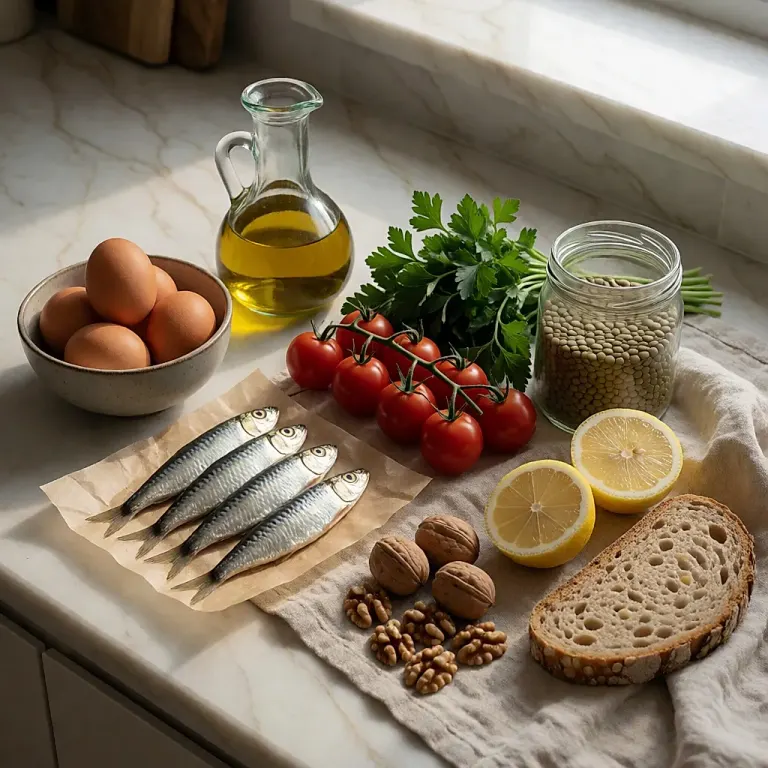
Citrus fruit plays the same vitamin C card, and the European Food Safety Authority recognises that vitamin C contributes to normal collagen formation and the normal function of blood vessels. Contributes is the important word: it doesn't mean erases. Oily fish — sardines, mackerel, salmon — nuts and olive oil bring fatty acids and satiety. Lean protein — poultry, eggs, tofu, pulses — maintains muscle mass, and muscle matters for how a body looks.
And pineapple? The bromelain it contains doesn't cause weight loss, and no slimming claim has been approved for the fruit. Enjoy it for what it is: a lovely fruit, not a fat burner.
Drinking: water, and green tea without the hype
Aim for one to one and a half litres of water a day, more if you're active or it's hot. Green tea contains catechins that have been studied, but the weight-loss claims made for it have been rejected at European level. Two cups a day is perfectly good — especially if they replace a fizzy drink.

On salt, alcohol and sugary drinks, moderation carries more weight than any headline ingredient. Less sellable, more effective.
What to do in practice
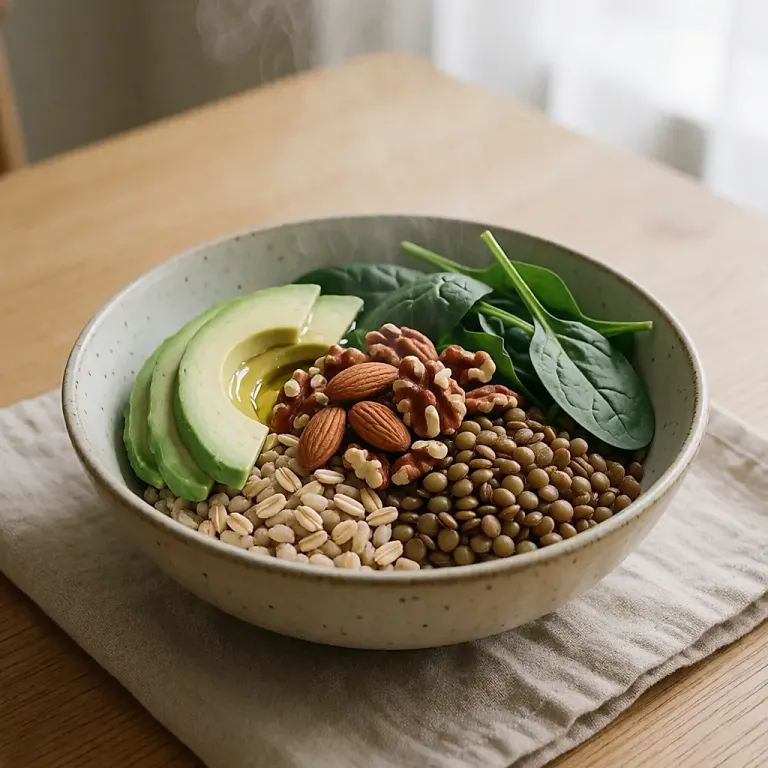
Build your plate like this: half vegetables, a quarter wholegrain carbohydrates or pulses, a quarter protein. Fruit for pudding. Water on the table. Consistency beats one perfect day.

Cellulite isn't a disease, and diet isn't a treatment. No "slimming" programme or supplement has shown a lasting effect on dimpling, and France's food safety agency ANSES has warned about adverse effects from some weight-loss products. Rapid weight loss can in fact make orange-peel skin look worse. If you're thinking about a restrictive diet, or if your skin changes in an unusual way — pain, redness, a lump — talk to a health professional, such as your GP or a registered dietitian.
What it costs
At the shops, as a rough guide: around £1 to £3.50 a kilo for fresh seasonal vegetables, and £2 to £3.50 a kilo for plain frozen ones, which earn their keep in winter. Frozen berries tend to land somewhere between £2.50 and £5 for 450 g, often less than fresh out of season. For green tea, budget £4 to £10 per 100 g loose leaf, or £2.50 to £6 for a box of bags. A tin of sardines stays around £1 to £2.50.
What moves the price: the season, organic certification, buying loose, and where you shop — market, supermarket, health food shop or online order. Loose and glass are good habits for cutting packaging, and frozen food keeps without waste. One thing to be clear about, though: organic certification covers how food is produced, not any effect on cellulite. So don't pay more in the belief that you're buying a result.
Sources
- NHS, Eatwell Guide — nhs.uk
- ANSES, the French food safety agency, work on food supplements intended for weight loss — anses.fr
- UK nutrition and health claims register (Department of Health and Social Care) and the EU register of nutrition and health claims
- EFSA, authorised claims relating to vitamin C — efsa.europa.eu
Food supplements do not replace a varied, balanced diet and a healthy lifestyle.

Comments
Your opinion matters: rate the article, react and reply to comments.
Comments are moderated; AI-assisted comments are flagged. Text emoticons (8-), :-), <3…) are automatically shown as images.