

Have you heard of the Cellu M6? A friend first asked me about it last year, between two coffees and a barely-used gym membership. Like many of us, she'd piled up the creams, the diets and the cardio sessions — and the orange-peel skin was still firmly camped on her thighs. It was worth digging into, because the promise is tempting and the reality is, let's say, more nuanced.

Cellulite isn't just about weight
Let's get one thing straight from the outset: cellulite is extremely common among women, slim or curvy, young or not so young. It has nothing to do with willpower or discipline, and that's probably the most important message in this article. The mechanism is partly hormonal: fat deposits sit in the hypodermis, the fibrous bands — the septa — pull on them, and the skin's surface takes on that dimpled look we know on the thighs, hips and stomach. It's a matter of structure, not laziness.

Moving more and eating well are still good for your overall health — nobody would argue with that. But they aren't enough to smooth away dimples, and that's exactly where the idea of a mechanical action comes in, working the tissue more closely. It's a nuance that explains why so many routines come unstuck: we're not quite talking about the same battleground.

What exactly is the Cellu M6?
The Cellu M6 is an endermologie machine designed by LPG Systems, a French company. The principle can be summed up in one sentence: a motorised head suctions and rolls the fold of skin. This is the famous pinch-and-roll, but mechanised — so more consistent than with hands, which tire and lose their rhythm as the session goes on. According to the manufacturer, this action boosts blood and lymphatic circulation and softens the tissue.

A word of caution, though: the machine isn't for home use. It stays in the clinic, in the hands of a physiotherapist or a trained beauty therapist. You don't improvise suction and speed settings on this kind of equipment.
What a session actually looks like
You slip into a bodysuit provided by the practitioner — LPG's Bodywear — for hygiene and modesty, then lie down. Allow 30 to 45 minutes on the targeted areas. The usual rhythm: one to two sessions a week, a course of ten to fifteen appointments, then more spaced-out top-ups.

As for the sensation, you'll feel a firm suction and a roller that warms up a little. It isn't supposed to be painful. Temporary redness, sometimes small bruises, can appear: if that happens, tell the practitioner rather than gritting your teeth. A good professional adjusts the intensity to your reaction, not the other way round.
Does it really work?
Léna's verdict: yes, but with a caveat. In reality, the scientific studies on endermologie show modest and, above all, temporary results. According to these studies, skin texture may appear smoother and the dimpled look may soften, but nothing guarantees it will hold without maintenance sessions. No device makes cellulite disappear for good, and nobody can promise you a duration.

Let's be upfront: I haven't tried the protocol myself. What I'm telling you here comes from the manufacturer's documentation and published studies, not personal experience. That's the house rule, and you have the right to know where the information you're reading comes from.
Circulatory problems, a history of phlebitis, pregnancy, anticoagulant treatment, skin lesions: talk to your GP first. A responsible practitioner will carry out a health check before the first session anyway and explain what the machine can and can't do.
Budget
On the budget front, allow around £50 to £100 per single session at a beauty salon or spa, sometimes a little less at a physiotherapy clinic. Course packages of ten to fifteen sessions often come in between £450 and £900. What shifts the price: the city, the number of areas treated, the type of machine and how well-known the centre is. Where to book: physiotherapy clinics, beauty salons, spas, specialist centres.
And reimbursement? Don't count on the NHS for a purely cosmetic treatment. The simplest thing is to ask your practitioner and your health insurer before starting — some situations connected to medical care may be handled separately.
The at-home technique
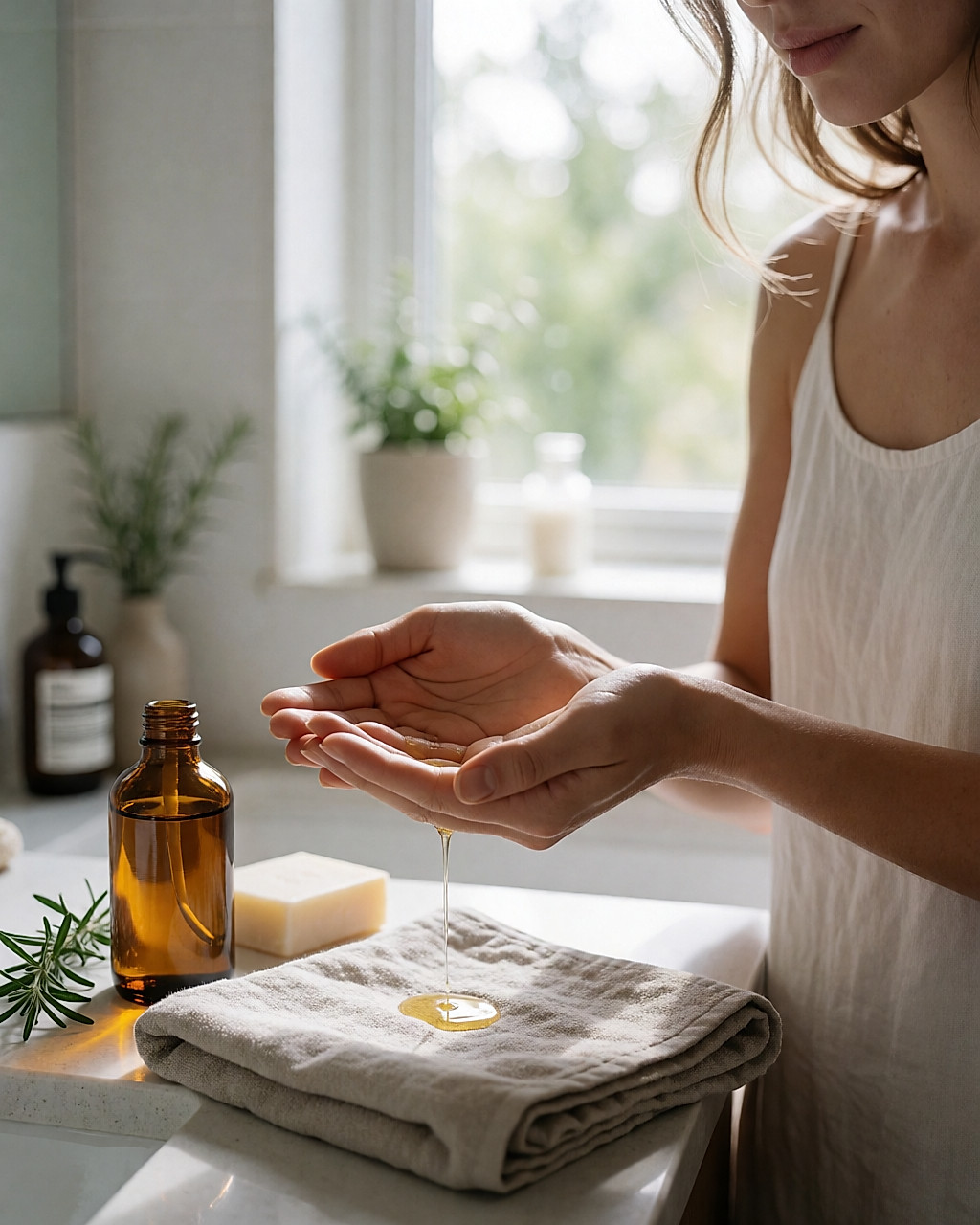
The machine doesn't replace a routine, and the reverse is true too. Between sessions, an organic body massage oil, in a glass bottle with a short ingredient list, does the job very well: the move that changes everything is the at-home pinch-and-roll, two minutes per area, without pressing too hard. Rinse the bottle and put it in your glass recycling; the cap goes wherever your local council collects it. If you'd rather use an anti-cellulite cream from the pharmacy, at least look at the ingredient list and choose recyclable packaging.
None of this replaces medical advice if you're unsure about your circulation, and nothing will ever replace choosing a practitioner who takes the time to explain their protocol. The rest — consistency, patience, accepting that orange-peel skin isn't a problem to be solved — is up to you. In truth, the biggest change might be to stop believing your body has to earn its place.
Sources
- LPG Systems — Introduction to the Cellu M6 and endermologie technology, official website.
- Luebberding S., Krueger N., Sadick N. S. — Cellulite: an evidence-based review, American Journal of Clinical Dermatology, 2015.



Comments
Your opinion matters: rate the article, react and reply to comments.
Comments are moderated; AI-assisted comments are flagged. Text emoticons (8-), :-), <3…) are automatically shown as images.