
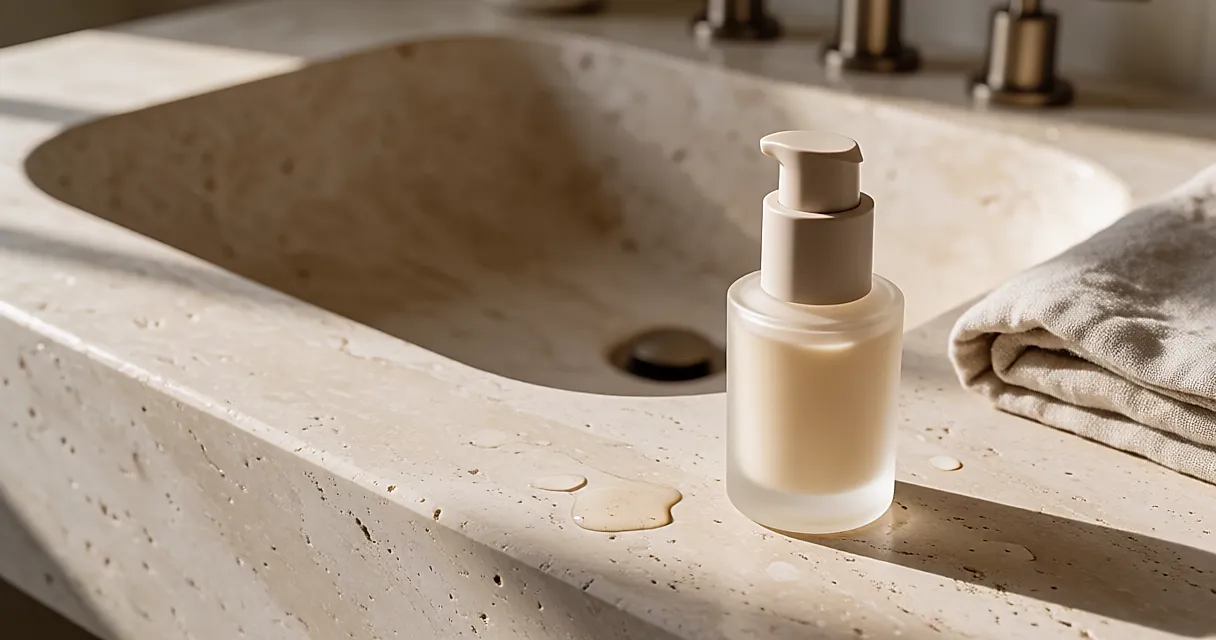
7.42am. On the edge of the basin: moisturiser, foundation, a swirl of glow-boosting something — and out in the hallway, a child hunting for a sock. The maths is easy: three bottles, two minutes you don't really have. That is exactly the gap tinted fluids and hybrid balms have moved into.
The format has changed, the shade question hasn't
A tinted fluid is nothing new: tinted moisturisers and BB creams have been cluttering up wash bags for years. What has shifted is the intention. You are no longer being sold a lighter foundation, but a skincare product that agrees to add colour — hence "fluid", a texture that glides and melts in rather than sitting on the skin in a layer.
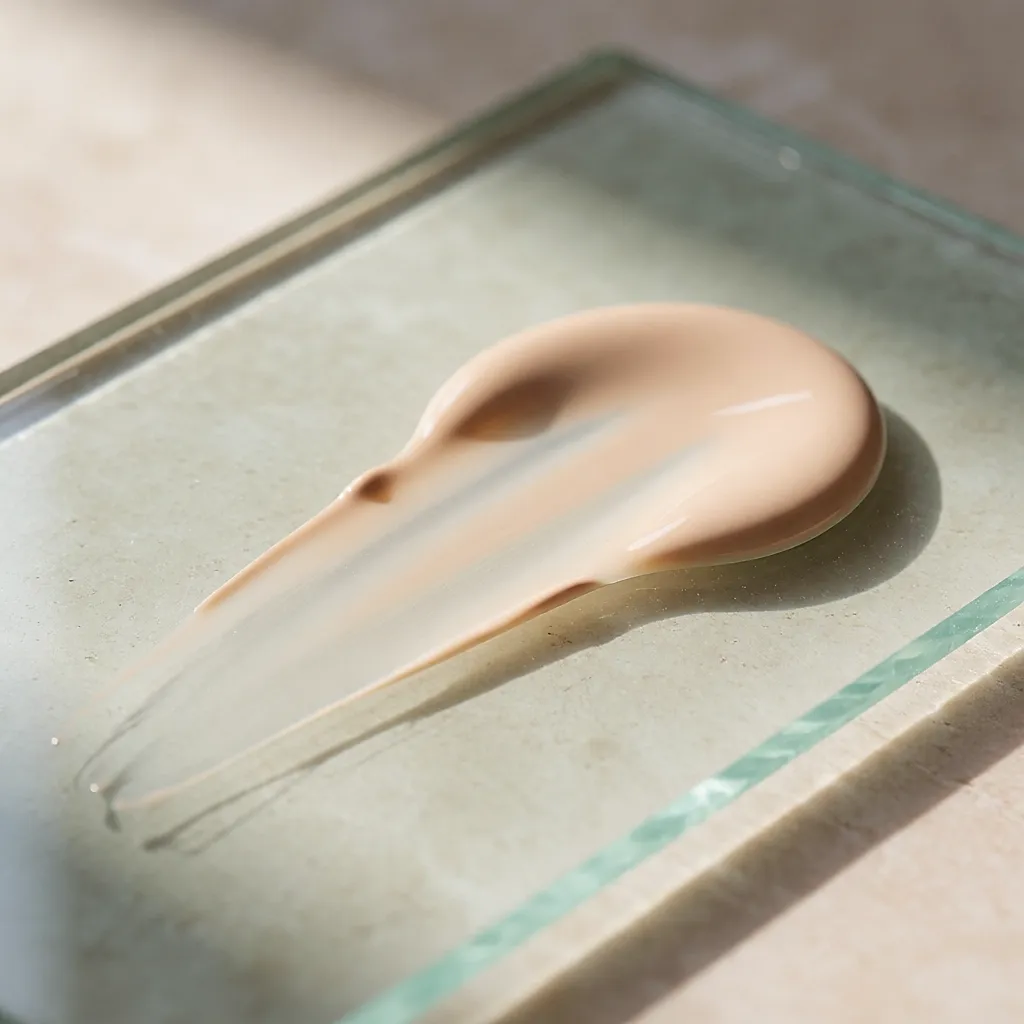
In practice, the difference comes down to two things. The pigment load, deliberately low: the complexion is evened out, redness softened, but you can still make out skin underneath — often more flattering than an opaque mask at eight in the morning. And the base: glycerin, hyaluronic acid, sometimes niacinamide or a plant oil, in a flexible film that doesn't pull tight. No magic in any of it, just a formula built to be spread with your fingertips, with no brush or sponge to rinse out that evening.
What you actually gain
The most tangible gain isn't in the mirror, it's on the shelf. One product fewer means one step fewer, one lid fewer to screw back on, and one bottle that no longer topples over in the weekend bag — the one you always close by pressing down on the lid. The application itself is three dots on forehead and cheeks, blended by hand in a few moments. No brush to wash, no tideline to fix.

On the packaging front, don't kid yourself: one product fewer is not one piece of waste fewer if the bottle is still single-use plastic. The real saving is a refill or a larger size where a brand offers one, and glass rather than plastic. Certifications such as Cosmos Organic or Soil Association, where they appear, relate to how a product is made and what goes into it — not to how well it works. Check that on the product page before you click, not after.
What one bottle won't do
Let's be clear about the deal. A tinted fluid evens out; it does not conceal. A spot, a dark under-eye circle, a patch of settled redness: that's a job for concealer, dabbed only where it's needed. It's one extra step, but a localised one — and often quicker than piling product over the whole face to rescue a single zone.
Second limit, and it matters: sun protection. A tinted fluid that carries an SPF is not thereby your protection for the day. The amount you apply to colour your complexion is far lower than the amount of sunscreen applied properly, so you're unlikely to get the protection stated on the label. If you spend time outdoors, keep a dedicated sunscreen — a fluid one if you like, so it layers underneath.
Third thing not to expect: a quick cleanse at the end of the day. Pigment and film have to be shifted, and micellar water on its own doesn't always do it. Double cleansing isn't compulsory for everyone, but if you wear a tinted base every day, it's in the evening that your skin will thank you. As for night cream, it remains night cream: a tinted fluid moisturises during the day, it doesn't repair while you sleep. On wear time, nobody can promise you a full day without touch-ups — it depends on your skin, the heat, and how many coffees you've got through before noon.
What you'll pay
As a rough guide, expect a 30 ml bottle to sit somewhere between about £10 and £60, from budget formulas at chemists and high-street retailers to mid-range skincare brands in department stores and online, and premium at the top end, where you're paying as much for the bottle as for the texture. Prices move with retailer and promotions, so treat these as bearings rather than facts. And speaking of the bottle: many of these fluids come in 30 ml, so compare price per millilitre rather than the number on the shelf edge.
The other habit worth having is shade. A tinted fluid should be tested on the jawline, in daylight — not on the back of your hand, which has never had your face's colouring. Many brands sell online: ask for a sample with your order where that's possible, or go to a counter in person to avoid a finish that turns apricot.
Three dots, no more. A pea-sized amount on your forehead, one on each cheek, then blend from the centre outwards and don't forget your neck. Does your skin mark easily? Pat with the warm flat of your hand instead of rubbing. And if blusher follows, leave a short pause after the fluid.
Which leaves the only question that really settles it: does it fit into your morning? If your current routine rests on three steps you won't give up, a tinted fluid will buy you a minute and a bit of shelf space. If you need coverage, keep the concealer and treat the fluid as a weekday shortcut, not a religion. And if in doubt, remember the only argument that counts: the product you're happy to reapply always beats the one you abandon after three days.


Comments
Your opinion matters: rate the article, react and reply to comments.
Comments are moderated; AI-assisted comments are flagged. Text emoticons (8-), :-), <3…) are automatically shown as images.