
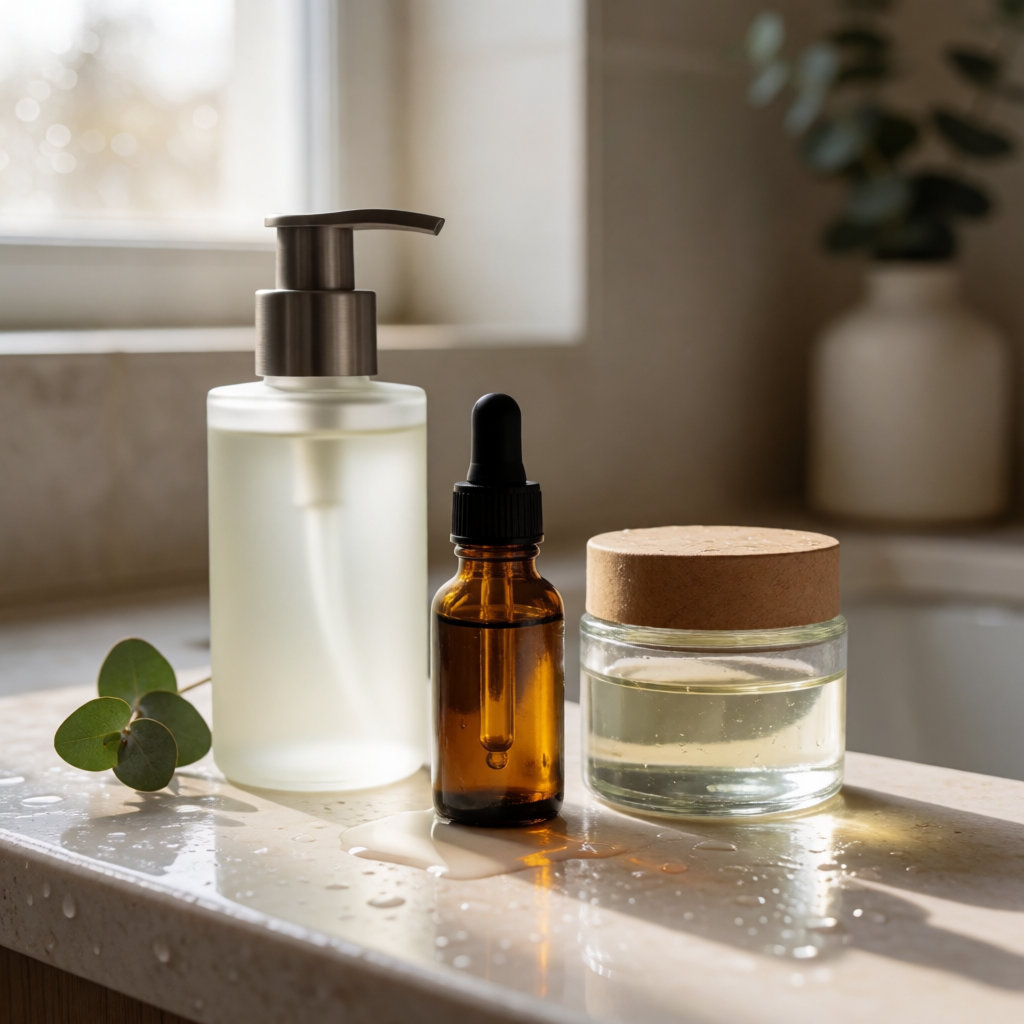
3-step facial routine for combination skin
Midday arrives, the screen goes dark, and there it is in the window reflection: that little shine on your forehead you didn't ask for. In the evening, it's the same story in reverse: your nose is shiny, but your cheeks feel tight in the heated bathroom, as if they're crying out for moisture. Welcome to the combination skin club: the most misunderstood category in skincare — and frankly, the most badly treated, with products piled on top of products.
It often feels as though you have to pick a side: a heavy-duty treatment for the T-zone, a rich cocoon for the cheeks. But at that rate, you end up with a shelf of half-empty bottles and skin that no longer knows where it lives. In truth, three well-chosen steps are enough for most of us, provided you choose them with a bit of sense. Shall we take a look?
Let's start with cleansing: gentleness, not stripping
In the morning, there's no need to bring out the heavy artillery. A gentle cleanser, free from sulphates that foam like a washing machine, does the night-time job perfectly. In the evening, change things slightly: if you wear make-up or sunscreen (and we do!), start with a make-up remover or cleansing oil, then follow with the same gentle cleanser. It's the duo that cleanses without leaving that unpleasant tight feeling on the cheeks.

And above all, forget 'new skin' gels that make your face squeak as soon as you step out of the shower. An overly stripping cleanser can disrupt the skin's hydrolipidic film and cause tightness or discomfort. The gesture that changes everything? Lukewarm water, never hot, and your hands, quite simply. A rotating brush every day? Not for me: it stimulates the T-zone more than anything else.
Targeted treatment, without turning the bathroom into a laboratory
There's no obligatory active step. But if spots or marks settle in, this is where it all happens. A light serum, in a gel or fluid texture, with one targeted active, applied to clean skin. Just one, we insist: if you layer niacinamide, salicylic acid and retinol on the same evening, you'll never know what helped — or what gave you that lovely redness the next day.

When it comes to formulation, an aqueous serum with niacinamide or plant extracts remains a gentle entry point for skin that's new to actives. Salicylic acid, derived from white willow and commonly used for blemishes, is best kept for the T-zone — never on cheeks that feel tight. Think of it as a guest you invite to only part of the table: it has its place, but not everywhere.
Moisturise without suffocating skin: the step everyone skips
It's probably the biggest mistake people with combination skin make: skipping moisturiser for fear of looking shiny. Oily skin can also be dehydrated, but we can't claim that a lack of water triggers excess sebum production. Choose a non-comedogenic moisturiser, in a gel-cream or fluid texture, that nourishes without blocking pores. In the evening, allow a little flexibility: if your cheeks feel tight, a richer texture can work there, while the T-zone keeps its lightweight format.
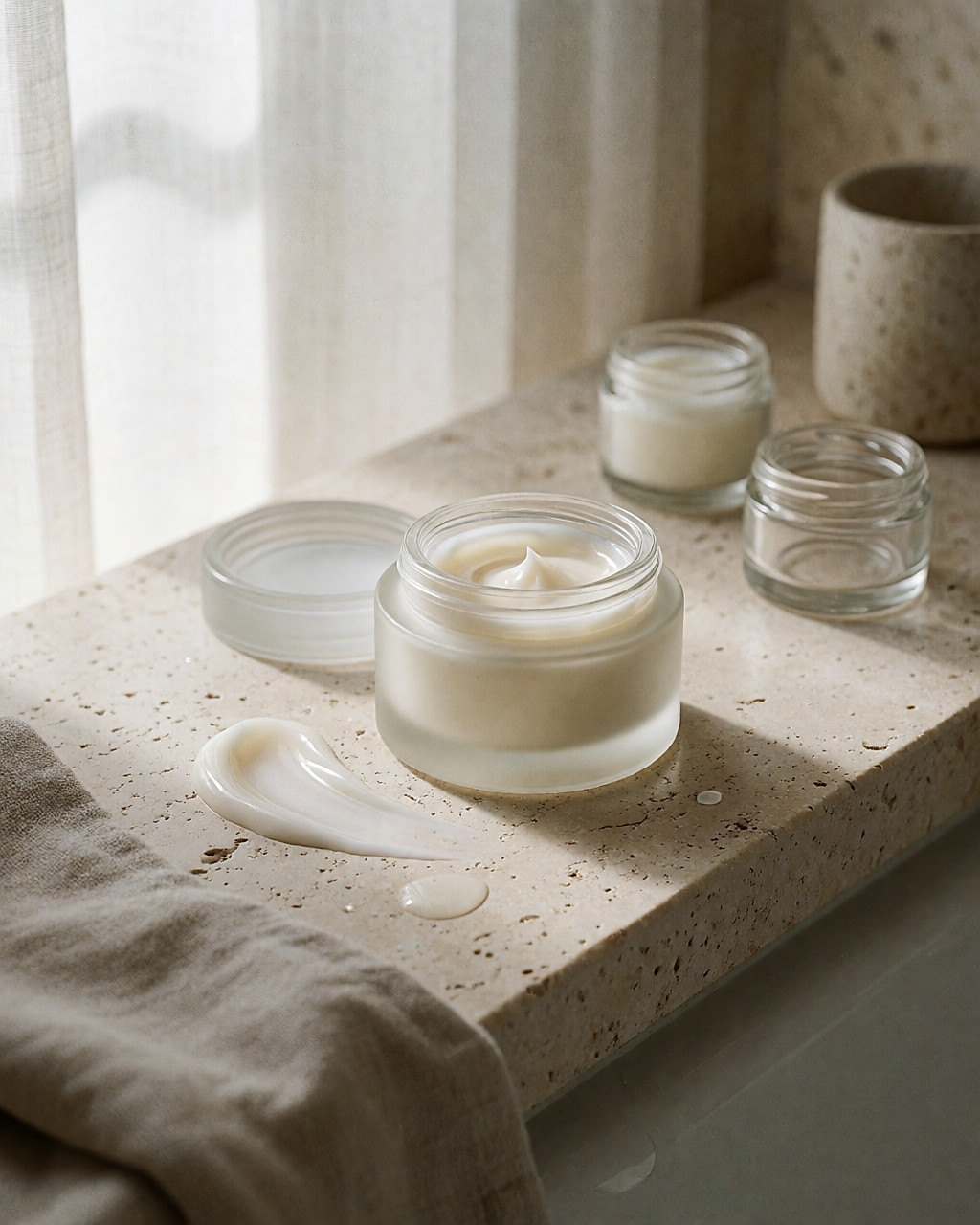
As you've gathered, the idea isn't to make everything uniform, but to adjust. Using two textures on the same face is perfectly acceptable — in fact, it's rather clever.
Before you change everything, take a photo of your skin in natural light. In two or three weeks, you'll have a clearer view of what's really changing — because bathroom mirrors always flatter the truth a little!
And when the seasons change, your routine adapts
In summer, lighten up without guilt: cleansing gel, aqueous serum, fluid moisturiser. The heat already does half the work, so there's no need to add more. In winter, everything flips. Skin feels tight more quickly, especially after a day outside — keep the gentle cleanser, but switch to a slightly more nourishing cream, ideally in the evening. As for morning sunscreen, it remains non-negotiable, summer and winter, under grey skies or on the ski slopes. Fluid, non-comedogenic textures are available in many ranges, including solid or refillable versions.

The missteps that damage combination skin
There are the classic mistakes, and then there are the little habits you don't even see coming. Over-cleansing, for example: three cleanses a day strips skin more than anything else; two are more than enough. Layering products is another big one — every extra bottle adds another risk of reaction, and makes it a real headache to identify the culprit. Changing products too often? Give a routine several weeks before judging it, otherwise you'll never know what works. Skipping moisturiser, of course, because oily skin can also be dehydrated. And finally, rubbing: friction, irritation, spots that come back — the infernal trio we know by heart.
How to spot what's triggering your spots
The simplest approach is still to introduce one product at a time: add it, leave it alone for a while, observe. A notebook, a note on your phone — it doesn't matter, as long as your memory isn't doing the work. If spots appear mainly on your forehead and along your jawline, look at what touches your face: phone, pillowcases, hands resting on your chin when you're thinking. We often underestimate the role these little habits play.
Budget-wise, there's no need to break the bank
For three or four simple products, expect roughly:
- Gentle cleanser: £7 to £18 in supermarkets, beauty retailers or online.
- Targeted serum: £9 to £35, depending on the actives and brand.
- Non-comedogenic moisturiser: £9 to £25.
- Facial sunscreen: £9 to £22.
For a complete routine, expect around £35 to £95. The price varies according to range, format, location for in-store purchases and promotional periods — as we know, nothing stays the same from one month to the next. You can find all of this in beauty retailers, supermarkets or on brand websites, and increasingly in solid, refill or glass bottle versions when the brand plays along. An organic certification on the bottle mainly tells you about the composition and production method, not about efficacy: it's up to you to decide what matters most in your routine.
The routine matters more than the label, frankly. Three steps, a few weeks of patience, and combination skin that finally stops crying wolf at midday — now that's a plan that holds up. And if something is really off, professional advice is worth more than ten extra bottles.
Sources
- American Academy of Dermatology — Skin care basics: how to wash your face, consumer resources on facial cleansing.
- Mayo Clinic — Skin care: 5 tips for healthy skin, general skincare advice.



Comments
Your opinion matters: rate the article, react and reply to comments.
Comments are moderated; AI-assisted comments are flagged. Text emoticons (8-), :-), <3…) are automatically shown as images.