
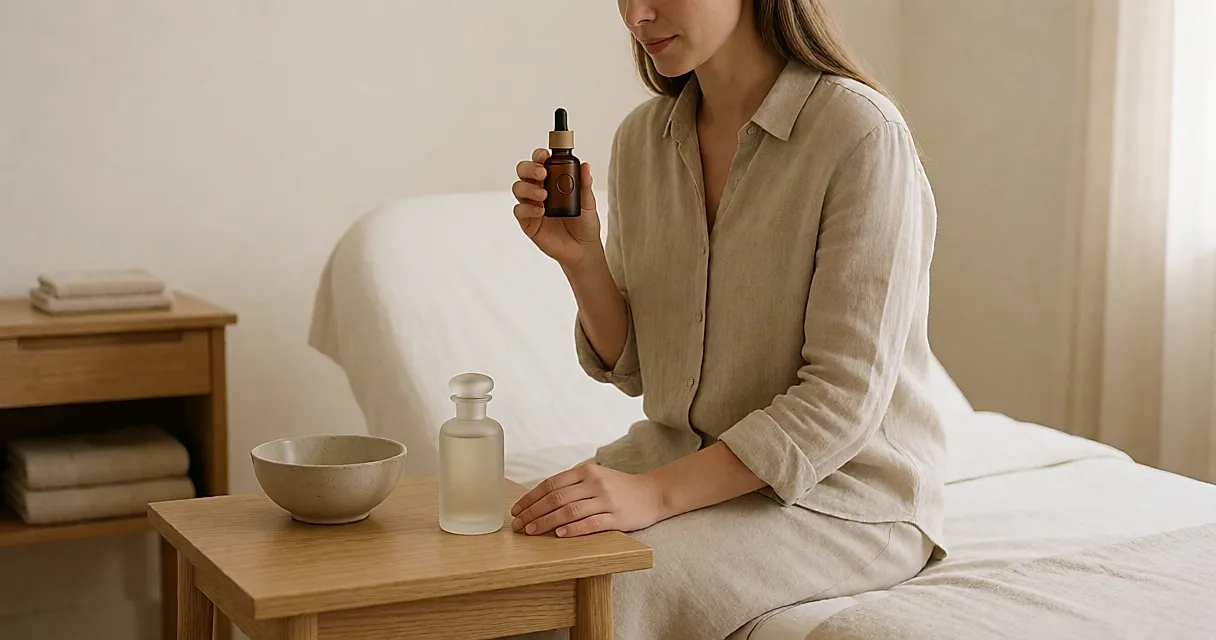
Often it isn’t the retinol that’s too strong. Nor the exfoliator. It’s the two of them turning up on the same face, on the same night, that leaves skin frazzled. So rather than deciding which one to keep, let’s give them different slots in the week — without buying anything new.
The real problem is stacking them
We’ve all heard the doom-laden version: retinol and exfoliators are incompatible, you have to pick a side, and heaven help anyone who dares mix them. Let’s be honest, the disaster version travels faster than the nuanced one. What actually matters isn’t that they cancel each other out. The sticking point is stacking, not mixing: on the same night, on the same area, two actives that can each unsettle skin, with effects that add up.
So should you pick a side? No: you just need to separate them. Think of two very efficient colleagues, each brilliant in their own field. Put them on the same file at the same time and they’ll get under each other’s feet. Your skin doesn’t need two rounds of disruption in one evening; it needs time to process it all.
A schedule, not a bigger shelf
The method comes down to one idea: one active per night, plus nights off. What rhythm should you use? Here is one example of a rhythm you can adapt: exfoliator on Monday, retinol on Tuesday, nothing on Wednesday, exfoliator on Thursday, retinol on Friday, nothing at the weekend — then adjust according to what your skin tells you. No paid app or jam-packed diary required.
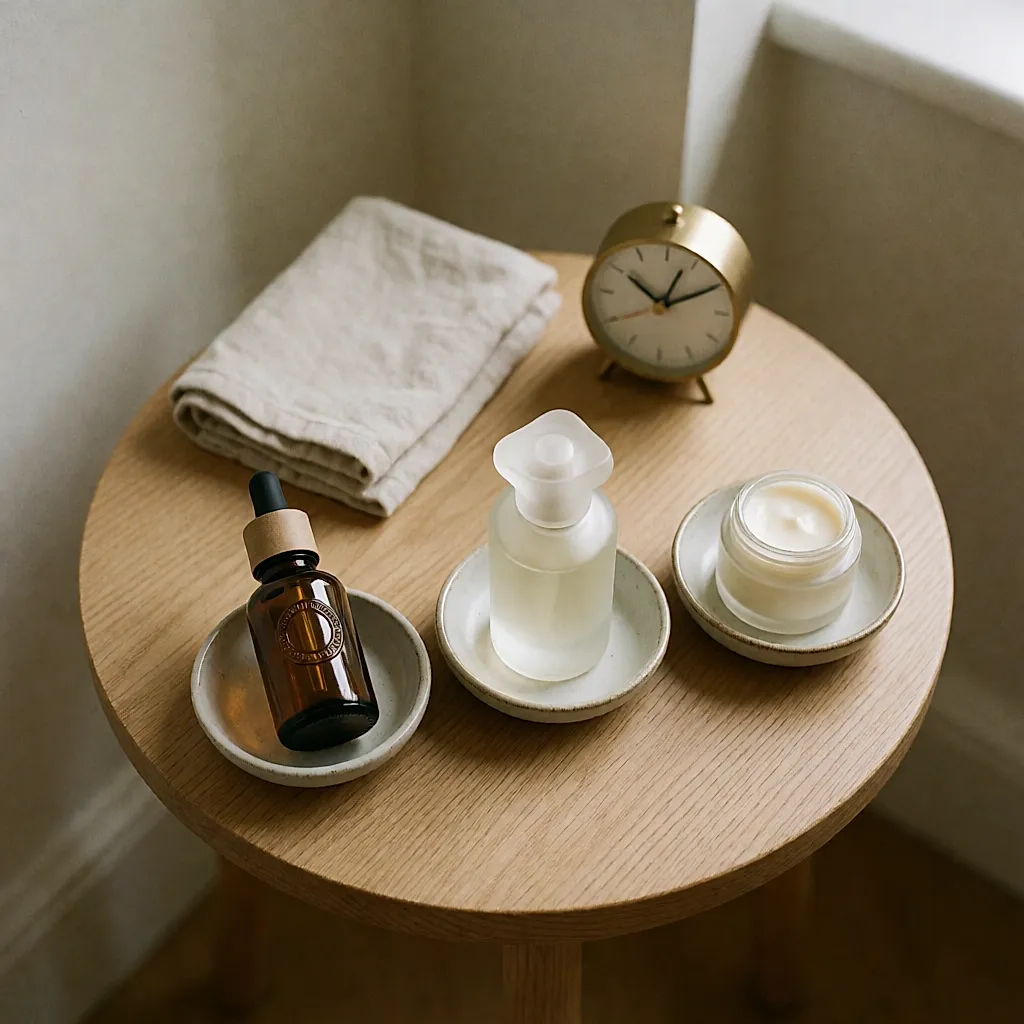
In practice, how you apply it matters as much as the product. Many recommend a small amount of retinol for your whole face, avoiding the eye area and the corners of your mouth. With the exfoliator, follow the instructions on the bottle, and don’t add extra ‘just to be sure’. On nights when you use neither, a basic moisturiser does the job: that’s when skin gets to recover.
What makes the difference between nights
Alternating doesn’t mean you can skip everything else. Skin that feels tight after an exfoliator doesn’t need a second active; it needs hydration and gentleness. And in the morning? Sun protection, every day: chemical exfoliants (AHAs/BHAs) and retinoids can make skin more sensitive to the sun, whereas a mechanical scrub doesn’t have the same effect. And it’s consistency that counts, not the season.
If you’re new to either one, introduce it on its own for a few weeks, observe, then add the second. I don’t have a universal schedule to give you: tolerance varies from one skin to another, and what suits your friend may make yours react. In reality, your skin sets the pace.
When things flare up, ease off
Redness, tightness, small patches: that’s the signal to pause. Put both actives aside, go back to a simple routine, and reintroduce them gradually, depending on how your skin tolerates them. If irritation persists, a pharmacist or GP can take a look; a dermatologist can help with this kind of thing too, not just major skin conditions.
Small but useful point: if you’re pregnant or breastfeeding, ask a healthcare professional for advice before using retinol. It isn’t meant to frighten you, just a question to put to the right person.
Your week at a glance — one example rhythm to adapt
- Night 1: exfoliator.
- Night 2: retinol.
- Night 3: a basic moisturiser.
- Night 4: exfoliator.
- Night 5: retinol.
- Nights 6 and 7: a basic moisturiser, and space things out if skin feels tight.
- In the morning, daily SPF.
The only investment is consistency
Nothing to buy, then. If you already have an exfoliator and a retinol in your cupboard, you have everything you need; you were just missing a schedule. A note on the fridge or a phone alarm will do the job nicely.
And if you only have one of the two? Keep it, use it at your own pace, and don’t add the other just for the sake of it. The good routine isn’t the one that lines up the most bottles; it’s the one you can stick to on a Tuesday night in November when you’re tired and all you want to do is go to bed.

Comments
Your opinion matters: rate the article, react and reply to comments.
Comments are moderated; AI-assisted comments are flagged. Text emoticons (8-), :-), <3…) are automatically shown as images.