

Three walls of gleaming bottles on one side, with skincare parked at the back like a well-behaved pupil. The beauty hall in the shopping centre makes no secret of its favourite. You go in for a serum and come out smelling of vanilla with a three-figure receipt. There is no need to turn that into a grand theory about the state of the market — the real question, if you love both, is how to choose without letting bottles pile up and without abandoning your routine.
A perfume can be judged in a day — and sometimes kept for years; a cream takes weeks to show what it can do. That gap is what makes the bottle so tempting: it tells its story quickly, makes an easy gift, and a new variation takes a formula that has already proved itself. Skincare asks for a bit more patience and consistency.
What this means for your routine
The good news is that a routine that works does not need a new launch every month: two or three steady products, a regular step or two, and temptation can stay in the shop. You do not need the serum launched last week to look well on Monday — especially a rainy Monday in November.
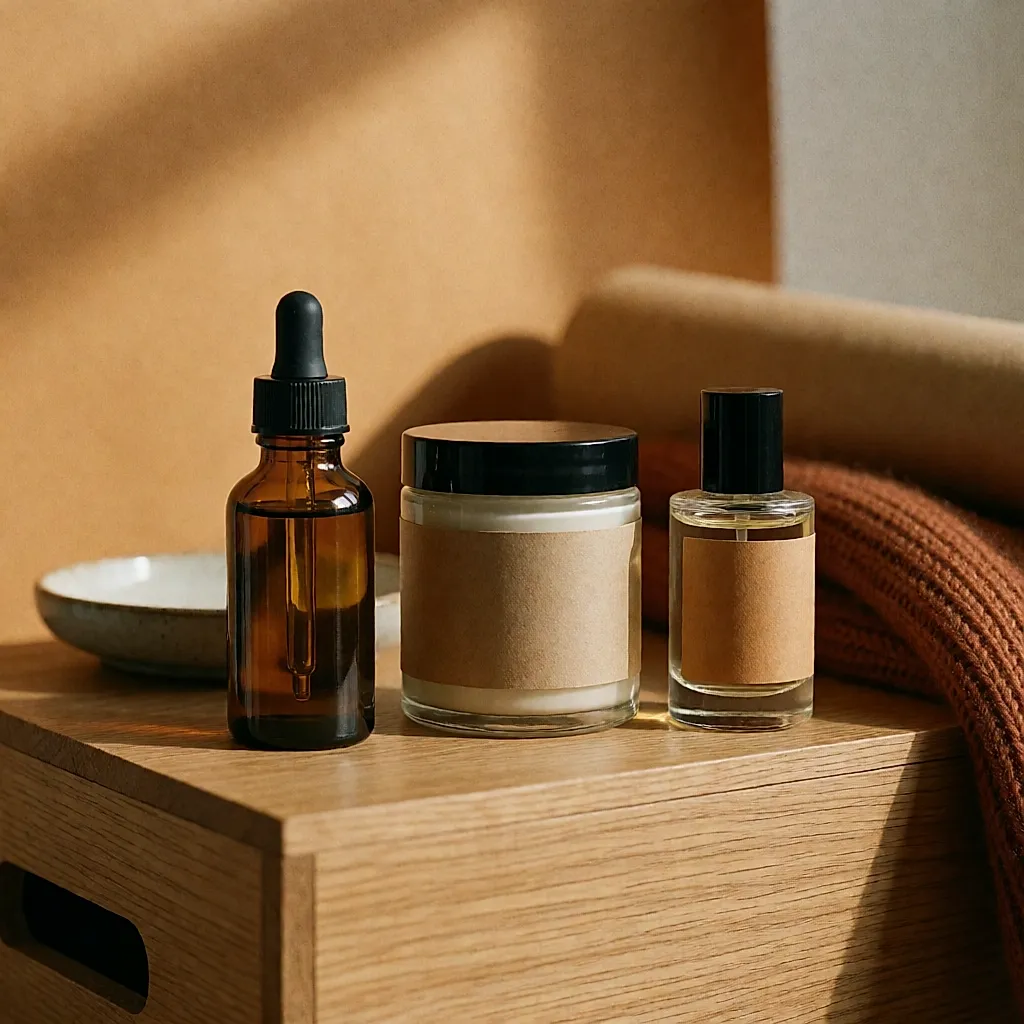
The not-so-good news is that the bottle knows exactly how to make itself desirable. A new variation has a familiar name and a bottle that looks like one you already love: you think you are repurchasing, and you buy something else. The habit that saves you? Check the full name and the concentration, then ask whether you would have noticed it without the giant poster. If the answer is no, you have your answer.
Three things to check before you choose
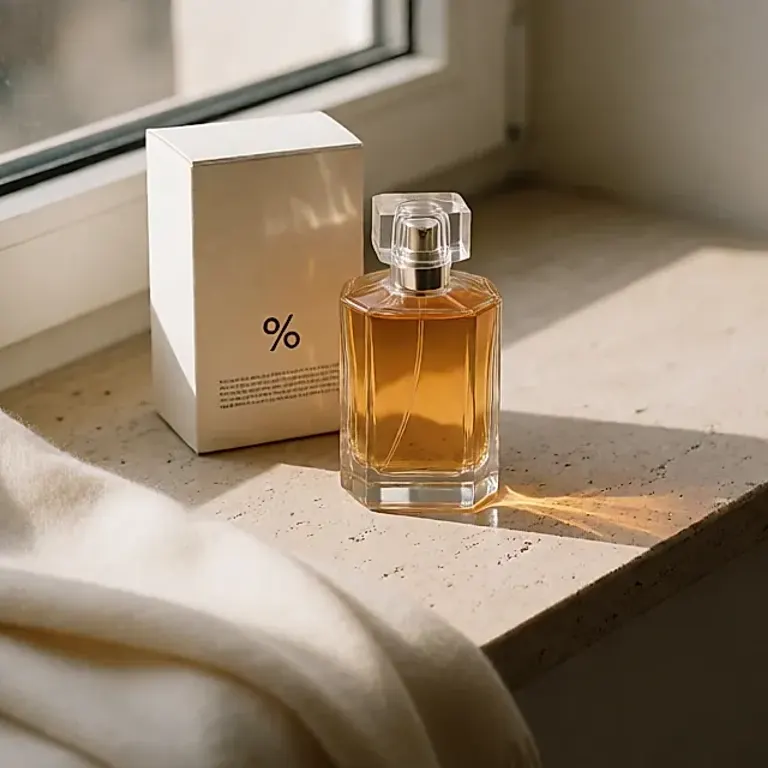
First: concentration, not price. Eau de toilette, eau de parfum, extrait, eau de cologne, mist — these labels give an indication of richness and staying power, not a guarantee. Two eau de parfum formulations can behave very differently depending on the raw materials, and a well-made eau de toilette sometimes lasts better than a lazy eau de parfum. It is not the label that decides; it is the test.
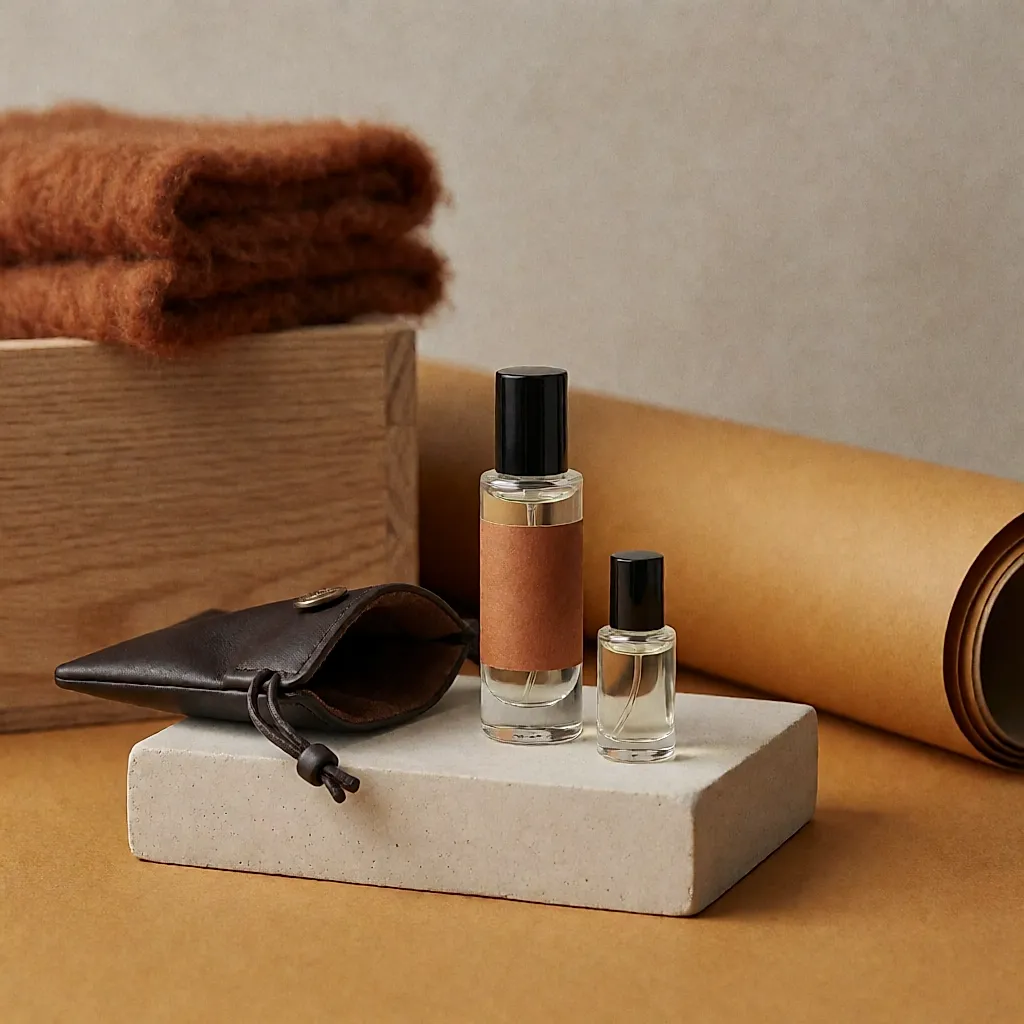
Second: testing on skin, over several hours. Paper smells of promise; your wrist smells of the truth. Spray the inside of your wrist or the crook of your elbow, do not rub it in, and do not decide too quickly: the top notes are often the most flattering. What matters is the base, the part that is still there hours later. No one can smell it for you, and no product page can predict what the juice will do on your skin — which is why it is worth asking for a sample and living a whole day with it.
Third: the size you will actually wear. The 100 ml bottle, with its flattering price per millilitre, often ends up as decoration on a shelf. A 30 ml, a handbag spray, a refill when the brand offers one: less glass, less money tied up, more chance of getting to the end. And if you like lighter formats, hair mist or solid perfume — often alcohol-free, applied with your fingertips — do the everyday job perfectly well, with more discreet staying power. That is the compromise to accept, not a flaw.
The full-day test — Ask for a sample, spray it on skin in the morning, then smell it at several points through the day, from morning to evening. If you still like it at the end of the day and do not want to rub it off, it is probably the one. If it has disappeared during the day, you have just saved yourself the price of the big bottle.
Budget
As a rough guide for classic fragrance: expect around £45–£90 for a 50 ml eau de toilette, £60–£130 for an eau de parfum of the same size, and often £100–£260 for 30 ml of extrait, more in niche collections. Hair mists and lighter waters usually sit around £20–£55, and miniature sets are a good training ground before the big bottle.
Where to buy? At a fragrance counter or beauty retailer to smell, compare and leave with a sample; at a supermarket or online for the classics, often cheaper — but with no test, so with a risk. Refills, where they exist, bring down the cost per millilitre and the weight of glass. And a very simple calculation: divide the price by the number of days you will actually wear the perfume. A £140 bottle worn three times a week for a year costs less per day than a £60 bottle gathering dust. An unused bottle is the worst buy in the category.
New launches do not oblige you to do anything: not to buy the perfume of the year, and not to turn your back on skincare. They just give you one extra right: the right to choose slowly. A scent is worn for months — it deserves a day's trial and a sample at the bottom of your bag. And if you take away only one thing, make it this: the best perfume is not the newest one; it is the one you put on without thinking on a Tuesday morning.

Comments
Your opinion matters: rate the article, react and reply to comments.
Comments are moderated; AI-assisted comments are flagged. Text emoticons (8-), :-), <3…) are automatically shown as images.