
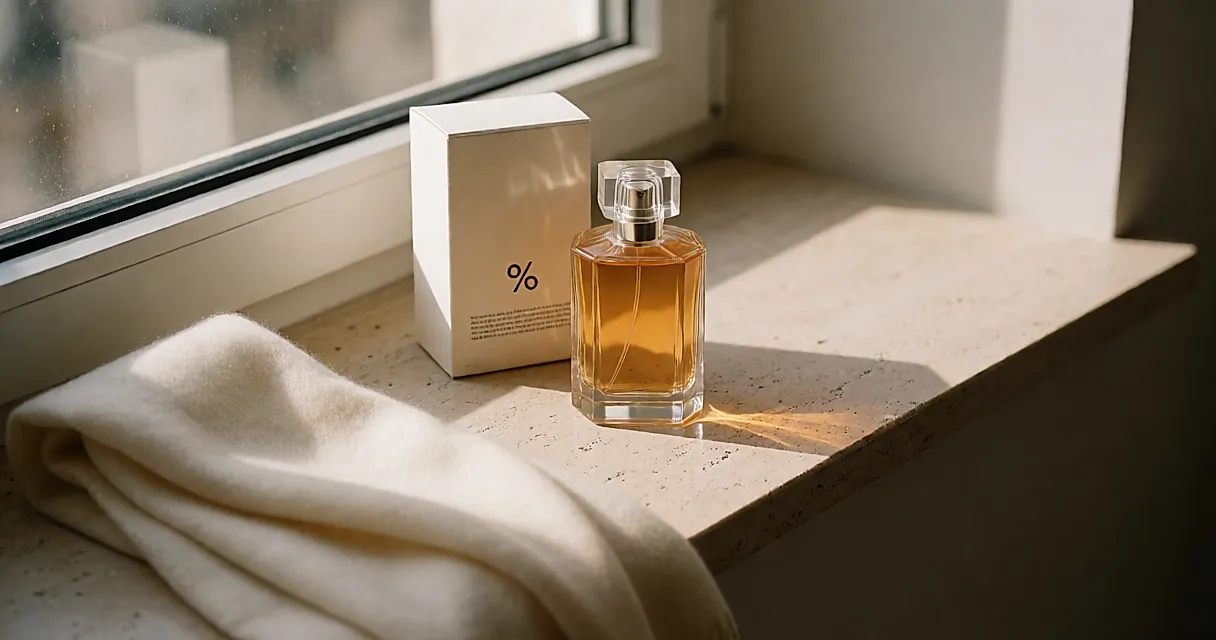
The parcel turned up on a Tuesday, three days before the birthday — and nobody in the room had smelled what was inside. You unwrapped it, sprayed it, nodded: "oh, that's actually lovely." The bottle wasn't chosen for its story, but for a number on the box: its percentage.
The number has moved to the front of the shop
Open any product page online and the words at the top no longer talk about a garden after rain or Calabrian bergamot. They announce a concentration, a trail, a longevity. The olfactory story, the one that used to be told over three paragraphs, has been demoted to small print below the price.
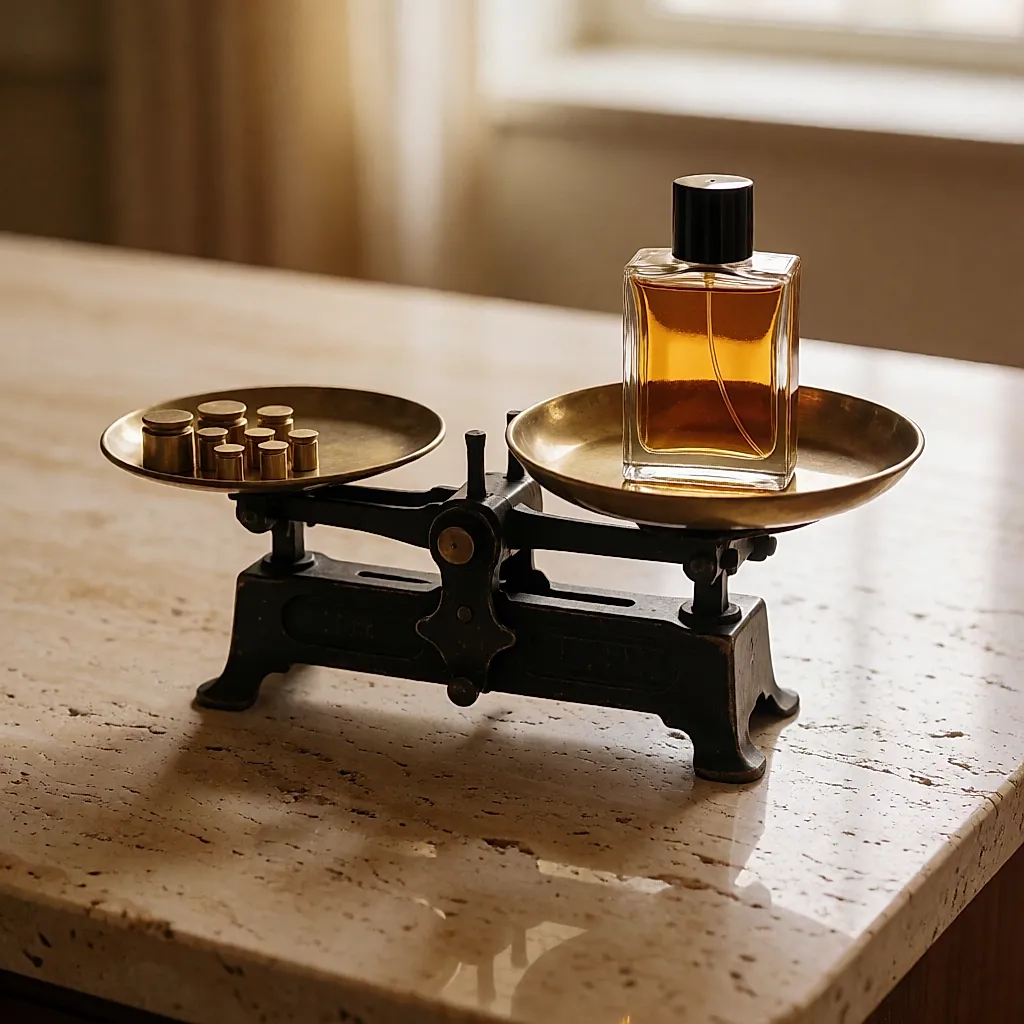
Prices have followed. An extrait de parfum usually sits somewhere between £150 and £400, and the rarest editions go a lot higher: a bottle at several hundred pounds isn't an oddity, it's a signpost. You're no longer buying a story, you're buying a percentage — and a percentage can be compared, ranked and argued over. Which is far more reassuring than somebody's childhood memory.
Is an extrait just a pricier eau de toilette?
Not quite. The industry's rough benchmarks — not an official standard, just an order of magnitude — put an eau de toilette at 5 to 10% concentrate, an eau de parfum at 10 to 20%, and an extrait from 20-30% upwards. Less alcohol, more material, a denser stroke on the skin. That's the theory.
The nuance: a percentage doesn't tell you everything. Staying power also depends on the formula, on the quality of the raw materials and on your skin — yours, the one that devours a perfume in two hours while the woman at the next desk has been wearing the same one since breakfast. I haven't smelled this kind of bottle, so I won't tell you what it's worth; I can only point out that the market has found itself a new scale of value, and that it's a very easy one to print.
In real life, one spray, not four
This is where an extrait changes the gesture. Where you'd generously mist an eau de toilette before heading out, two presses are often enough with a concentrate. Wrist, behind the ear, the crook of the elbow — then leave it alone. As a precaution, plenty of people advise against rubbing your wrists together.
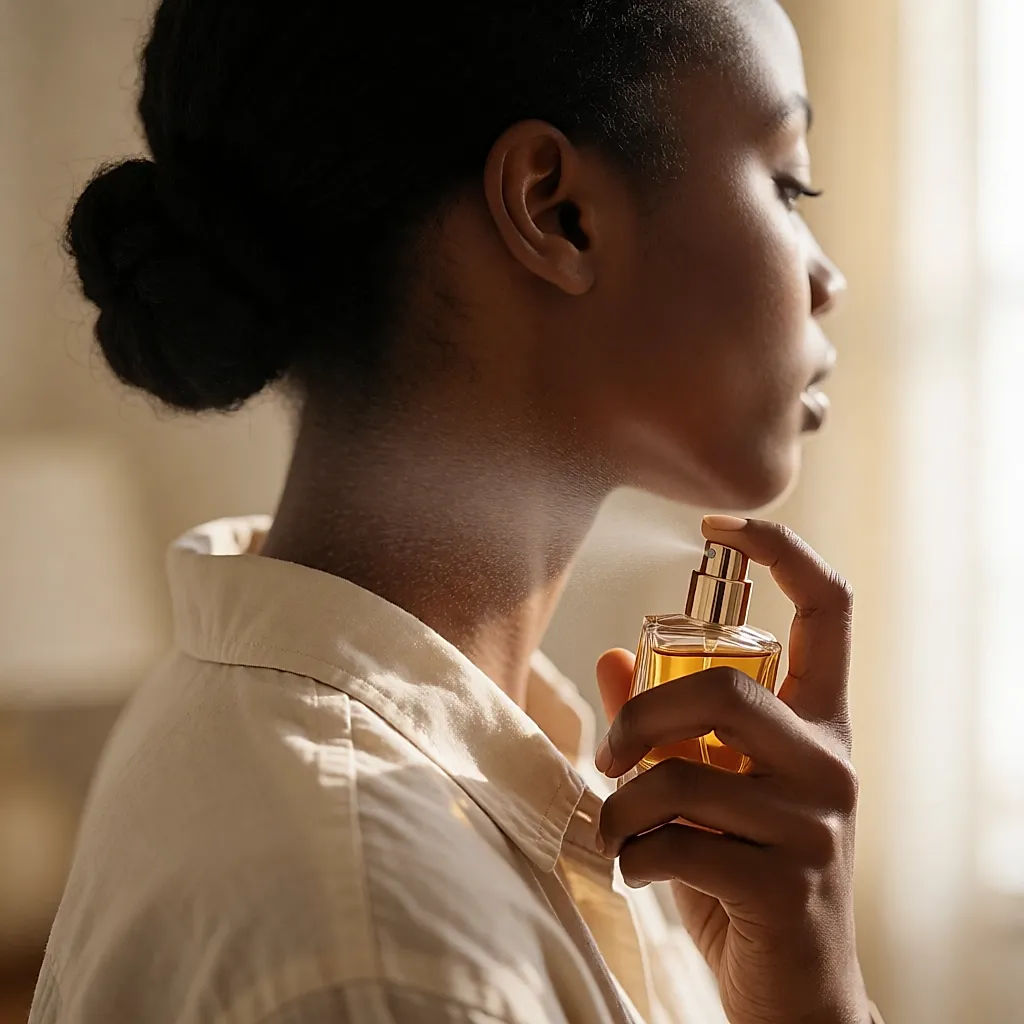
The real benefit is time. An extrait settles in, evolves, leaves a trace on a scarf the next morning. Which also means you have to genuinely like it for eight hours straight. And if your colleague wrinkles her nose at ten in the morning, there's no point topping up: that's not a dosage problem, it's a proximity problem.
How to buy blind without getting burnt
The good news is that you can absolutely choose a fragrance without having smelled it first — as long as you don't stake several hundred pounds on a single click. Ask for a 2ml sample at a perfumery counter: often free if you're already a customer, sometimes a few pounds, and it buys you a few days of proper testing. Discovery sets from niche houses do the same job, with more of a game to them.
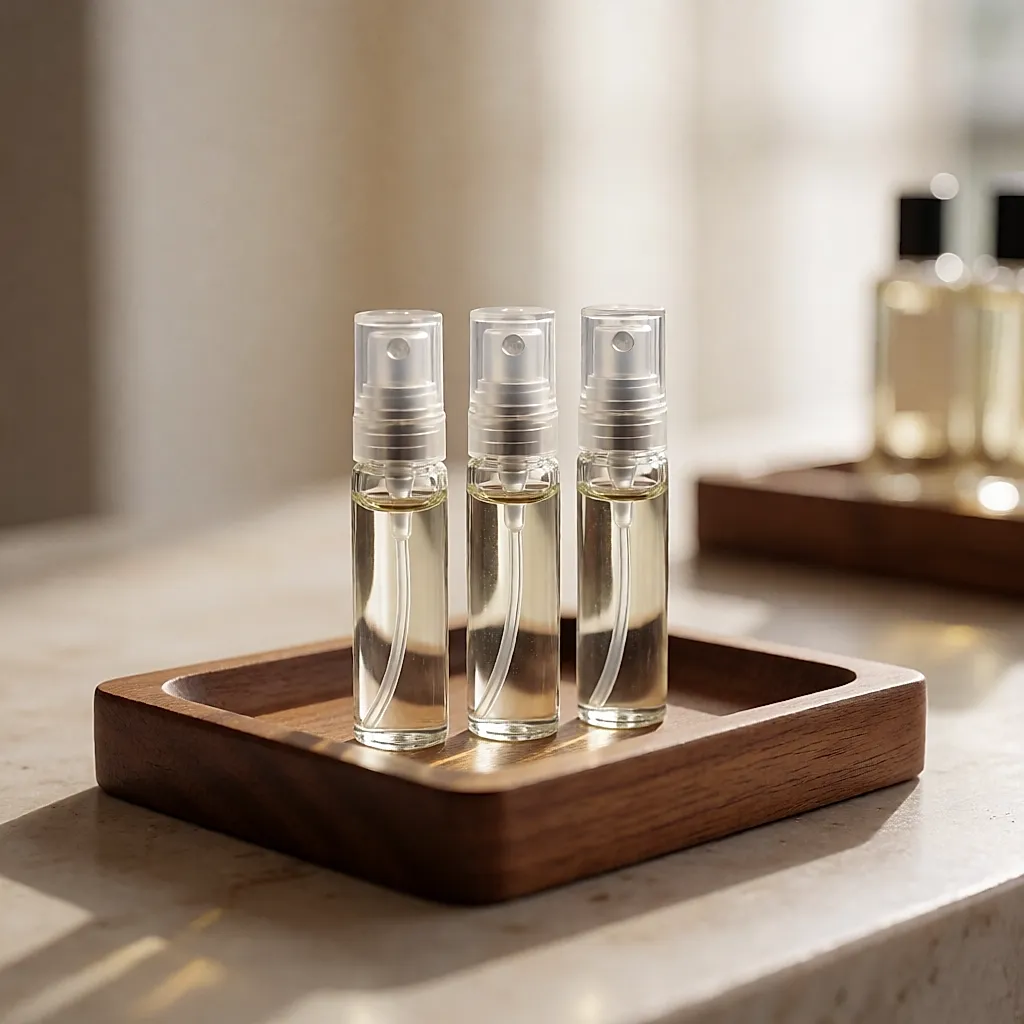
Second reflex: spray it on skin, never on a card, then let it develop for a while — an hour, say. Paper lies, and it lies with enormous confidence. Finally, check the returns policy before you check out — depending on the retailer, and on whether the cellophane is intact, taking a perfume back is far from automatic.
The Sunday-night test. One spray on the wrist, get on with your evening, then smell your skin two hours later, and again the next morning on a jumper. If you still like the trail when you're knackered and it's raining in November, that's a good sign. If it gives you a headache in your pyjamas, you've just saved three figures.
What it costs
As a rough guide on the UK market, expect somewhere around £35 to £80 for a classic 50ml eau de toilette, £70 to £140 for an eau de parfum, and £130 to £350 for an extrait — more once you get into rare collections or the big formats. A sample runs from about £3 to £10, a discovery set from £25 to £60.
It all depends on the format (30, 50 or 100ml), the retailer and the city: department stores and niche perfumeries let you try first, brands' own websites sometimes offer travel sizes, and the high street chemist is still unbeatable on the classics. Price per millilitre tends to climb with concentration — not necessarily with pleasure.
The percentage is the entry price; the story is one you write yourself, by wearing it. So before you commit to a three-figure bottle, order the sample: it's the one step that will save you from scenting your bathroom for the next three years.
Comments
Your opinion matters: rate the article, react and reply to comments.
Comments are moderated; AI-assisted comments are flagged. Text emoticons (8-), :-), <3…) are automatically shown as images.