
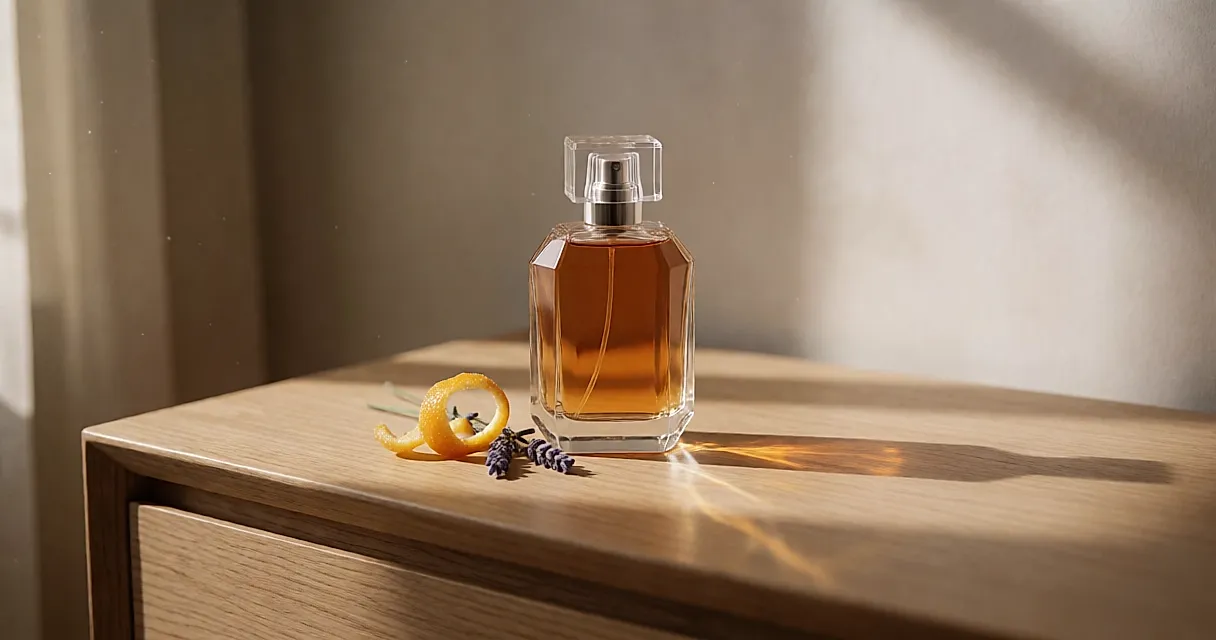
In the lift at 8.12am, a trail of lemon and lavender follows you up to the third floor. That trail is two very ordinary molecules — linalool and limonene — and your neighbour is wearing them without knowing it. Neither is rare or exotic: you'll find them in a good share of the bottles on the shelf. All the more reason to look closely at what EU rules have to say about them.
An opinion is not a ban
The European Commission's Scientific Committee on Consumer Safety (SCCS) brings together toxicologists, dermatologists and pharmacists. Its job isn't to decide whether a perfume is beautiful, but to say at what levels a substance remains acceptable in a cosmetic, depending on how it's used. An opinion doesn't ban anything: it proposes limits, sometimes conditions of use, and the Commission then decides whether or not to write them into the annex of restricted substances.

That's where it gets concrete. On the shelf, the smell doesn't change. The ingredients list does.
The pair that turns up everywhere
Linalool is the soft floral note that rounds off a lavender or a bergamot; limonene is the zest, green and sparkling. You'll find them in citrus, in white flowers, in woods — and not only in perfume: a deodorant, a conditioner, an eau de toilette, and there you are.
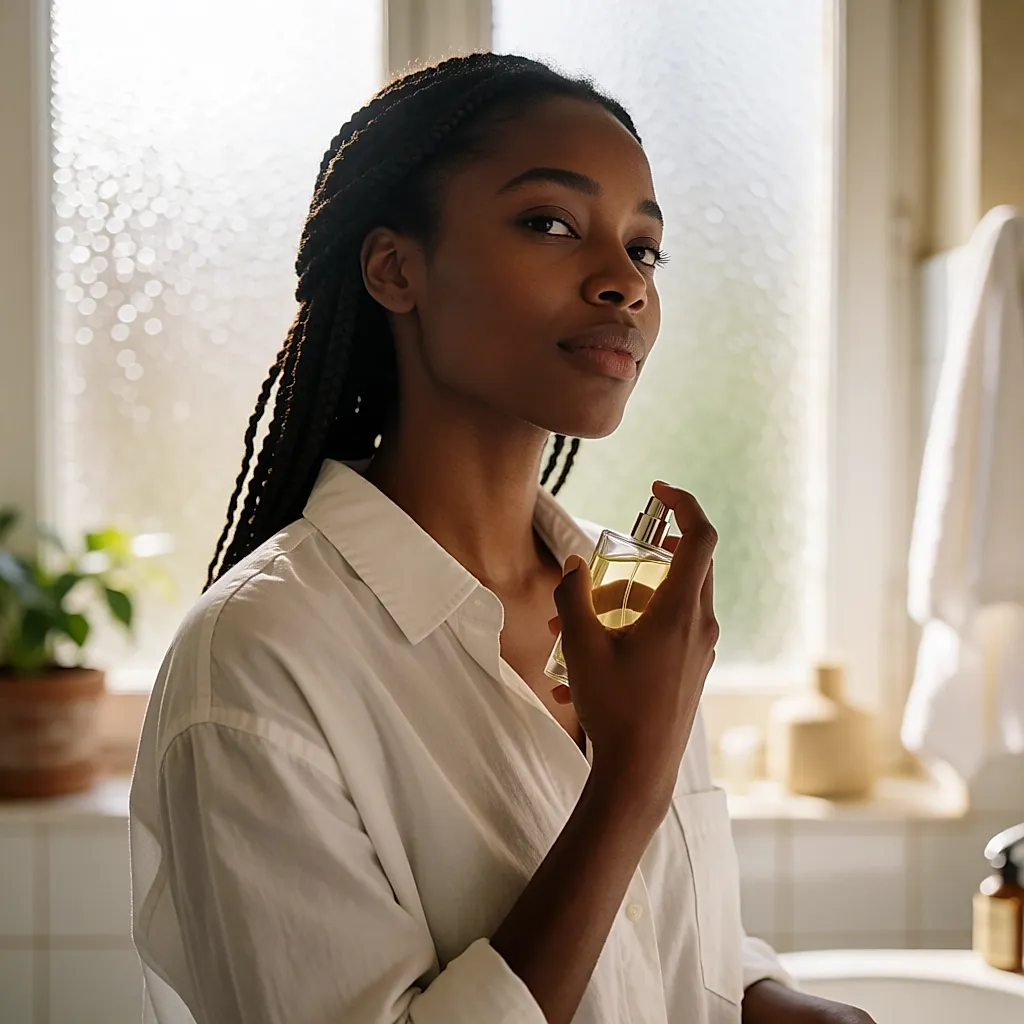
Beware the "natural, so it must be gentle" reflex. The linalool in lavender and the linalool made in a lab are the same molecule: the first isn't milder, the second isn't more suspect. Some of the literature looks at oxidation products — the molecules that form as a bottle ages. So the forgotten bottle left above the radiator isn't your best friend.
Inside the bottle, the work carries on
A perfumer doesn't work with isolated molecules: they work with accords. Linalool does the binding, limonene brings the high notes. Add a little too much of one and the lemon turns to soap; take it out and the whole thing sags. In the bottle, the work continues: air, light and heat carry on doing their thing. Citrus goes first, the juice darkens, the trail flattens out.
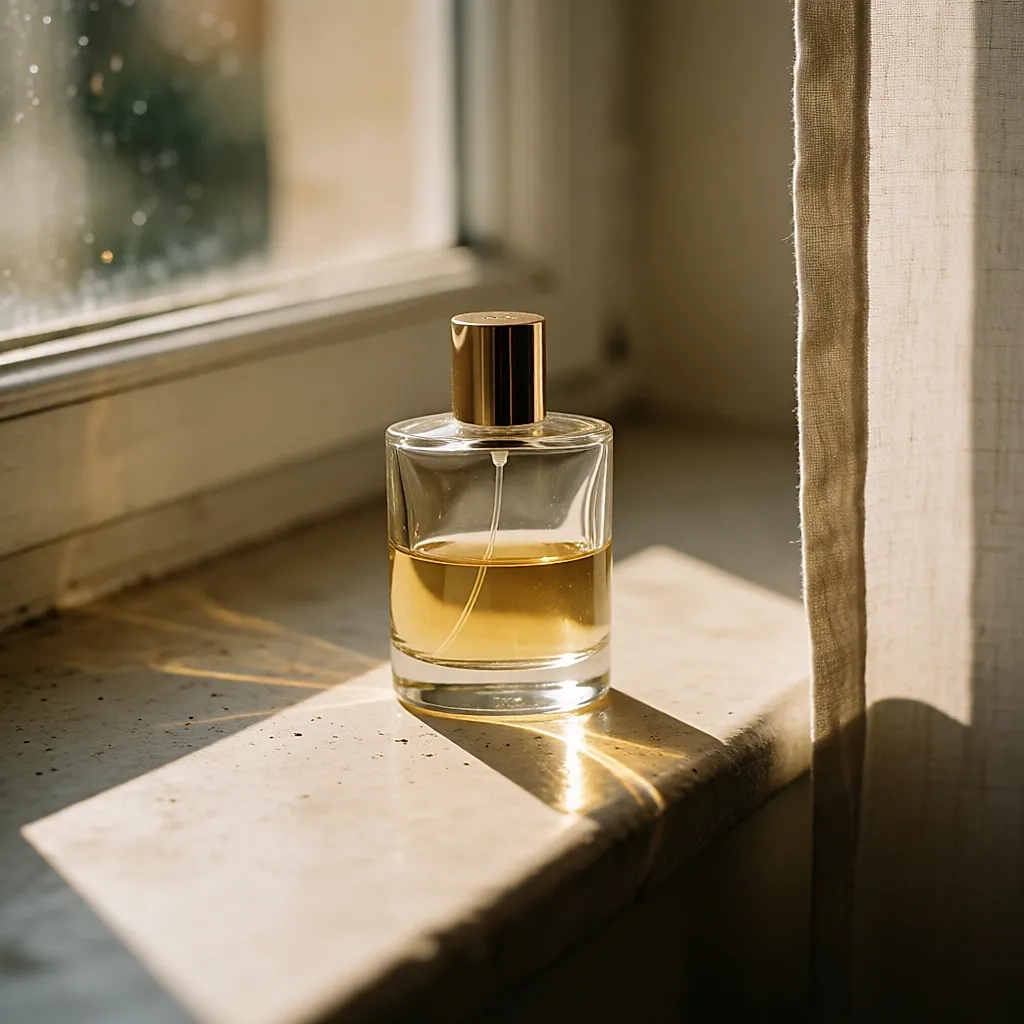
And you, in all this? You won't smell linalool as such. You'll smell "something clean", or your grandmother's lavender. The nose recognises an accord, not a nomenclature: two perfumes sharing ten molecules sometimes have nothing in common. Paper shows the structure; skin decides the rest.
Grasse, the other end of the journey
In Grasse, May rose and jasmine have been grown for centuries. The question of dosage comes up while the formula is being built, not six months later. A perfume with a molecule removed at the last minute often ends up flatter than one designed around the constraint from the start.

The downside is the "free-from" juice that smells of laundry detergent. Strip enough out and you get fragrances that are clean, neat and a little sad. The conversation between the nose and the toxicologist is there precisely to save the contours while trimming only what's strictly necessary. Beauty and reason don't have to go head to head in the same corridor!
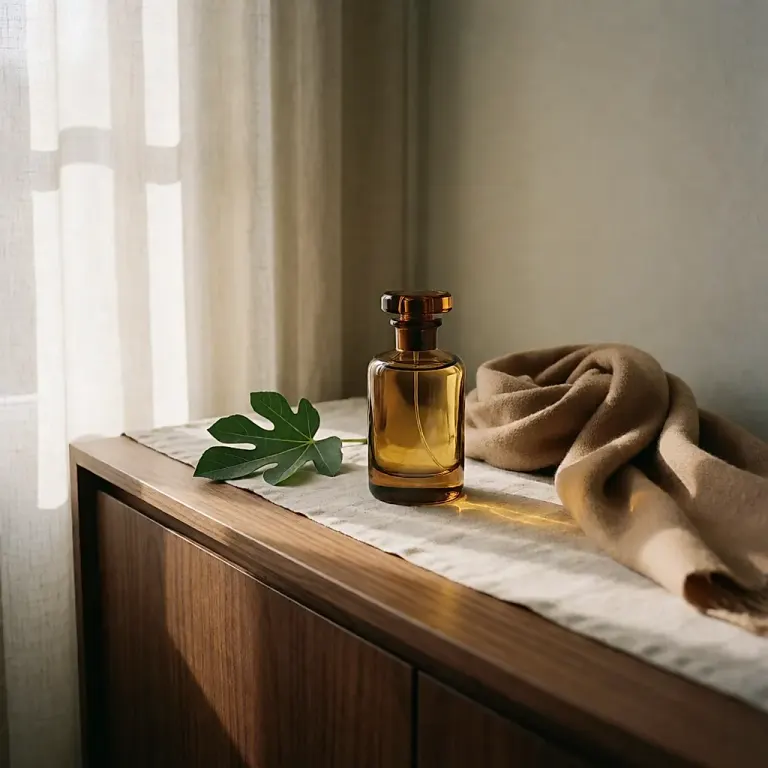
Three habits for a bottle that ages well. Keep it in its box, away from the radiator and the window: light and heat are the juice's two sworn enemies. Close the cap properly — a spray left half-open is oxidation on fast-forward. And test on skin, never on paper: your skin is what makes the call.
Underneath it all, the news isn't made in Brussels or in the microgram. It's made when you twist off the cap, on a wrist, on a morning when you're already running late. You won't think about it, and that's exactly right. But the next time you read "linalool, limonene" at the bottom of a box, you'll know what it's telling you: an accord, a dose, a constraint accepted, and a bottle best kept out of the sun. The rest is up to your nose.
Comments
Your opinion matters: rate the article, react and reply to comments.
Comments are moderated; AI-assisted comments are flagged. Text emoticons (8-), :-), <3…) are automatically shown as images.