

Not my finest moment — and I'd followed the instructions to the letter. Since then, I've worked my way through formulas, compared active ingredients and learned one thing: the finish has less to do with the price of the bottle than with the molecule you choose, your skin tone and three application moves. Shall we start from the beginning?
DHA and erythrulose: the two actives that make the colour
First, and it matters: most fake tans contain no sunscreen. Some combined products do include UV filters, but no self-tan should be treated as adequate sun protection. The colour comes from a reaction between a sugar and the amino acids in the stratum corneum — the layer that sheds on its own over days. It has nothing to do with a suntan. Under UK cosmetics rules, DHA is permitted for use on skin at cosmetic concentrations, but self-tan sprays and mists should not be inhaled and a patch test is still recommended.
Two actives dominate the market. DHA (dihydroxyacetone), obtained by fermentation, is the fastest and most intense: you'll find it at 3 to 12% depending on the depth of colour promised. Erythrulose, another sugar, reacts more slowly. The colour builds in stages, more evenly, with a less orange undertone. Many formulas combine both so that one corrects the other.

Which formula for your skin tone?
The question that keeps coming up: what if you have very fair skin?
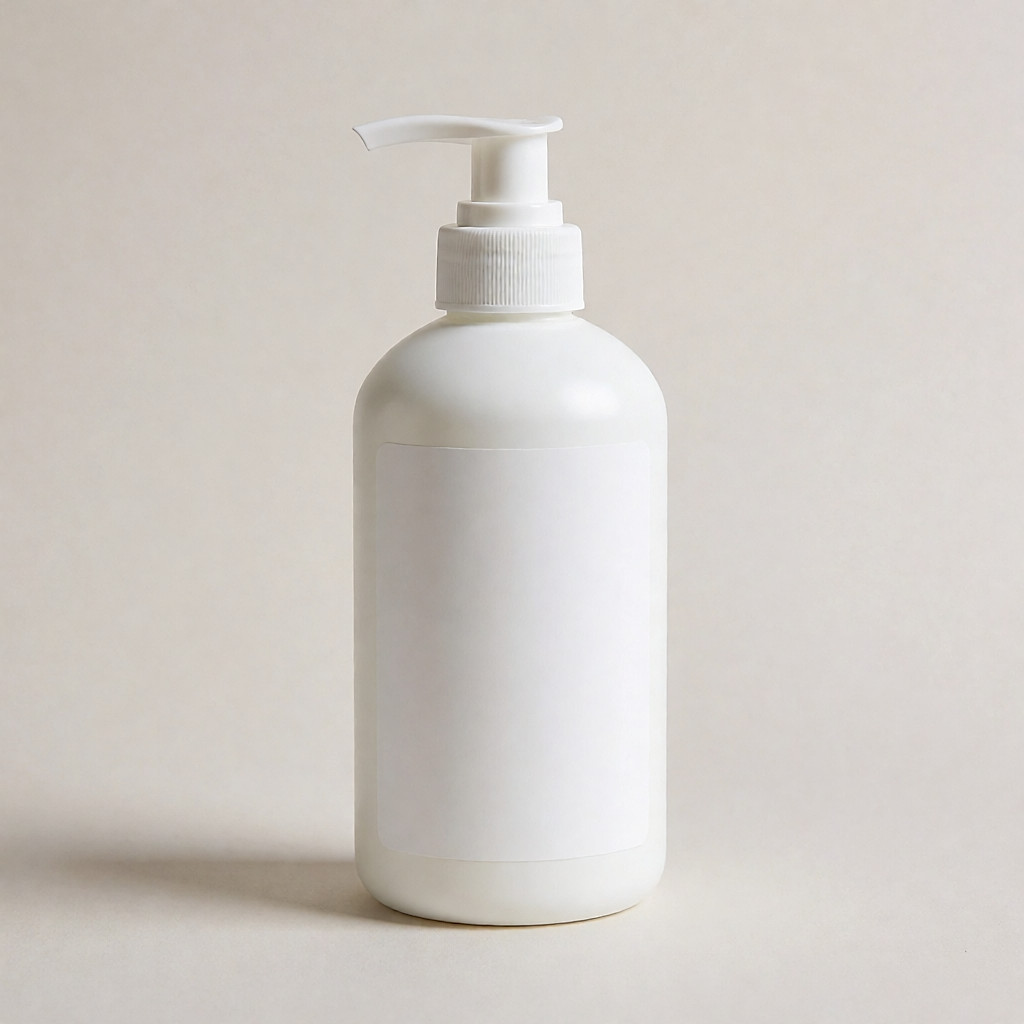
On fair, dry or rarely exposed skin, go for a gradual tanner with a low dose of DHA, often under 3%, either alone or combined with erythrulose. You build colour day by day, you can fix a missed patch, and mistakes become rarer. On medium or already tanned skin, a classic formula with a higher DHA concentration will give a bolder result in one application.
Good news: the default carrot-orange tint of the 2000s is a thing of the past. Why the turnaround? Because formulas have become much more stable. A caveat, though: the final result depends on how many amino acids your skin has. Two people using the same tube won't get the same colour. That's chemistry, not a faulty product.
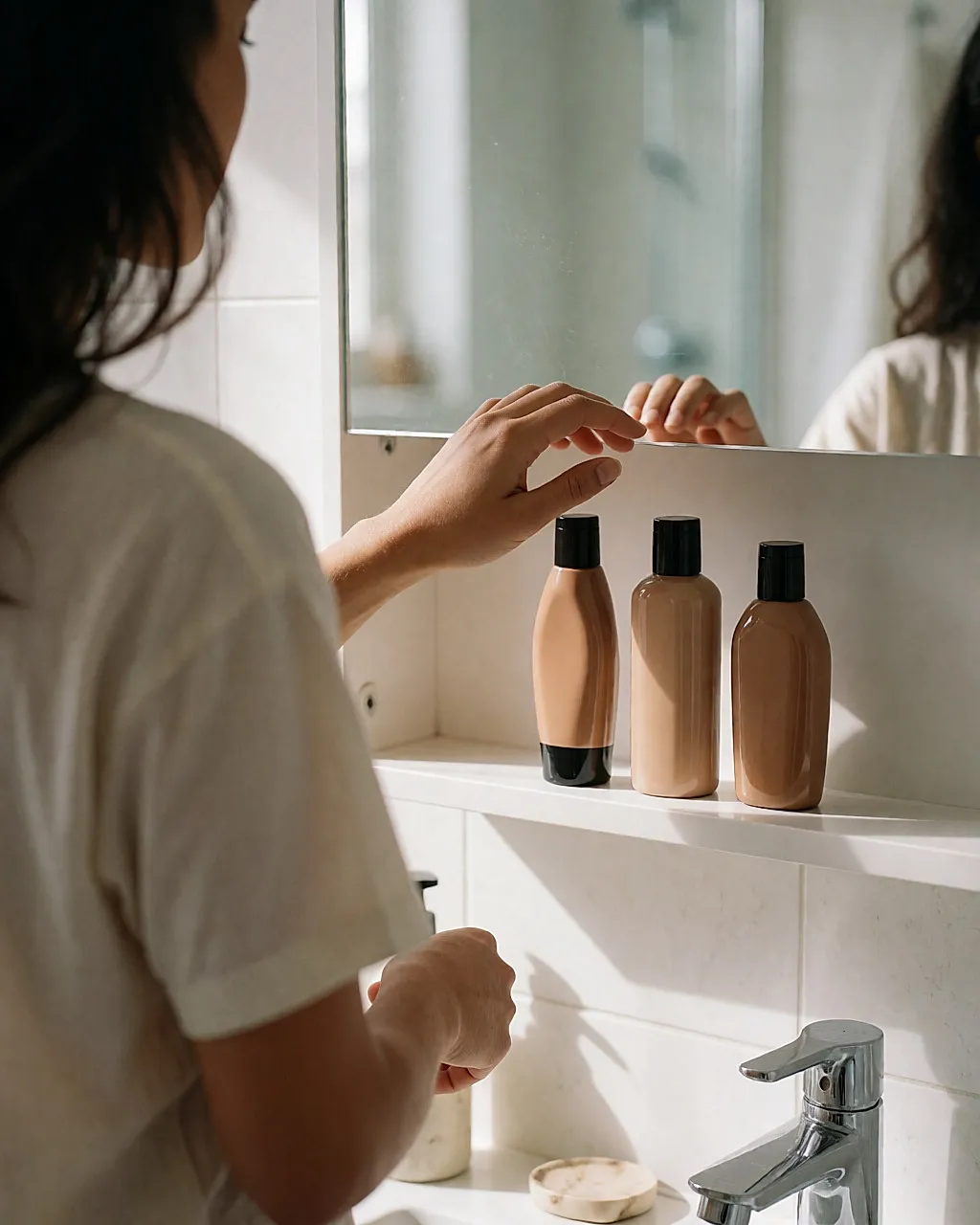
The move that changes everything: application
The golden rule is to exfoliate the day before. Not an hour before, not that morning: you weaken the skin barrier and the colour catches in patches. Repeat once or twice a week for as long as you're using self-tan.
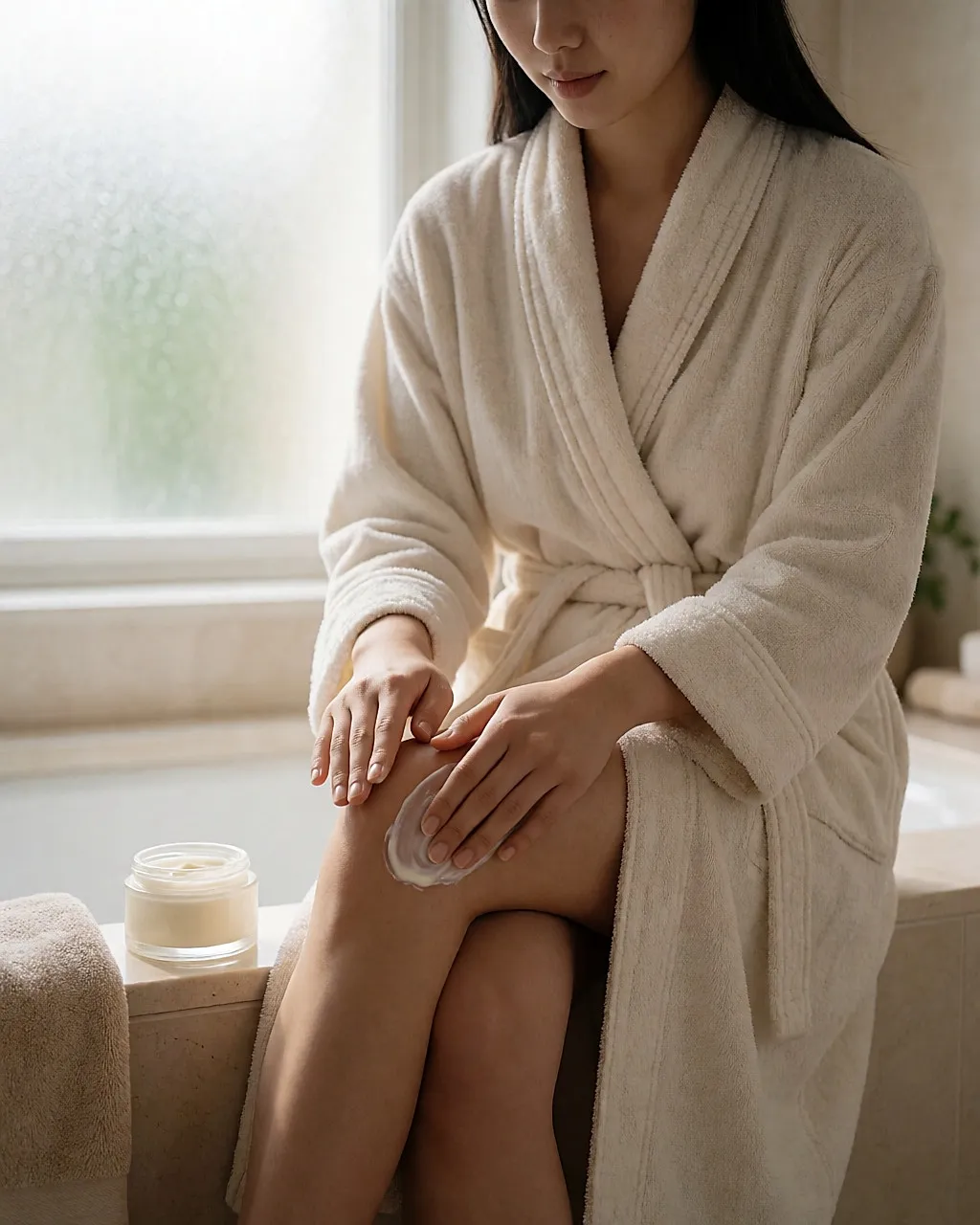
Then, in order:
- Moisturise the thick areas — elbows, knees, heels, knuckles — with a light cream. DHA penetrates faster there and darkens more.
- Apply with an applicator mitt or bare hands, in thin, even layers, from the legs upwards. A pea-sized amount per area is enough.
- Finish with the face, then wash your hands and under your nails with soap.
- Let it dry for ten to fifteen minutes before dressing. The colour mainly develops overnight.
As for frequency, every other day for a light tan, every day for a more pronounced result. And moisturise daily: that's what keeps the colour even rather than letting it go patchy.
The mistakes that make your tan go wrong
- Waxing immediately beforehand is not advised, because fragile or irritated skin can react and give an uneven finish.
- Thinking fake tan protects you from the sun: most offer no SPF and don't replace sunscreen; some combined products contain SPF, but their protection should not be considered sufficient.
- Skipping the patch test in the crook of your elbow, especially if the formula contains essential oils or fragrance.
- Putting on a light-coloured outfit straight away: DHA stains some fabrics.

Looking for a cleaner formula? Look at three criteria, not the word 'natural' printed in large letters on the label. First, the INCI list: DHA and erythrulose should appear clearly, in descending order. Next, a certification — COSMOS ORGANIC or COSMOS NATURAL — which sets a minimum percentage of natural-origin ingredients and limits the synthetic ingredients allowed; check the standard's requirements via Cosmebio rather than trusting the logo. Finally, the packaging: refill, glass or card. A refillable bottle carries more weight than green rhetoric.
Budget
- Gradual body self-tan from a supermarket or own-brand range: around £5 to £12.
- Face or body formula from a pharmacy or beauty retailer: more like £15 to £35 depending on size and actives.
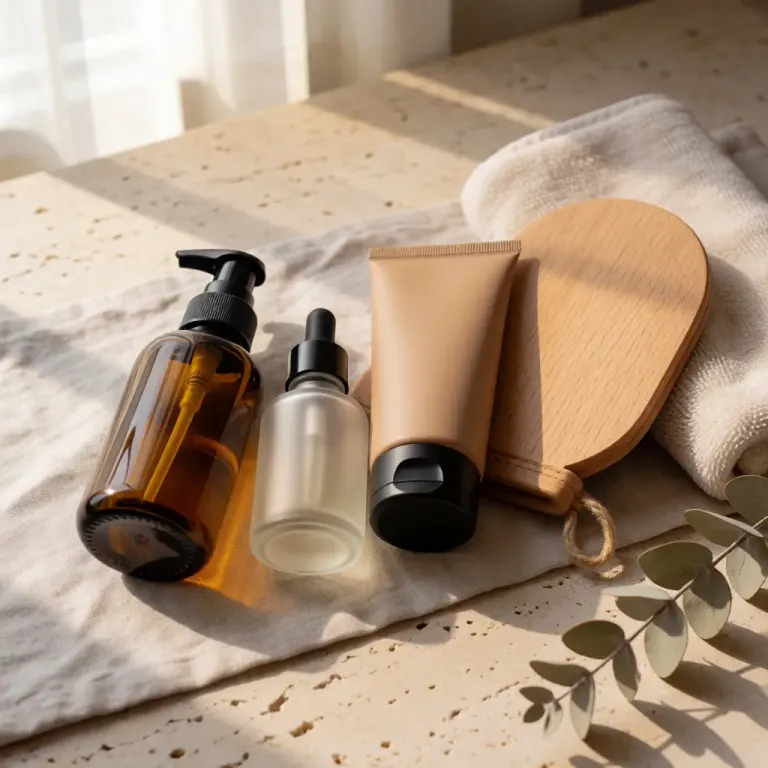
- Applicator mitt: £5 to £15. Body scrub: £5 to £15.
- In-salon self-tan treatment, spray or mist: £30 to £80 per session, more for a bespoke formula.
What changes the price: the DHA concentration, whether erythrulose is included, fragrance, organic certification, format and refillability. Supermarkets and own brands remain hard to beat on gradual tanners; pharmacies and beauty retailers often handle sensitive skin better. Online, check the manufacturing date: a recent bottle is preferable.
Sources
- Regulation (EC) No 1223/2009 on cosmetic products — EUR-Lex; see also the UK Cosmetics Regulation as retained in GB law.
- Office for Product Safety and Standards (OPSS), cosmetics regulation guidance.
- European Commission CosIng database of cosmetic ingredients.
- NHS, sun safety and sunscreen advice.
- UKHSA, UV index and sun protection.
- Skin Cancer Foundation, 'Sunless tanning'.
- Cosmebio, COSMOS Organic and COSMOS Natural standards.

Comments
Your opinion matters: rate the article, react and reply to comments.
Comments are moderated; AI-assisted comments are flagged. Text emoticons (8-), :-), <3…) are automatically shown as images.