
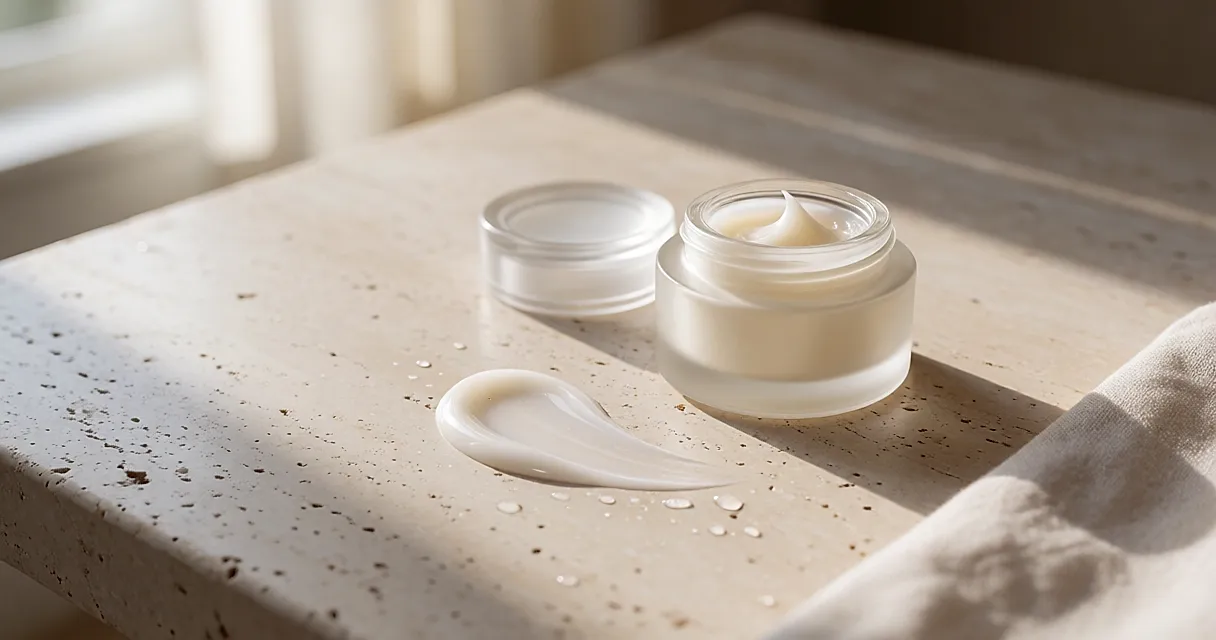
It's 11am, the meeting has no end in sight, and the fluorescent light turns your forehead into a little mirror. The annoying part? You haven't changed a thing: same serum, same moisturiser, same order of application. But combination skin is two different terrains under one roof, and it's often the layering, rather than the skin itself, that creates that midday shine.
The serum-plus-moisturiser sum
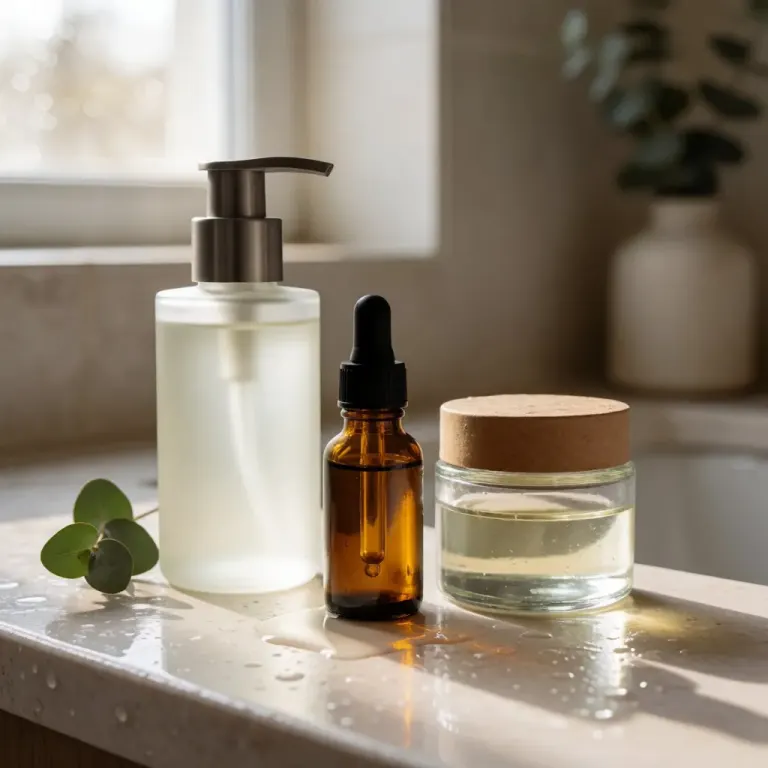
Go back to your morning routine: a fluid serum, then a moisturiser that nourishes. On the cheeks, the logic holds. On the forehead, nose and chin, the second layer sits on top of the first, and the film left on the surface catches the light. Hence the mirror effect by midday, when your skin hadn't asked for anything.
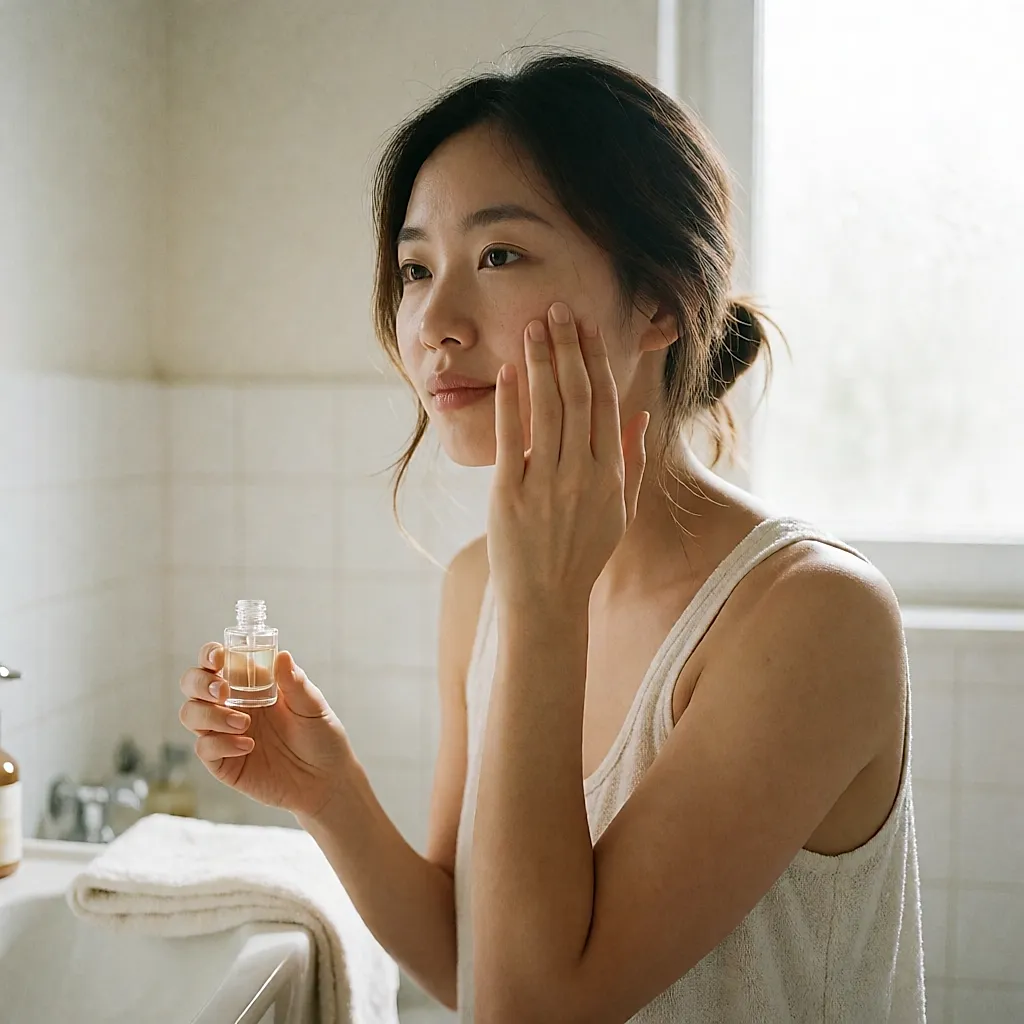
So do we ditch the cream? Certainly not. The idea behind a gel-cream is to take the edge off that sum without leaving skin tight: keep the serum, swap the morning moisturiser for a lighter gel texture that hydrates without adding a heavy oily layer. If your current moisturiser suits you, keep it. The switch is only worth it if your forehead shines before your first coffee.
What a gel-cream actually does
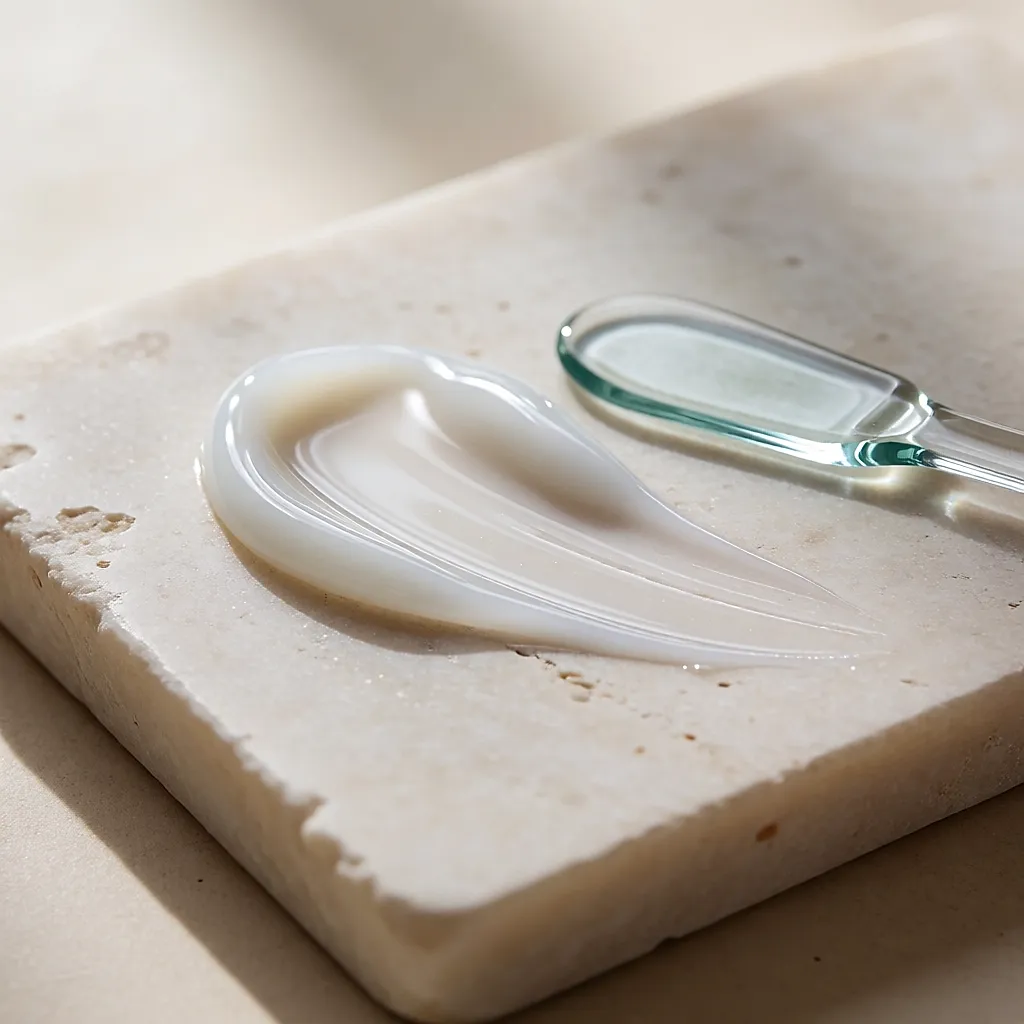
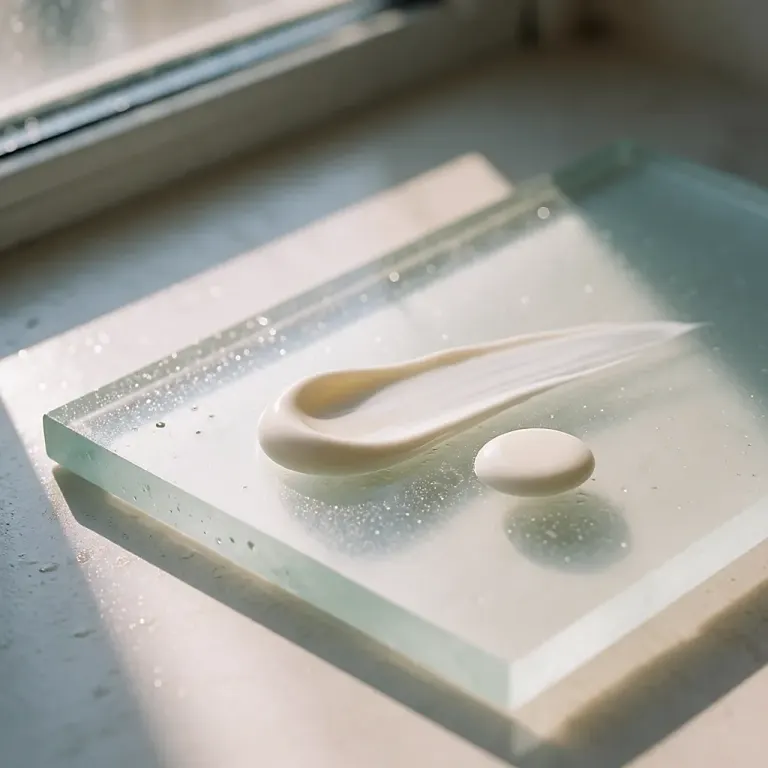
A gel-cream is a gelled emulsion: water, humectants and very little, if any, heavy oil. It spreads like a gel, disappears quickly and leaves skin supple rather than satiny. That's exactly what makes it comfortable when you're doing your make-up standing up, between stints at the ironing board.
Its limits? It hydrates rather than nourishes. A cheek that feels tight at 3pm isn't necessarily telling you the texture has failed: it may be telling you hydration is lacking. In that case, a pea-sized amount of richer cream on the cheeks is enough, and the T-zone stays calm. Nothing obliges you to treat all three zones of your face as if they were one and the same.
The label before the packaging
Three things are worth a look while you're holding the tube. First, where denatured alcohol sits: as a general rule, especially among the main ingredients, an alcohol high up the list can be drying; at the end of the list, its exact role depends on the formula. Next, look for humectants such as glycerin or hyaluronic acid, and niacinamide, often cited for combination skin — no overpromising, you know how it is. Finally, the words 'non-comedogenic': the claim doesn't rest on one standard test; in other words, it's only as meaningful as the brand making the claim.
On labels, don't stop at the logo: check exactly what the certification covers, without expecting it to prove efficacy on your skin. Look at the packaging too: a refill where one exists, a tube rather than a jar (fingers are charming, not sterile), glass or card where possible. And if you change products with the seasons, a smaller size is better than a big jar that will spend the rest of its life at the back of a drawer.
At night, don't throw it all out
At night, your skin wants something different from the morning. It's the time to nourish the cheeks, let the T-zone breathe and — small detail, big difference — not apply the same product everywhere just for symmetry. Keep the gel-cream on the forehead, nose and chin, and put the richer cream where skin feels tight. Two textures, one face: it isn't fussiness, it's local weather!
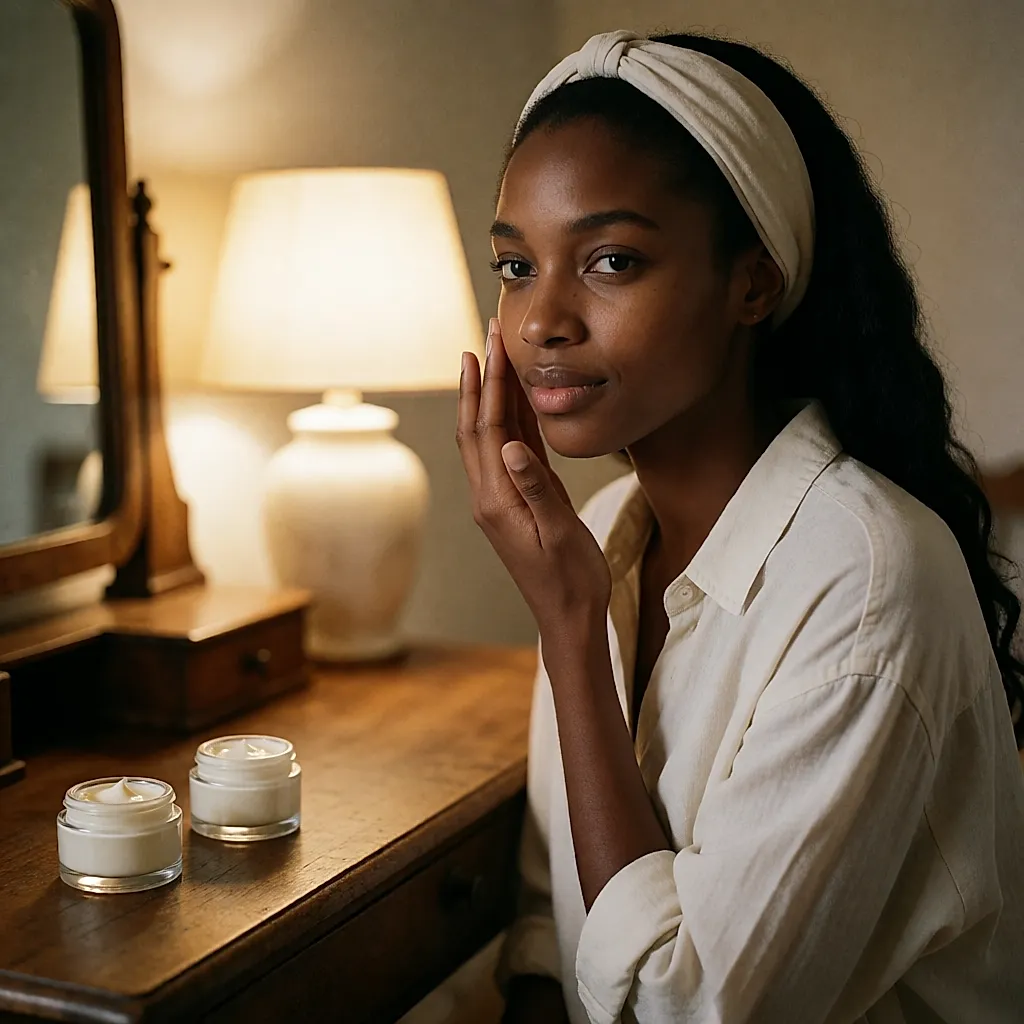
You still need to know what your skin is asking for. I don't have a universal rule to offer: it all depends on your sebum, the humidity in your flat and the heating that comes on in October. Watch your forehead at the end of the day for a few days, change only one thing at a time, and see what shifts.
Budget
Expect to pay £8–£15 in the supermarket for a simple hydrating gel, £15–£25 in a pharmacy, and £25–£45 for a certified natural formula with a refill. The price climbs with the actives and the packaging far more than with the texture. You'll find the essentials in pharmacies, health-food shops and online, without having to order a jar from the other side of the world only to use half of it.
The morning routine in three steps. One pump of serum on clean, still-warm skin. A pea-sized amount of gel-cream, from the centre outwards, not forgetting the nape of your neck. Let the texture sink in for a moment before make-up.
Midday shine isn't solved with compact powder in the office loos. It's decided in the morning, in what you layer, or don't. Next time your forehead turns into a mirror, look at your shelf before you look at your skin.
Comments
Your opinion matters: rate the article, react and reply to comments.
Comments are moderated; AI-assisted comments are flagged. Text emoticons (8-), :-), <3…) are automatically shown as images.