
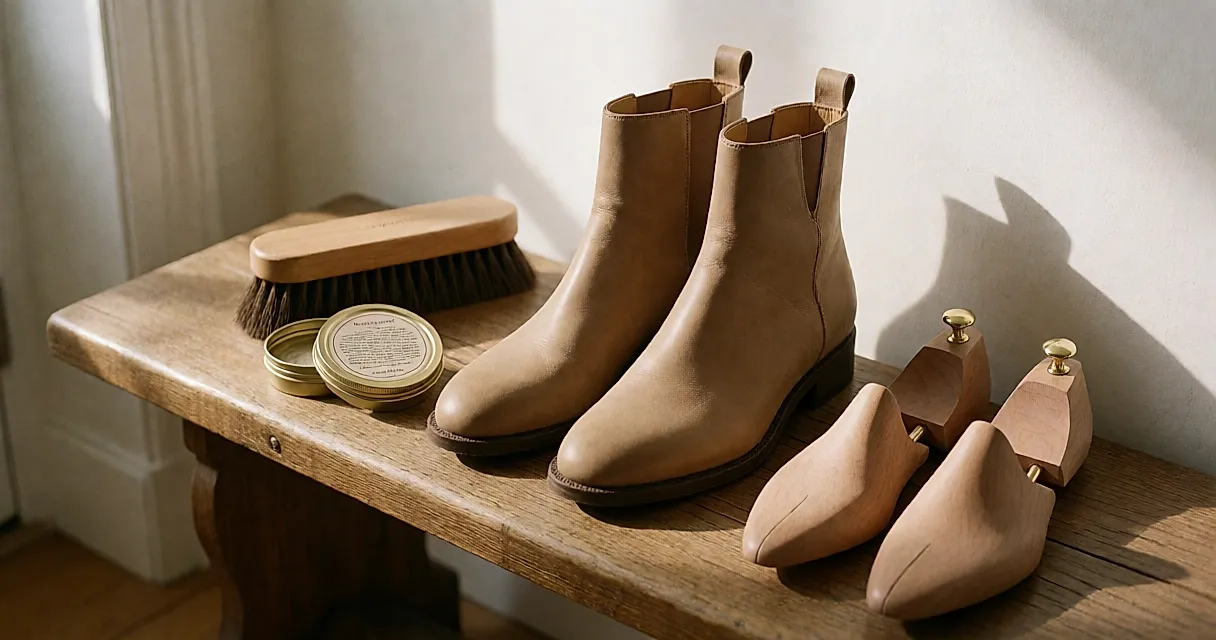
The boot is on the bench, the sales assistant says 'vegetable-tanned' and you nod as if this were obvious. Except the shoe doesn't look like the others: no shine, a matte surface, a grain so tight it looks like a polished pebble. And then the question arrives: how do you look after that leather?
The matte finish is only the first clue
Vegetable tanning is leather tanned with bark and wood — chestnut, oak, mimosa, quebracho — rather than chromium salts. Vegetable-tanned leather can have a matte tone and a tight, almost closed grain, without the slightly plastic gleam of smoothed leathers. But appearance also depends on the finish, the dye, the animal species and the surface treatment: vegetable-tanned leather can be smooth or shiny, and leather tanned another way can be matte. So matte alone is not a reliable sign. The colour is often not quite even; it breathes, with darker tones in the folds, like an oiled wooden board.
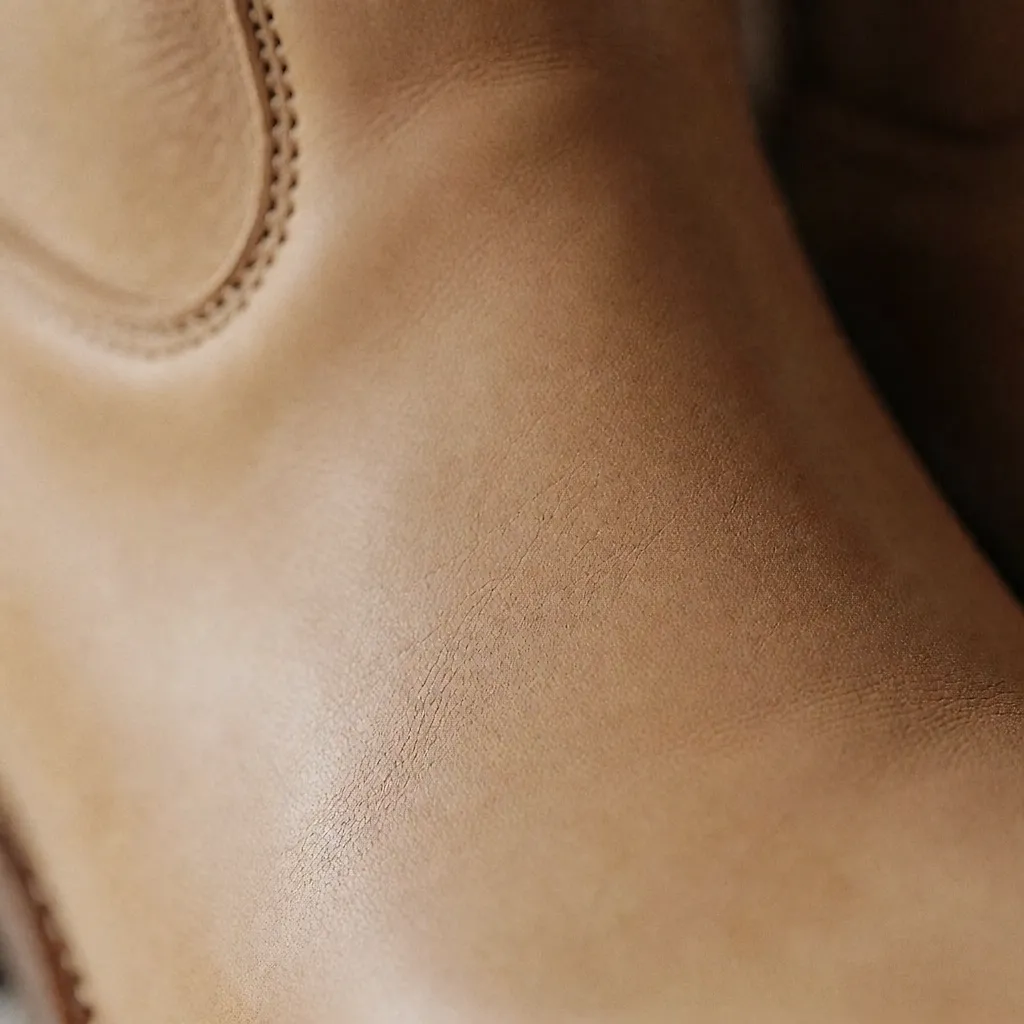
Another clue comes when you try them on: the leather is firmer. The shoe holds your foot; it doesn't slump. Does it feel stiff? That's normal — allow a few outings for it to relax and take the shape of your foot. Always try both shoes, and walk on the tiled shop floor before you say yes: leather remembers its first fitting.
What it asks of you: a thin layer of grease
The big thing with vegetable-tanned leather is feeding. A nourishing grease, or a cream based on waxes and plant oils, applied with a cloth in a thin layer, is plenty. In practice, many people recommend regular care. Brush first to remove dust, leave it to sink in, then buff. And resist the urge to add more 'to do the job properly': too much grease softens the leather and darkens it in one go.

The rest is simple. A cedar shoe tree at the end of the day, air-drying away from the radiator, a soft cloth for everyday marks. Nothing complicated, but a real routine — the kind you keep when you look after your things.
Water, the quiet enemy
Here is the point that isn't always mentioned at the till: water marks. A rain shower, a puddle, and the leather remembers the drop as a darker ring. On a light colour it shows; on deep brown it blends into the patina and is less noticeable. If you get caught out, let it dry at room temperature, then brush. No hairdryer, no wonder product.
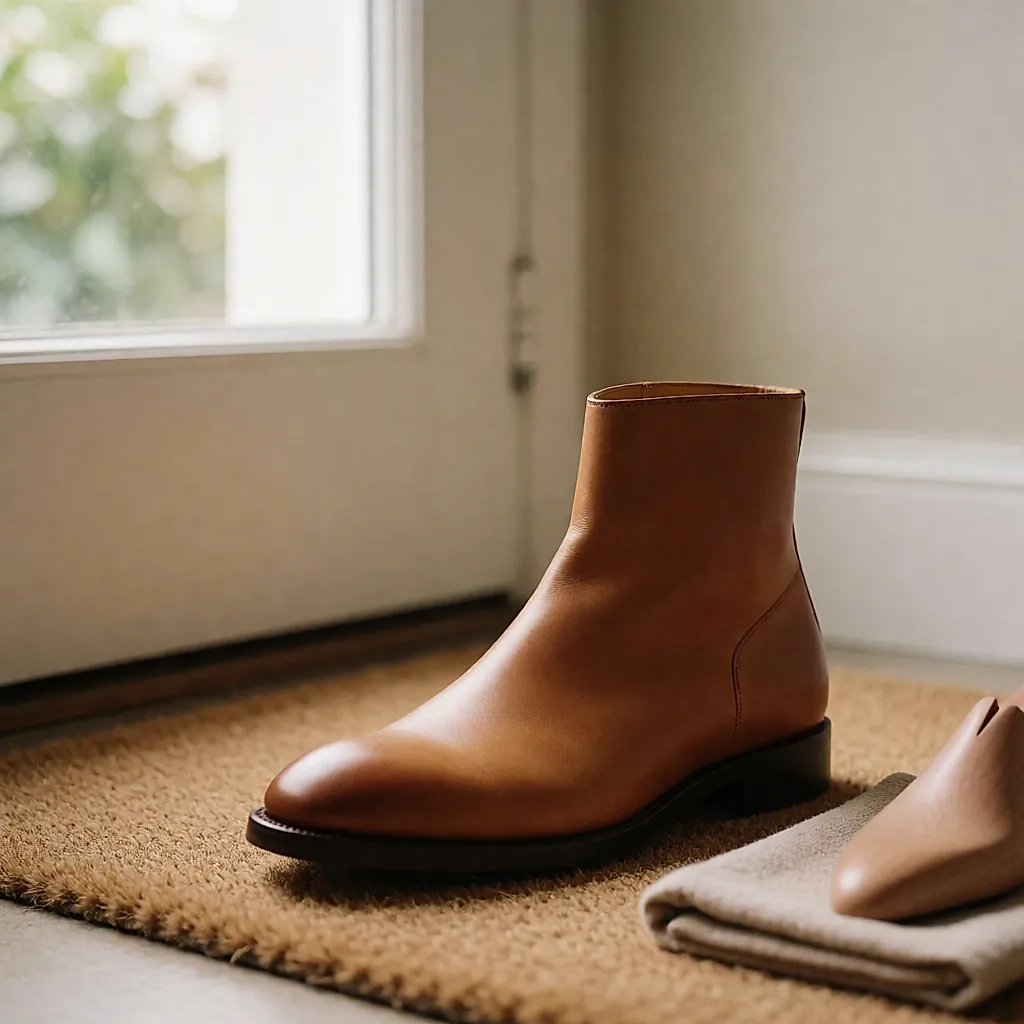
Is that a dealbreaker? It depends on your life. For a daily commute in November rain, a pair of leather shoes treated differently — or rubber boots — will be more carefree. For the office, dry weekends and evenings, vegetable-tanned leather does the job very well.
Over three years, it becomes yours
This is where it gets interesting. Vegetable-tanned leather darkens, develops a shine at friction points, takes on a deeper glow. Grease speeds that shift towards caramel a little, and that's normal: you don't make leather younger, you go along with it. Two people starting with the same pair won't end up with the same result — rain, commutes and how often you care for them do the rest. Isn't that the point?

One honest caveat: vegetable tanning is not an ecological label in itself. Everything depends on the tannery, where the hides come from, the finishes and the dyes. What can safely be said is that a pair you care for and keep for ten years has a different footprint from a pair replaced every eighteen months.
What to budget
As a guide, expect to pay around £150 to £300 for Derby shoes, loafers or ankle boots in vegetable-tanned leather from European shoe brands; at the end of the season or second-hand, prices sometimes drop to between £85 and £130. A tin of grease costs roughly £7 to £22 and lasts for years — the best pleasure-per-pound buy in your wardrobe. Where to look: shoe repairers, shoe brands that give details of their tannery, and specialist charity or vintage shops.
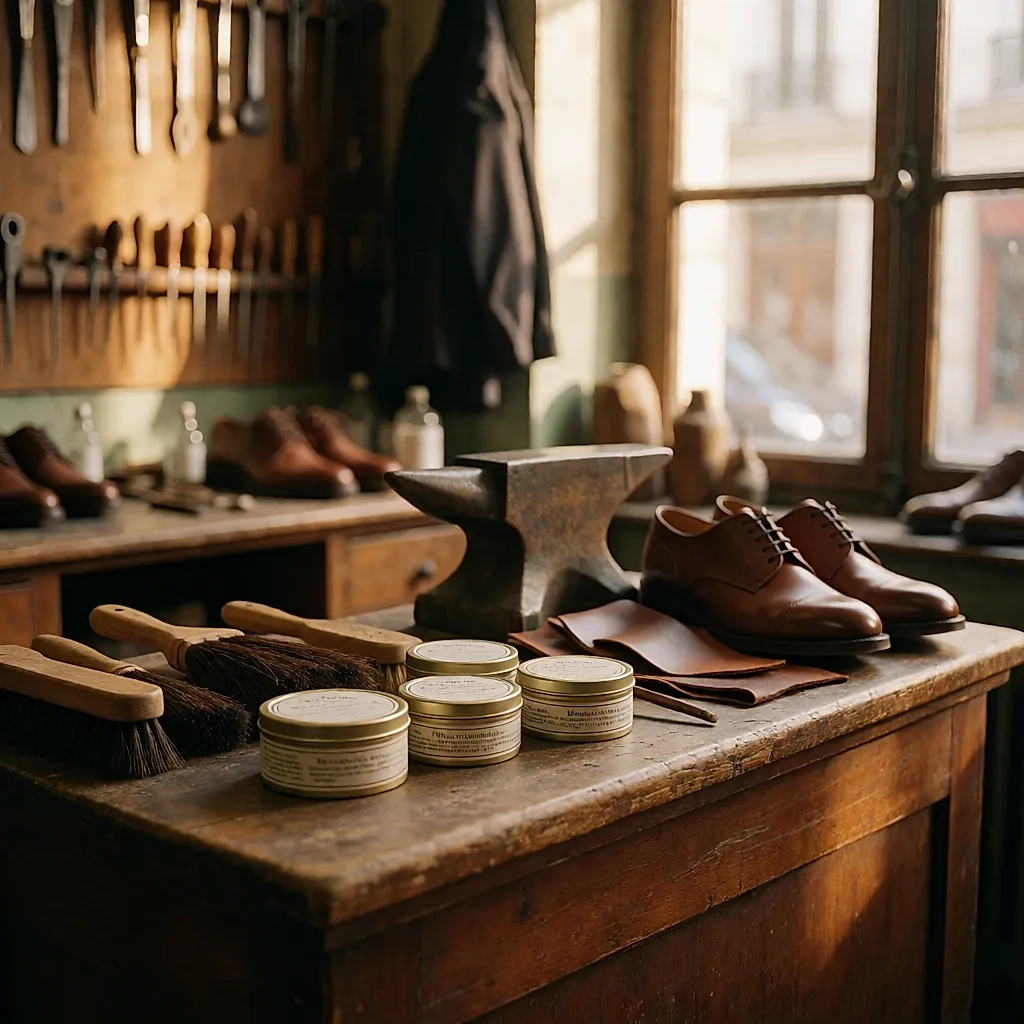
When trying them on, three checks: flex the shoe gently to see whether the leather creases nicely rather than cracking; inspect the edge of the sole and the neatness of the finishing; ask where the leather was tanned. A brand that can answer is often a brand that looks after the rest too.
The reassuring part is that a pair of vegetable-tanned leather shoes needs no professional kit and no cobbler's qualification: a brush, a tin of grease, shoe trees and a little patience in the first week. In return, it gains patina, darkens and tells a story. Were you looking for a shoe to keep? Here is a pair worth trying, then adopting if the leather pleases you.


Comments
Your opinion matters: rate the article, react and reply to comments.
Comments are moderated; AI-assisted comments are flagged. Text emoticons (8-), :-), <3…) are automatically shown as images.