

A flowing dress, a pair of wide-strapped sandals, a Sunday in the park with no other plan than doing nothing at all: that's the summer you've been holding in your head since February. And then, one morning, in the harsh bathroom light, your gaze drifts downwards and your mood drops with it. Many of us know that moment. The good news: legs play out on three fronts — the care you give them, the comfort you offer them, and the wardrobe you subject them to every day.
Understand before you buy
Before you rush at a tub of cream or a pair of sandals, take two minutes to look at what genuinely bothers you. Heaviness at the end of the day, a calf that swells as the heat rises, fine bluish veins appearing across the thighs: these are signals that won't be sorted out by smoothing on a cream. It isn't a beauty article's job to make a diagnosis. If you're in pain, if one leg swells, if veins become prominent or if the pain wakes you at night, book an appointment with a GP or a vascular specialist. This healthcare professional will look at the situation and tell you what's going on. The beauty routine comes afterwards, never before. Moisturiser does not replace medical advice, and that's exactly as it should be.
Move, but at your own pace
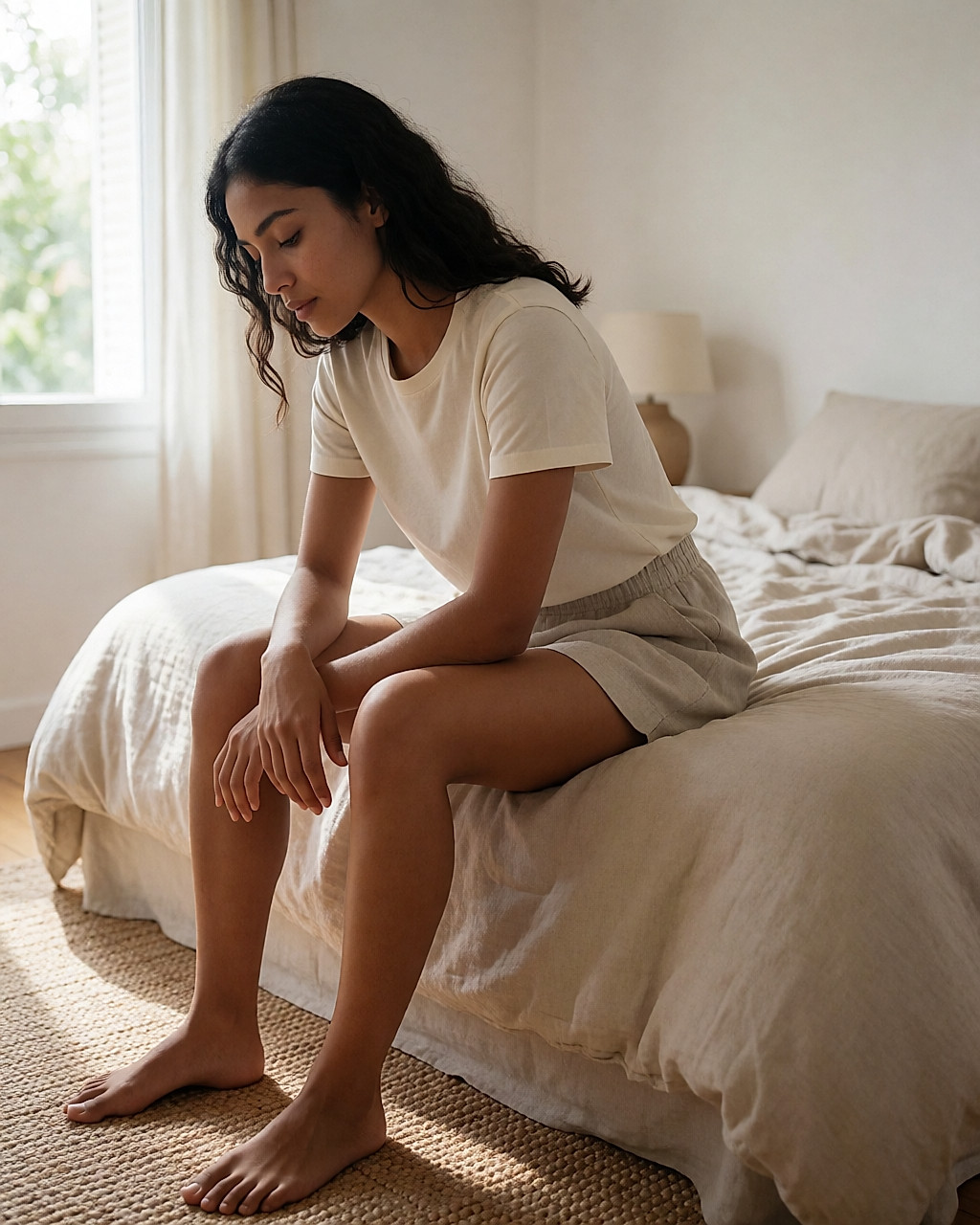
This isn't about selling you a medical programme: the idea is simply not to stay still for too long when you can do otherwise. Movement is part of a balanced routine, without there being a single recipe to follow. The best exercise is the one you actually do regularly, without pain and with a little pleasure — consistency weighs far more than intensity. Start small, even if that means splitting a session in two. And if an activity causes discomfort, stop and speak to a healthcare professional before pushing on.

Your wardrobe does half the work
Here's the chapter we rarely talk about, and yet it changes the silhouette entirely. Trousers that pinch at the waist or the calf are first and foremost uncomfortable, and they also break the line. Conversely, a fluid drape — linen, viscose, light cotton — leaves the leg free and lengthens the look. Straight cuts and palazzo styles are becoming summer basics; low-rise skinny jeans and synthetic leggings, much less so. Think about the material before the cut: it's the drape that decides the final result, not the size label.

On the footwear front, the sweet spot sits between two extremes. A ballet pump with a paper-thin sole cushions nothing, and neither does a ten-centimetre stiletto. A 3 to 5 cm heel, or a slightly thicker sole, often makes a good compromise for a full day on your feet — but the only judge is your comfort. If you want a statement piece that holds the silhouette, go for a wide strap rather than a platform that squashes the foot. For hosiery, stick to textures that don't itch and sizes that don't dig in. And if any discomfort sets in, don't force it: better to see a doctor.
The evening routine, five minutes for you
- Moisturise: after your shower, glide a body lotion or a plant oil over your legs, massaging gently, just for the pleasure of it. No need to press hard.
- Exfoliate once a week, if your skin tolerates it: a gentle texture is enough to keep skin comfortable and prepare it for moisturiser.
- Pull on a pair of socks or a soft legging if you like feeling cocooned — choosing a size that doesn't squeeze.
- Lay out tomorrow's outfit: a flowing skirt, wide trousers or a light dress will be more comfortable than a garment that digs in.
- See a doctor if you're in pain, if a leg swells or if veins become prominent: it isn't a beauty gesture that will sort the question out.
On the formula front, you can turn to organic plant oils — sweet almond, jojoba, sunflower — often sold in glass bottles, and to lotions whose ingredient list stays short. The Cosmos Organic or Ecocert standards guarantee a minimum share of organic ingredients and regulate the composition; they don't tell you whether the texture will suit you — that part is for you to feel. Refills and solid formats lighten the packaging. On the other hand, if your skin reacts badly to an oil, a classic lotion bought from a pharmacy remains a perfectly defensible choice.
The gesture that changes everything, and it's free. After your shower, glide a moisturiser or dry oil from ankle to thigh, without trying to turn it into a medical gesture. Thirty seconds, just for soft skin and the pleasure of care. If your legs feel heavy or hurt, it isn't a beauty tip you need: see a healthcare professional.
Budget
- Body lotion or oil for legs: expect around £7 to £22 in a supermarket, in a pharmacy or online. The price depends on the size, the range and the texture; no need to pay more for a simple moment of care.
- Swimming pool entry: expect around £4 to £9 per visit, often less with a council membership. A gym sits more around £20 to £45 per month, but a gentle activity doesn't necessarily require a subscription.
- Summer shoes: expect around £35 to £110 for a comfortable, properly cushioned pair. The price rises with the material, the sole and the place of manufacture; you'll find them on the high street, at a shoe shop or online.
- Leg treatment at a salon: expect around £25 to £50 per session depending on the city, the range and the duration. It's a beauty moment, not a medical treatment: in case of pain or doubt, speak to a healthcare professional first.
Sources
- Santé publique France — Physical activity guidelines for adults, consulted in 2026.
- European Commission — EU Ecolabel, criteria for textiles, consulted in 2026.
- Oeko-Tex — Standard 100 by Oeko-Tex, consulted in 2026.
- Cosmos Standard — Cosmos Organic standard, consulted in 2026.
- Ecocert — Organic cosmetics standards, consulted in 2026.



Comments
Your opinion matters: rate the article, react and reply to comments.
Comments are moderated; AI-assisted comments are flagged. Text emoticons (8-), :-), <3…) are automatically shown as images.