
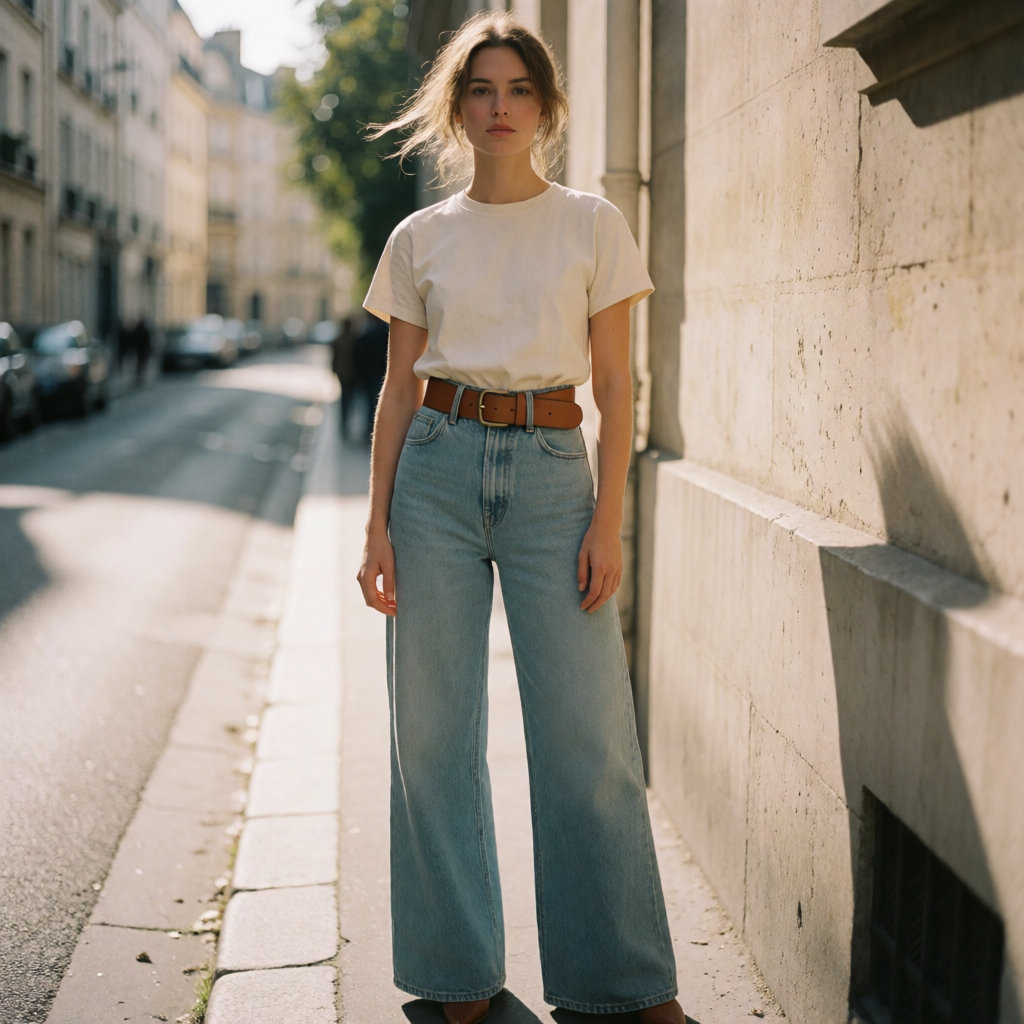
Have you ever come across an older fashion photo and, without thinking, told yourself you would happily wear it tomorrow? That is exactly the effect Ba&sh's summer collection had on me. The Parisian brand, founded by Barbara Boccara and Sharon Krief, has a look all of its own: bohemian, soft, never complicated to throw on in the morning. So what still stands up in that wardrobe, and what can we let go of without regret?
The wide-leg jean and high belt: the foundation hasn't moved
In the collection imagery, Ba&sh is clear: there is no contest between skinny and wide, wide wins. Slightly faded denim, a loose top tucked into the waistband, heels hidden under the hem, and that familiar wide belt sitting high on the waist to shape the silhouette. The formula still works, and in 2026 wide denim remains the structuring piece of the wardrobe. But what has changed is the precision: the drape matters more than the stated width. A rigid high-waisted denim holds the silhouette; with a supple denim, choose one size up to keep movement in the leg.
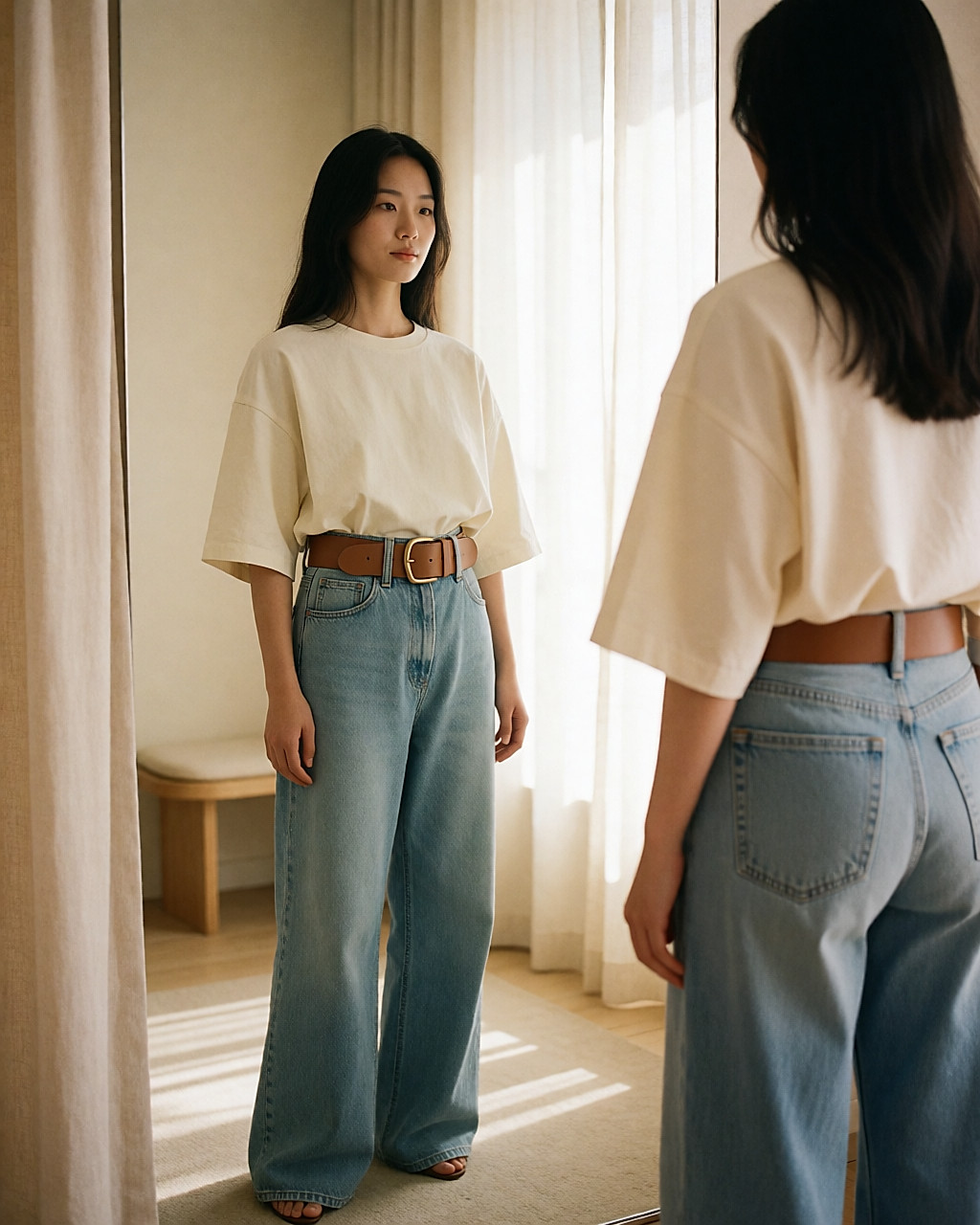
On the fabric side, conventional cotton remains the norm, and it is a sensitive point for jeans — its cultivation is often criticised for water use. A useful reference: the GOTS label, which governs the chain from field to finished garment, with requirements on wastewater treatment and chemical inputs. Labelled options are not the most common; the most effective lever is often second-hand. And a clarification: I have not tested the collection pieces themselves; I am going on the imagery and on what people are wearing today.
Bermuda shorts and harem trousers: the double-edged bet
Bermuda shorts used to be worn low on the hips, loose, tomboyish, with a pair of heels to offset the pre-teen feel. The style contrast still works, the low waist much less so. In 2026, Bermuda shorts are back, longer and mid-rise — and what makes the difference is the length (just above or just below the knee, never right in the middle) and the weight of the fabric. A thick denim holds the shape; a thin cotton turns into pyjama shorts.
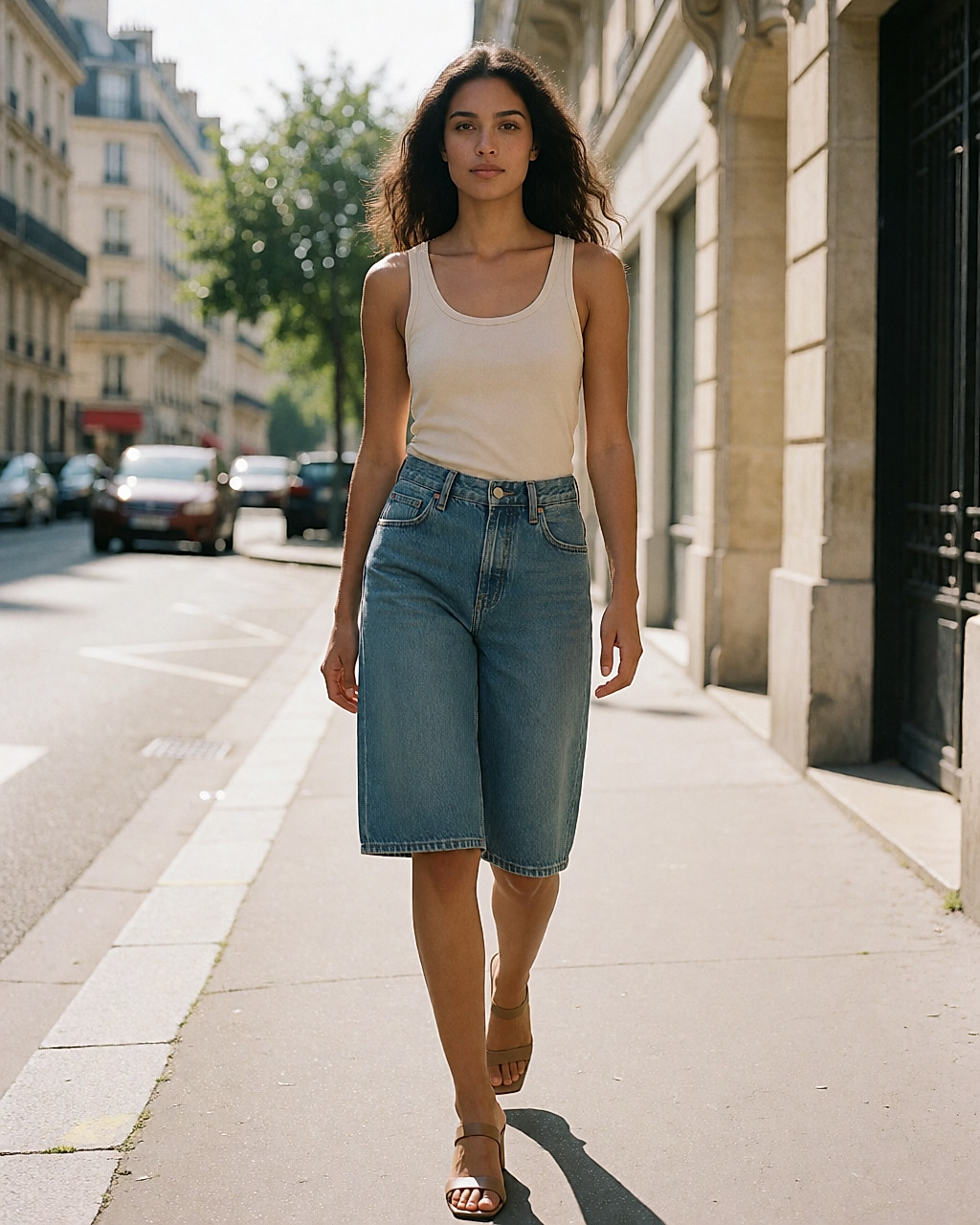
Harem trousers, though, can stay where they are, frankly. The dropped crotch may come back one day, but on today's silhouette, let's say it plainly: it weighs down everything it touches. Better to save your shopping energy for pieces that really work.
Long, airy dresses: the most wearable part
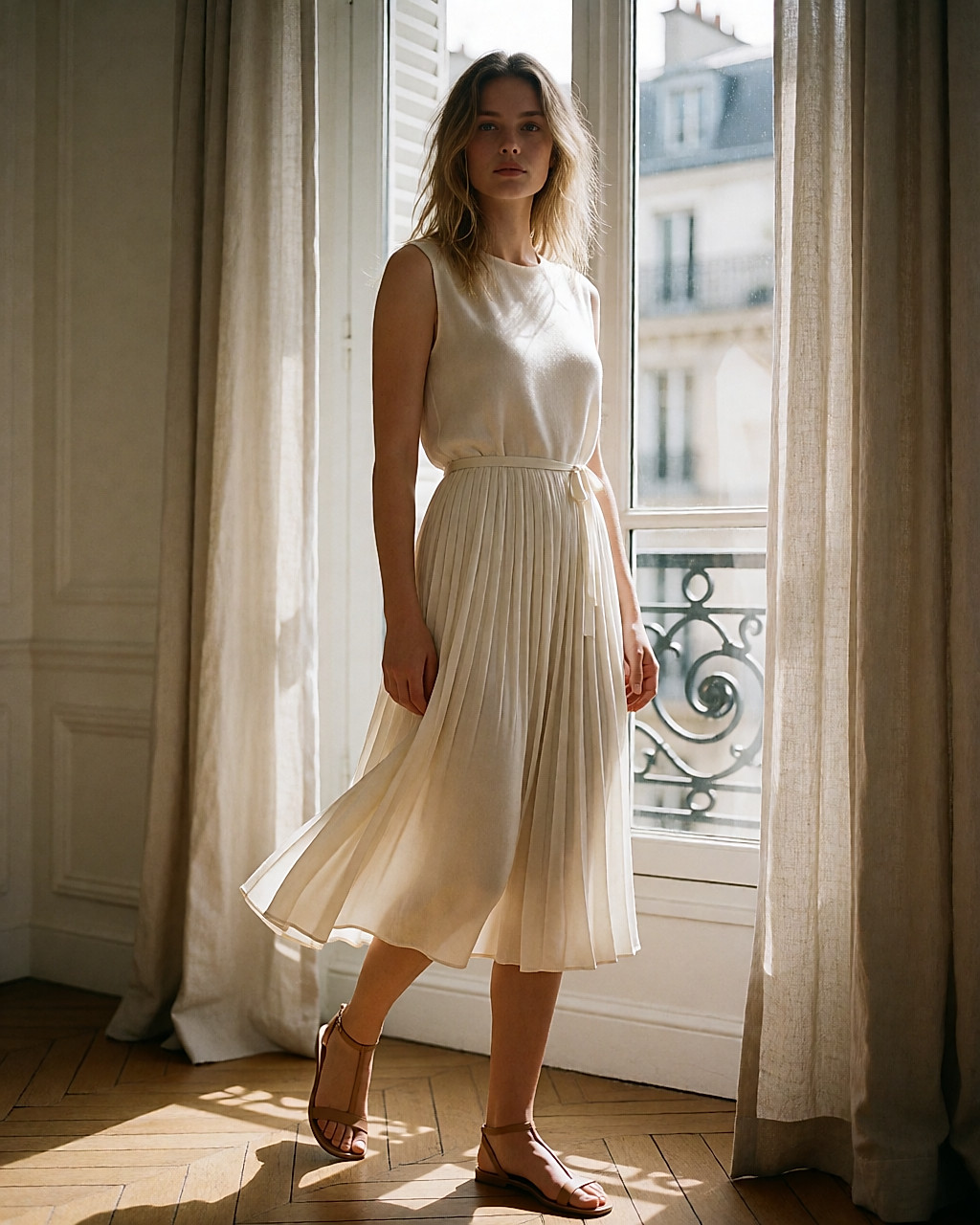
A long pleated cotton dress, an extra-long skirt over a fitted top, a strapless dress to accessorise with strappy sandals: the brand goes for volume and movement. In reality, this remains the easiest part to bring back out, and the refreshed bohemian look has put these cuts centre stage. The balance rule has not moved an inch: volume below, a top close to the body — otherwise the silhouette disappears. On prints, a very busy floral motif on a long skirt is enough to fill the space; there is no need to add more on top, just let it breathe.
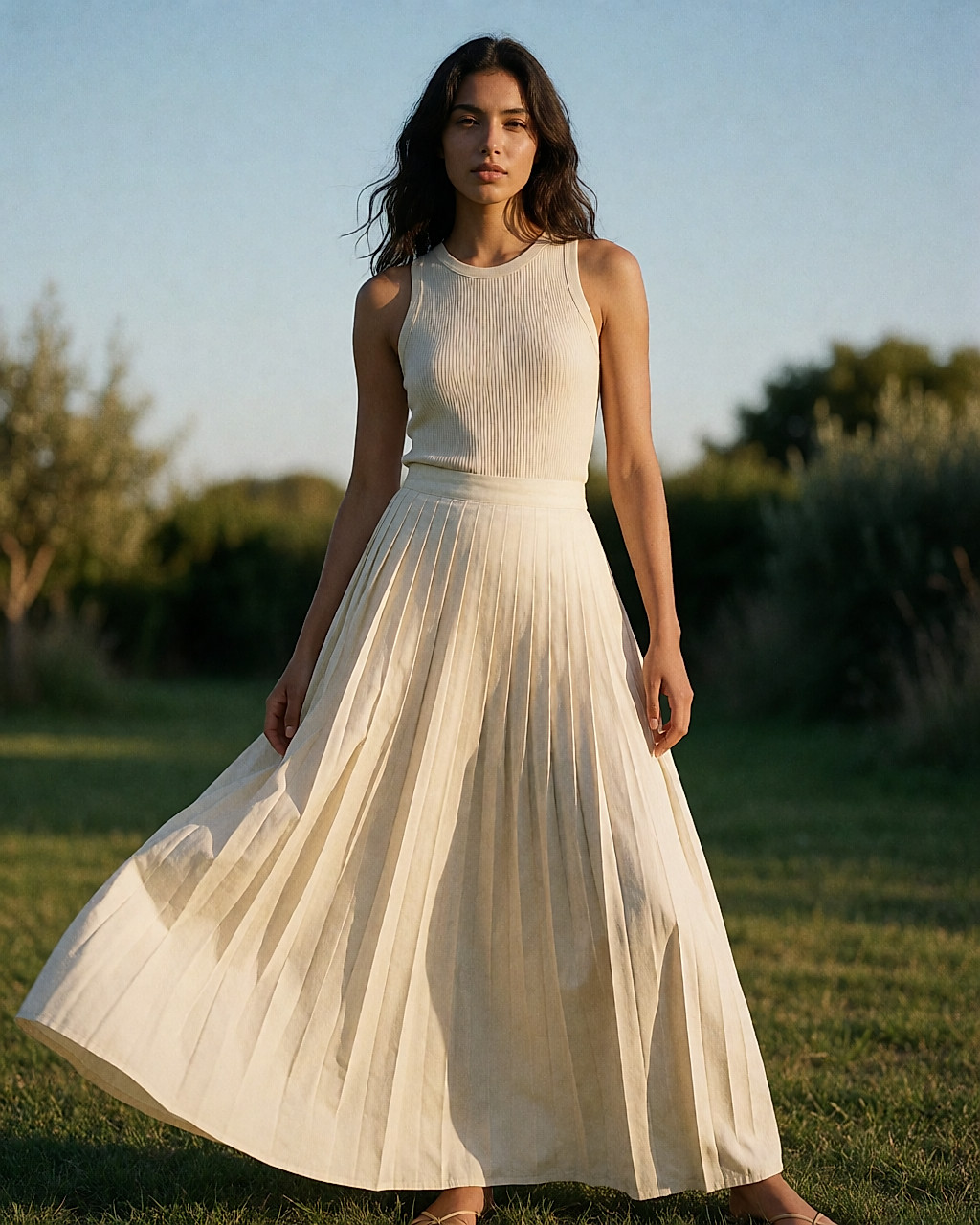
For the fabric, two credible options. European Flax-certified linen confirms the European origin of the fibre, but not working conditions — worth keeping in mind. GOTS organic cotton goes further in regulating the supply chain. End of life matters too: a linen or cotton dress resells well, while a mixed-polyester piece is less likely to find a buyer second-hand.
Leather: the spend that deserves thought
A leather bomber over wide-leg jeans: the boho-rock alliance still holds, and it is even the simplest layering to get right. But a new leather piece remains the heaviest purchase in the wardrobe. The honest compromise: second-hand first, or vegetable-tanned leather from an LWG-certified tannery — a label that assesses tanneries on environmental management and traceability, without certifying farming conditions.
Three pieces, no more. A strong volume (long skirt or wide-leg jeans), a simple fitted top, then one accessory that does the work: a wide belt, strappy sandals, or a single piece of jewellery that is present enough. Two textures that answer each other give the necessary depth; everything else should fade into the background.
Budget
Typical UK price ranges, for guidance:
- Wide-leg jeans: expect around £35–100 on the high street and in mid-market ready-to-wear, £70–170 for labelled or European-made denim, and £15–50 second-hand.
- Long cotton or linen dress or skirt: £25–80 in ready-to-wear, £80–220 for organic cotton or European linen, £18–60 in charity shops.
- Leather strappy sandals: £45–130, up to £260 for vegetable-tanned leather.
- Wide belt: £18–50, up to £100 in full-grain leather.
- Leather jacket: £170–520 new, £50–220 second-hand.
What changes the price: the fabric and its label, where it was made, the finishing, and above all the buying channel. New pieces are found in shops or online; the rest in charity shops or on second-hand platforms.
Sources
- Global Organic Textile Standard (GOTS): global-standard.org
- European Flax: europeanflax.com
- Leather Working Group: leatherworkinggroup.com
- Refashion (French textile sector): refashion.fr


Comments
Your opinion matters: rate the article, react and reply to comments.
Comments are moderated; AI-assisted comments are flagged. Text emoticons (8-), :-), <3…) are automatically shown as images.