

There are pieces you still regret leaving at the till, and others you come across years later at the bottom of a box, with a slightly nostalgic smile. Clearing out mine, I came across a floral playsuit bought in a long-ago summer sale: the cotton has held up, the cut much less so. The summer 2026 sales are behind us, so rather than serving up the same old list of supposed bargains, let's go over the ground together — fabric, fit, care, end of life. Honestly, that's where a good buy is decided.
What lasts season after season
The lightweight cotton playsuit, small-scale florals, the natural straw panama, the leather tote, the belted tunic: these summer staples remain a solid base for a wardrobe, and there's no reason to bin the lot just because the season is over. What has changed is what we check before we start accessorising. Where does the fibre come from? How many washes will it take? Will it be reparable one day? Three questions that separate a good buy from the garment you find forgotten at the back of a wardrobe, label still attached.

The silhouette: playsuit, dress, skirt
Here, the cut does everything. A cotton or washed-linen playsuit should drape softly, never stiff as card: pinch the fabric, and if it creases into sharp accordion folds that won't drop out, be wary — it will age badly. On prints, a small-scale floral outlasts a big motif that dates fast, and the texture of the cloth matters as much as the drawing.
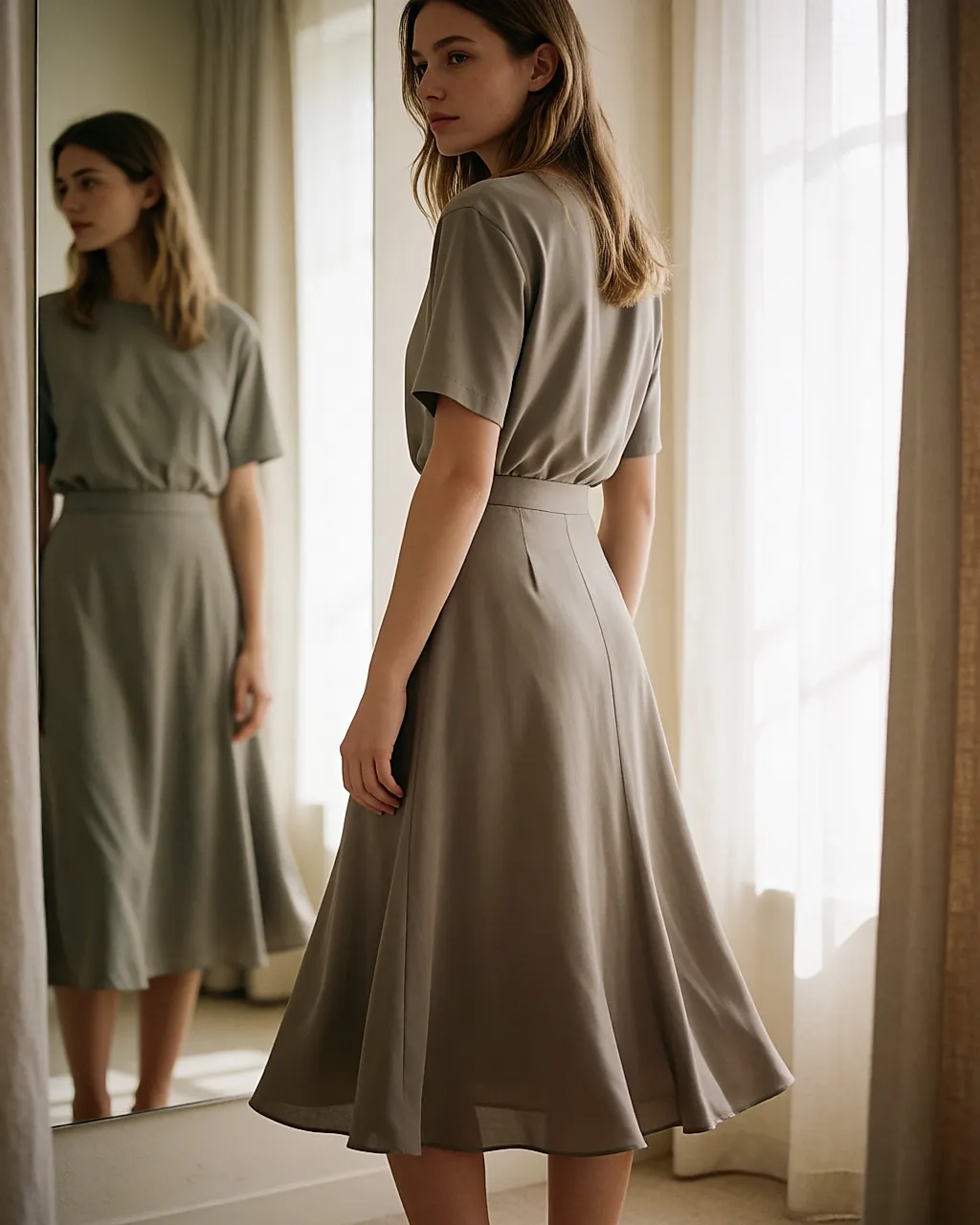
With dresses, fluidity has been holding its own for several seasons: a slightly flared cut, a defined waist, a midi skirt that moves. The silk feel of a bustier now has its equivalent in viscose from responsibly managed forests, or in a fibre such as LENZING ECOVERO, which is easier to live with day to day. Read the label: that name signals a traceable supply chain, not a guarantee of neutrality. Turning wood pulp into fibre is still thirsty work, for water and energy alike.
The accessories that pull the whole look together
A natural straw panama, a tote, a belt: they're what turn a simple outfit into a statement. Look for a weave without heavy treatment and a cotton lining rather than polyester — the lining is often what decides whether a hat lasts several summers or just one. With leather, vegetable tanning or reclaimed hide limits the use of chrome salts; the price climbs, but a tote fed once or twice a year and taken in for repair can stay with you for years.
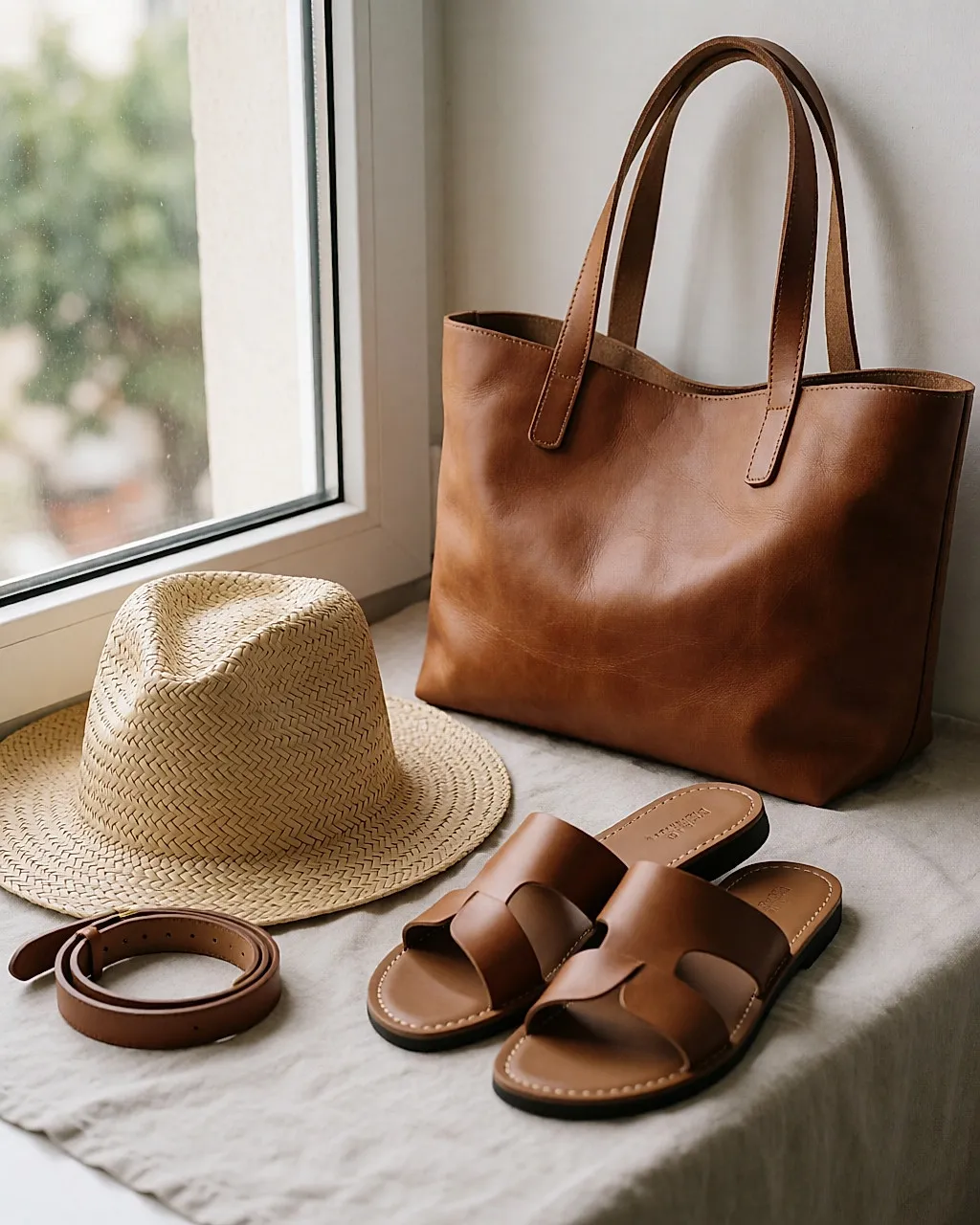
Sandals remain the weak spot of the sales: thin leather, glued soles, one season and they're finished. Turn the shoe over before you get to the till and check whether the sole is stitched or simply glued.
Knitwear and layering
The little lemon-yellow jumper from a few years back has a credible equivalent today: a fine merino knit from a traceable supply chain, or certified recycled wool (GRS, the Global Recycled Standard). Merino handles moisture better and works in layers under a light jacket in the evening, without the stifling overheat that thicker knits sometimes leave you with. Cashmere, meanwhile, turns up secondhand at prices that bear no relation to new: a polished look on a tight budget — provided you're happy with a few bobbles and check the shoulder seams.
Three checks before you get to the till
- The label: fibre composition in numbers, care instructions, where it was made.
- The drape: does the piece hold its shape as you move?
- Repairability: accessible seams, replaceable buttons, a hem that can be taken up.
Budget
UK price bands, based on discounted new pieces and secondhand:
- Playsuit, skirt or dress in cotton or linen: roughly £25–£70 on the high street, £80–£180 mid-market.
- Merino or recycled wool knitwear: £70–£180, more for premium pieces.
- Straw panama: £20–£80 depending on how fine the weave is.
- Leather sandals: £50–£130 in the sale, more if the sole is stitched.
- Leather tote: £90–£350.
What moves the price: the fibre, where it was made, the lining and how repairable it is. Where to find it all? High street chains and online multi-brand retailers for new; charity shops, resale sites and vintage shops for secondhand; cobblers and alteration services to extend the life of what you already own. France's textile repair bonus, run by Refashion, can cover part of the bill at accredited workshops — there's no UK equivalent, so here it comes down to repair cafés, local menders and the alterations counter at your dry cleaner's.
A word on the sales themselves: in France, a crossed-out price has to match the lowest reference price the retailer charged in the 30 days before the reduction, and the DGCCRF, the country's consumer and fraud watchdog, polices it. The UK has no fixed sale season and no 30-day rule of that kind; here it is the Competition and Markets Authority's pricing guidance that applies, which expects a 'was' price to be one the item genuinely sold at for a meaningful period before the reduction.
Sources
- Gov.uk — consumer protection and pricing guidance for retailers.
- Competition and Markets Authority — pricing practices guidance (CMA102), including how 'was/now' prices should be set.
- Textile Exchange — Global Recycled Standard (GRS) certification for recycled textiles.
- LENZING ECOVERO — viscose fibre made from certified wood.
- OEKO-TEX Standard 100 (oeko-tex.com) — testing for harmful substances.
- EU Ecolabel — the textile benchmark many European suppliers to UK brands work to; the label no longer applies in the UK and no domestic replacement has been introduced.



Comments
Your opinion matters: rate the article, react and reply to comments.
Comments are moderated; AI-assisted comments are flagged. Text emoticons (8-), :-), <3…) are automatically shown as images.