

You pull last year's coat out of the wardrobe, put it on, and within three seconds you remember exactly why it stayed at the back. Shoulders that swamp you, a hem that cannot decide where to sit, a lining that scratches: the same issues come round every winter. Yet the right coat is the piece you keep for years, which is exactly why it is worth getting right. Here is what to check before you reach for your card.
Silhouette first
A coat is a line. This season, the mid-length cut leads: it falls below the knee, sometimes to the calf. It lengthens the silhouette on one condition — the drape must be clean, with no folds collapsing over the hips.
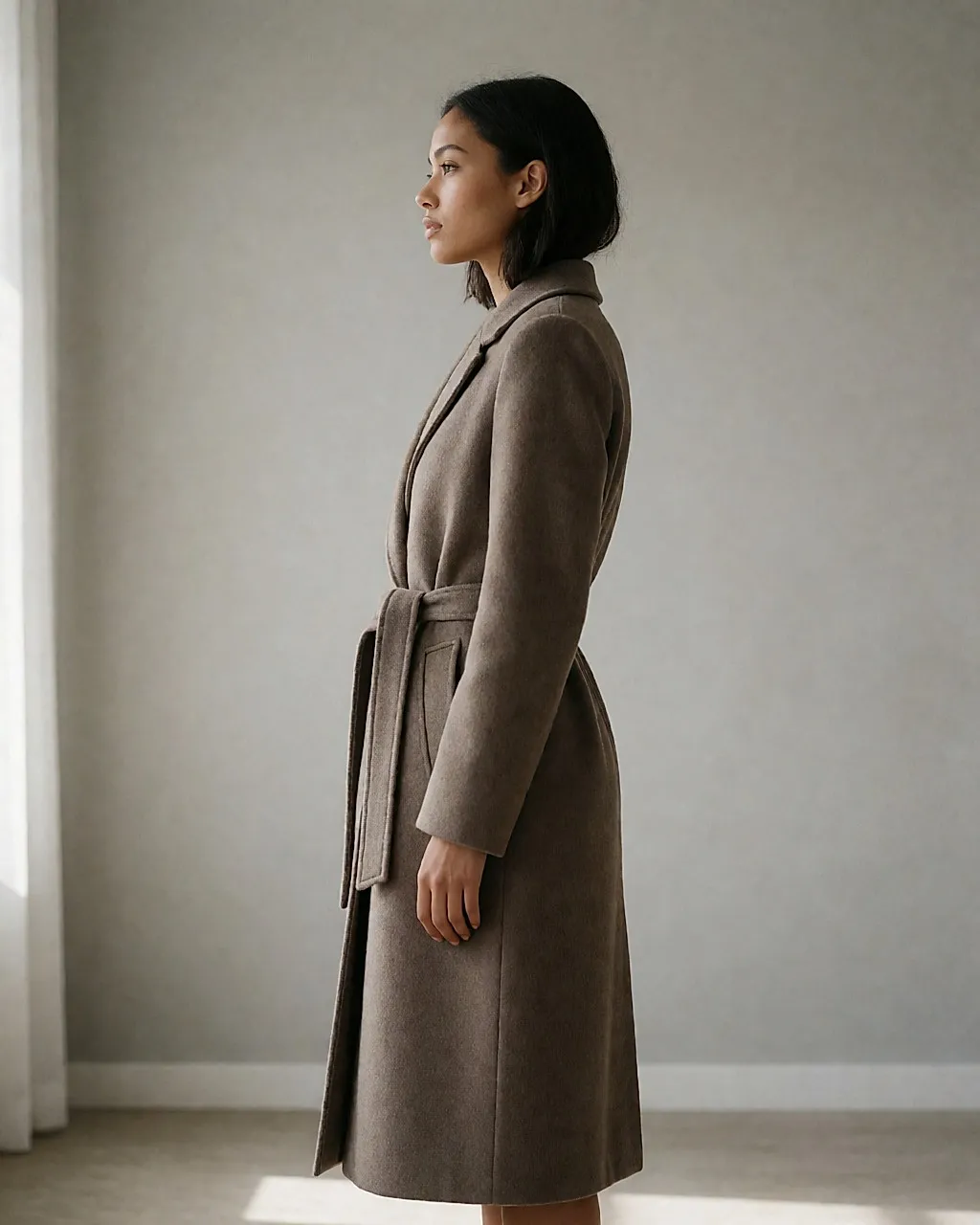
The shoulder next. Structured, it lifts your posture; dropped, it softens the shape and feels more relaxed. Try both in the fitting room: they tell very different stories.
Then the belt. Tied over thick wool, it defines the waist and keeps volume in check. On an oversized coat, it becomes the statement piece of the whole look.
Layering: try it in the fitting room
A coat is never worn on its own. So keep your fine knit or shirt on while you try it: in one move you can check that you can lift your arms, fasten the button, and sit down without feeling choked.

Layering, in reality, is not about piling on three knits. A fine base layer, a mid-weight knit, a well-cut coat: you can move from a heated room to a 5°C street without a second thought. And if the coat will not fasten, you are not the problem — you should have sized up.
Fabric does half the work
Before colour, read the label. Composition comes first.
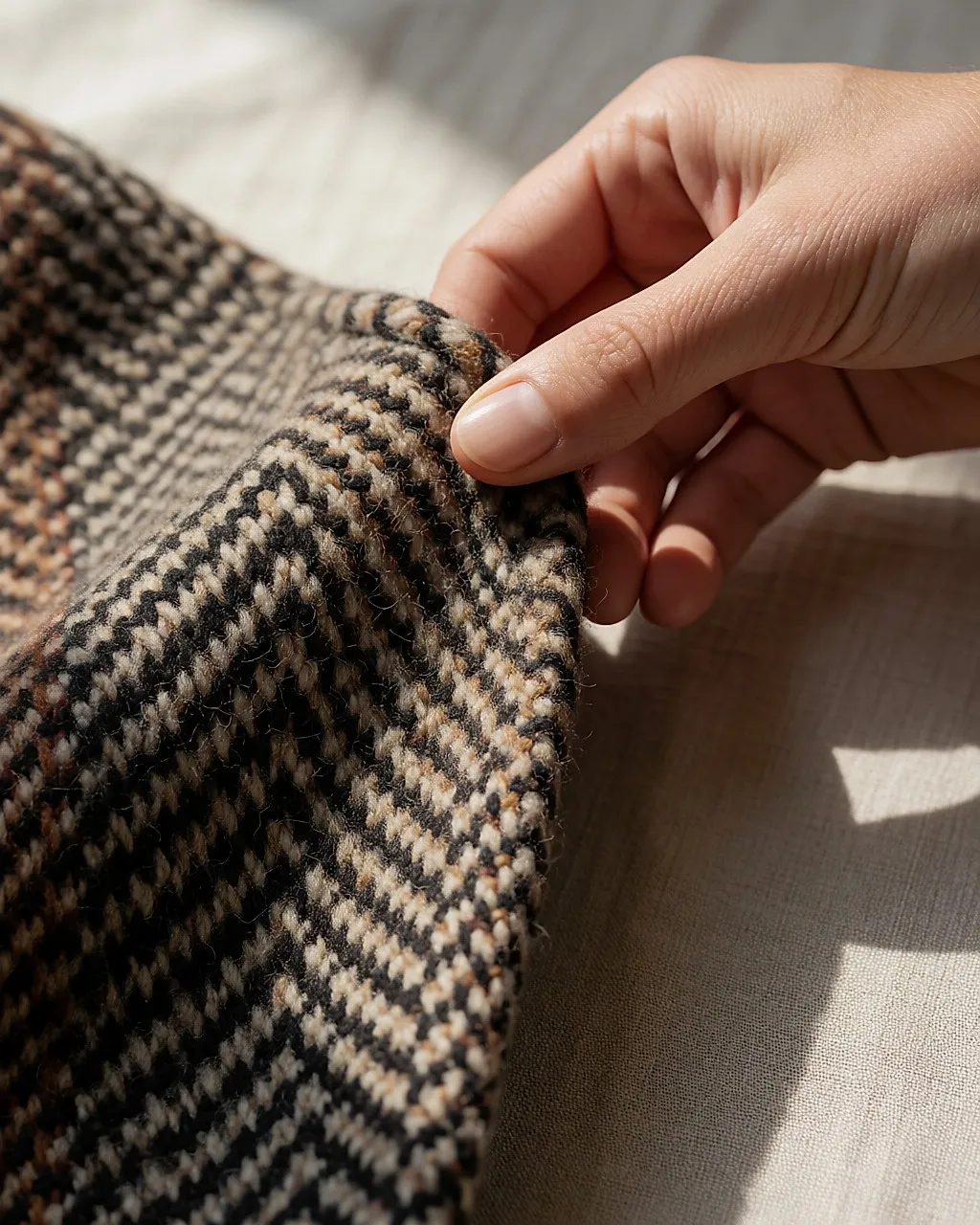
A high wool content keeps you warm, manages moisture and recovers its shape after a day's wear. The term 'virgin wool' means new fibres, never recycled: a sign of durability over time, not an eco-label.
A wool-polyester blend often costs far less. It creases less, but pills and marks folds more quickly. You decide where to draw the line.
Cashmere is finer and warmer for the same weight. Worn every day, it tires at the elbows: save it for short styles or coats you wear occasionally.
On texture, graphic prints — Prince of Wales check, herringbone, tweed — can carry an outfit on their own. One patterned piece is enough in a wardrobe. And at the end of its life, take it to a textile recycling bank: the wool is reused or recycled there, rather than sent to landfill with general waste.
The fitting-room routine, short version — and it saves you more than any trend buys:
- Slide a hand under the lining. Pulled tight as a sheet? The coat will not move with you;
- Pull gently at the elbow. Dense wool springs back; a limp cloth keeps the mark;
- Check the seams at the pockets and buttonholes — that is where the finishing gives itself away;
- Sit down in it. If the coat rides up to your armpits, leave it on the rail.
Two pieces that anchor a wardrobe
The belted wool coat remains the safe bet: smart enough for a meeting, simple enough for jeans. Choose a neutral tone — camel, navy, grey marl — and add colour with a scarf rather than the other way round.
For very cold weather, the cinched puffer replaces the bulky shape. Look at the filling: traceable down certified to RDS, or recycled synthetic fibres under GRS. The first is warmer and more delicate to care for; the second is machine-washable and costs less. Either way, the filling is what drives the price.
No product test here, just the benchmarks that tell a keeper from a mistake. And the step that settles it every time: try the coat on over your usual knit, then move. If it holds up there, it will hold up all winter.
Budget
Let's talk money, because this is where the differences really show. In supermarket and fast-fashion ranges, a mixed wool coat lands around £50 to £120, usually with a modest wool content. Mid-range brands sit between £150 and £350, with a better balance of wool. A good-quality 100% virgin wool: count £260 to £600; cashmere or premium cloth starts around £520. Second-hand is worth a look first — charity shops and resale platforms run £25 to £130, and a 1990s wool coat is sometimes better made than a new one at the same price. Do not forget alterations and dry cleaning, though: prices vary widely by region, tailor and type of work, so ask for a quote before you commit.
The price depends above all on actual composition, fibre origin and where you buy. At the same cut, the label is still the best guide.
Sources
- WRAP, UK charity working on textile sustainability and clothing longevity — wrap.org.uk
- Textile Exchange, Responsible Down Standard (RDS) and Global Recycled Standard (GRS) — textileexchange.org
- European Commission, EU Ecolabel, textiles — ec.europa.eu
- Love Your Clothes (WRAP), consumer advice on caring for and extending the life of clothes — loveyourclothes.org.uk
- UKFT, UK Fashion & Textile Association, industry notes and trends — ukft.org


Comments
Your opinion matters: rate the article, react and reply to comments.
Comments are moderated; AI-assisted comments are flagged. Text emoticons (8-), :-), <3…) are automatically shown as images.