
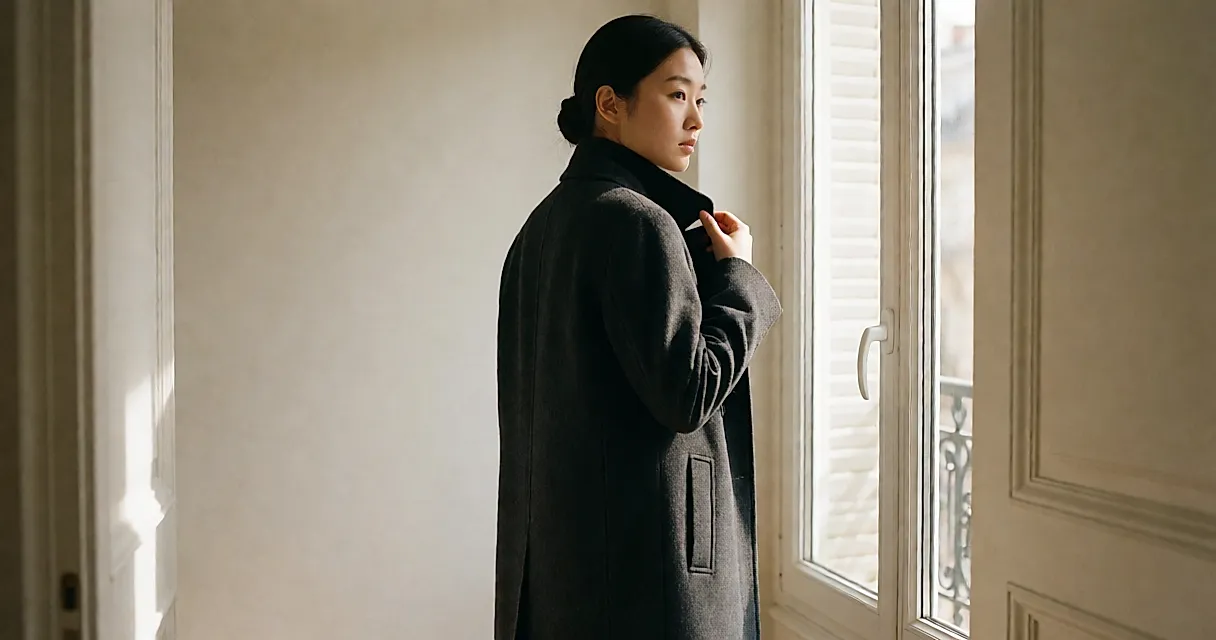
The parcel arrives, you shake the coat out, pull it on over your pyjamas and… doubt sets in. The sleeves trail past your hands, the waist feels loose, and you cannot quite decide. Look higher: the shoulders. They are what holds the coat up, and they are the one thing that cannot really be fixed for you.
The shoulders decide; the rest follows
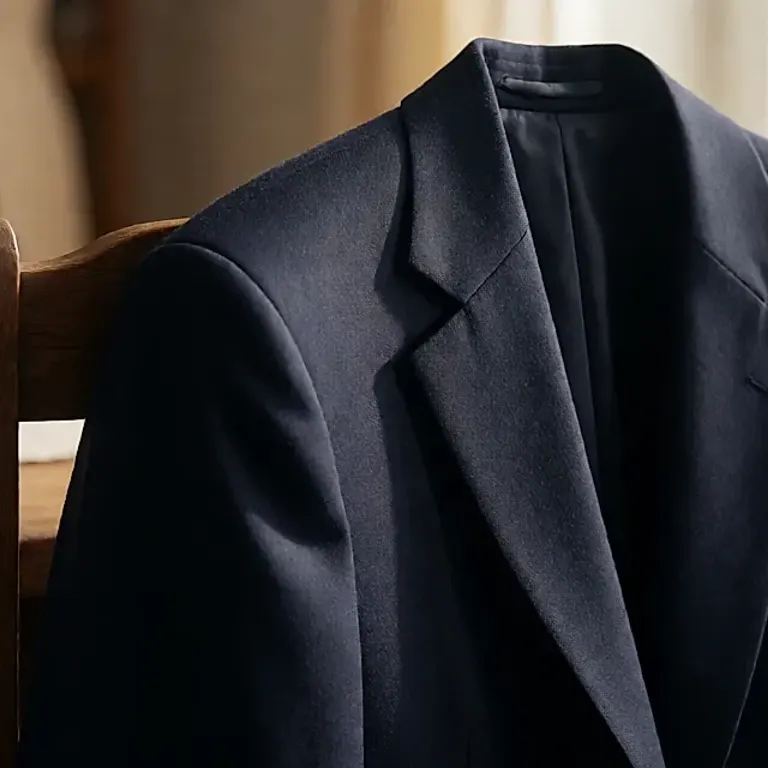
A coat works a little like a suspension system: the shoulder line carries the weight of the cloth, and everything else depends on it — how the back falls, how the sleeves hang, how the body of the coat drops. If the shoulder seam stops short of the bone, the coat rides up and the sleeves pull forward as soon as you lift an arm. If it goes too far, the armhole gapes: you are swimming in the coat, air gets in and the silhouette suddenly looks wider.
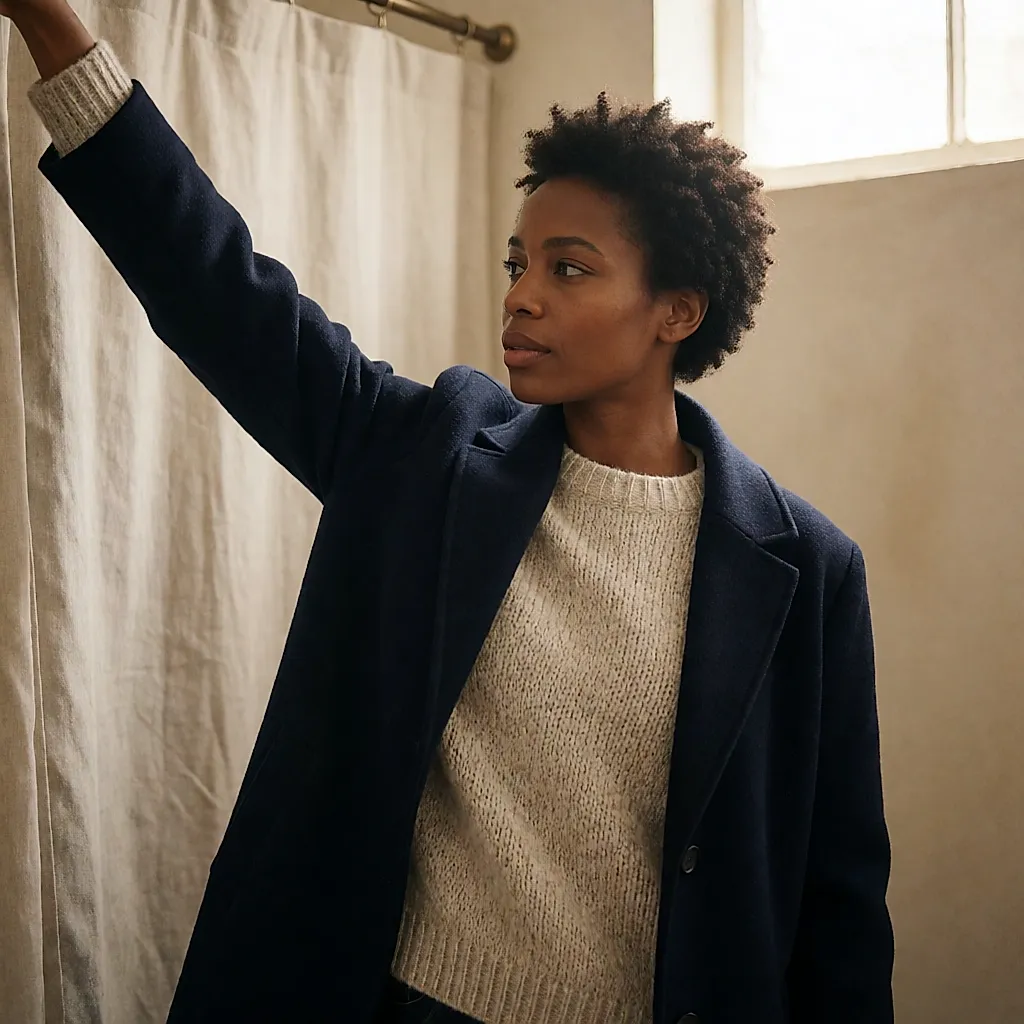
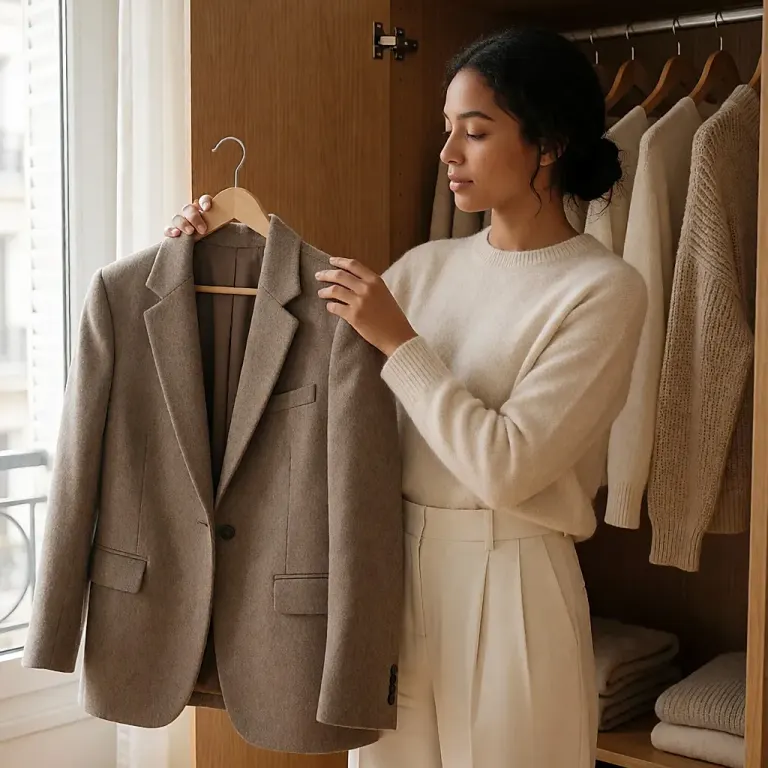
In the fitting room, use a simple marker: the shoulder seam should sit roughly in line with the little bone you can feel at the top of your shoulder. And try the coat on with your winter layers — a medium-thick jumper, not the thinnest T-shirt in your drawer. A coat fitted in September over short sleeves will not work in January, and you will only notice once the cold has set in.
What a tailor can fix without batting an eyelid
First the sleeves: shorten them, taper them, repair a tired cuff. Then the belt: move it slightly higher or lower, take in a waist that gapes, replace a belt loop. The length, as long as you are shortening it — an invisible hem on dense wool barely shows. Finally, the waist: darts or side seams can bring in a hollow back or a waist you thought was long gone.
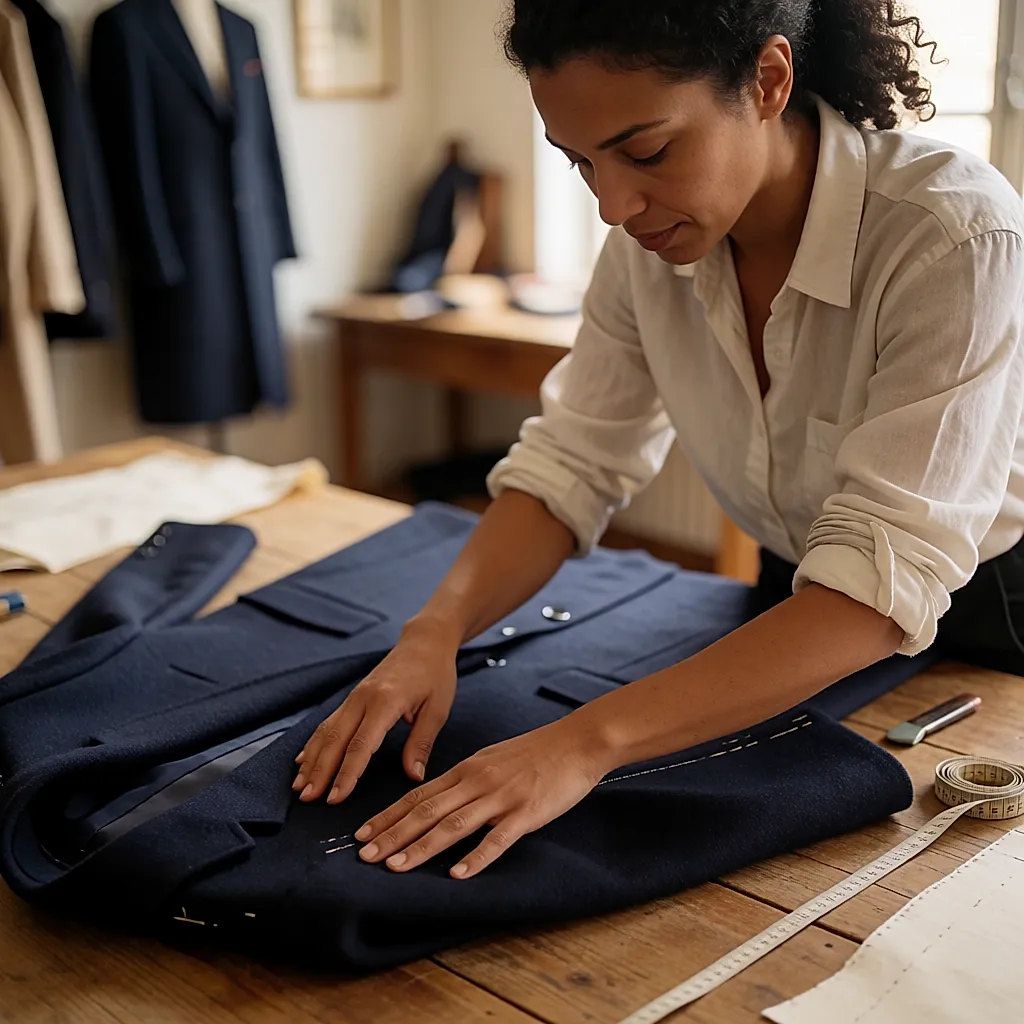
None of these touches the architecture of the coat. A simple hem costs around £18 to £30 at a local alterations tailor; a proper waist adjustment with a fitting costs more. It is often cheaper than posting the coat back — and far more satisfying.
What no needle and thread will save
The shoulder, precisely. Reworking a shoulder seam is technically possible, but it involves the armhole, the lining and sometimes the neckline: in practice, many tailors will refuse, and when they do agree, the result shows. The same goes for an armhole that sits too low — raising it distorts the way the body of the coat falls.
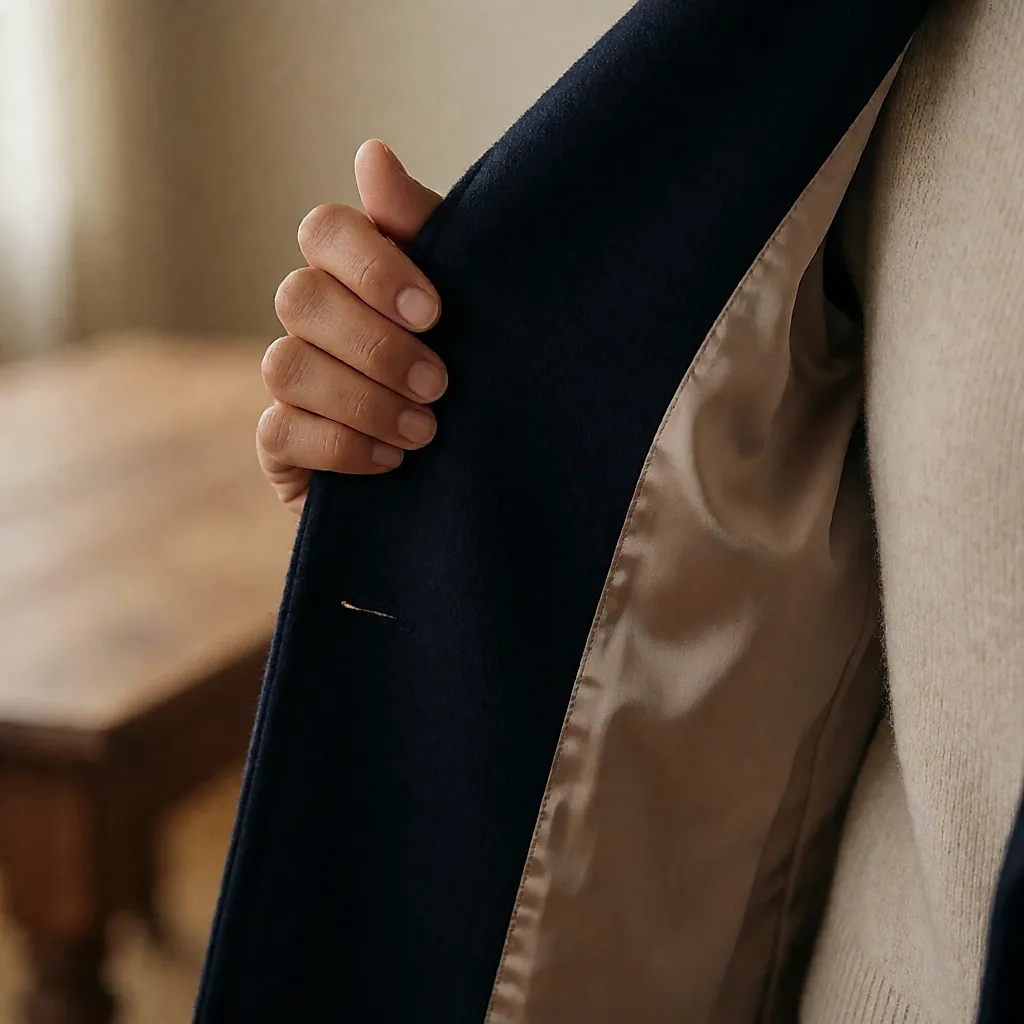
There is also what the fabric rules out. A very dry wool keeps the mark of every unpicked seam; a lined coat is harder to alter than an unlined one; and a short coat cannot be made longer — you can take up, never let down. A collar, finally, is hard to reshape: it is what frames the face and the upper chest.
One size up, or the right shoulder?
Here is the real trade-off. Should you take the next size up and assume you will have everything altered? That is a bad calculation: if the shoulder gapes, you will have to touch the armhole for the rest to follow, which is the most expensive and least certain alteration. Conversely, a coat with the right shoulder can be taken in at the waist, shortened and adjusted for a reasonable sum.

So the rule comes down to one sentence: choose the shoulder, adjust the rest. One caveat, though: a deliberately oversize coat is meant to have a dropped shoulder — just check that the line is clean and the sleeves do not go past your fingers, otherwise you are wearing someone else's coat. And if the shoulder is perfect but the price stings, second-hand is a very good route: old wool coats often have impeccable shoulders and cloth that has not budged.
Budget
For the coat itself, expect to pay £120 to £250 on the high street for decent wool, £250 to £500 for a dense wool cloth that will last several winters, and £30 to £100 in a charity shop or consignment store — plus around £35 for alterations. The price depends above all on the wool content, the lining and the internal finish; a glance at the label to check the synthetic fibre content can save a lot of disappointment after three wears.
On alterations, a sleeve hem is £12 to £25, a coat hem £18 to £30, taking in the waist £30 to £60. A shoulder, if anyone agrees to take it on, often exceeds £50. Prices rise in big cities and on lined pieces; local alterations tailors, sewing shops with a seamstress and department-store alteration services are usually the easiest to find.
Three checks before you say yes. Raise your arms: if the sleeves ride up to the elbow or the back pulls, the armhole is too high. Cross your arms: there should still be ease, and the shoulder should not lift. Turn your back to the mirror: that is where you see whether the coat falls straight or everything pulls to one side.
In the end, a coat is all about how it is carried: if the shoulder is right, it follows you instead of dragging behind. So next time, put it on, look at the shoulder before the length, and ask yourself the only question that matters: is this the coat that fits you, or will you be negotiating with it for three winters? If you hesitate, put it back without guilt. There are other coats — your shoulders, however, cannot be altered.

Comments
Your opinion matters: rate the article, react and reply to comments.
Comments are moderated; AI-assisted comments are flagged. Text emoticons (8-), :-), <3…) are automatically shown as images.