
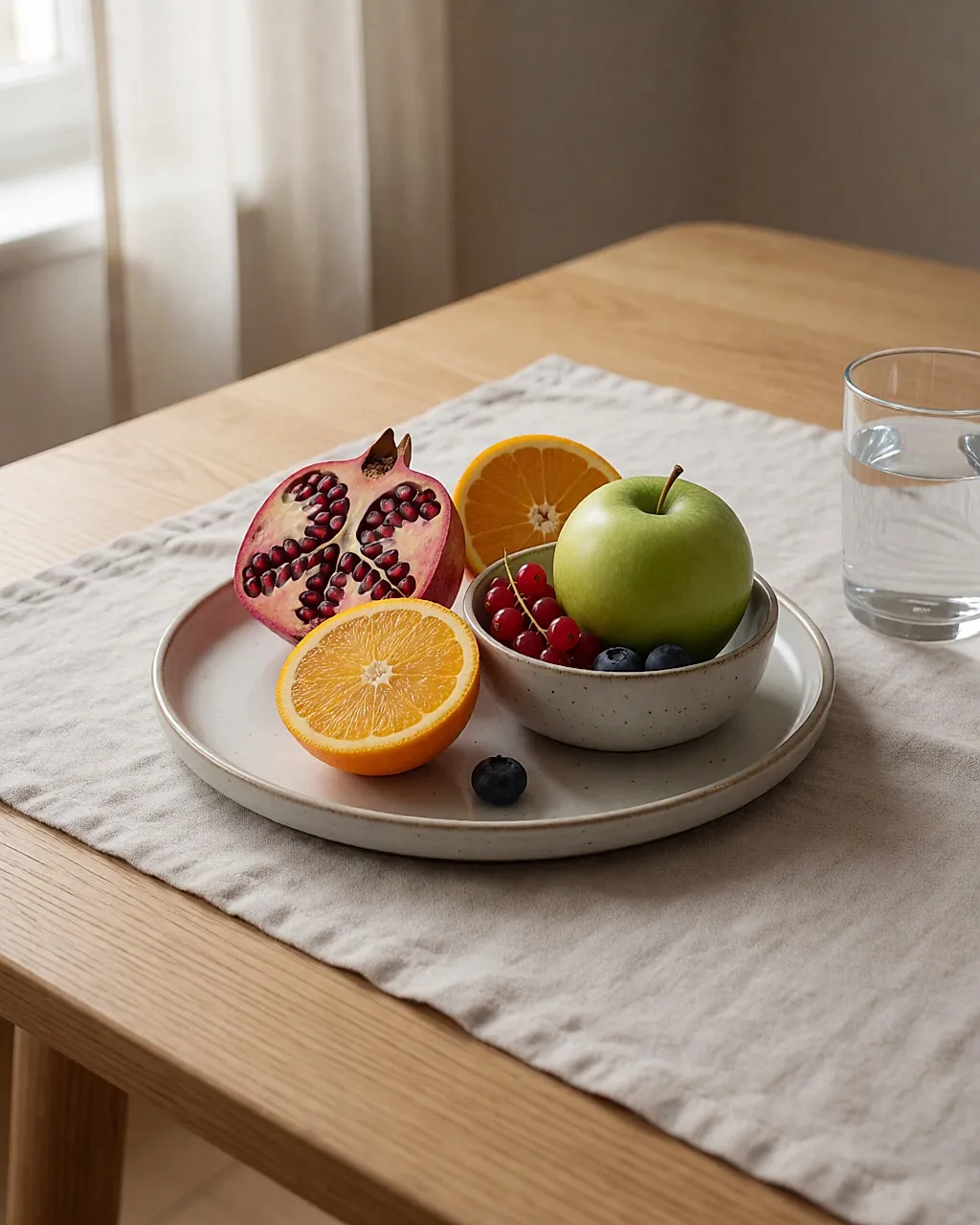
An apple forgotten at the bottom of a bag, a handful of blueberries tumbling over a yoghurt, two dried apricots as a stopgap mid-afternoon: making room for fruit in your day needs no elaborate ritual. A practical benchmark is at least five portions of a variety of fruit and vegetables a day, and fruit counts towards that total. Here is what we know, what we don't yet know, and no promises either way.
What the current evidence suggests
A piece of fruit is first of all an assembly: fibre, vitamins, minerals and a whole retinue of plant compounds — polyphenols, anthocyanins, carotenoids — whose effects researchers are still unpicking. Fruit is generally encouraged as part of a balanced diet, but keep this in mind: no fruit replaces medical treatment. In practice, variety counts for more than the quantity of any one star fruit.
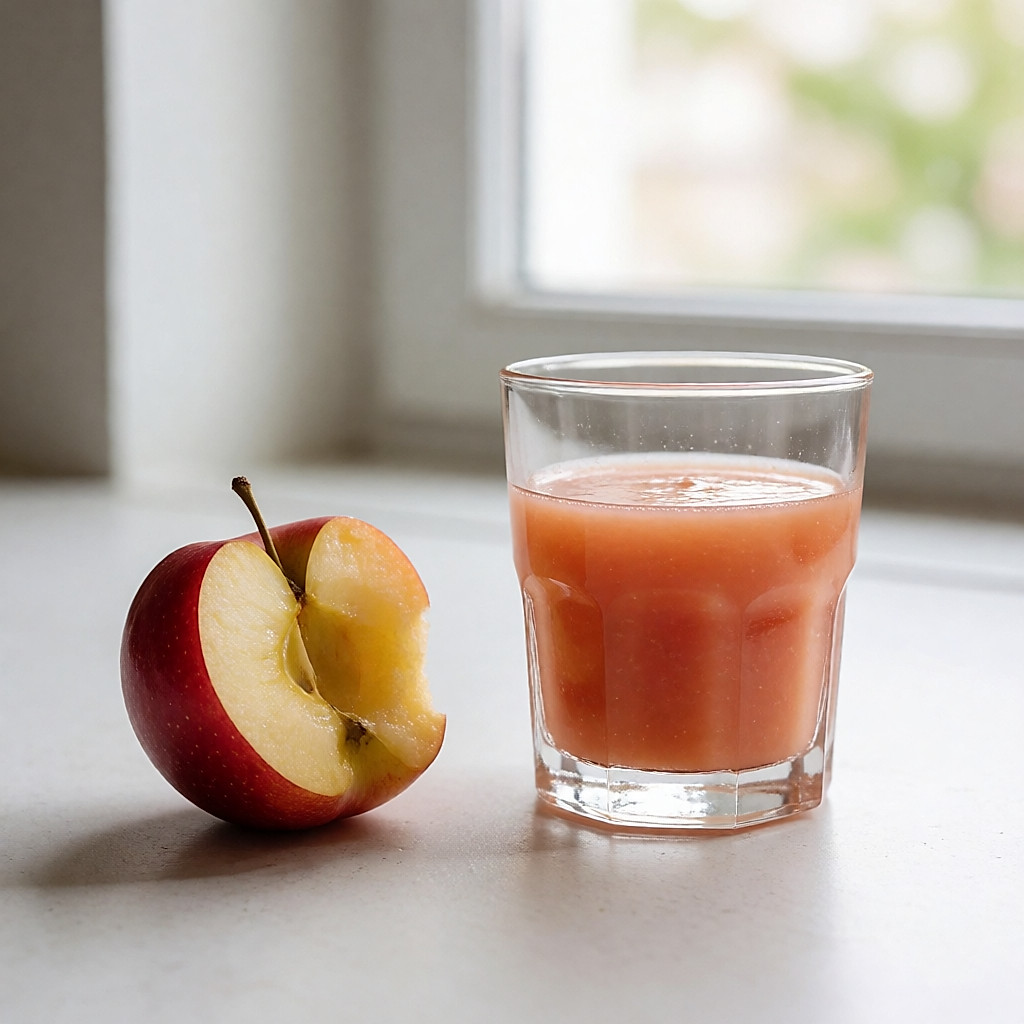
Whole fruit over juice
A pressed juice, even with no added sugar, retains little fibre and takes minutes to drink: you take in the equivalent of two or three fruits almost without noticing. Whole fruit has to be chewed, is more filling, and its structure slows the arrival of sugars in the blood. There is no question of banning homemade juice — simply keep it as an occasional thing rather than the foundation of your breakfast.

Red, orange, purple: what to expect
Citrus fruit is famous for vitamin C, but it isn't alone on the podium: kiwi, blackcurrant and guava bring plenty too. Berries owe their colour to anthocyanins, polyphenols studied for their antioxidant effects; the data suggest something worth exploring in prevention, without guaranteeing anything. The apple, rich in pectin — a soluble fibre — is a practical choice: nothing spectacular, but a fruit that travels well and slips into any bag.
Grapefruit: the one to watch
Some medicines can interact with grapefruit and grapefruit juice. That is no reason to cut the fruit out, but it is a point worth monitoring: if you take regular medication, speak to your GP or pharmacist before eating it routinely.

Dried fruit and nuts: small portions
The wording trips people up, and it is worth clearing up. Dried fruit — apricots, raisins, dates — concentrates fibre and minerals, but plenty of sugar too: a small handful goes a long way. Nuts — almonds, walnuts, hazelnuts — supply unsaturated fats and magnesium; a small handful, unsalted, is a sensible portion. Both fit in a bag and earn their keep when hunger strikes far from home.

In practice: eat whole, seasonal fruit, ring the changes on colour, and keep juice for the exception. And if you are on long-term medication, ask your pharmacist before you take up grapefruit.
Cost
The price of fruit depends enormously on the season and where you buy it. As a rough UK guide, expect somewhere around £2 to £3 a kilo for standard apples and £3 to £5 for organic apples, though this swings widely by retailer and time of year. Fresh berries in summer sit at roughly £2.50 to £4 for 250g, against £3 to £5 a kilo for frozen berries — often the best compromise between November and April, with a texture that holds up. The bill also shifts with size grade and where you shop: market, local grower, supermarket. On labelling, UK organic certification covers the production method: organic standards strongly restrict synthetic pesticides and prohibit GM, but say nothing about vitamin content, which depends mainly on freshness and the time between picking and your plate.



Comments
Your opinion matters: rate the article, react and reply to comments.
Comments are moderated; AI-assisted comments are flagged. Text emoticons (8-), :-), <3…) are automatically shown as images.