
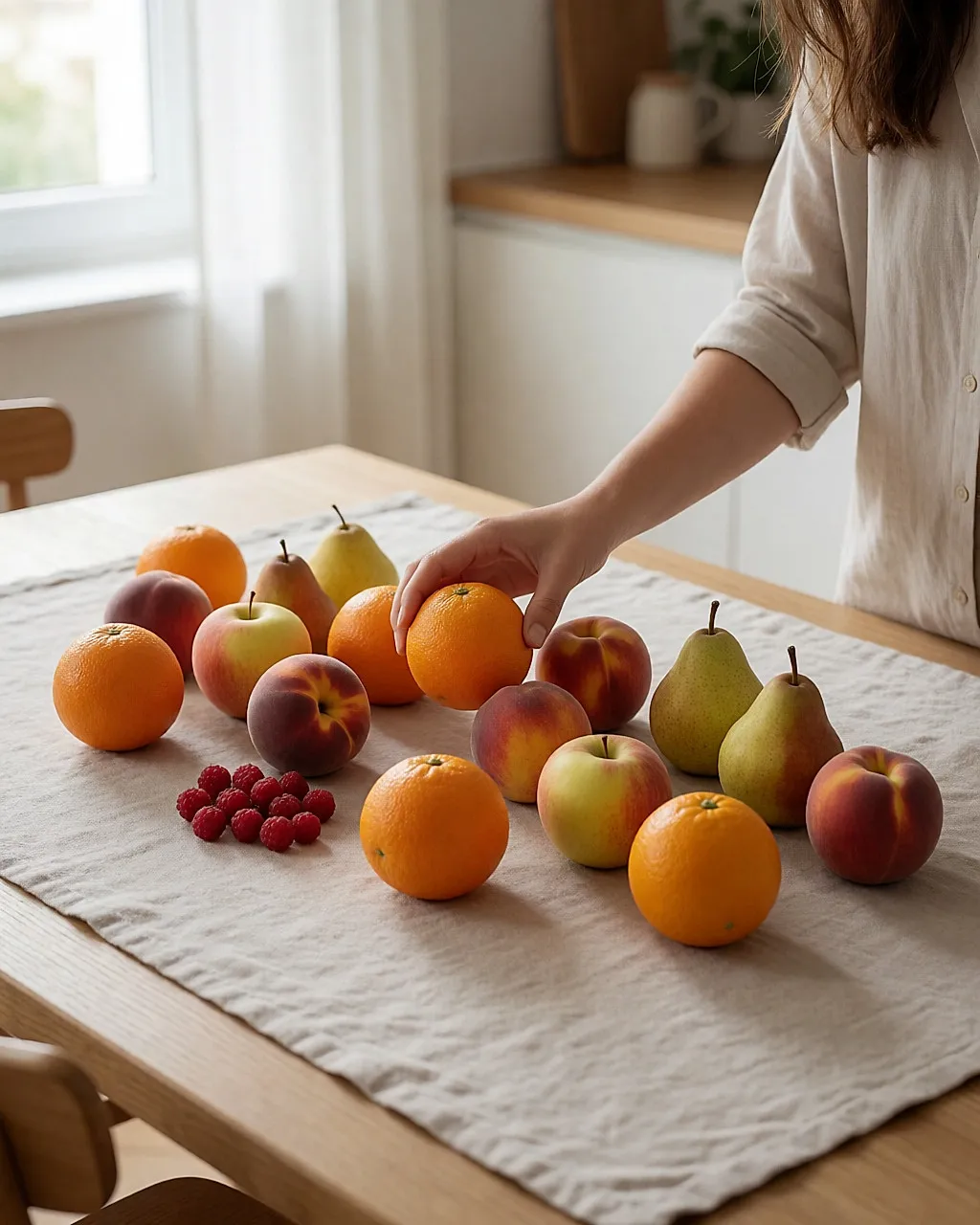
Four o'clock, a stomach starting to growl, and the bakery on the corner calling your name. Nothing dramatic about that. But if you're going to choose something anyway, it helps to know what a piece of fruit actually delivers — and what it doesn't — so you can decide without guilt and without being sold a story.
What we know, and what we don't yet know
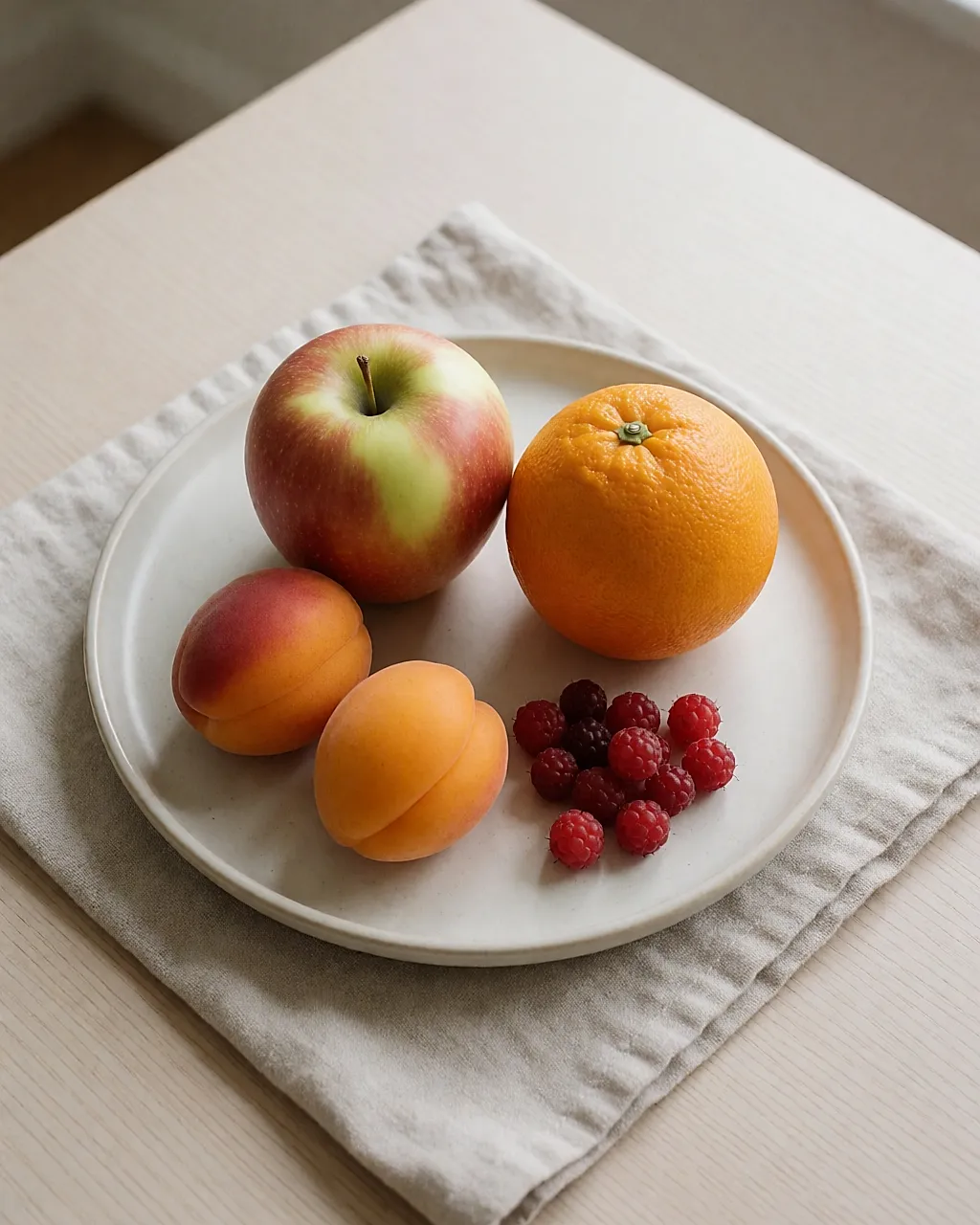
Start with the part everyone agrees on. A widely used practical marker — not a personal prescription — is five portions of fruit and vegetables a day, roughly 400g in total. Fresh, frozen, canned, raw or cooked: what counts is the day's total, not the way you eat it. And a portion? Around 80g is the usual practical guide — a small apple, an orange, two apricots or a small handful of berries; a whole piece of fruit counts as one portion, even if it weighs more.
What is also well established: diets rich in plant foods are associated with a lower risk of cardiovascular disease, type 2 diabetes and some cancers. Those links hold up solidly at population level; for any one person, nobody can promise anything. In prevention terms, fruit is simply one of the levers acting on risk factors such as excess weight or high blood pressure, alongside sleep, physical activity and keeping up with medical checks.
What's less well known: no fruit "boosts" your immune system, whatever the slogans say. Vitamin C contributes to the normal functioning of the immune system. But more is not automatically better, and eating more of it is not a reliable way to keep winter colds away.
One more marker before we get into specifics: a whole fruit and a juice, even one squeezed at home, are not equivalent. Juice loses most of its fibre and lets its sugars through very quickly. Keep it as a pleasure, not as the portion that counts.

The orange: the reliable one
Oranges are a familiar source of vitamin C, with potassium and some fibre, and they earn their reputation. A medium one is a generous fruit — often enough for a practical portion in one go.
Its most concrete asset isn't the vitamin C headline, though. Vitamin C improves the absorption of iron from plant sources. Squeezing an orange over a pan of lentils or chickpeas therefore helps your body absorb that iron — a simple pairing, documented for decades, and it costs nothing.
Should you bite into it rather than juice it? If you want the fibre, yes. The white pith and zest, rich in pectin and flavonoids, end up in the bin with the squeezer. In practice: keep the juice for Sunday breakfast and eat the fruit the rest of the week.

Peach and nectarine
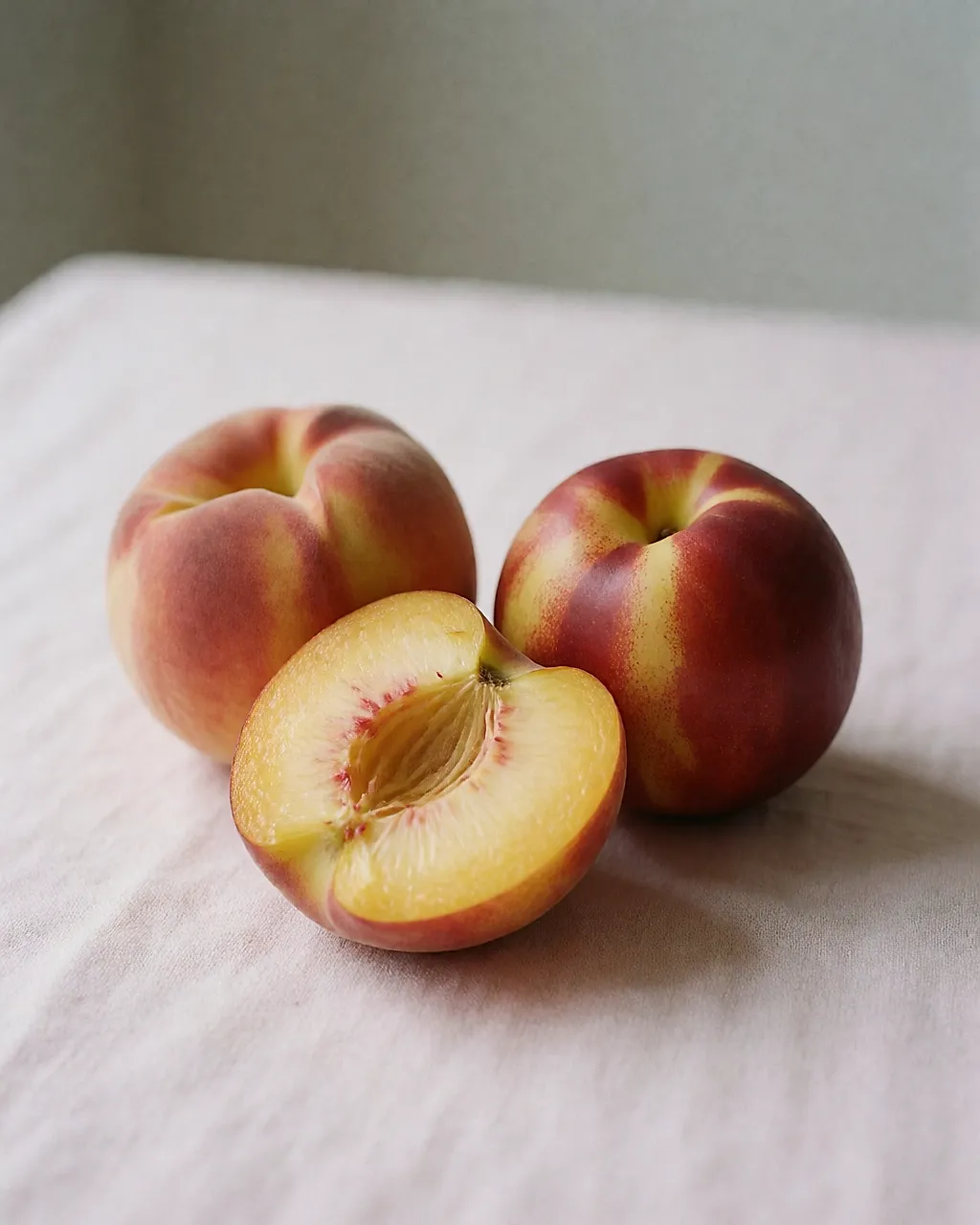
A juicy, light fruit with potassium and some fibre: this is the fruit for hot days, one that quenches almost as much as it feeds. The nectarine is the same species, simply without the fuzz.
Its flesh, yellow or white, may contain pigments such as carotenoids and flavonoids; carotenoids contribute to the yellow or orange colour of some varieties. These pigments were long credited with protecting blood vessels, including against varicose veins or thread veins. Current data can't confirm it: the line of enquiry is open, not settled. In other words, nobody can tell you today that eating peaches protects your legs.
What is established is its contribution to your daily fibre and water intake. A juicy fruit, low in energy density, that needs no preparation: three good reasons to slip one into your bag.
The apple: the snack ally
With water, fibre and pectin, the apple has a quiet talent — it takes a long time to chew. That chewing, plus the water and fibre, encourages a feeling of fullness that arrives quickly and lingers a while. Hence its popularity with anyone swapping a sweet snack for a piece of fruit.
Be wary, though, of the spectacular figures still doing the rounds: "two to three apples a day lower cholesterol by 20%". Current data suggest a modest effect of soluble fibre on LDL cholesterol, not the dramatic reduction those headlines imply. Fruit helps; it doesn't treat.
The skin holds the fibre and polyphenols. If you eat it, rinse it thoroughly under running water and rub it, without soap or detergent. An organic apple reduces your exposure to pesticide residues; it doesn't guarantee the complete absence of residues, and careful washing remains the first step.
The pear: gentle on the gut
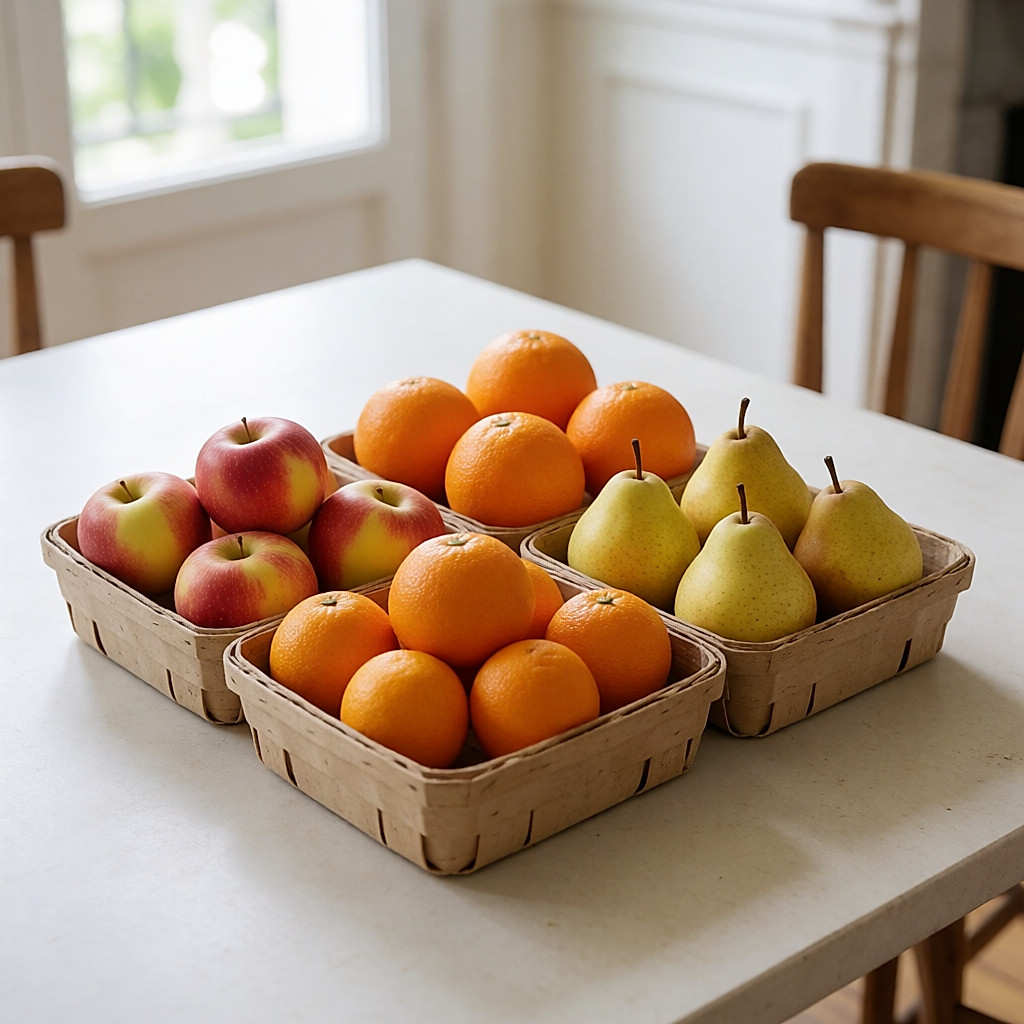
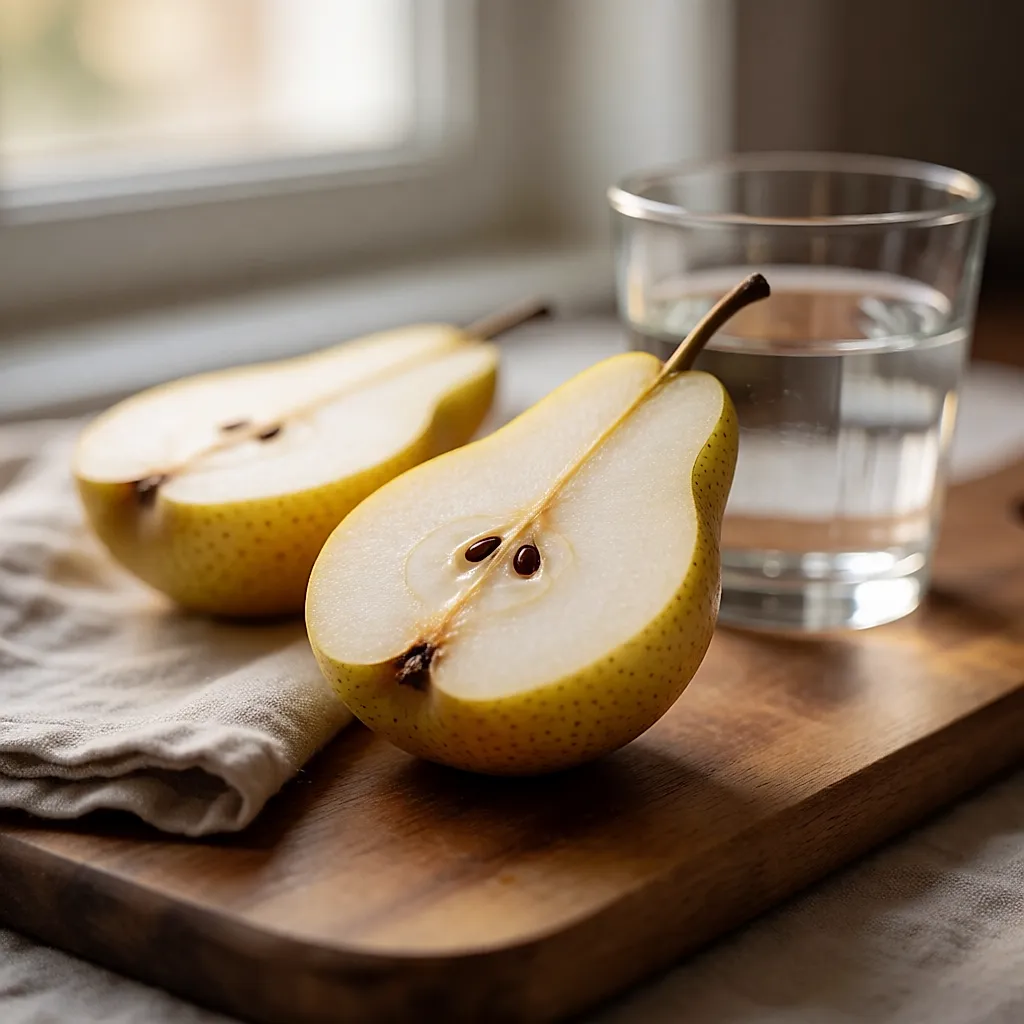
A pear brings fibre from its skin, potassium and sorbitol, a sugar alcohol naturally present in the fruit. It's that sorbitol, combined with the fibre, that explains its effect on digestion: for some people, one well-ripened pear is enough to get a sluggish gut moving again.
For others, the same sorbitol brings bloating and discomfort, particularly with irritable bowel syndrome. There's nothing odd about that: we don't all react the same way. If fruit regularly sets off digestive pain for you, talk to a GP, pharmacist or dietitian rather than cutting whole food groups out of your diet.
Well ripened, a pear is a pleasure in itself. Slightly firm, it bakes beautifully in the oven with a pinch of cinnamon.
Fresh, frozen or canned?
All three have a case, and that's good news. Frozen fruit is often locked in at ripeness — sometimes richer in vitamins than fresh fruit left too long in the fridge drawer. Canned fruit loses some vitamin C and folate but keeps its fibre and minerals. Choose fruit in natural juice or light syrup, and rinse it if you're watching added sugars.

Fresh stays unbeatable for pleasure and crunch. It's also the most fragile: a forgotten fruit ends up in the bin, and that is the only genuinely "bad fruit" that matters.
The practical version: use a practical portion guide — one piece of fruit or a small handful — and aim for several portions of fruit and vegetables a day, without turning the numbers into a rule. Go for whole fruit over juice, vary colours and varieties through the week, and treat pastries for what they are — an occasional pleasure. If you have diabetes, digestive problems, a food allergy or are on medication, speak to a healthcare professional before overhauling your habits.


Comments
Your opinion matters: rate the article, react and reply to comments.
Comments are moderated; AI-assisted comments are flagged. Text emoticons (8-), :-), <3…) are automatically shown as images.