
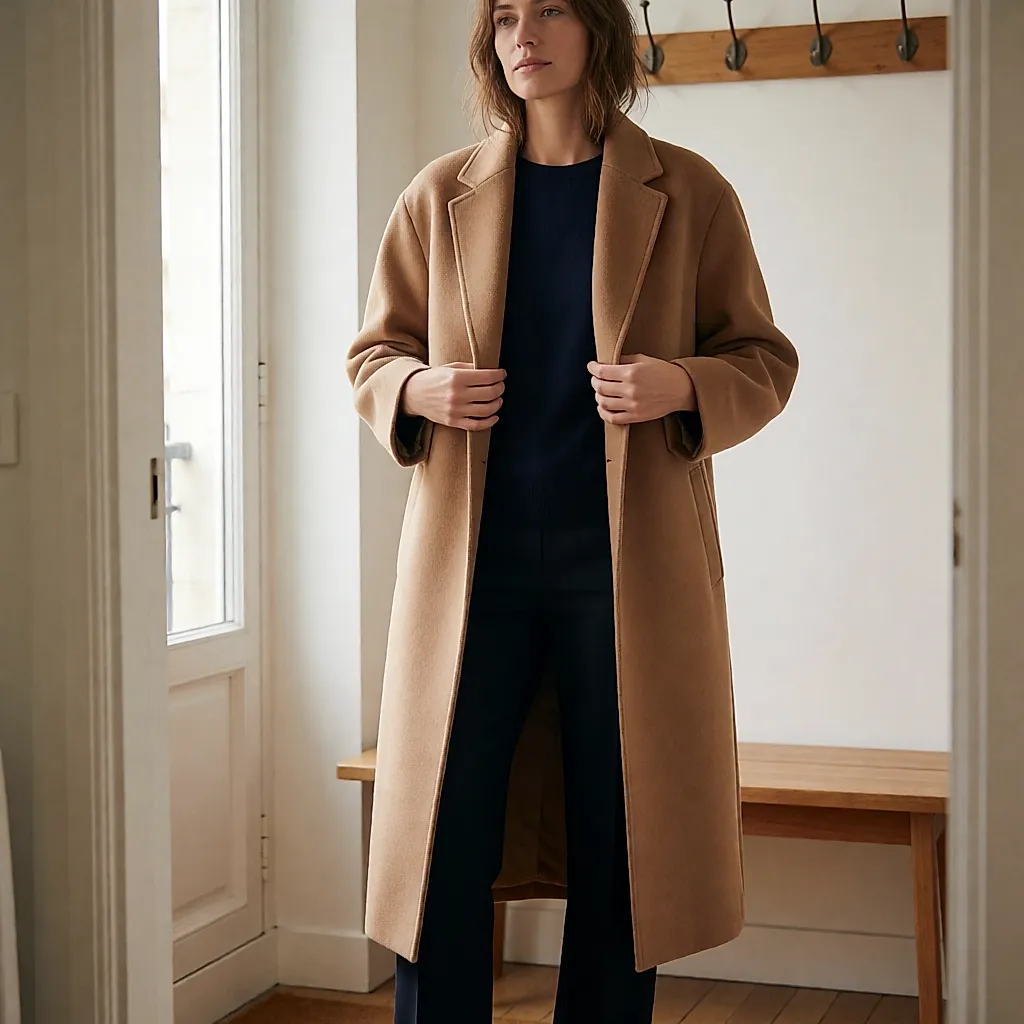
The parcel arrives the day before you leave, you pull the coat on over your pyjamas, and doubt sets in. On the photo, it fell at mid-calf and looked fantastic; in your hallway, it stops at mid-thigh. So is the coat to blame? Not necessarily — it's all about line and drape, and that's decided before you even try it on.
Line first, length second
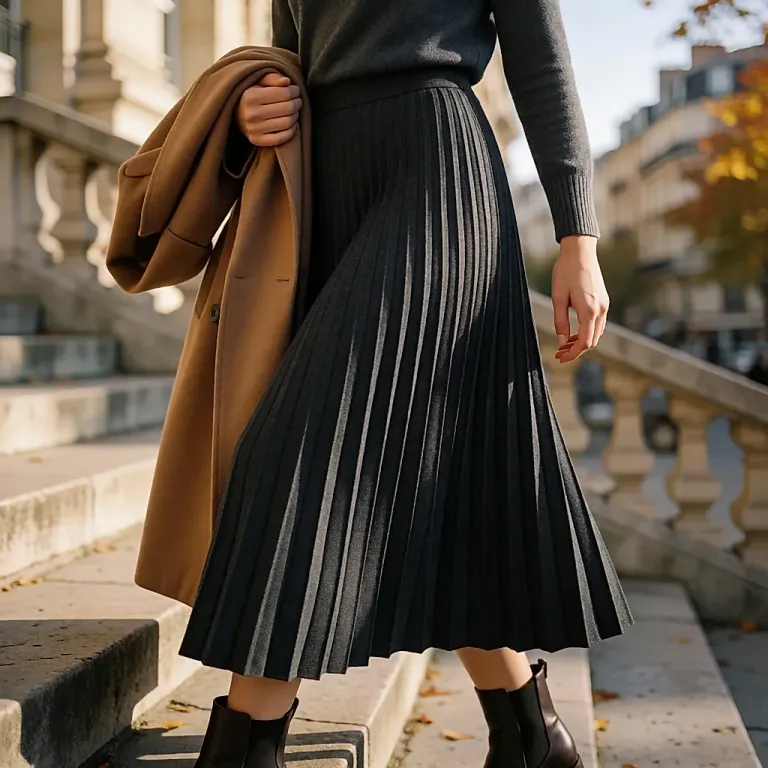
A long coat doesn't create an elongated silhouette, and a short one doesn't make you look compact: what matters is the relationship between the coat's length and the length of what you're wearing underneath. In practice, avoid having the coat hem land exactly at the hem of your skirt or trousers — that overlap draws a horizontal line in the worst possible place. A few centimetres longer or shorter, and the whole thing breathes.
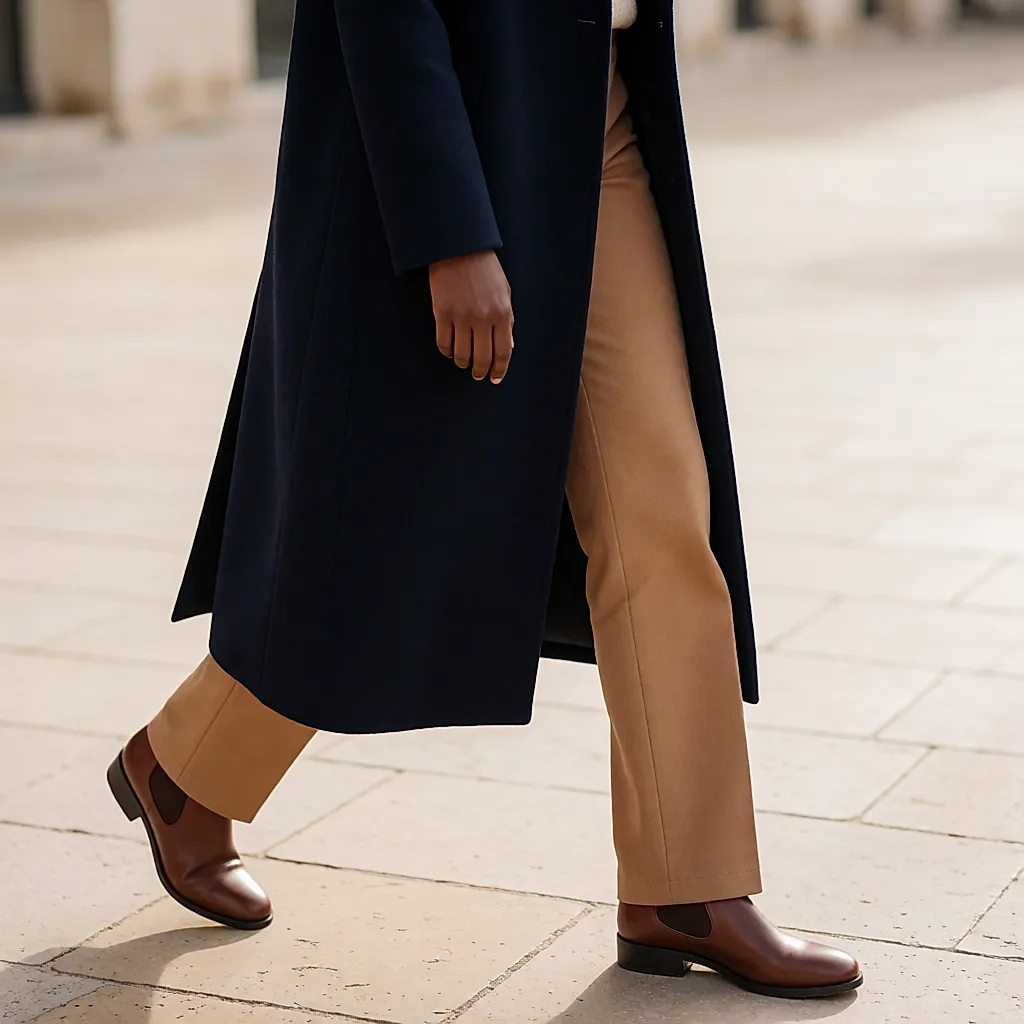
Your dominant line sets the tone. More long than short? A long vented coat extends the movement, while a straight short coat creates a sharper graphic contrast. More compact? A long coat calls for verticality — a front vent, discreet lapels, a clean hem — whereas a straight short coat worn with a defined waist lifts the eye. No piece is off-limits: these are length ratios to study before you fall in love.
Long or short: let your daily routine decide
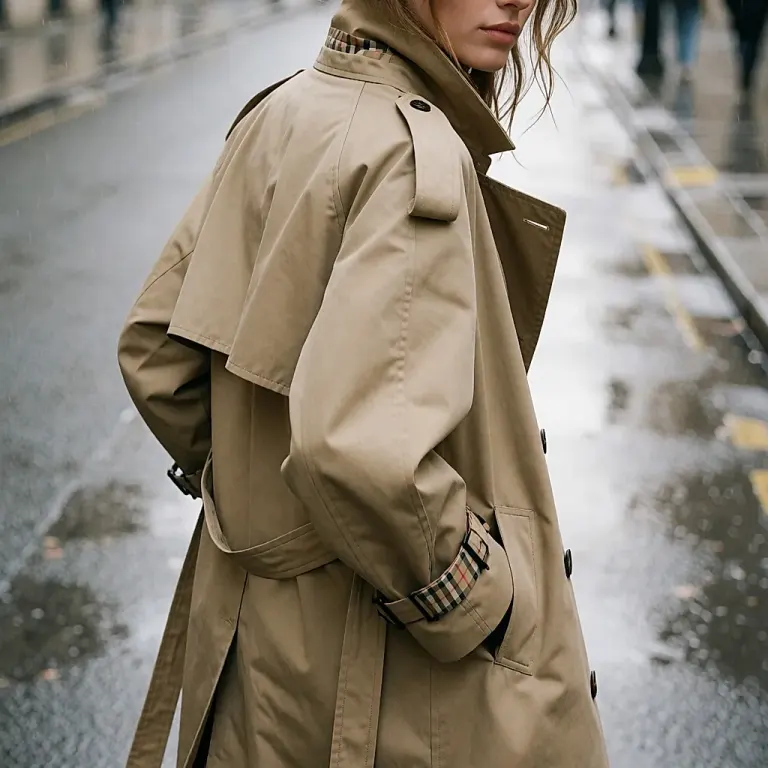
The real decider is your commute. On the Tube at 8.40am, a long coat without a vent gets caught in the ticket barrier and trampled on the escalator. With a vent, everything changes: you walk, you climb stairs, you stop tugging at the hem. In the car, the balance flips — a long coat sits badly, creases behind the knees and catches in the door; a straight short coat settles in without a fight.

Then there's November rain, sworn enemy of hems. A long coat in dense wool melton or felt holds up; a long coat in a fine, floaty fabric drinks up the puddle. A straight short coat forgives a shower the way it forgives a late start: you throw it on and go. Verdict: go long for days when you really walk, short for days when you're racing the clock.
Drape: how the fabric decides
Two coats with the same cut, two opposite looks: that's drape. A dense wool melton falls cleanly, with weight and a line that doesn't apologise; a soft merino wool follows movement; a well-woven recycled wool often plays the same tune, with a matte finish. One question in the fitting room: does the fabric hold its shape when you raise your arms, or does it stretch at the elbow?
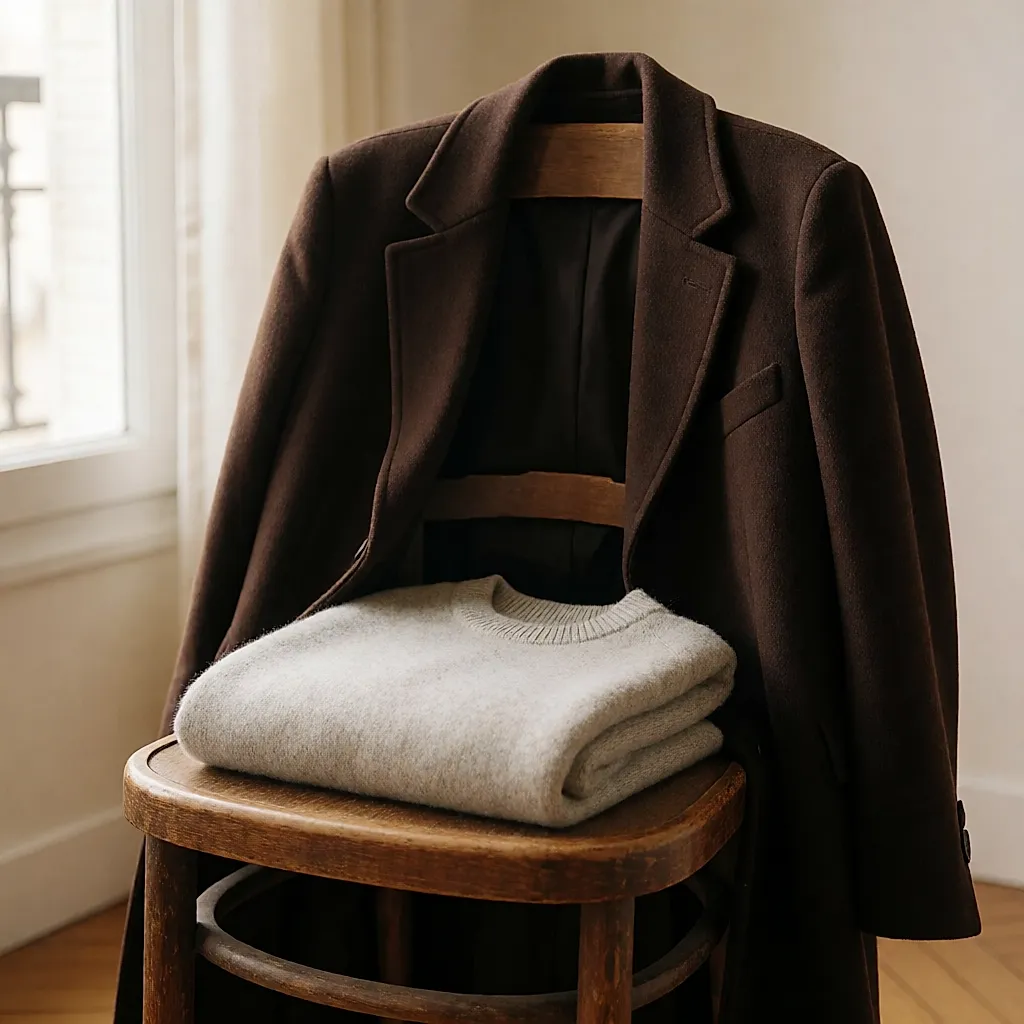
The straight short coat is the more demanding of the two: too soft and it droops; too stiff and it looks boxy. Aim for a fabric with body and a simple cut — two darts, not six. And on the label, the sensible move is still the best one: check the synthetic fibre content (it changes the feel and how the coat ages) and favour natural fibres. The rest is care: brush, air, let the piece rest between wears.
Shoulder and layers: the blind spots
You try it on in a T-shirt on a September afternoon, buy it, and by January you can't raise your arms. The fix: bring the knitwear you actually wear in winter. The thickness of your layers changes everything at the armhole, and a coat designed for a light dress will leave you with hunched shoulders as soon as a chunky knit joins the party underneath.
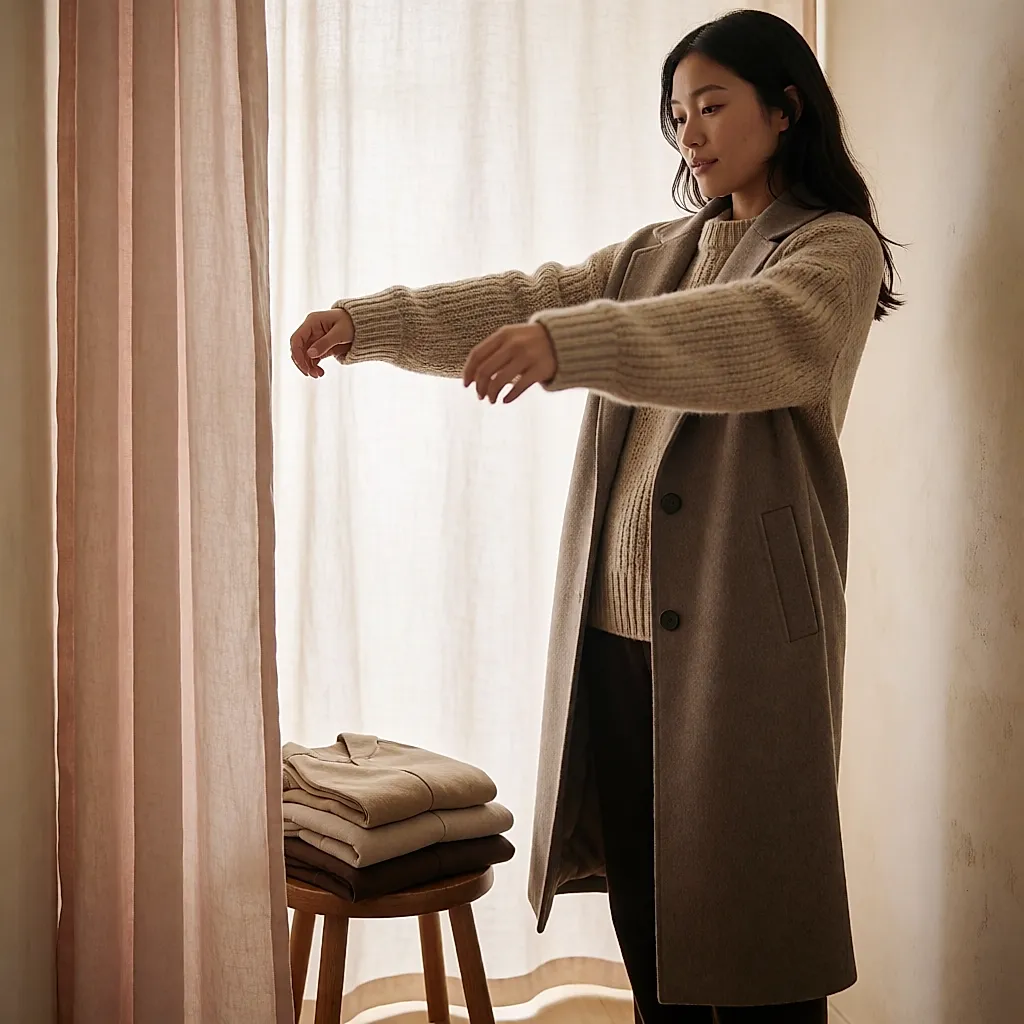
Then there's shoulder placement. The seam should sit where your shoulder ends: too far out, the sleeve slips and the line sags; too close, everything pulls as soon as you raise your arm to grab your suitcase. In the fitting room, arms out, shoulders rolled, mime fastening a seatbelt: it's the test that doesn't forgive.
Budget
As a rough guide, expect to pay around £25–£100 for a second-hand wool coat, £100–£250 for classic ready-to-wear, and £250–£550 for a wool-rich style from a brand that lists its composition. Beyond that, you're mainly paying for the weave, the origin of the wool and where it was made.
Also budget for hem or sleeve alterations, often £15–£45 at a local tailor or alterations service, and specialist cleaning, around £15–£35 depending on the care label. Do your sums over three winters, not one Saturday afternoon. A coat altered to your exact length often looks far better than it actually is.
Try it standing up, sitting down, arms raised, with your January jumper on. Check the hem in a full-length mirror, not just in the fitting room. And check the returns policy before you cut off the tag: a neatly resealed parcel is better than a £300 regret.
So: long vented or straight short? If you walk, use public transport and like a silhouette that moves, a long vented coat in dense wool is your best bet — as long as you have it cut to your exact length. If your daily life is written in car journeys, stairs and rushed mornings, a well-structured straight short coat will do more for you than a pretty photo promise. If you're torn, try both in the same fitting room, with the same jumper, and let your reflection decide. The right coat isn't the one that looks most impressive on the hanger: it's the one you throw on without thinking until March.

Comments
Your opinion matters: rate the article, react and reply to comments.
Comments are moderated; AI-assisted comments are flagged. Text emoticons (8-), :-), <3…) are automatically shown as images.