

A belted trench, a checked lining, a shape that has outlived a century of trends. Nothing about the beige coat shouts — and that's exactly why it stays. To understand that quiet staying power, you have to go back to a 21-year-old draper.
1856: a draper in Basingstoke
Thomas Burberry opens his first shop in Basingstoke, Hampshire. He sells cloth to the local well-to-do, then expands the business in the 1870s. His obsession? A fabric that keeps out rain without making you sweat. In the late 1870s he develops gabardine, a tightly woven cloth that lets air through while repelling water. The patent was filed in 1888.
From the Tielocken to the trench
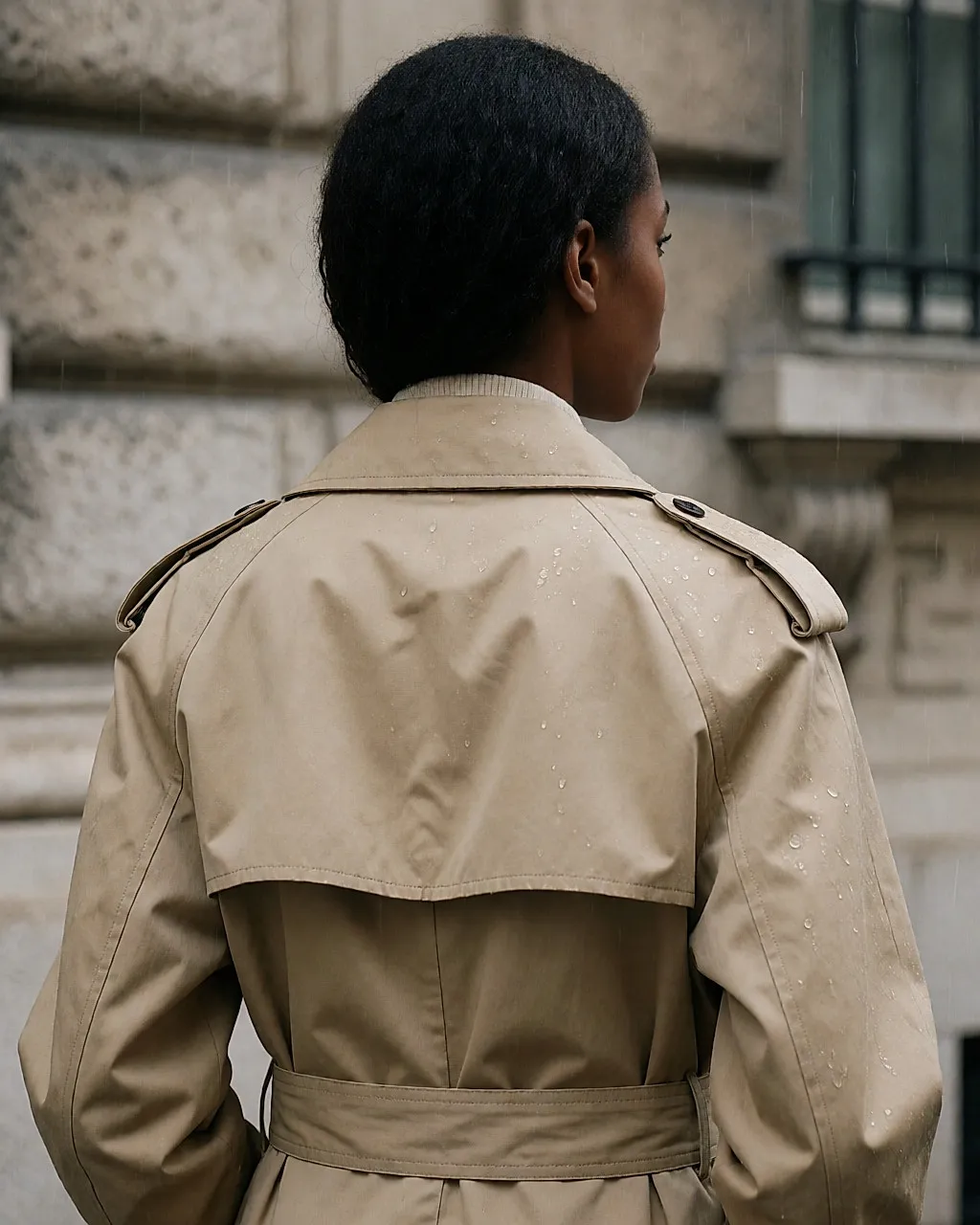
In 1891 he opened a shop in London on Haymarket; the business became Burberry & Sons in 1901. In 1912 he patented the Tielocken, the trench’s ancestor: a long cut, fastened with nothing more than a belt. The British Army took note, and the trench coat became part of officers’ daily kit during the First World War, with epaulettes, strap tabs and D-rings for attaching equipment. The check motif arrived in 1924, at first hidden as a lining.
Thomas Burberry died in 1926, having handed the business to his sons in 1917; momentum dipped. The brand lived on its reputation, then came under the control of GUS in 1955.
The 1990s revival
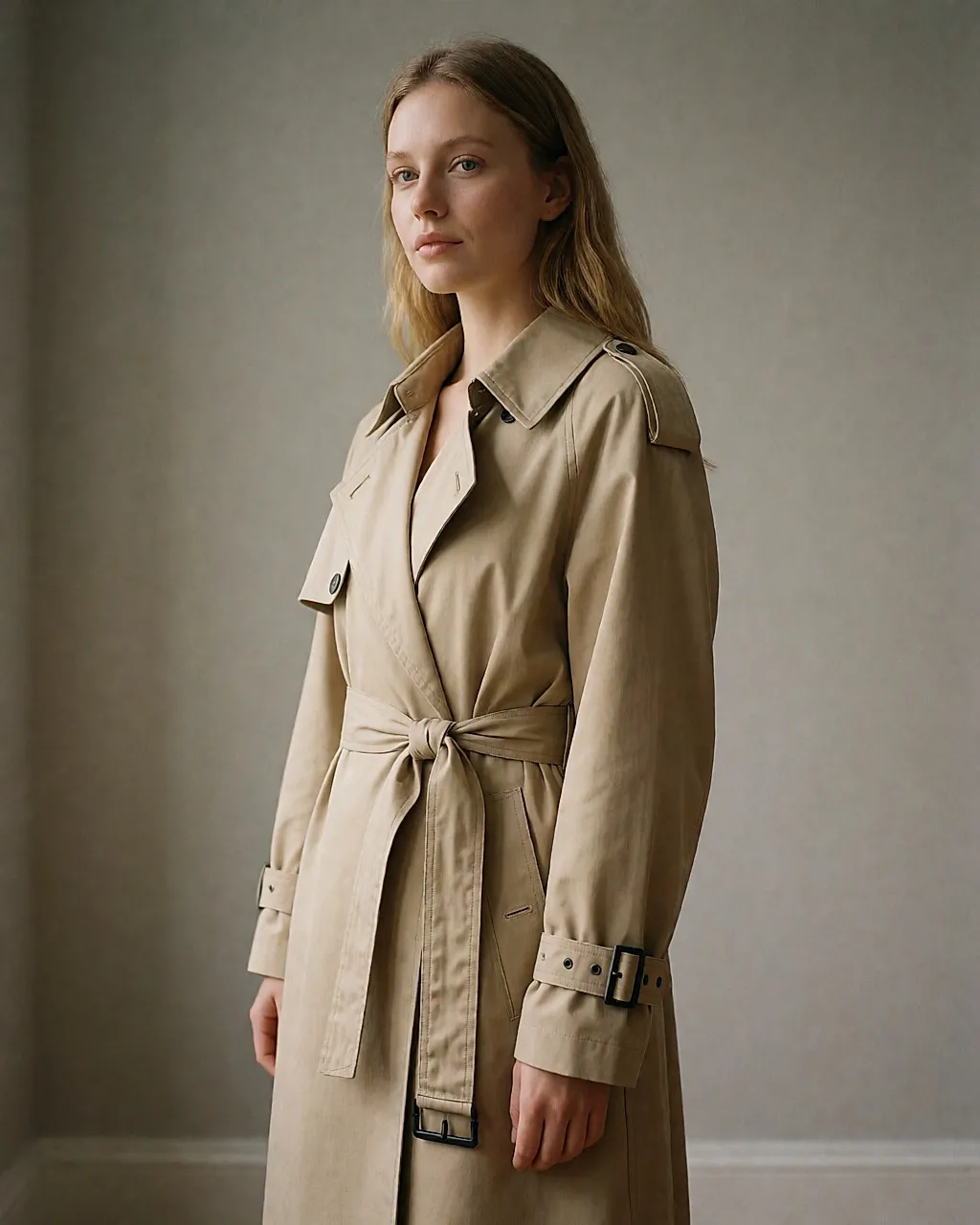
By the late 1990s, Burberry had lost momentum. The relaunch came through a complete reset: new management, new designers and a face who got people talking, Kate Moss, photographed by Mario Testino. The trench became desirable again, and the check came out of hiding. In 2005 the company left GUS; it had listed on the London Stock Exchange in 2002.
Today: the check, again and differently
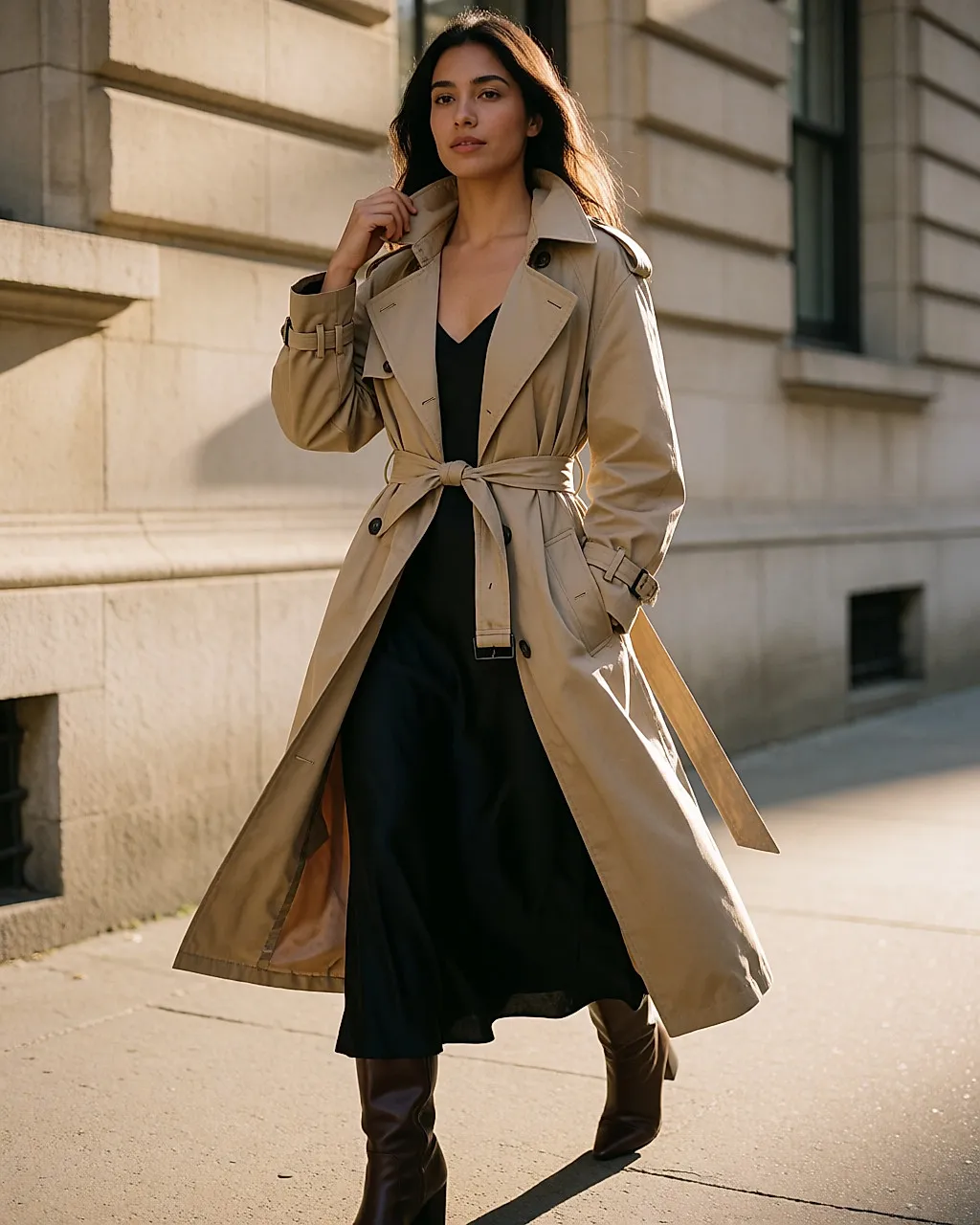
The creative direction has changed several times since: Christopher Bailey, then Riccardo Tisci, then Daniel Lee, who arrived in 2022 and introduced a house blue and a duck motif. In 2024 the new chief executive, Joshua Schulman, announced a refocus: fewer conceptual silhouettes, more trenches and cashmere scarves.
Plain beige, worn your way
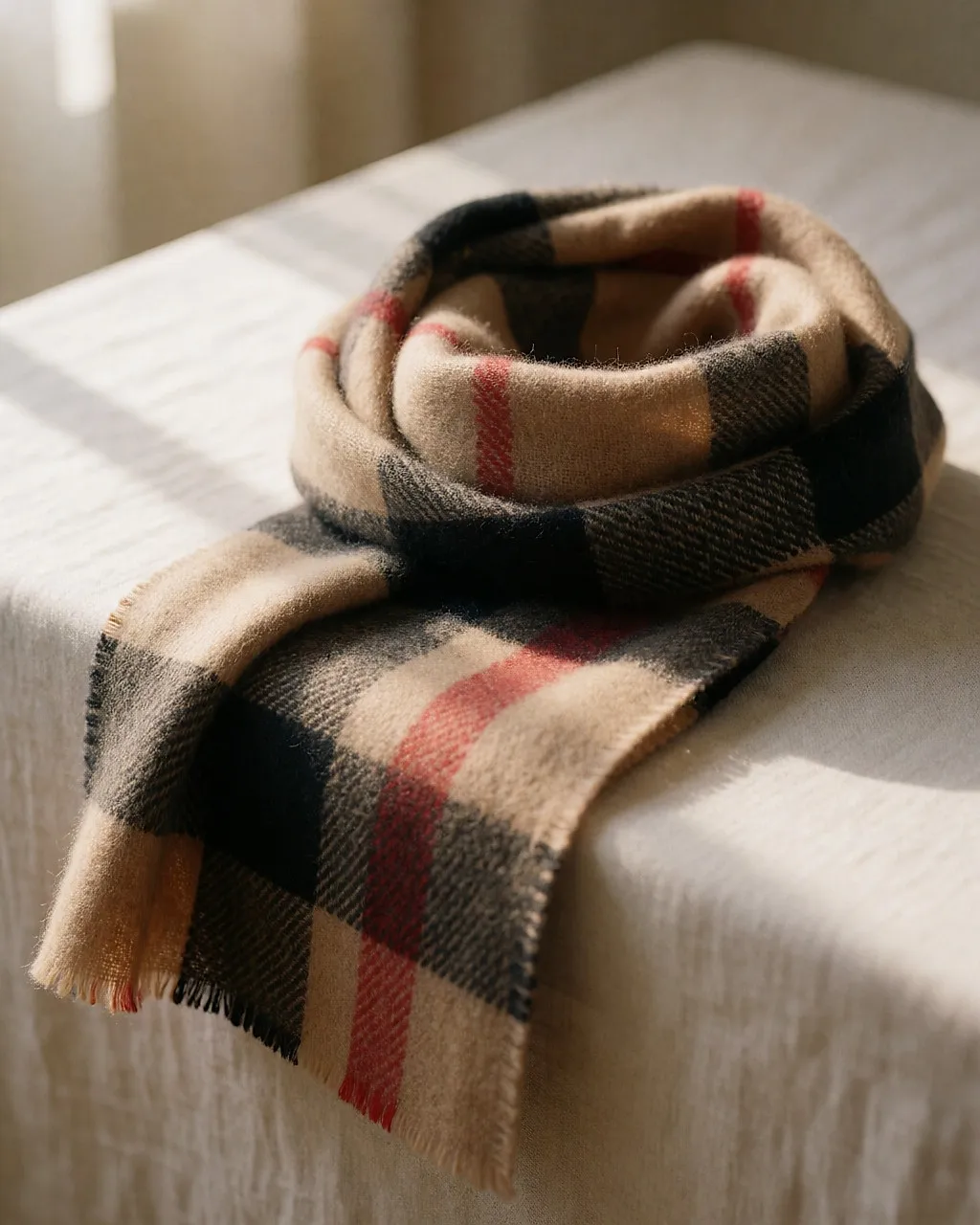
The thing about a beige trench is that it doesn't need much help. Go tonal — beige, cream, camel — or throw it over raw denim and a sweatshirt to take the formality down a notch. What counts isn't the label but the cut: a slightly oversized shoulder will age better than one that's too fitted, and the check works best kept as an accent, a scarf, a visible lining, a cap.
If you want a coat that still looks right in ten years rather than ending up at the back of the wardrobe, start with the fabric — a dense cotton gabardine, a breathable lining — then check the seams at the stress points, and ask how it is meant to be cared for. Air it after each wear and give it a brush now and then; in practice, dry-cleaning is best spaced out and only sent for when it is truly needed, and buttons, belt and lining can often be repaired rather than replaced.

The trench, the scarf and the bill
Let's talk numbers, because they matter. In the UK, a new Burberry trench sits around £1,700 to £2,600 depending on the line and the fabric, and the classic cashmere scarf around £350 to £550 — sums that shift with the collection, the composition (cotton, wool, blends) and where you buy, whether that is the official store, a department store or the airport. At that price, trying one on still matters, if only to check the sleeve length.
If you would rather spend less, pre-loved is the real lever. On Vestiaire Collective, a second-hand Burberry trench often goes for between £250 and £800; on Vinted, keep an eye out for good vintage pieces, but stay wary of counterfeits and always ask for sharp photos of the interior label and the seams.
On materials, the most credible option is organic cotton whose textile processing is GOTS-certified: the standard covers manufacturing and supply-chain traceability, from certified organic fibres, not just the finished product. Otherwise, buy second-hand, repair in store or with a tailor, and resell or donate it when you no longer wear it. No conventional trench is planet-neutral: better to own that than to dress it up as something it isn't.
It then comes down to budget. If yours stretches to it, a Burberry trench is made to be worn for years and repaired rather than replaced. If it doesn't, there is no rush: a plain high-street cotton trench will carry you while you save. Either way, it's the cut and the fabric people see, long before the label.
Sources
- Burberry, ‘Our History’ section and annual reports (burberryplc.com)
- Burberry, official site (burberry.com): trench and scarf ranges, repair and resale services
- BBC News: coverage of results and the ‘Burberry Forward’ strategy (2024)
- Vogue Business: coverage of appointments and product refocus at Burberry
- Vestiaire Collective, official site: second-hand offering
- Global Organic Textile Standard (global-standard.org): scope of the GOTS standard

Comments
Your opinion matters: rate the article, react and reply to comments.
Comments are moderated; AI-assisted comments are flagged. Text emoticons (8-), :-), <3…) are automatically shown as images.