

The Birkin: Hermès's timeless tote
Let's be honest: we've all been there. A bag too small to swallow your notebook, a phone poking out of the top, a coffee cup that ends up spilling over your e-reader. Now picture the scene on a Paris–London flight a few decades ago. A young mum, Jane Birkin, is complaining loudly that she cannot find a single tote worthy of the name. Opposite her, Jean-Louis Dumas, then president of Hermès, listens and starts sketching. Out of that lively conversation came a drawing, and then a design launched in 1984: a soft tote, two handles, a flat pocket for slipping in documents. The bag was named after Jane Birkin from the very start, and it answers what busy women want: something elegant, but practical too. Suffice to say it needs no introduction.


One bag, two destinies
Alongside the Kelly, the Birkin is one of Hermès's flagship designs. We all know the Kelly: the structured, single-handle bag made famous by Grace Kelly. The Birkin plays the opposite card — roomier, softer, with a slouchy drape — designed to sit in the crook of your arm and keep up with a packed daily life. On the style front, the real difference lies less in the look than in the way you use it. And honestly, that changes everything.
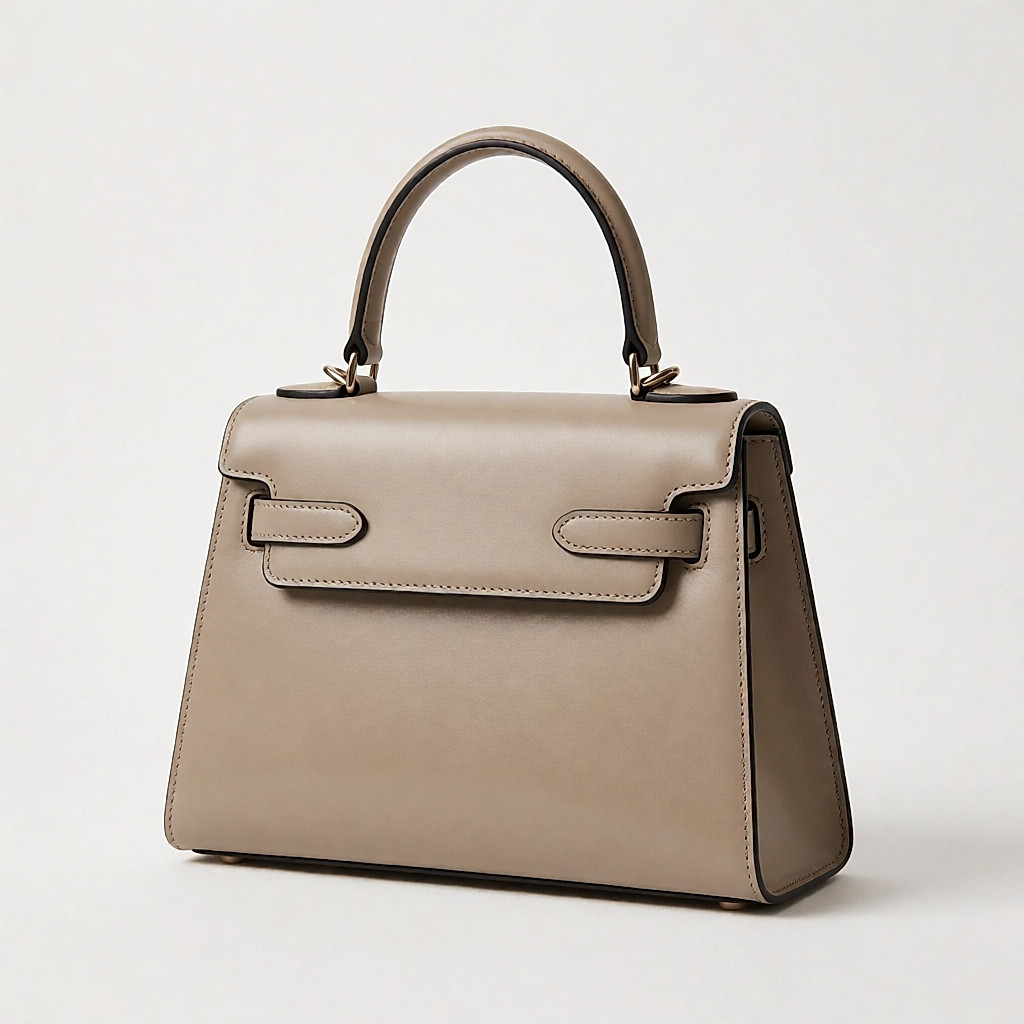
Since then, this roomy tote has been adopted by a long list of celebrities and by the fashionistas of the cult series Sex and the City — proof that it has moved beyond being a simple accessory to become a genuine icon. A bit like a wardrobe staple that got out of hand: you see it everywhere, it weathers every season, and you fall for it.
The Hermès legacy
It has to be said the house is no newcomer. Hermès began life as a family workshop making harnesses and saddles, and from 1900 onwards it built a reputation for seriousness and quality around the world. Under Émile-Maurice Hermès, the family business grew while keeping its image of luxury goods intact. Travel bags, handbags, belts, scarves, jewellery: Hermès creations do not bow to fashion. They are timeless objects that resist the dictates of the seasons and can be passed down from generation to generation.

The leather sets the price
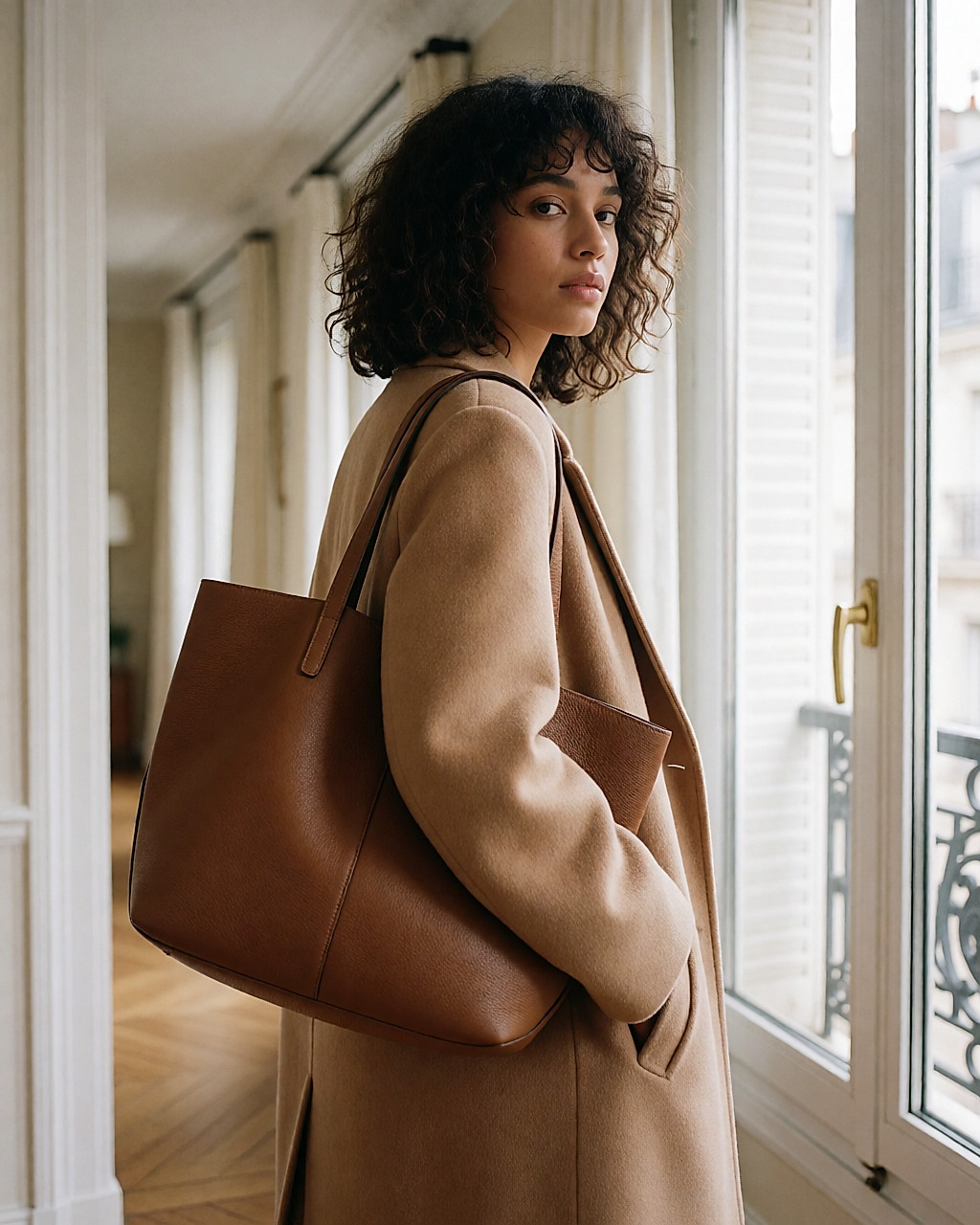
Available in calf, crocodile, ostrich or cow leather, the Birkin is made in whichever material the client favours. From classic bull calf to exotic skins, it is the leather that pushes the price up as much as the size does. And that is also what makes every piece different: the same cut, but a texture and a drape that belong to that leather alone.

On budget, the rule has not budged: Togo, Clémence, exotics — the leather sets the price. If you are one of the lucky few, you will need to arm yourself with patience, because demand still outstrips supply, and the wait for the luxurious bag to reach your arm is often counted in months. Prices have soared since the days when a Clémence bull calf was quoted at around £3,800. Today we are in a completely different league.

Pre-owned Birkin: the checks to make. Always ask for the original receipt, have the bag authenticated by an expert or a specialist service, and be wary of unusually low prices: in this market, a bargain often hides a counterfeit.
A collector's item
Hermès does not publish its prices, and each piece is priced according to leather, size and finish. The crocodile version belongs to another galaxy entirely: expect tens of thousands of pounds, and more still for certain collector's pieces.
Jane Birkin parted with her very first Birkin at auction, where the bag went for a sum far above its boutique price. Proof, if any were needed, that the Birkin has become a collector's item as much as an accessory.
Even today, at Hermès it is customary to name handbags after the women who inspired them. The Birkin, one of the house's classics, takes its name from the singer Jane Birkin. Created in 1984, it answers what modern women want: a bag that is functional while staying elegant. More than forty years on, you could say it is as on-trend as ever.
Budget
There is no single price for a Birkin: it all depends on the size (25, 30, 35…), the leather, the colour and the finish. In boutique, expect around £7,500 to £13,000 for a standard leather model, and considerably more once you move into an exotic skin. On the second-hand market the ranges climb higher still: think £10,000 to £17,000 for a Birkin in good condition, with no ceiling for rare or vintage pieces. You will find it in Hermès boutiques, subject to deliveries and to a salesperson's assistance, with no official waiting list; you will also find it at specialist resellers — Collector Square, for instance — or at auction; either way, always check authentication before you buy.
Sources
- Hermès — The history of the Hermès house



Comments
Your opinion matters: rate the article, react and reply to comments.
Comments are moderated; AI-assisted comments are flagged. Text emoticons (8-), :-), <3…) are automatically shown as images.