

We've all been there: a whole afternoon spent taming a mane that simply refuses to behave, straighteners heating up, and half an hour later the frizz creeps back in on the bathroom steam. So when you hear about at-home kits for lasting smoothing, doubt is bound to set in. Is this really the brilliant solution we're being sold, or are we better off letting the pros handle it?

The trouble is that permanent smoothing kits sold all over the internet deserve a healthy dose of suspicion. Behind the promise of sleek, shiny hair, some can contain substances that are harmful to your health. A detail that cools the enthusiasm pretty quickly, and one that should make you think twice before hitting "add to basket".
So how do you find your way through the jungle? It comes down to a few simple habits: check the ingredients list, read the precautions for use carefully and make sure the product meets the regulations. Bad news: a brand name on its own doesn't guarantee that something is safe, and it's nowhere near enough of an argument to dive in with your eyes closed.
Jean Louis David and at-home lasting smoothing
Jean Louis David had spotted this, and at the time offered not one but two do-it-yourself lasting smoothing kits. The first, inspired by Brazilian smoothing, was aimed more at wavy to curly hair, with the brand claiming sleek, supple results. The second took its cue from Japanese smoothing and targeted curly to coily hair, with hold said to last several weeks — something to be confirmed by your own hair type and how you look after it, of course.
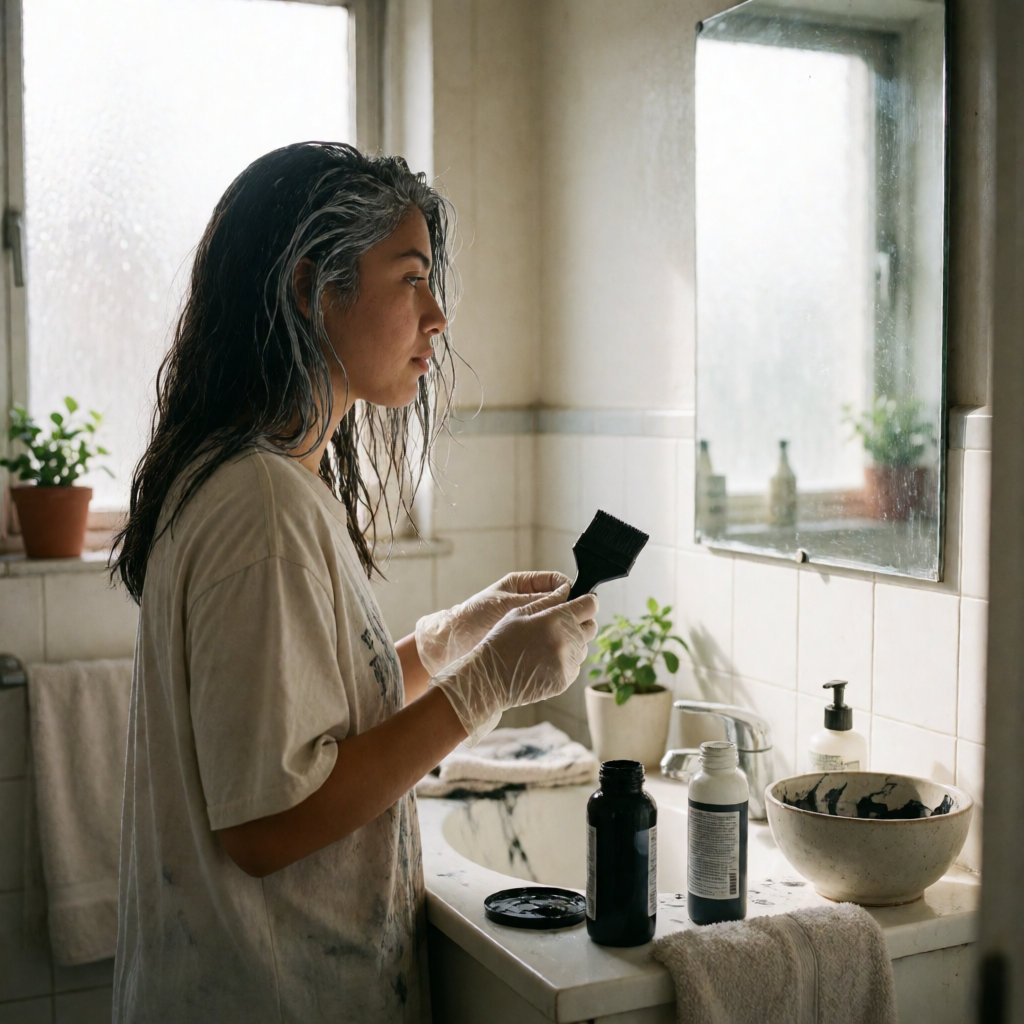
In practice, the process is a little like a colour cream. You always start with a strand test: that's the basics. If all is well, apply the smoothing cream following the instructions and the processing time in the leaflet, never improvising. Rinse, then apply a second cream whose job is to set the smoothing. Rinse again once the time is up, and finish with the treatment supplied in the kit. Then it's a case of rinsing, drying and running the straighteners through to reveal the result.
The instructions are set out in detail in the leaflet, and it's fair to say you need to follow them to the letter, precautions and warnings included: your hair's health is at stake. After application, people generally notice less frizz and hair that feels smoother, more supple and easier to style. Rather nice, isn't it?
How long it lasts is where things get trickier. The smoothing's resistance tests are calculated on a certain shampooing frequency. Real-world wear is therefore independent of the claim on the packaging: it depends above all on your hair type, how often you wash it, the water in your area and the heat you use day to day. Treat it as a rough guide, never as a guarantee.

Where to find these kits and how to find out more
To ask questions and find out more about these Jean Louis David kits, the site jarrete-de-boucler.com was the reference point at the time. Back then, the kits were sold in French supermarkets and listed on that same site, "J'arrête de boucler". One word of caution, though: before heading over, it's worth checking that the site is still live — there's no guarantee it is today.
Japanese smoothing: what happens in the salon
To set the scene, Japanese smoothing has plenty of fans in salons, and with good reason. It's for anyone dreaming of extra-sleek hair that stays that way. With it, you can wave goodbye to straighteners and blow-dries, at least for a good while. The idea? A permanent, or rather long-lasting, smoothing that can hold for several months on treated hair, depending on regrowth and aftercare — with professional follow-up that remains essential. The catch is that it's done at the hairdresser's and calls for a decent budget, which is why DIY kits have multiplied.
In other words, the salon offers a professional's care, but at a cost that can climb quickly. The at-home kit appeals with its gentler price, provided you're happy to be your own hairdresser and you're rigorous about reading the ingredients and following the leaflet.
Budget
Expect to pay roughly £130 to £350 in a salon for Japanese smoothing, depending on the length and thickness of your hair, the salon and where you live. For DIY kits, prices tended to sit between £20 and £45 in supermarkets. But saving money is never a reason to skip reading the ingredients or the strand test. And remember that price says nothing about how long the result really lasts, which also depends on how often you shampoo and how you look after your hair afterwards.
Worth noting, too, that with this kind of product you can also look to supermarkets, beauty halls and specialist haircare retailers, online and in store — compare your options to find the formula that suits your hair type.
Always patch-test the product on a strand before applying it to your whole head, and follow the instructions, precautions and warnings in the leaflet to the letter. If you're unsure about the ingredients or you notice an unusual reaction, it's better to speak to a healthcare professional or your hairdresser before going ahead.
At heart, at-home lasting smoothing is a bit like a lot of things in beauty: it can do you a good turn, as long as you don't skip the steps. Test, read, ask questions, and keep in mind that your hair will thank you for taking that time.



Comments
Your opinion matters: rate the article, react and reply to comments.
Comments are moderated; AI-assisted comments are flagged. Text emoticons (8-), :-), <3…) are automatically shown as images.