
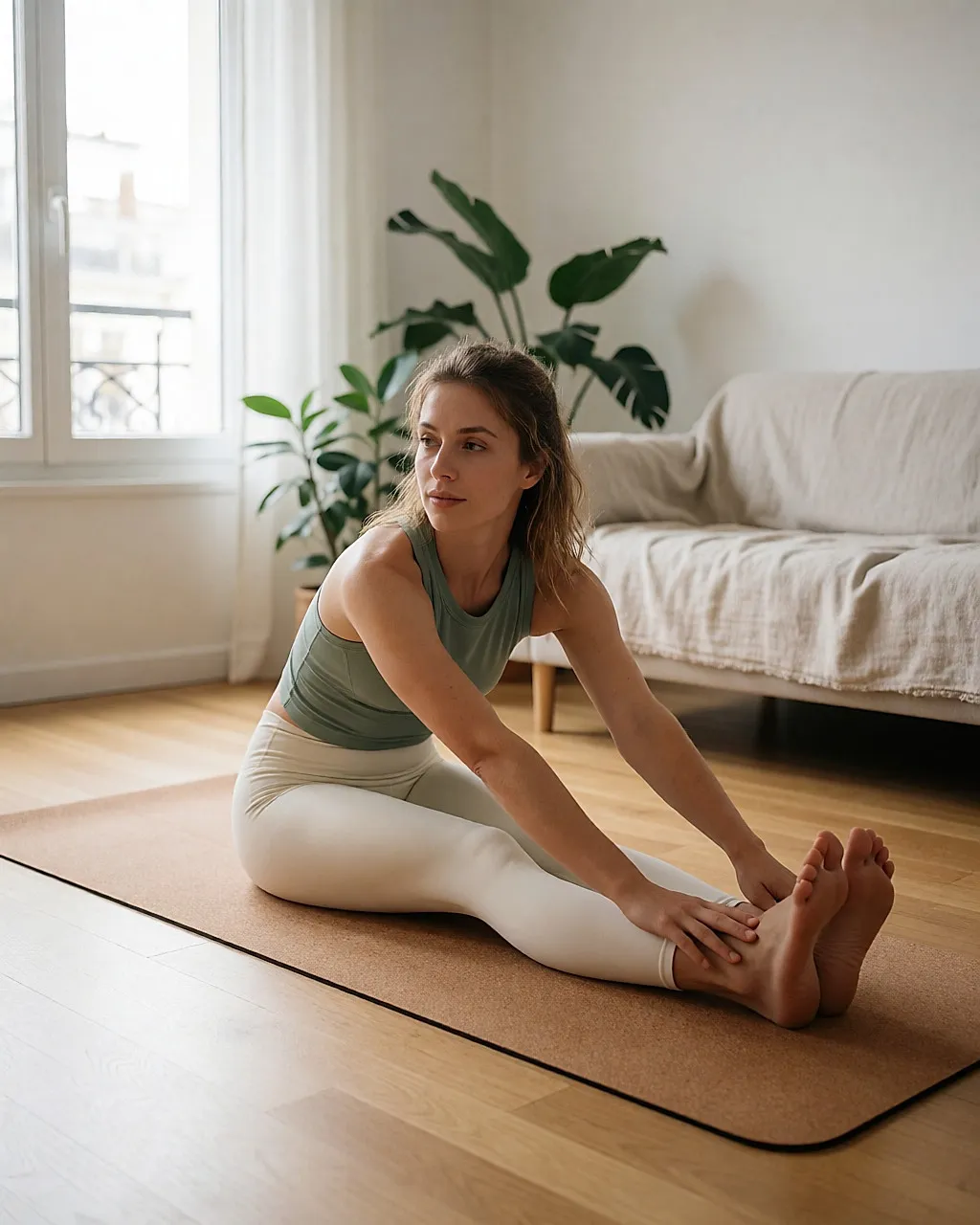
You've tried to get back into exercise before, and then life took over. Between the trip to the gym, peak-time slots and childcare, the first barrier isn't lack of motivation: it's time.
Current evidence suggests that regular physical activity lowers the risk of cardiometabolic disease and improves sleep and mood. WHO guidance is 150 to 300 minutes of moderate activity a week, plus two muscle-strengthening sessions. Worldwide, around one in four adults still falls short of those thresholds.
That's where the idea of a coach who comes to you starts to make sense. You cut out the commute, choose the time, and train in a space you already know.
How the network works
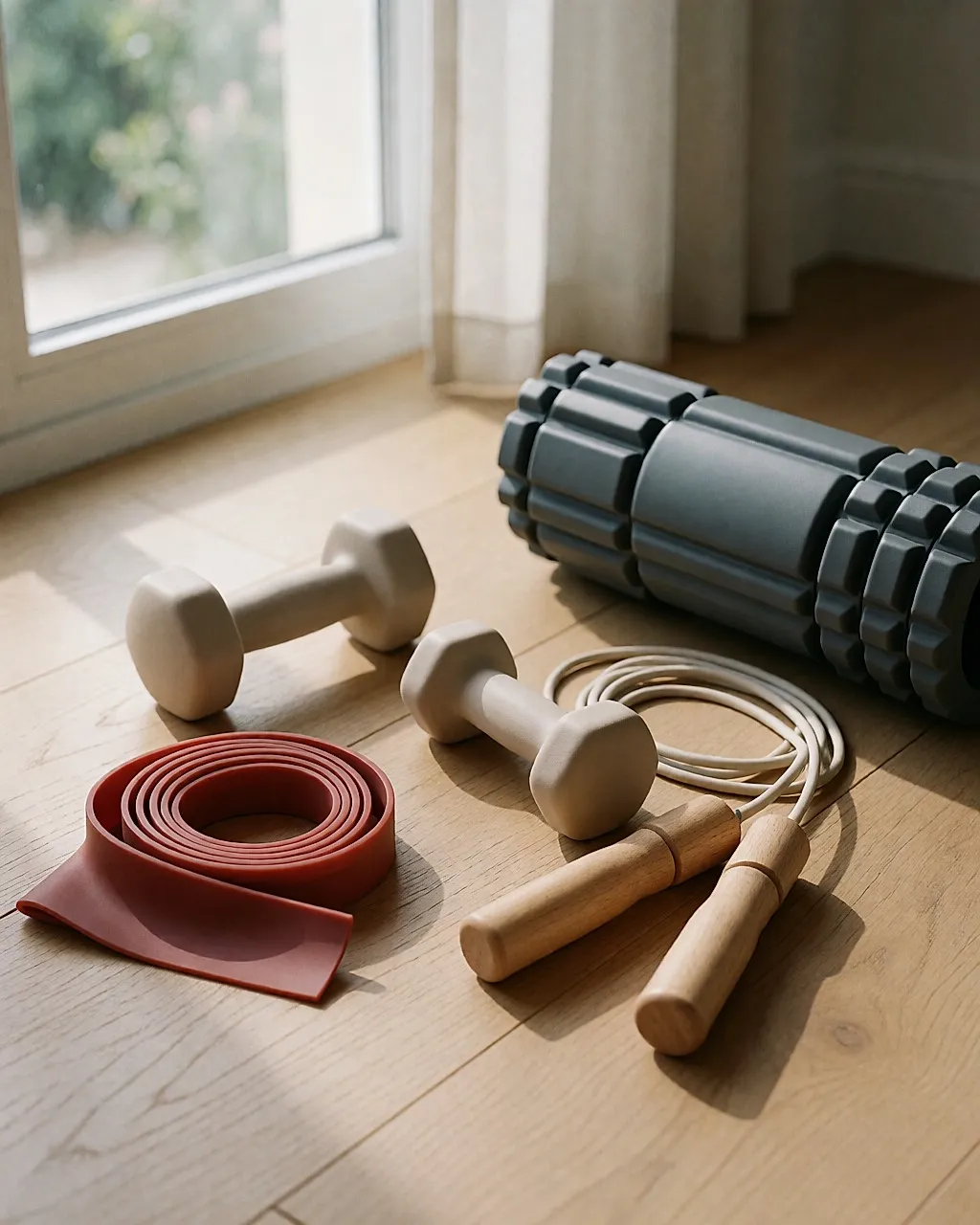
Sport-Pros describes itself as a network of sport and relaxation professionals who travel to your home. As well as fitness coaches, it includes swimming teachers, yoga teachers, sophrologists and seated-massage practitioners. The catalogue mixes several aims: toning, returning to exercise, Pilates, maintenance training, abs and glutes, dance (salsa, cha-cha), exercise adapted for older adults, relaxation through yoga, and postnatal support.
There are two options: a one-off session, if you want to try it or ease back in gently, and a monthly, quarterly or annual subscription, where the price per session falls as you buy more. The professional adapts to your actual level, not to a standard programme. That's what sets a home session apart from a group class: no one is watching, and your form can be corrected twenty times without embarrassment.
One note of caution. After giving birth, or if you have persistent pain, pelvic floor rehabilitation and medical advice come before getting back into fitness. Speak to a health professional — a GP or midwife — before you start again.
The fitness assessment: your first appointment
In practice, the first appointment often takes the form of an assessment, usually free and with no obligation. You answer a series of questions about your history, routine and goals, then do a few simple exercises that help assess your profile. From there comes a personalised programme, adjusted as the sessions go on.
A reputable network will also ask for whatever is needed to make the sessions safe: a medical certificate or health questionnaire, depending on the case, especially if you have a risk factor (a history of heart problems, asthma, high blood pressure, pregnancy). In France, sport on prescription, provided for under the law for certain chronic conditions, requires a medical prescription for adapted physical activity: a coach cannot issue it. In the UK, similar support may come through exercise referral schemes or social prescribing, but again it needs a referral from a healthcare professional. In practice, remember this: the right question to ask at the first appointment isn't 'how many kilos?', but 'what might stop me getting injured?'
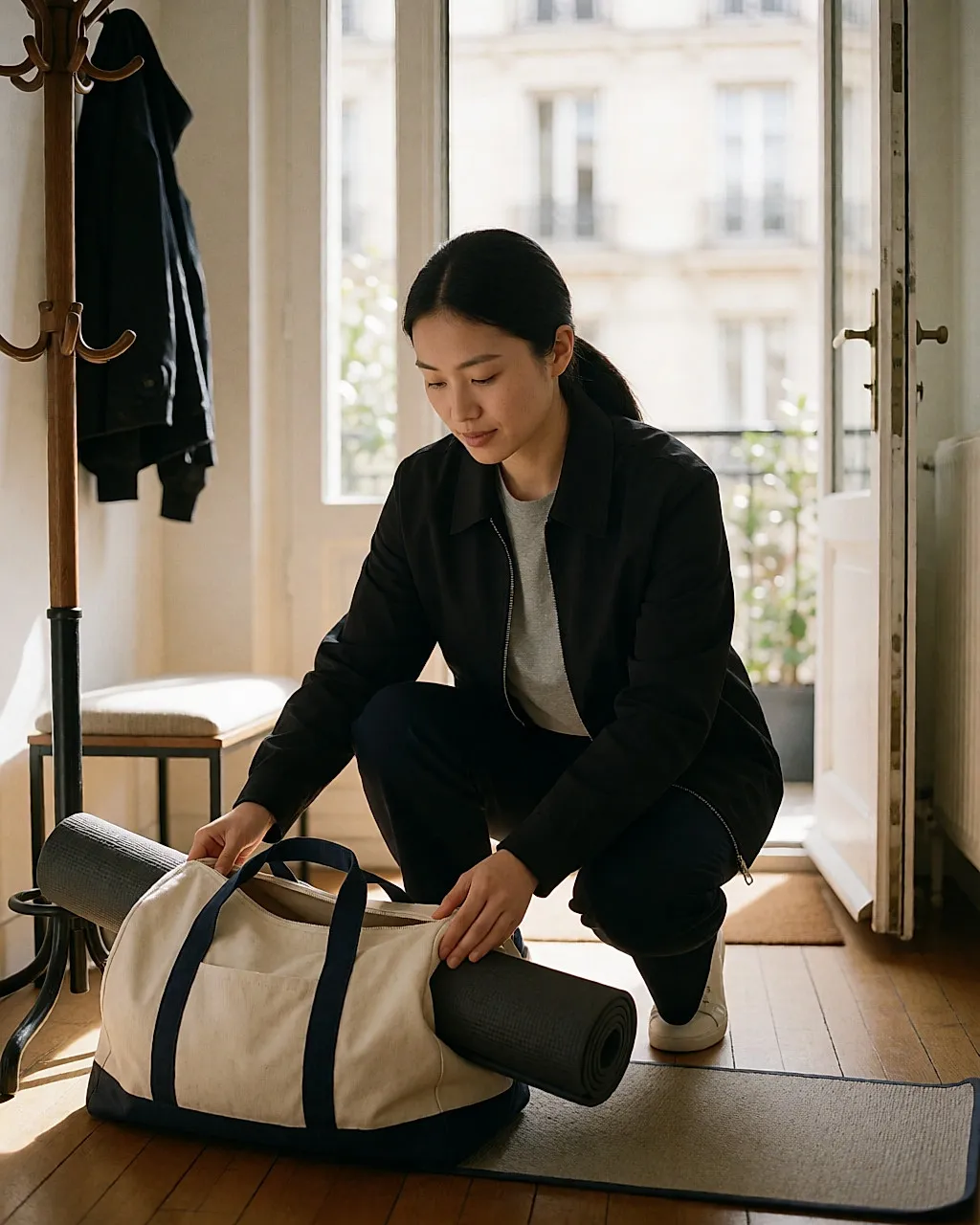
The ritual, not just the performance
Before you commit, ask for three things: the coach's qualifications (in the UK, a Level 3 personal training qualification and, for clinical populations, a specialist qualification; in France, the equivalent is BPJEPS with the 'activité physique pour tous' mention, or a STAPS degree with the 'activité physique adaptée et santé' mention), their professional card or registration, and the network's public liability insurance. Add two practical questions: what does a typical session involve, and what equipment is provided. A trial session is worth more than a brochure.
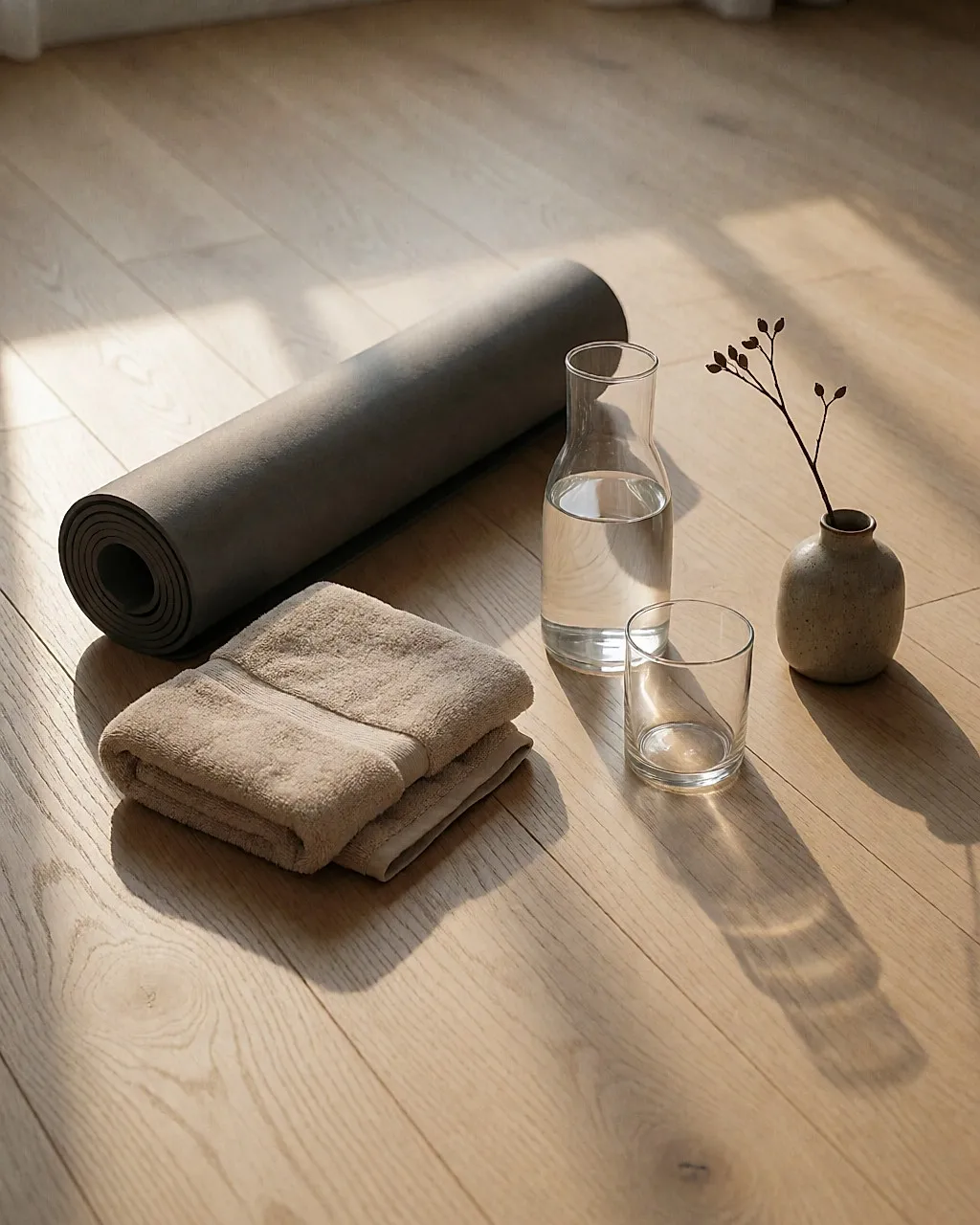
When it comes to looking after your body, the benefit depends less on intensity than on consistency, and on simple habits: gentle stretching at the end of a session, slow breathing, hydration, and enough sleep. A twenty-minute ritual three times a week fits far more easily into a busy life than a fantasy hour and a half every weekend.
Budget
Prices vary mainly by city, the coach's qualifications and the volume you buy. In France, where Sport-Pros operates, expect around £30–£70 (€35–€80) for a one-hour individual home session, with higher prices in Paris and other large cities. A shared class for two or three costs much less per person, often £13–£25 (€15–€30). Yoga or sophrology at home: more like £45–£80 (€50–€90) per session. Ten-session packages are usually discounted.
To reduce the cost, check eligibility for the French tax credit for personal services: the organisation must be registered as SAP (services à la personne, or personal services), and the service must appear on the list set out in the French labour code — which is not true of every sporting activity. Ask for the SAP registration number and the annual tax certificate, and check the official French tax administration page before relying on a reduction. The immediate tax-credit advance, managed by Urssaf, is available for some eligible services. This tax credit is specific to France; the UK has no equivalent tax relief for personal training, so be wary of any UK provider claiming otherwise.
Where can you find a coach? Registered SAP networks, gyms that offer home visits, local associations and online platforms. Compare at least three quotes, and check whether travel is included or charged separately.
Sources
- WHO, 'Physical activity' fact sheet, who.int
- NHS, 'Physical activity guidelines for adults', nhs.uk
- UK Chief Medical Officers, 'Physical activity guidelines', gov.uk
- Santé publique France, 'Physical activity and sedentary behaviour', santepubliquefrance.fr (French public health agency)
- French Ministry of Sports, information on sport on prescription, sports.gouv.fr
- impots.gouv.fr, 'Tax credit for personal services'
- service-public.fr, 'Personal services: tax credit'
- Urssaf, 'Immediate tax-credit advance', urssaf.fr
- Légifrance, French Labour Code, article D. 7231-1
- Ameli, information on adapted physical activity, ameli.fr


Comments
Your opinion matters: rate the article, react and reply to comments.
Comments are moderated; AI-assisted comments are flagged. Text emoticons (8-), :-), <3…) are automatically shown as images.