
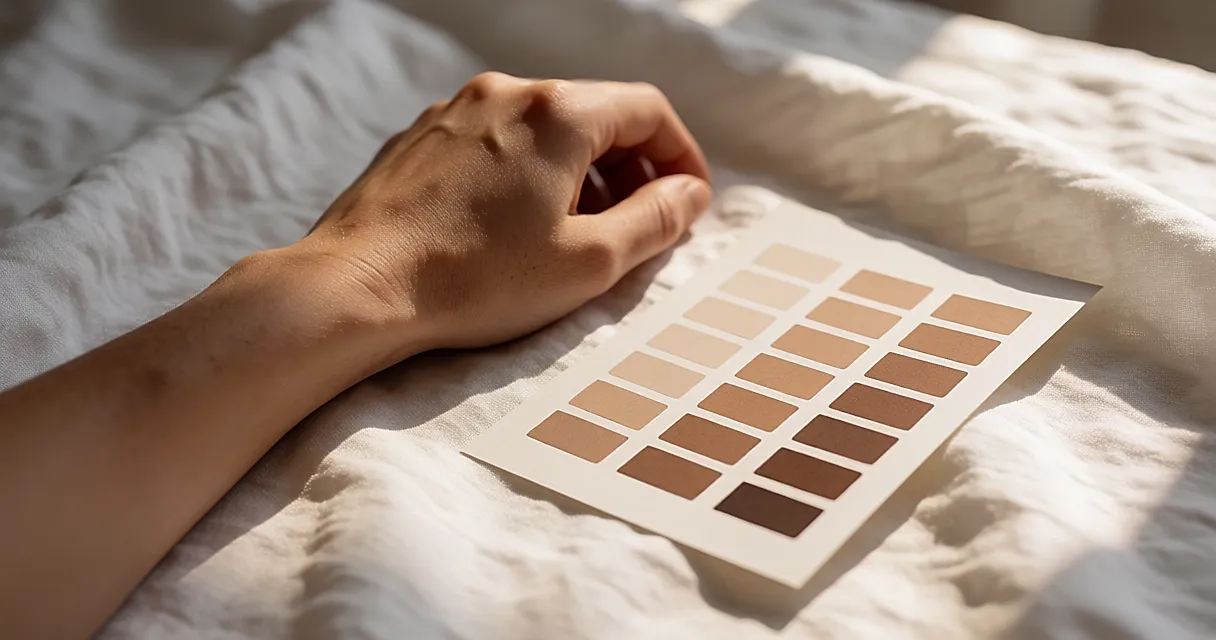
The box turned up. It sat in the hall for days, and the question surfaced: "This was the right one for blonde hair, wasn't it?" That's a question to ask before you pay, not after you've unpacked. And the answer has nothing to do with the price or the number of flashes. It comes down above all to one thing: the contrast between the colour of the hair and the colour of your skin.
What the light is actually aiming at
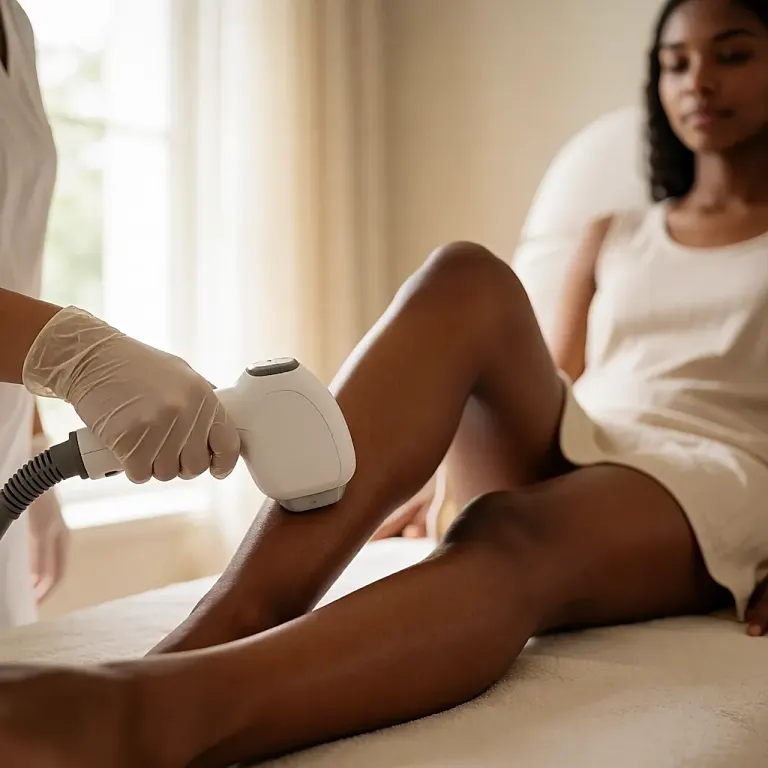
Most devices sold for at-home hair removal are intense pulsed light (IPL) machines; a handful of diode models exist and cost more. The principle doesn't change: deliver light that melanin — the pigment in hair — absorbs, so the follicle heats up and goes into a resting phase. Dark brown or black hair on fair skin: an obvious target. Light blonde, white, red or very fine downy hair: the target becomes practically invisible, and no amount of power will put the colour back into it. Olive or darker skin: the melanin isn't only in the hair; it's in the epidermis too, which heats up at the same time.
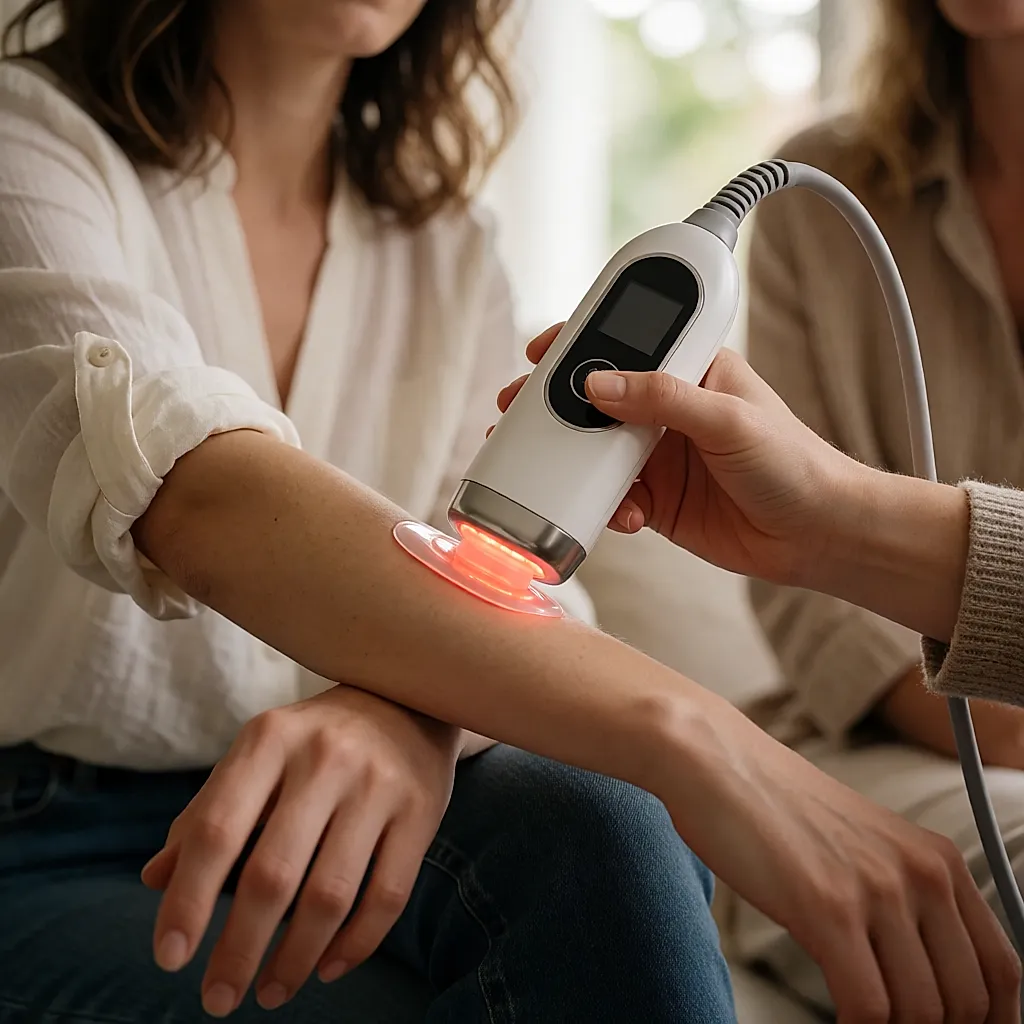
That's exactly why the boxes carry a skin-tone chart, and why plenty of devices include a sensor that simply won't fire on skin that's too dark or freshly tanned. It isn't a gimmick to pad out the manual; it's a safety catch. It's also why turning the joules up fixes nothing: it won't darken blonde hair; it just raises the risk of your skin overheating.
Five minutes in front of the mirror
Before you order, there's one daft little thing that takes about as long as a cup of coffee: look at your leg. Not the smooth skin on the day you removed the hair — the regrowth once it's visible, the one that finally shows the true colour and density of the hair. While you're looking, note any moles, tattoos, scars or irritated patches: the light can't tell a hair from a tattoo.

Then the chart. It's on the box, in the manual, on the manufacturer's website, and your skin tone has to be on it — including the "two weeks in Greece" version. If it isn't there, the device isn't for you, and that's not a question of willpower. A lot of olive and darker skin tones are excluded by the manufacturers themselves: in that case you sort it out with a dermatologist or a specialist clinic, not with a special offer. Check the list of approved areas too — the face isn't always included.
The checklist before you hit checkout
- Is the hair properly dark? (light blonde, white, red: the light has almost nothing to aim at)
- Is your skin tone on the chart, tanned version included?
- Have you spotted a mole, tattoo or scar on the area?
- Does the brand allow that area?
- Does the retailer accept returns if the trial doesn't work out?
The small patch that decides everything
The temptation is to do the lot on the first evening — whole leg, bikini line included — and judge it the next morning. Bad idea. The protocol is more modest: shave the area (the hair needs to stay inside the follicle, so no waxing or plucking beforehand), set the intensity to minimum, then treat a small patch only.
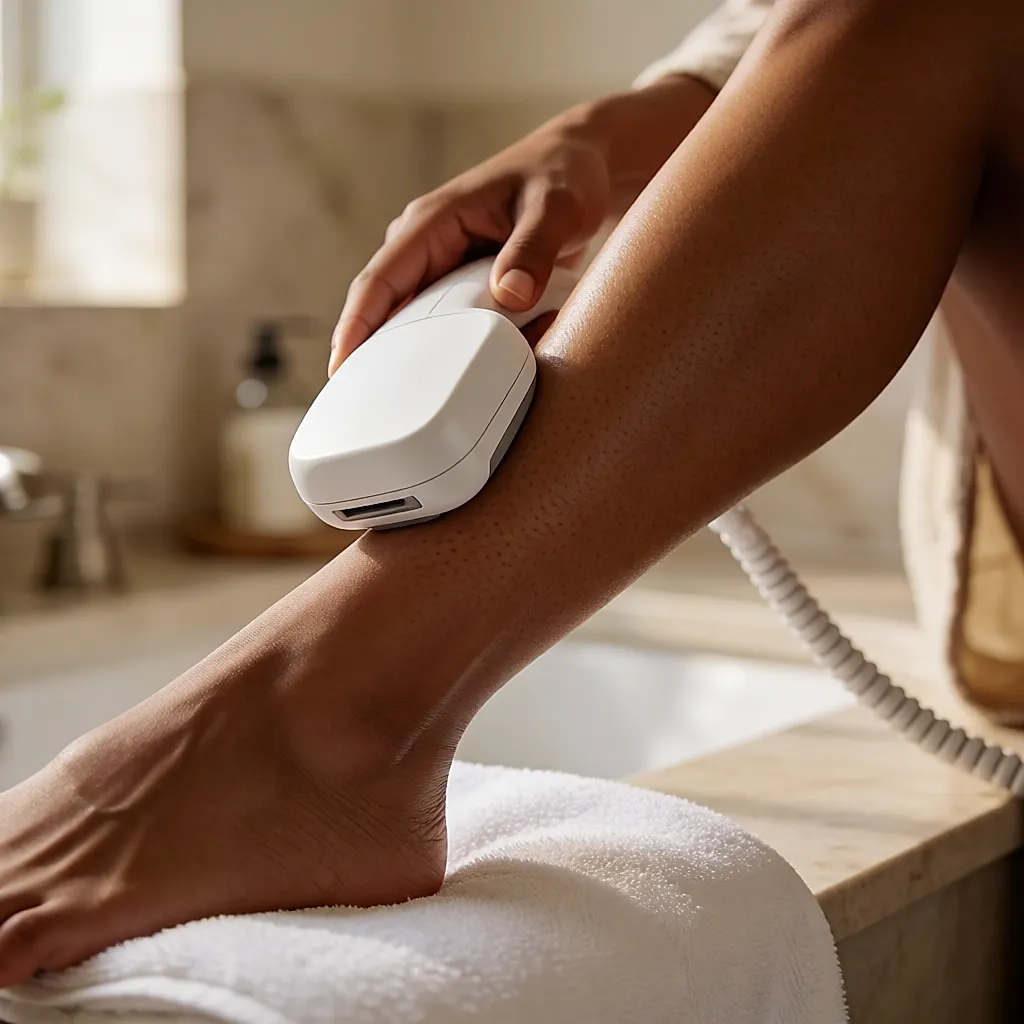
What you're watching for afterwards isn't the result; it's the reaction. Redness that sets in and stays, a burning sensation, a blister: stop everything, and if it doesn't settle quickly, ask a pharmacist or your GP to look at the area. If all stays calm, you can widen out gradually, respecting the interval set out in the manual between sessions.
On effectiveness, nobody can promise you peach-smooth skin: not me, not the brand. Contrast, consistency and hair colour do the work; the device just delivers the light.
Budget
Expect to pay somewhere between £100 and £500 for an IPL device, depending on the size of the flash window, the number of flashes quoted and whether there's a skin-tone sensor. Diode devices are less common and usually sit above that range. And the cost doesn't stop at the purchase price: if the lamp isn't replaceable, the total flash count is the lifespan of the machine. Worth checking that number before you click.
You'll find them in pharmacies, at beauty and electrical retailers, and online. The smart move isn't hunting down the most dramatic discount; it's picking a retailer that accepts returns. It sounds dull, but that's what leaves you a way out if the small-patch test doesn't convince you.
An IPL device isn't a bad buy in itself: it's a conditional one. The deciding factor is neither the power printed on the box nor the length of the product page; it's the contrast you can see in the mirror. If it's there, the device has a real chance of earning its keep; if it isn't, you've just saved yourself several hundred pounds — and that's a decent result in its own right.

Comments
Your opinion matters: rate the article, react and reply to comments.
Comments are moderated; AI-assisted comments are flagged. Text emoticons (8-), :-), <3…) are automatically shown as images.