
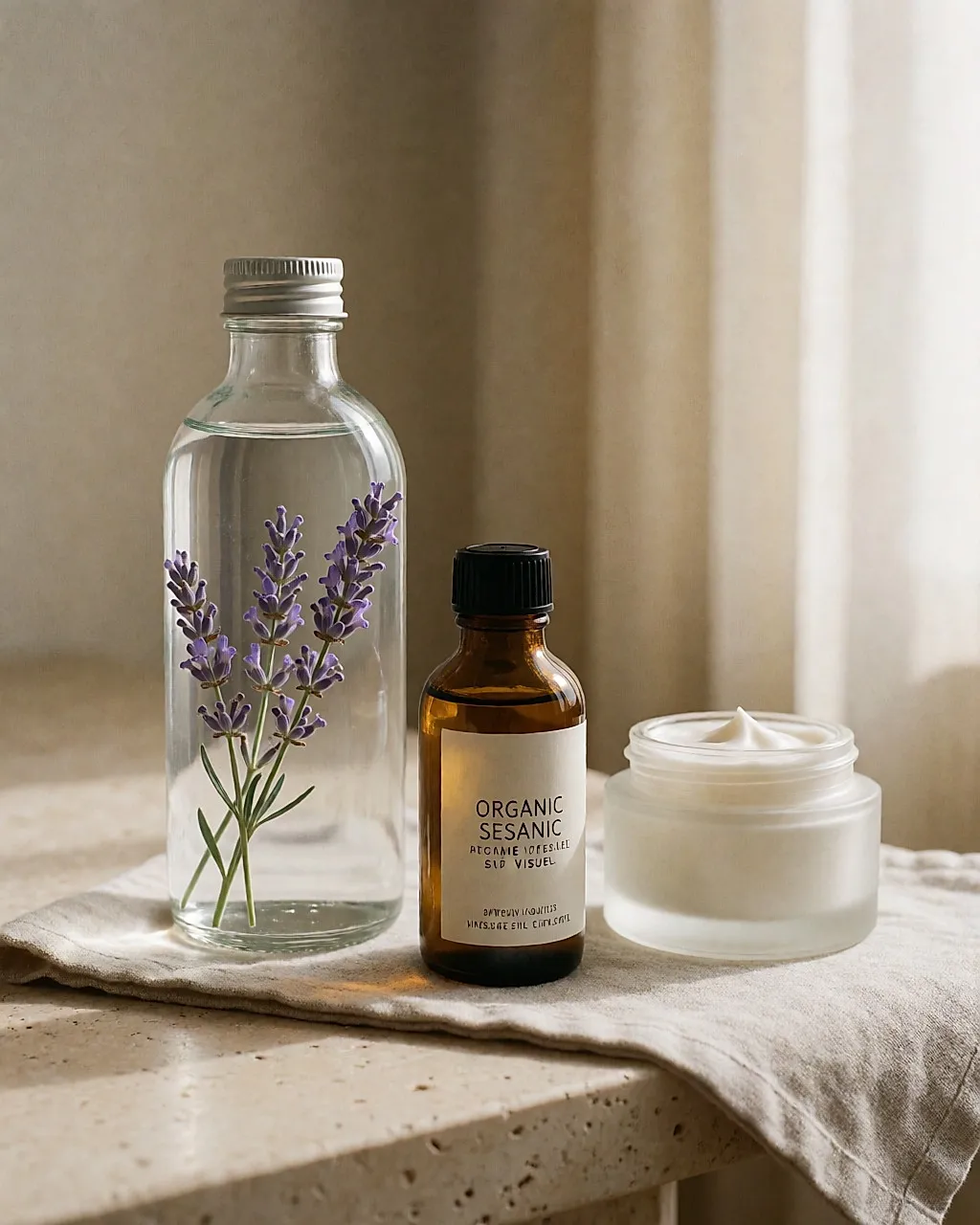
Looking for an organic routine that holds up on skin that's starting to show its age? I dug out the details on BIO BY RAHMA, the brand stocked by the shop evydemmentbio, to see what it offers right now — and above all what to check before you click.
Let's be upfront: I haven't tried the current range. What follows comes from the ingredient lists, the certification standards and the way these ingredients actually work, not from a trial in a treatment room. Where something is brand talk, I'll flag it.
What the ingredients actually do
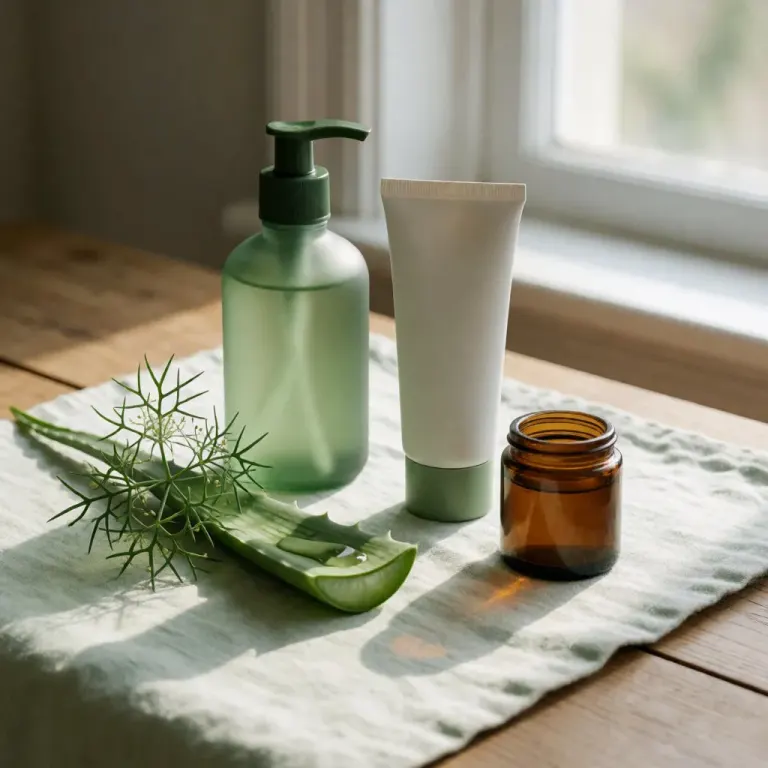
The brand leans on a few staples. Lavender floral water, for instance, is a hydrolat: it works as a toner and refreshes skin after cleansing. Witch hazel, an astringent, is worth knowing about on areas that shine or feel tight. Sesame oil, rich in vitamin E, plays the emollient: it softens skin and helps limit water loss. Plant-based glycerin and lecithin draw in and hold moisture, vitamin E acts as an antioxidant, and hydrolysed wheat proteins are used for a surface-tightening effect.
The 'dermo-regulating' talk, or skin that 'corrects itself', on the other hand, is marketing language rather than a proven mechanism. What you can actually check is the INCI list, the stated share of organic ingredients, and the certification.
The label rather than the promise
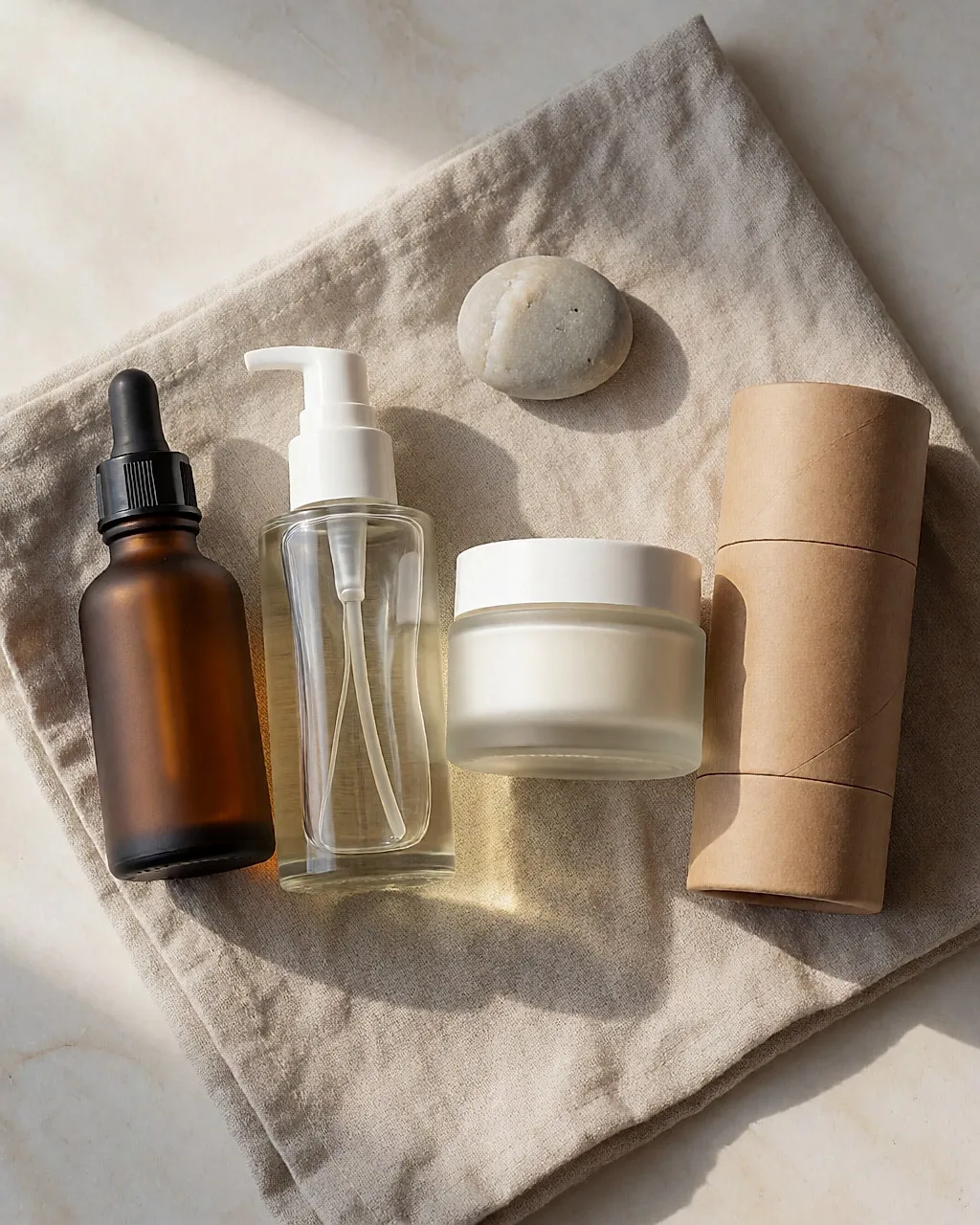
A bottle can claim 89% or 94% organic ingredients: on its own, that figure tells you very little. Look at the standard behind it. COSMOS, run among others by Ecocert and Cosmébio in France and by the Soil Association in the UK, sets the rules on the share of organically farmed ingredients, on processing methods and on packaging. A product certified COSMOS ORGANIC has been audited: it isn't a mention a brand can simply award itself.
When it comes to end of life, favour glass, unplasticised card and refills where they exist. A glass jar is recyclable, but it's heavy to transport: the best move is still to finish what you buy.
A floral water doesn't keep like an oil. Once opened, away from light, give it a few months — often six at most — and keep it in the fridge if the label allows. If the smell changes or it turns cloudy, bin it.
Your routine in three steps
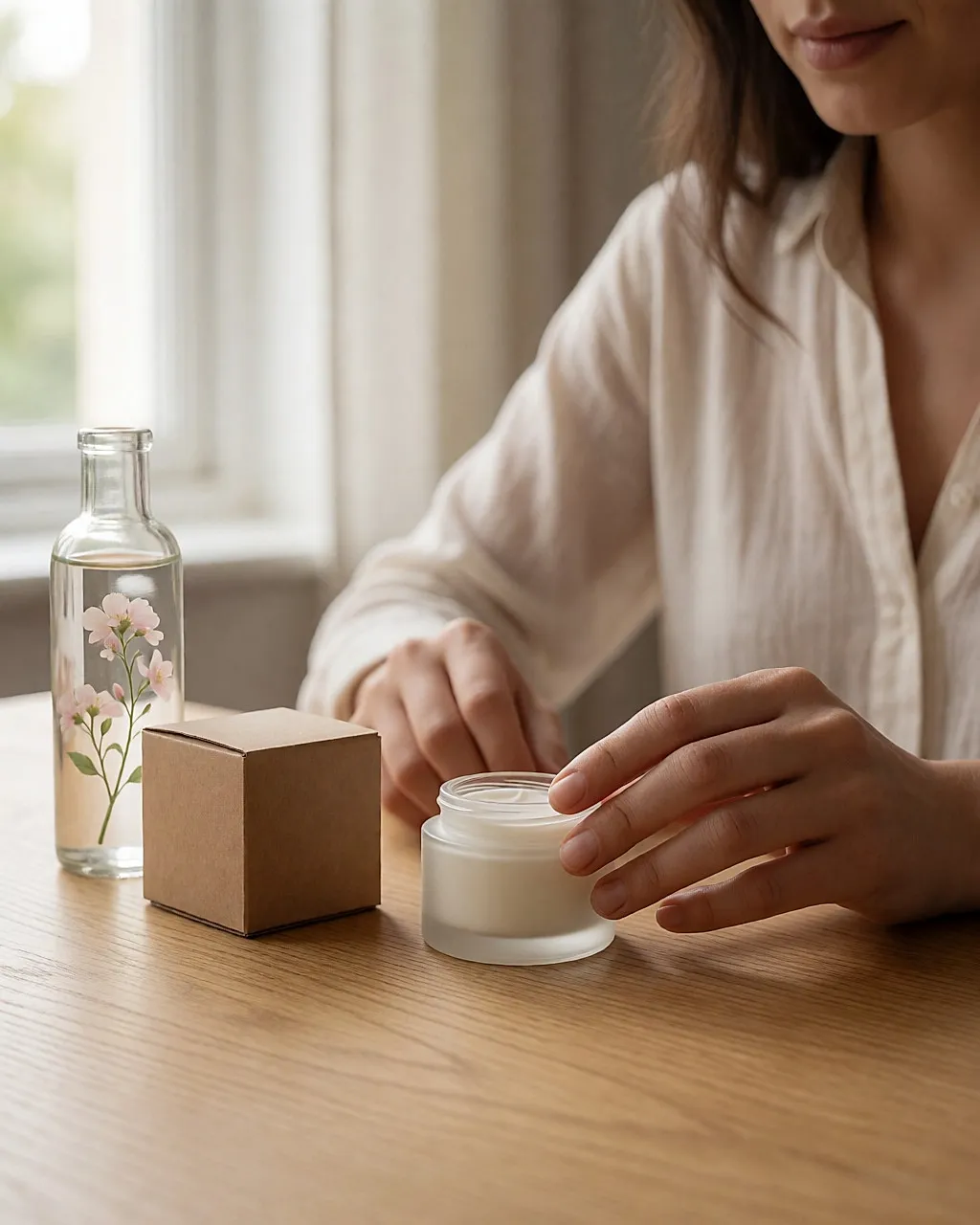
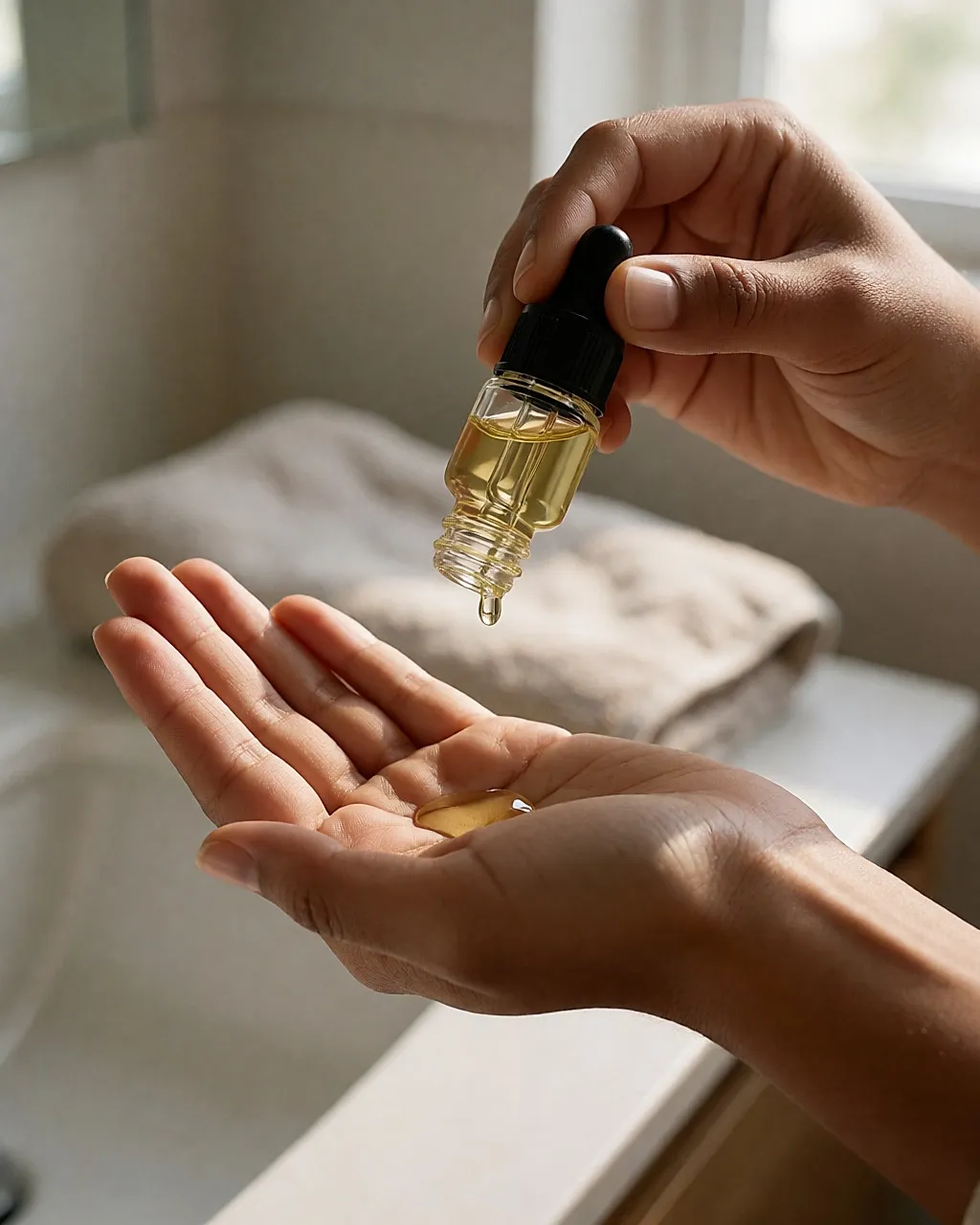
A gentle cleanse, then a few drops of floral water patted in with your fingertips, never rubbed: that's the step that changes everything on a reactive complexion. In the evening, warm two or three drops of sesame oil between your palms, press it onto skin that's still damp, then finish with your cream. In the morning, keep the richer texture for winter and go lighter as soon as the temperature climbs.
You don't need a whole range. One floral water, one oil, one cream: that's already a complete routine. Add a concentrated serum only if your skin still feels tight after that.
Budget
- Organic floral water (lavender, witch hazel), 200 ml: expect roughly £7 to £15 in a health food shop, pharmacy or online.
- Organic sesame oil, 100 ml: expect roughly £9 to £17.
- Certified organic face cream, 50 ml: expect roughly £17 to £38; a concentrated serum quickly climbs to between £25 and £50.
What moves the price: certification, the share of organic actives, the size and the type of packaging. Where to find these products: the evydemmentbio shop when it stocks the brand, health food shops, pharmacies and specialist retailers. One last practical tip: compare the price per millilitre, not the price on the label.
Comments
Your opinion matters: rate the article, react and reply to comments.
Comments are moderated; AI-assisted comments are flagged. Text emoticons (8-), :-), <3…) are automatically shown as images.