
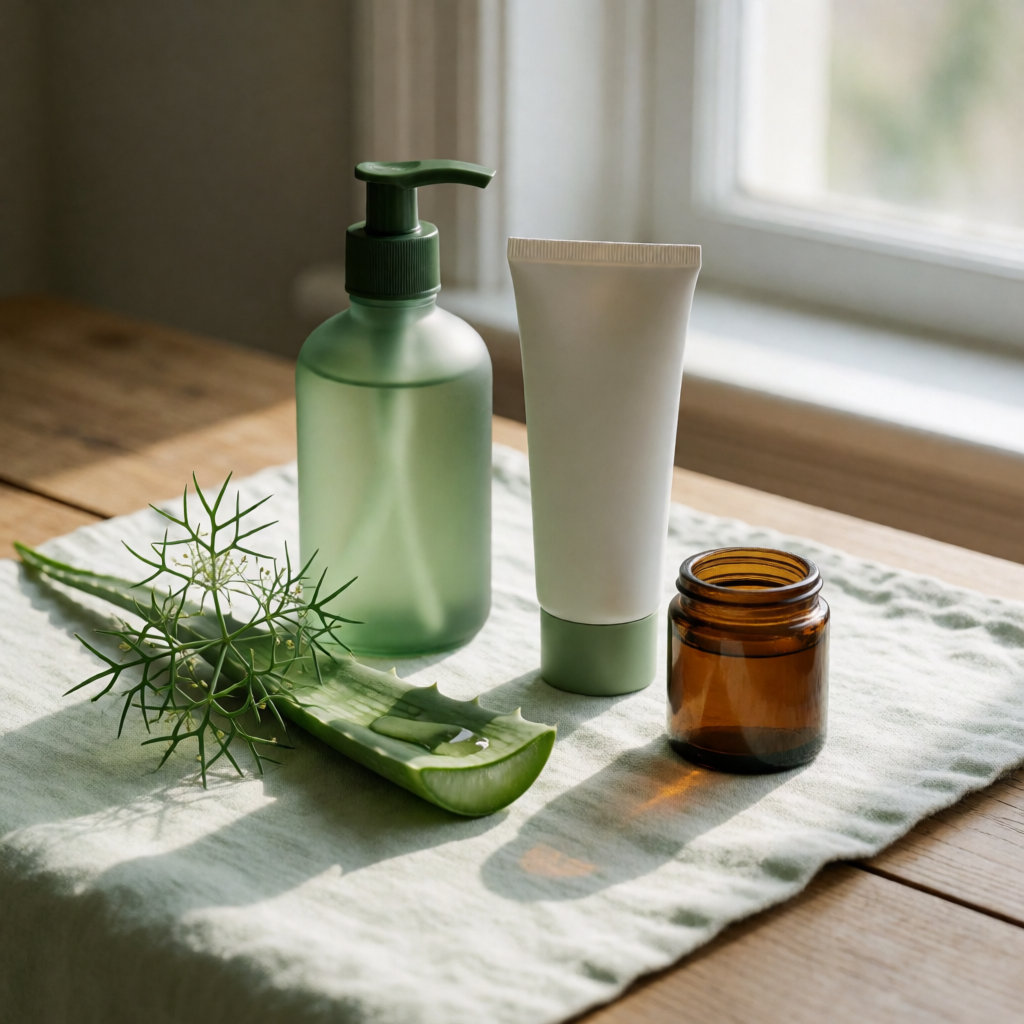
A green bottle, a neat little ‘organic’ on the label, and there you are in the middle of the health and beauty aisle wondering whether you’re paying for a formula or a story. It’s a familiar scene, isn’t it? When a brand as established as Garnier steps into organic beauty, the real question isn’t whether the intention is sincere, but whether the formula and the routine hold up day to day. So we’ve picked over the Bio Active range: what it contains, what its certification really guarantees, and what it won’t do.
What the certification really guarantees
The Bio Active range is certified by Ecocert Greenlife, according to the COSMOS standard. It isn’t a decorative logo. The standard sets a minimum percentage of naturally derived ingredients and a minimum share of organically farmed plants, and it regulates processing methods. This is the first thing to check before you reach for your card, because ‘natural’ on its own means nothing. A product can contain a trace of plant extract, be labelled ‘naturally derived’ and commit to nothing. The certification, by contrast, has a specific and audited meaning.

One small caveat to keep in mind: a certified formula isn’t automatically free from the risk of a reaction. Organic isn’t a free pass to skip a patch test on a small area before applying it to your whole face, especially if your skin reacts quickly.
Actives, not miracles
The range covers the essentials: several make-up removers (including a cleansing milk and an eye version), two moisturisers and two anti-ageing products. The formulas rely in particular on aloe vera juice, known for its soothing and hydrating properties, and sea fennel, highlighted for firming. So much for the promise.
Watch the wording, though. ‘Firming’, ‘anti-wrinkle’: these are cosmetic claims, not promises of a particular outcome. A product hydrates, softens and improves the skin’s comfort over days. It won’t erase an established wrinkle. Saying so is already doing yourself a favour.

Textures, application and small limitations
The moisturisers have a fluid texture, while the nourishing versions are creamier. The step that changes everything comes down to a hazelnut-sized amount: warm it between your palms, apply from the centre of the face outwards, and don’t forget your neck. Applying more is pointless — skin absorbs what it can, and the rest ends up as a greasy film. Two hazelnut-sized amounts ‘just to be sure’ simply leave you with a shiny mask.

For sensitive skin, it’s better to look at the fragrance-free versions. The eye make-up remover is presented as extra-gentle, but for waterproof or heavy make-up, expect to go over the area several times. The cleansing milk is very creamy and may need a light touch, or it can leave a sticky finish. The anti-ageing products are described as fast-absorbing, which may make them a decent base before make-up.

I’ll be honest: I haven’t tested this range myself. This overview is based on the official product information. This is exactly the kind of skincare that should be judged over three weeks, not one day. So be wary of rave reviews after two days.

Which version for which skin
Normal to combination skin: the fluid moisturiser, morning and evening, on clean skin. Dry or sensitive skin: the richer nourishing version, which takes a little longer to absorb. For the eye area, the fragrance-free version, patted in with the ring finger — the weakest finger, and therefore the gentlest for this delicate area. And if you’re torn between two products, remember that one product used to the end is better than three bottles half-started. And yes, we’ve all got a drawer that proves it.

Budget
On price, this remains affordable for certified skincare. In the UK, as a rough guide, expect around £4 to £10 for a make-up remover or moisturiser, and more like £7 to £15 for an anti-ageing product or serum. Differences come down to size, retailer, city and offers, which are fairly regular on this kind of range.
Where to buy it: in supermarkets in the health and beauty aisle, or at specialist beauty retailers.
A useful habit before you pay: check what the bottle says about recyclability, and whether a refill format exists for the product you’re considering. Not every range offers one, and it’s a criterion that carries as much weight as the ingredient list when you want to reduce packaging.
If you remember only one thing, make it the evening double cleanse: make-up remover first (cleansing milk on the face, eye version on the eyelids), then a cleanser. That kind of consistency has more impact on how your complexion looks when you wake up than any pile of bottles.


Comments
Your opinion matters: rate the article, react and reply to comments.
Comments are moderated; AI-assisted comments are flagged. Text emoticons (8-), :-), <3…) are automatically shown as images.