
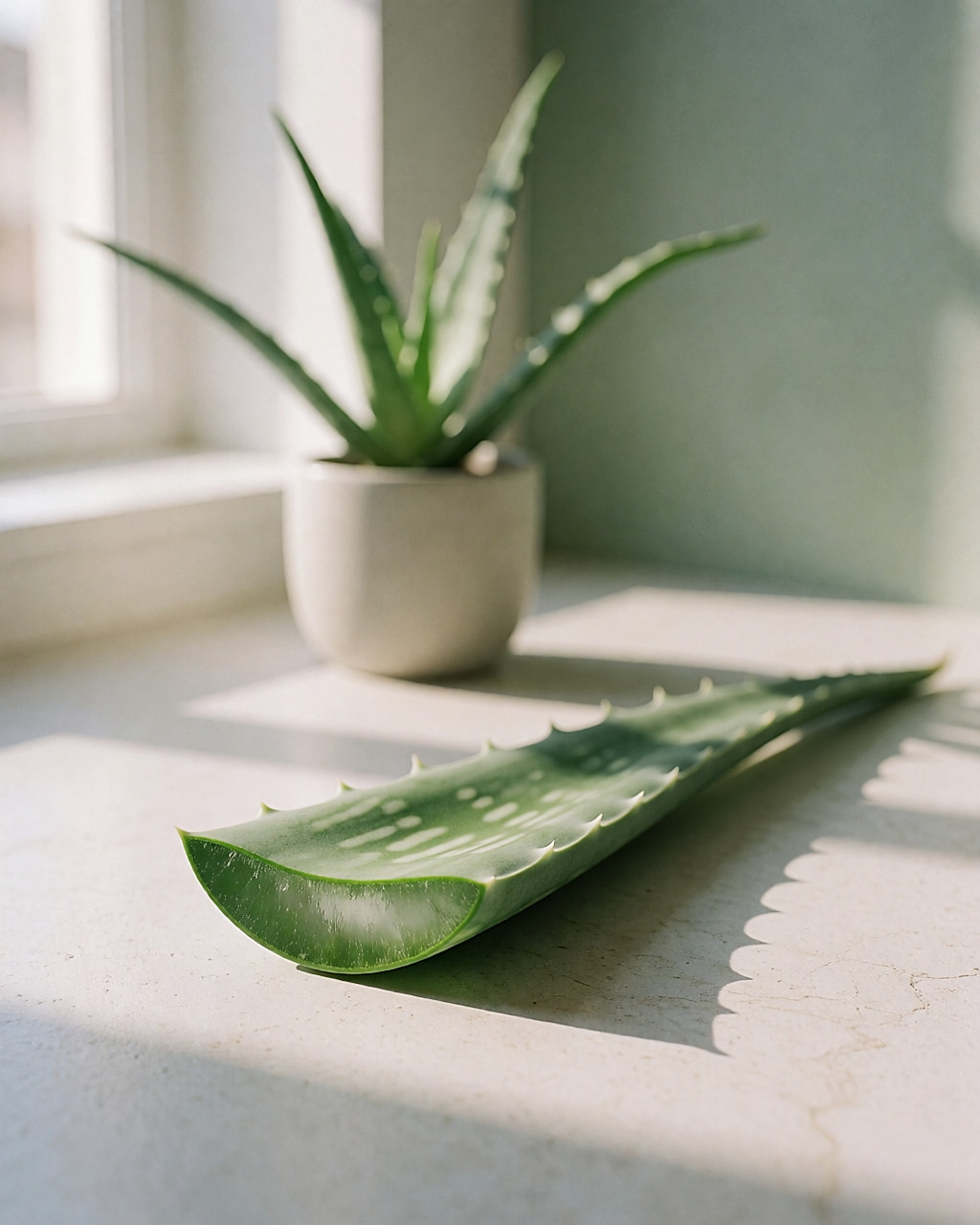
Aloe vera turns up everywhere: after-sun, hand cream, toothpaste, juice to drink. Its reputation as the Swiss Army knife of skincare is nothing new, and yet there is a gap between what the plant actually does and what the labels promise. Not enough to throw the pot away, but enough to keep your eyes open.
What the plant actually contains
The fresh gel you get by cutting a leaf is around 99% water. The rest is made up of polysaccharides — including acemannan — plus vitamins, minerals and enzymes. Nothing dramatic, but a composition that partly explains why the plant has been useful for so long.
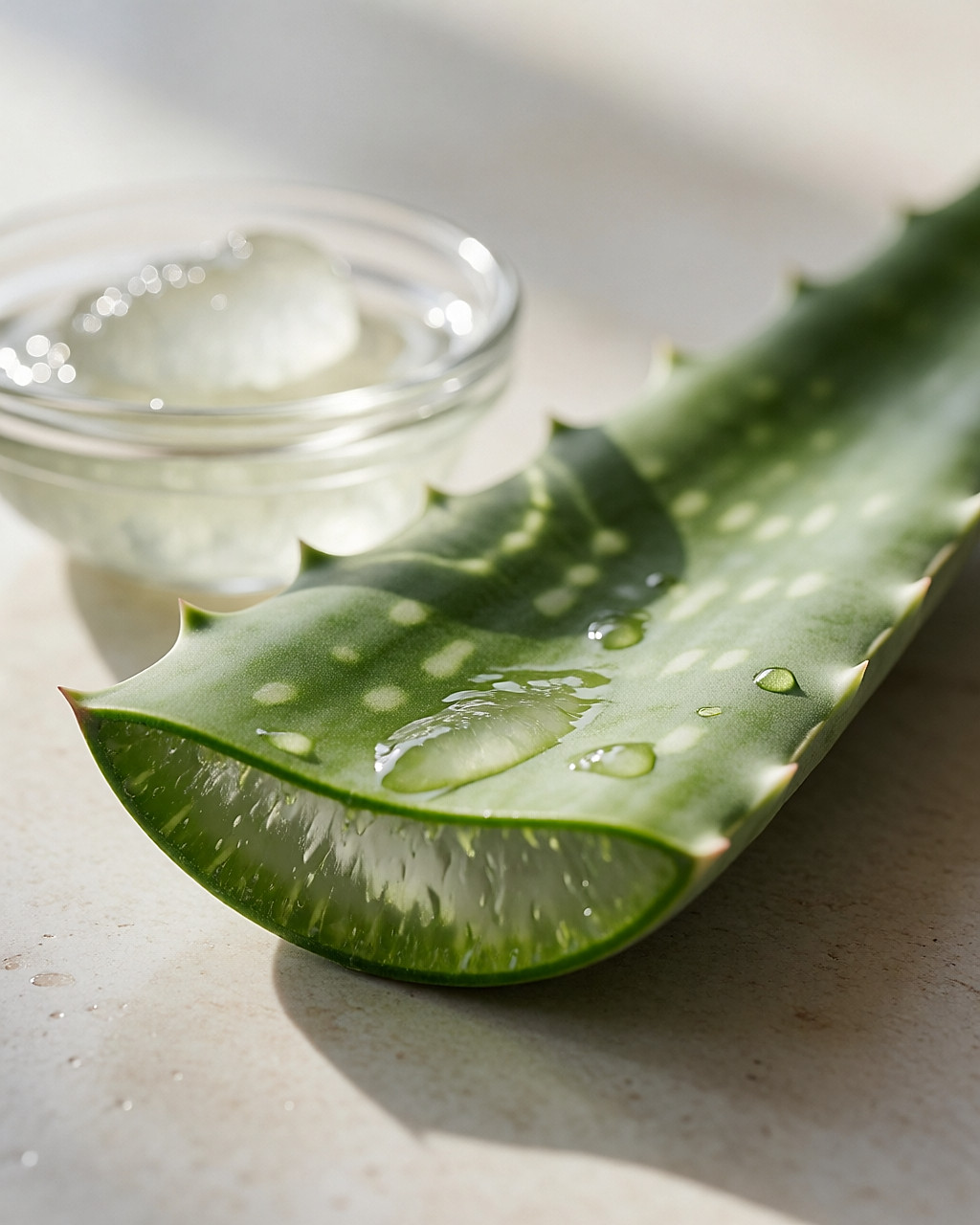
Then again, the famous '75 nutrients' you read everywhere come mainly from commercial literature, not from official analysis. In other words, when a label promises a very long list, you can smile: the aloe vera leaf is not a walking laboratory, it is a rather modest succulent that simply has what it takes to hydrate and soothe.
On the skin: what we know and what remains unclear
In practice, the gel soothes. Applied in a thin layer to mild sunburn or tight skin, it forms a moisturising film and gives a feeling of freshness. This is the simple step you can allow yourself on intact skin, without a treasure hunt between the shelves.

For everything else, be cautious. A wound, an extensive burn, blisters or a lesion that will not heal are for a doctor, not for the pot of gel. For hair, a gel mask applied before shampooing can help detangle and tame rough ends — a welcome helping hand on dry hair, as long as you do not expect wonders.
A cosmetic gel is not a medicine. Aloe vera soothes and moisturises, but it does not replace a dressing or medical advice. If your skin reddens or tingles when you apply it, rinse with clean water and stop using the product, then speak to a professional if the reaction persists.
Drinking it or taking it as a supplement: caution first
The pulp can be consumed; the rind and the whole leaf, much less so. They contain hydroxyanthracene derivatives, including aloin: current data suggest they are laxative and potentially genotoxic, as EFSA has highlighted. Since 2021, these derivatives have been banned in food in the European Union. If you are in the UK, check the latest Food Standards Agency guidance.

In other words, avoid homemade remedies and whole-leaf juices, even if you come across a recipe that promises the earth. If you are considering a supplement, speak to a healthcare professional before you start, especially if you are taking medication or expecting a baby: it is the wisest step, and it costs nothing.
Choosing your gel without being taken in
Three criteria are enough, and none requires a chemistry degree. First, the ingredients: look for an aloe percentage stated clearly, often between 90 and 99%, and a short ingredient list — the fewer lines, the easier it is to make sense of.
Next, the label: a certified organic cosmetic (Cosmos Organic, Ecocert) guarantees a proportion of organic ingredients and a controlled set of standards, which limits the use of synthetic fragrances and preservatives. Finally, end of life: a glass bottle or a cardboard refill recycles better than an opaque plastic tube. As for the phrase 'cold stabilisation', it is not regulated: it describes a process, not a quality. That is why it should not raise the score on its own.
Budget
Expect to pay around £5 to £10 for a 200 ml gel in supermarkets, health food shops or online, £13 to £22 for a brand sold in department store beauty halls, and £17 to £26 for a gel claiming 99% aloe. The price rises with the aloe percentage, certification and glass packaging, and it can vary depending on the city and where you buy it.
For supplements, you are often looking at £9 to £22 per bottle, but again, ask a professional for advice before buying. Between an honest supermarket gel and a branded bottle, the difference rarely comes down to the leaf itself — more often it is the formula, the container and the promise that goes with it. So there is no need to break the bank: a simple, well-labelled gel very often does the job.
Aloe vera is neither a magic potion nor a plant to banish to the souvenir shelf. It is a gentle ally for the skin, as long as you leave it in its place — that of a care product, not a treatment. Keep it for summer's minor sunburn, thirsty ends and labels you take the time to read. The rest is the work of healthcare professionals, and no one will blame you for asking them.
Sources
- EFSA — Safety of hydroxyanthracene derivatives for use in food, EFSA Journal 2018;16(1):5092.
- European Commission — Regulation (EU) 2021/468 of 18 March 2021, EUR-Lex.
Food supplements do not replace a varied, balanced diet and a healthy lifestyle.



Comments
Your opinion matters: rate the article, react and reply to comments.
Comments are moderated; AI-assisted comments are flagged. Text emoticons (8-), :-), <3…) are automatically shown as images.