
Let's get one thing straight first, because it matters: none of this has been tested in a lab. What I'm giving you here is based on official product information, the standards behind the labels, and what a texture suggests when you open the pot in a shop. It seemed only fair to say so.
Read the label, not the claim
The word 'natural' has no official definition in cosmetics. 'Organic' doesn't have a single official definition either: it refers to private standards such as COSMOS or Cosmébio, checked by certifying bodies. Two standards come up again and again on packs sold in France.
COSMOS Organic and COSMOS Natural: a European standard backed by several certifying organisations. The Organic version sets a minimum percentage of ingredients from organic farming, with stricter requirements for leave-on products than for rinse-off ones.
Cosmébio: the French association, with two levels (Bio and Nature), checked by independent certifiers.
The one habit that makes the biggest difference is simple: read the first ingredients on the INCI list. Listed in descending order above 1%, they give a good indication of the formula's base—often a large share, though not guaranteed to be the majority. If aloe vera juice or a floral water leads the list, the base looks solid. If you see 'aqua' followed by three silicones, you're mainly paying for pretty packaging.
Face care: start with a rich cream
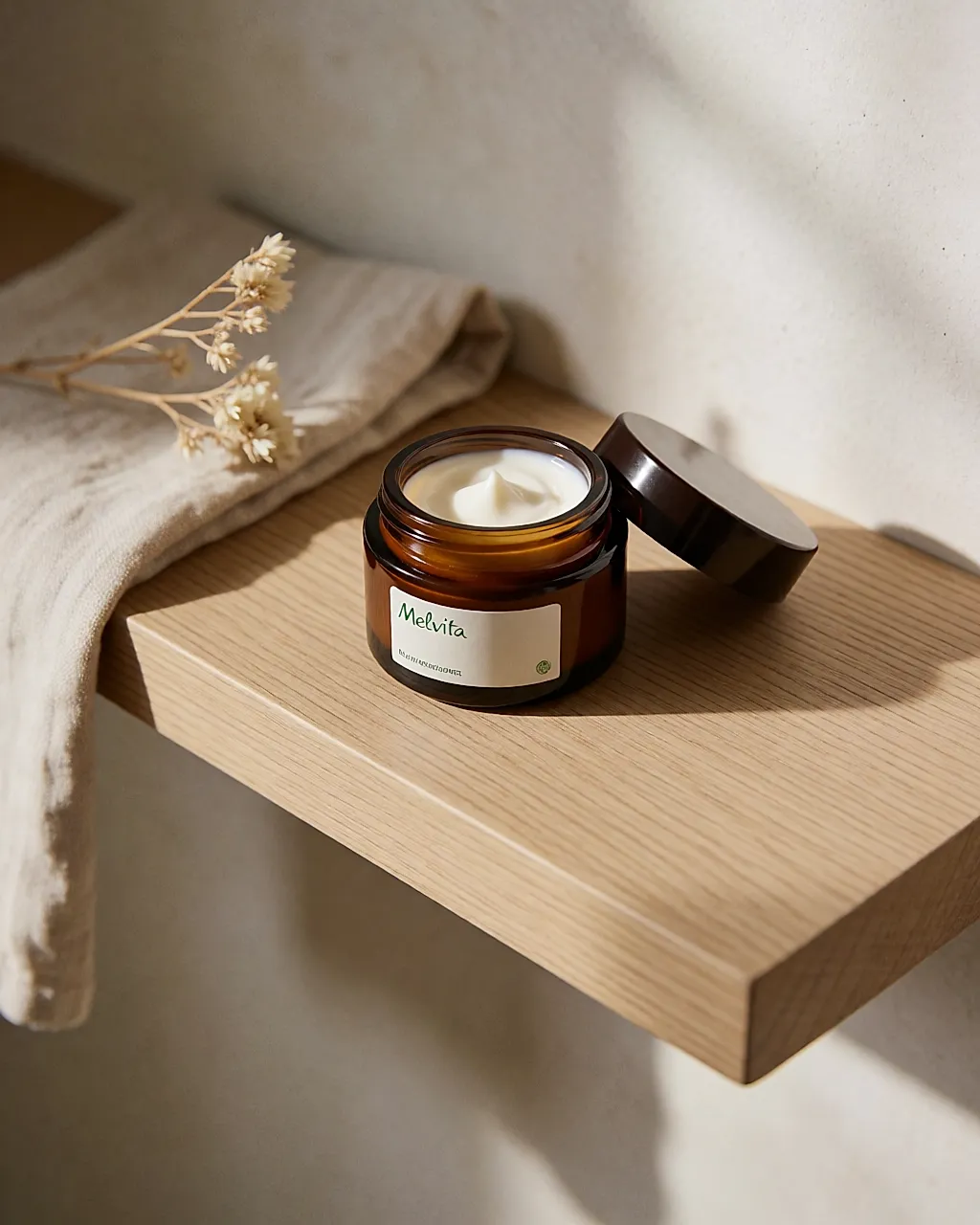
Does your skin feel tight after a shower? Do redness flare up as soon as it turns cold? A rich aloe vera cream is still the most sensible starting point. German brand Santaverde formulates its products with aloe juice instead of water: the texture is dense, almost a melting balm, and it warms between your palms before application. Warm three drops, pat from the centre of the face outwards, and give skin about 30 seconds to absorb before makeup.
The honest catch: these products are mostly found in health-food shops or online, rarely in supermarkets.
Antioxidants: the step before the promise
Broccoli, sea fennel, white tea, argan oil—organic antioxidant formulas exist, and many are well put together. Still, no cream can undo ten years of sun. What you can expect from a well-formulated day cream is comfort, a less reactive skin barrier and a slightly less dull complexion over time. The rest happens elsewhere: in your sun protection and in your sleep.
If you're looking for a benchmark, aim for a glass bottle or a refill. And check where the fragrance comes from: named essential oils rather than a generic 'parfum' tucked at the end of the list.
At night, a richer texture
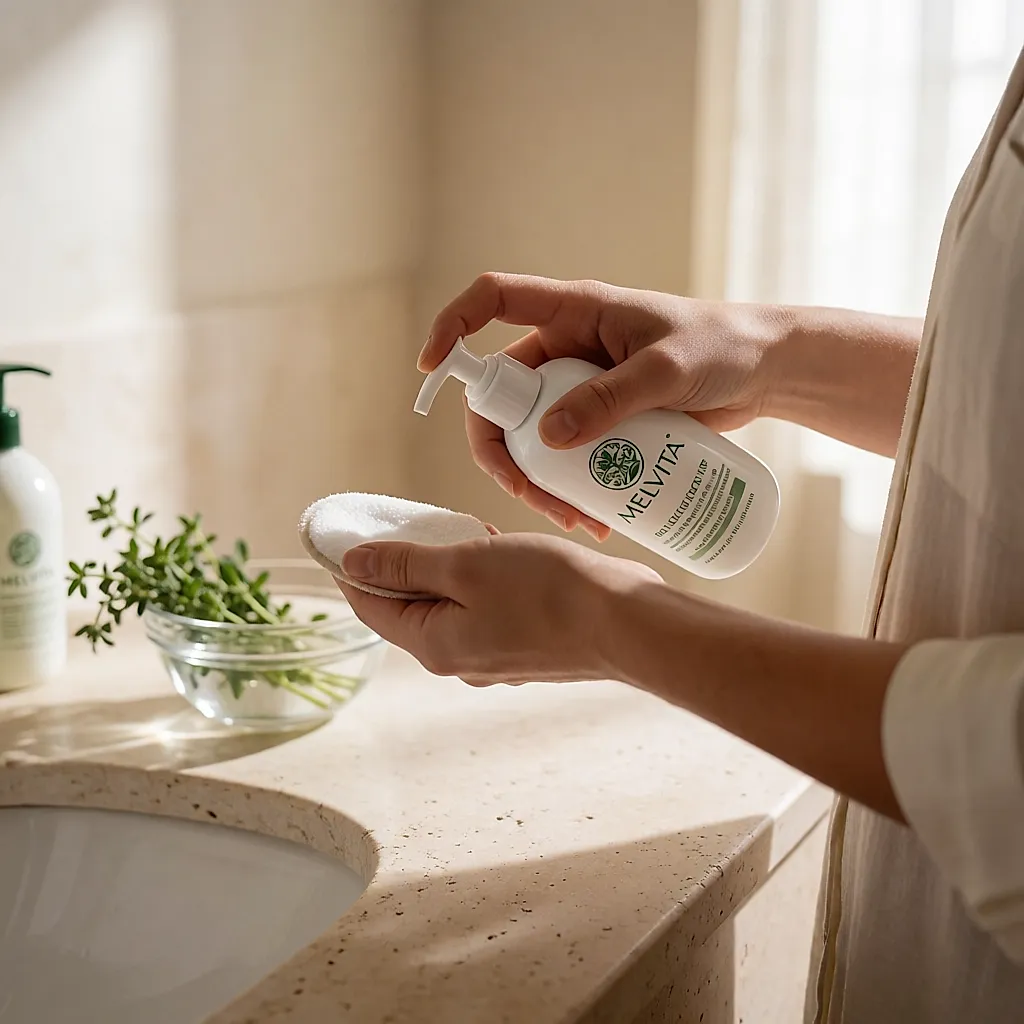
At night, your skin isn't facing wind or makeup. It's the moment for a thicker texture: a balm, a cream nectar, or a few drops of oil mixed into your usual moisturiser. Immortelle floral water, argan oil, plant proteins—organic combinations are plentiful. The useful test isn't the length of the active ingredient list, but what the product does on your skin: does it sink in, or does it sit as a greasy film on the pillow?
Body: lotion and scrub
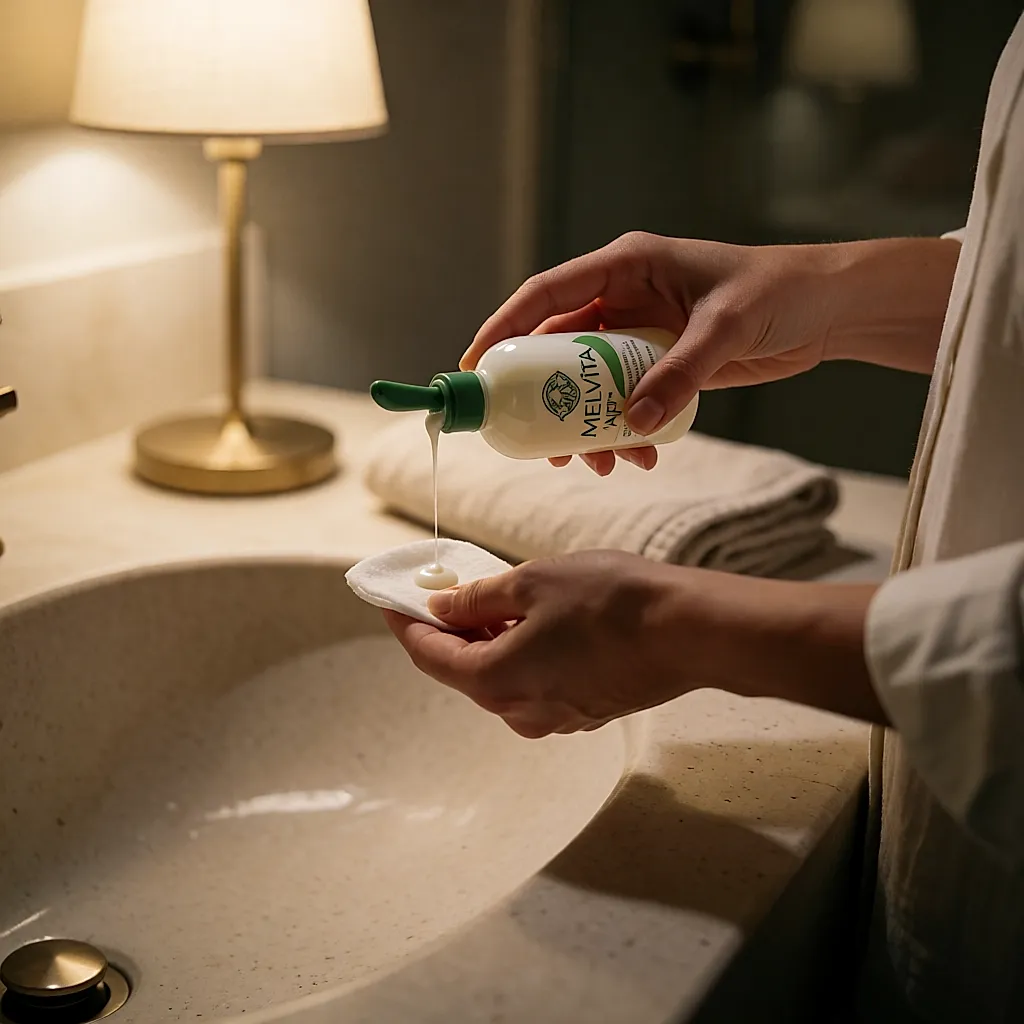
For the body, a light lotion with citrus extracts and jojoba oil does the job after a shower, applied while skin is still damp. On packaging, a glass pump bottle recycles better than a plastic tube—but the pump itself, a mix of plastic and metal, rarely ends up in the right waste stream. A refill, when the brand offers one, is often the best compromise.
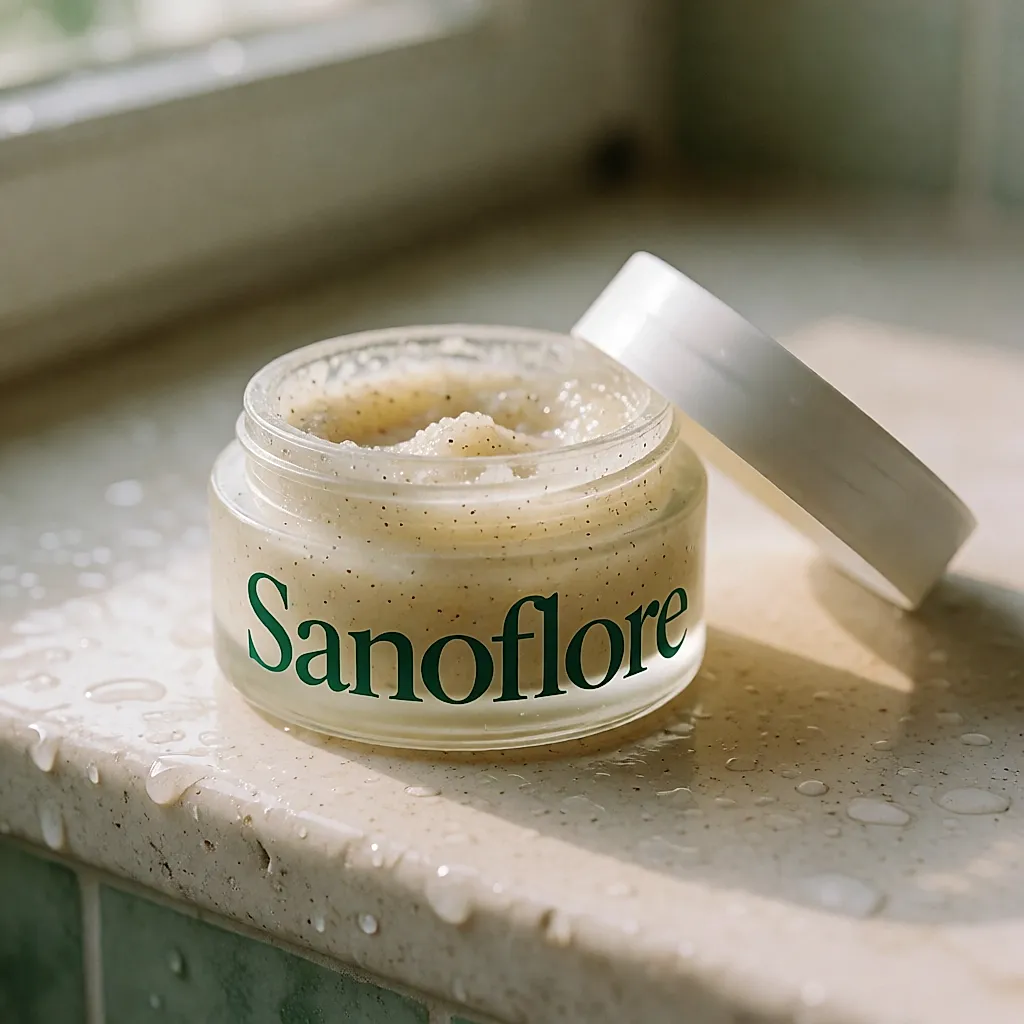
For a face scrub, be wary of grains. Plastic beads have been banned in rinse-off cosmetics in France since 2018, but mineral micro-grains, such as diatomaceous earth, are still abrasive if you scrub hard. Alternate with a grain-free enzyme scrub, once a week at most.
Cleanser and toner: the pair that matters
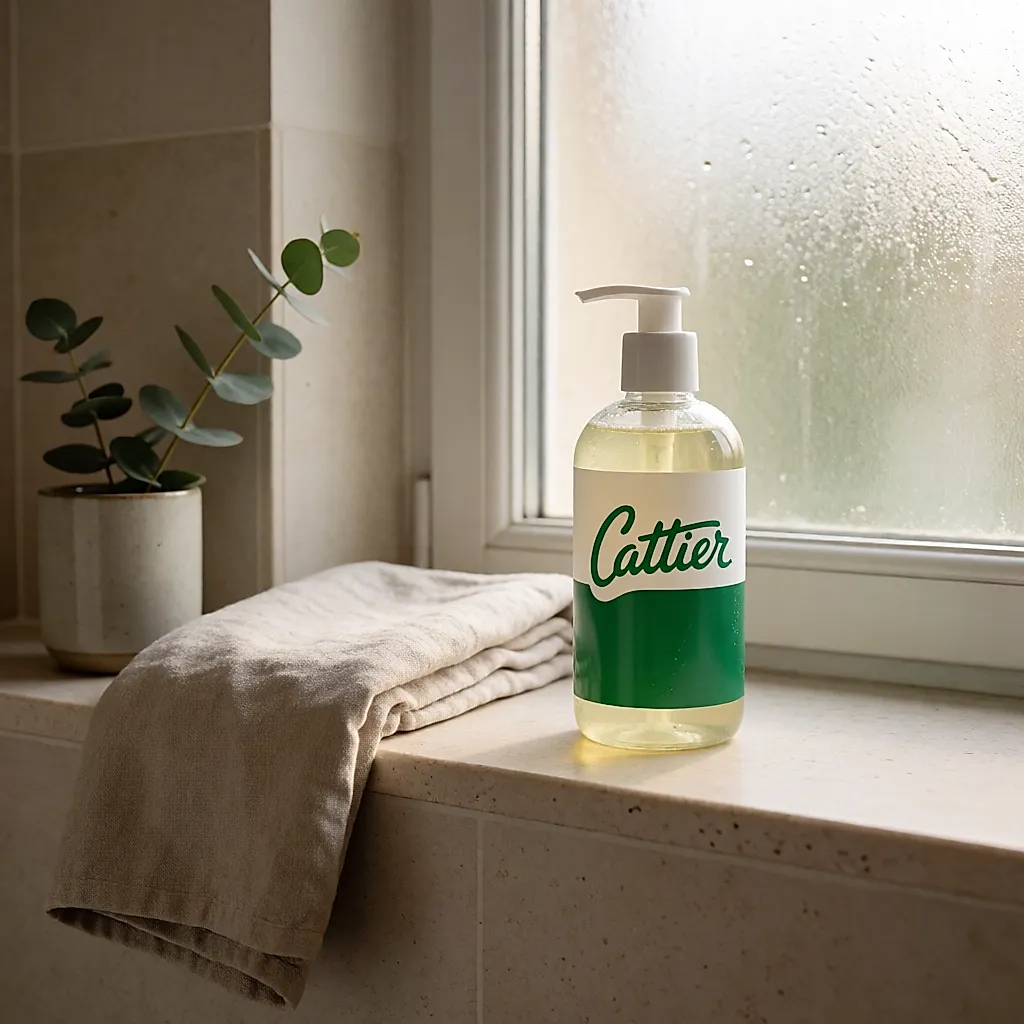
For sensitive skin, a cleansing milk with orange blossom water, shea butter and sweet almond oil, with no silicone or added fragrance, removes makeup without tugging. Add an alcohol-free toner to finish the job and remove hard-water minerals—a real source of discomfort in towns and cities.
One warning, though: many ranges mentioned in older posts on the blog have disappeared from catalogues. Check the brand's current product page before rushing to the shops.
Test one new product at a time, for two weeks. If your skin reacts, you'll know exactly what to blame. And keep your old cleanser to hand for rushed evenings.

Budget
A rough UK guide for certified organic products, based on the kind of ranges you'll find (prices vary by retailer and brand):
- Rich face cream, 50 ml: roughly £10–25 in health-food shops or pharmacies, up to £40–55 for premium brands.
- Night treatment or serum: £18–45.
- Cleanser and toner: £7–18 each.
- Body lotion: £9–22. Scrub: £9–18.
What shifts the price: the concentration of active ingredients, certification, format—a refill usually costs less than a new bottle—and where you buy it. Supermarkets and brand websites are often the cheapest; department-store beauty halls the most expensive. The traditional January and summer sales are still a good time to try an unfamiliar brand. A gift set, though, is no better value than a simple bottle.
The practical takeaway: start by replacing just one product—the one you use every day. That's where the change will be most noticeable.
Sources
- Regulation (EC) No 1223/2009 on cosmetic products, EUR-Lex.
- COSMOS Standard, cosmos-standard.org.
- Cosmébio association charter and certification levels, cosmetique-bio.org.
- French Code de l'environnement, ban on plastic microbeads in rinse-off cosmetics (2017 decree, effective 1 January 2018).
- Santaverde official product information.
Comments
Your opinion matters: rate the article, react and reply to comments.
Comments are moderated; AI-assisted comments are flagged. Text emoticons (8-), :-), <3…) are automatically shown as images.