
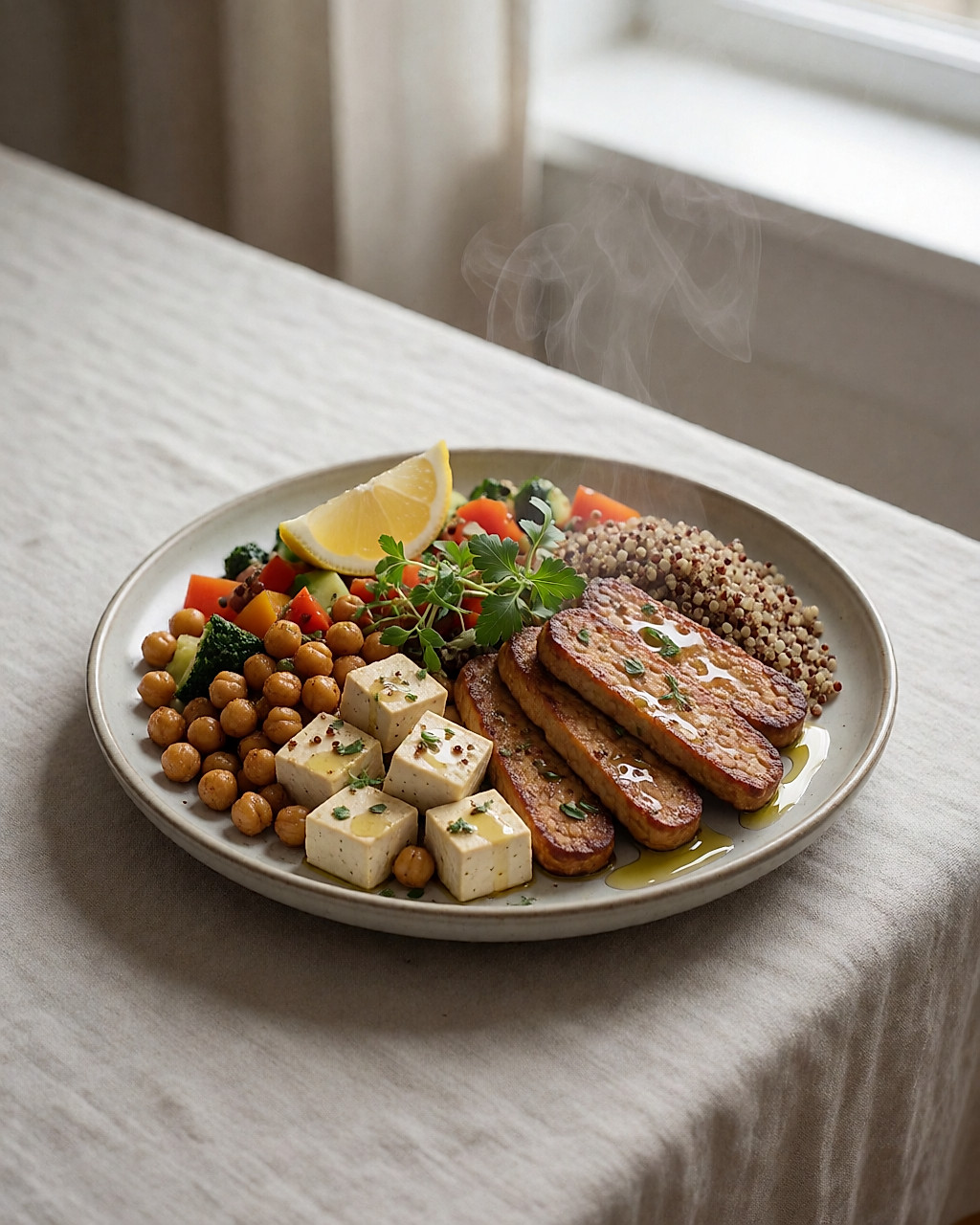
You're standing in the aisle, a pack of tofu in one hand, your phone in the other, and that familiar question pops up: what on earth am I going to do with this white block? A few years ago, the choice came down to soft tofu and a few frozen patties, and you often left empty-handed. Today, the aisle has changed in barely a few years, almost without fanfare — smoked tofu, tempeh, jars of pulses already seasoned, mixes you can heat up. So how do you make sense of it without spending an hour there?
What has changed in the aisle
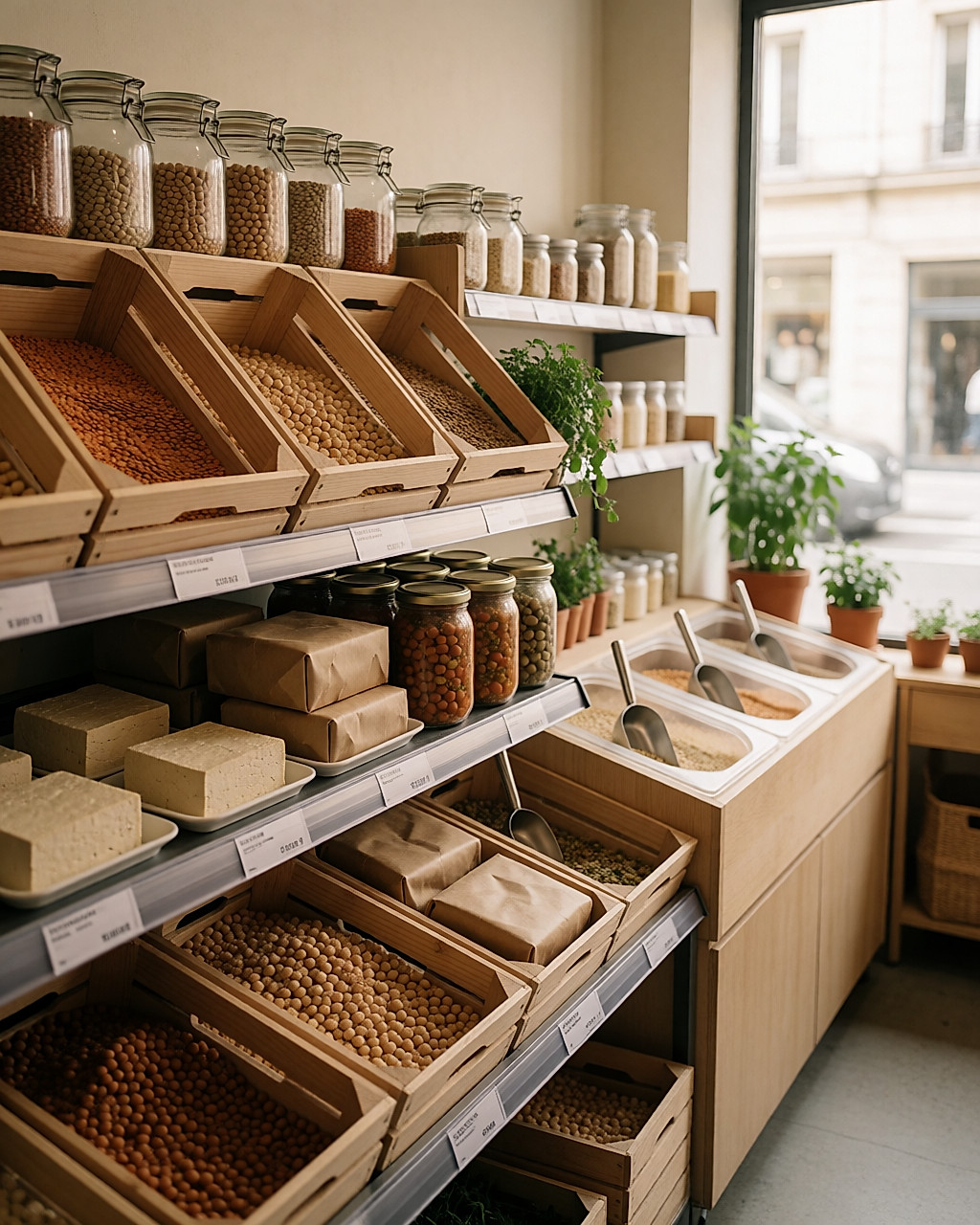
Where once there was little more than a pack of soft tofu and a few frozen patties, you'll now find firm tofu designed for the frying pan, smoked tofu, tempeh, pulses cooked in jars or pouches, grain-and-pulse mixes ready to heat, and more and more refill options. In practice, that's good news: more textures available, so more chance of finding one you'll genuinely like.
Because that's the catch, let's be honest. The problem was never a lack of choice, but a lack of signposts — you buy something because it looks nice on the shelf, then leave it languishing in the fridge because you don't know what to do with it. The rest of this article is here to help: a couple of simple habits to turn this aisle into a weekday ally, not just decoration.
The label: a little guide you can read in two lines
The useful habit can be summed up in one sentence: the shorter the ingredient list, the better you know what you're eating. A good base looks like this — the name of the pulse or grain, water, a little salt. Conversely, sugar, glucose syrup, flavourings, modified starch or added oil often signal a more processed preparation than a plain product — and, in many cases, one that's saltier or sweeter.

Then look at the 'protein per 100 g' line. A ready meal often shows less than a plain product, simply because it contains more water. A difference that may seem minor, but matters when protein is exactly what you came for.
In practice, remember this: in the aisle, turn over two comparable products and read just two lines — the ingredient list, then protein per 100 g. Thirty seconds is enough to see which one delivers more substance with fewer additions.
Which texture for which use?
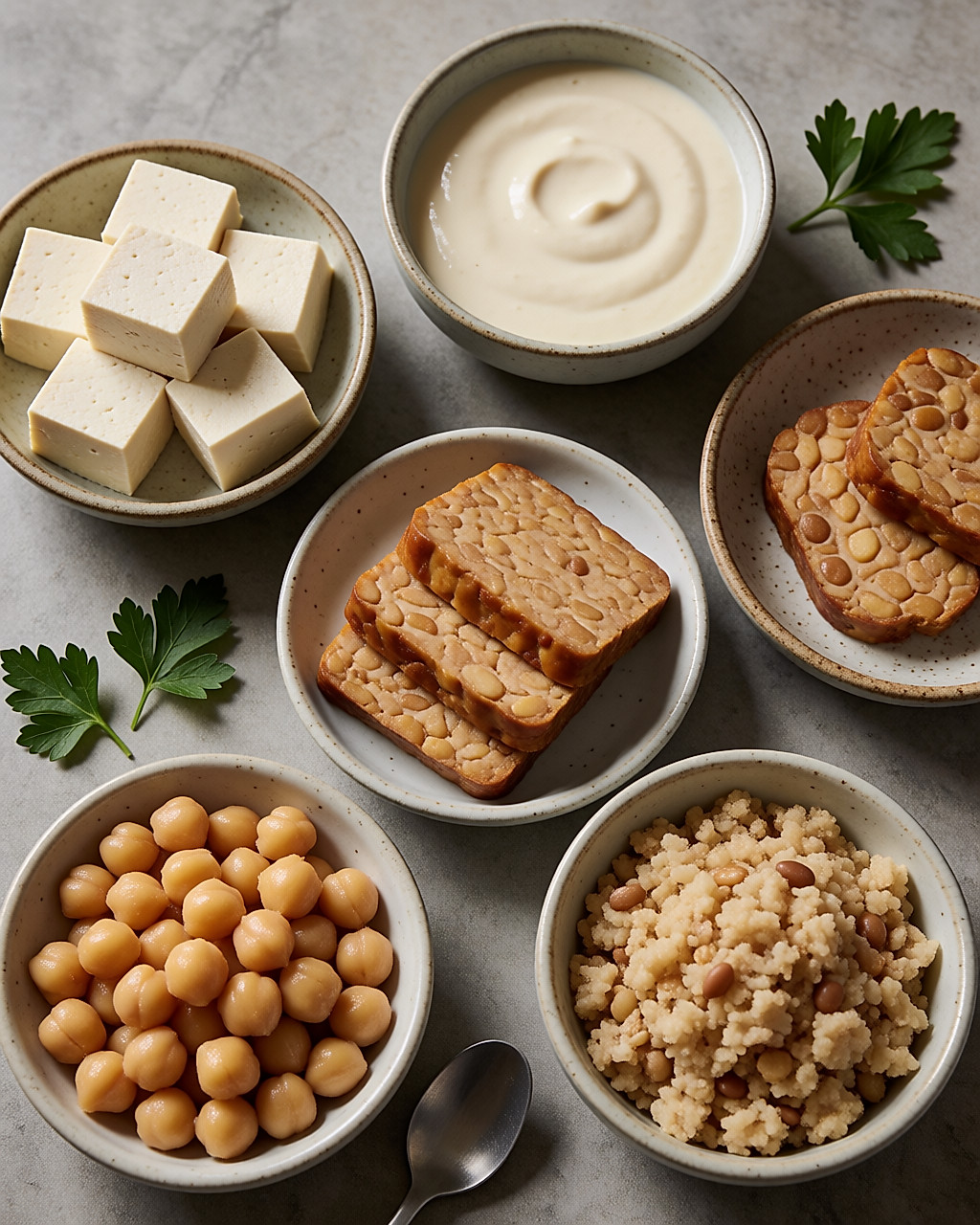
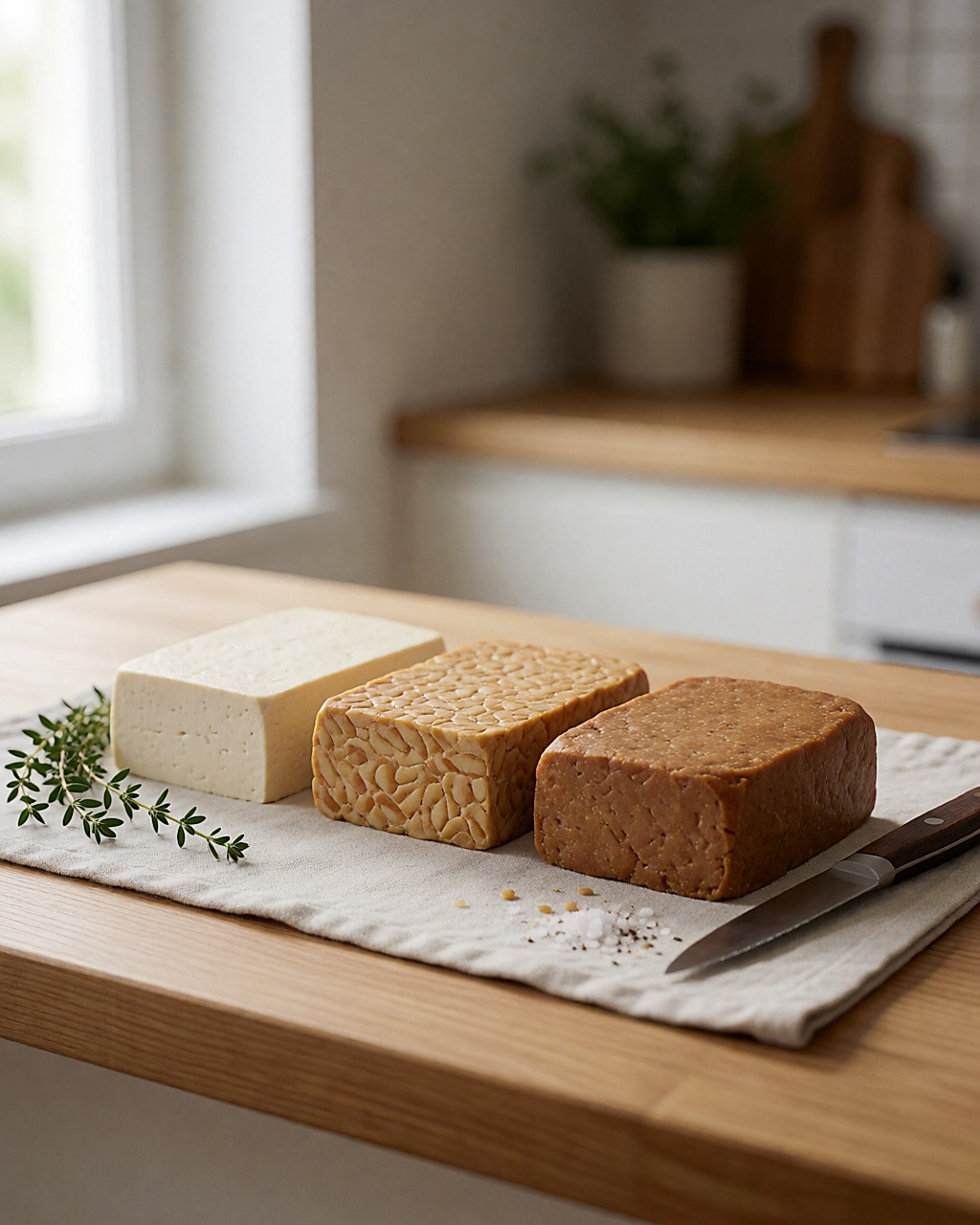
Firm tofu has little flavour of its own: it takes on your marinade and holds up well in the pan. Silken tofu, on the other hand, isn't made for that — save it for sauces and desserts. Tempeh is dense, with a pronounced fermented flavour, and holds its shape in slices. Cooked pulses are soft and ready in two minutes, perfect in a salad. As for grain-and-pulse mixes, their texture is softer, and the grain-plus-pulse combination provides a more complete amino acid profile.
This last point is worth pausing on, because it carries an old reputation for being complicated. People long believed you had to combine grains and pulses at every meal, down to the gram. In reality, it's much more flexible than that: regulation happens over the day, not plate by plate.
Three pillars, and a satisfying meal
Three pillars are enough: a source of plant protein, a minimally refined grain, vegetables — plus a little fat (olive oil, seeds, avocado) for satiety. That oil or those seeds aren't just decoration: they also help you feel full, and a slightly dry pulse dish is less appealing to eat than one with a good coating.
And think about vitamin C — lemon, bell pepper, parsley. Current evidence suggests it may improve absorption of plant iron, which is less easily absorbed than iron from animal sources. A squeeze of lemon on lentils, then, isn't just about flavour.
Three ideas for tonight's dinner
The express pan-fry. Press the firm tofu, cut it into cubes, brown it for eight to ten minutes over a medium heat with a little oil and a soy-sesame sauce, then add frozen vegetables and leftover rice.
The jar salad. Rinse a tin of pulses, add tomatoes, herbs, olive oil, lemon and toasted seeds: ten minutes, no hob needed.
Marinated tempeh. Five minutes in a marinade (soy sauce, mustard, vinegar), six to eight minutes cooking, a microwaved sweet potato and a salad. Done!
That's enough to get you through three evenings without endless questions. Let's be honest: none of these recipes will revolutionise the way you cook. But they have the virtue of being short, needing no strange equipment, and working with what you already have in the cupboards.
Budget: a rough guide
A few rough guide prices for the UK; everything varies by city, range, organic status and where you shop.
Plain firm tofu is around £2 to £4 for 200 to 400 g — Asian supermarkets are often cheaper than health food shops. Tempeh, rarer in large supermarkets, costs £3 to £6 for 200 g. Pulses remain the aisle's bargain: £1 to £3 per jar or ready-to-use pouch, and around £1.50 to £3 per kilo dried — the most economical choice. Grain-and-pulse mixes sit between £2 and £6 per pouch or kilo, more for a seasoned preparation. Refill sections, finally, are worth checking for pulses and grains.
The sensible compromise: dried or refill pulses as a base, and one or two ready-made products (tofu, tempeh) for busy days. As for where to buy, you'll find everything in large supermarkets, health food shops, Asian supermarkets, refill sections and online.
Eating more plant proteins suits most people, but it isn't without implications for everyone. If you have chronic kidney disease, certain digestive conditions, are on treatment or under specialist care, protein, fibre or potassium content really matters. This isn't something to decide alone: diagnosis and adjustments should be discussed with a healthcare professional. If you make big changes to your diet, mention it at your usual check-up — prevention works that way too.
Deep down, the plant protein aisle has only one real trap: the pack bought out of curiosity and forgotten at the back of the fridge. With an ingredient list read in two lines, a texture chosen for the job, and two or three combinations that don't make life complicated, you have more than enough to make a difference. And if you take only one thing from all this, let it be this: start small, with one product, one recipe, one week. The rest will follow.
Sources
- Santé publique France — Programme Manger Bouger: dietary guidelines, 2024.
- ANSES — Ciqual nutritional composition table, 2020.
- ANSES — Opinions and reports on dietary guidelines, 2019-2021.
- EFSA — Dietary Reference Values for protein, 2012.
- FAO — Pulses and their nutritional benefits, 2016.


Comments
Your opinion matters: rate the article, react and reply to comments.
Comments are moderated; AI-assisted comments are flagged. Text emoticons (8-), :-), <3…) are automatically shown as images.