
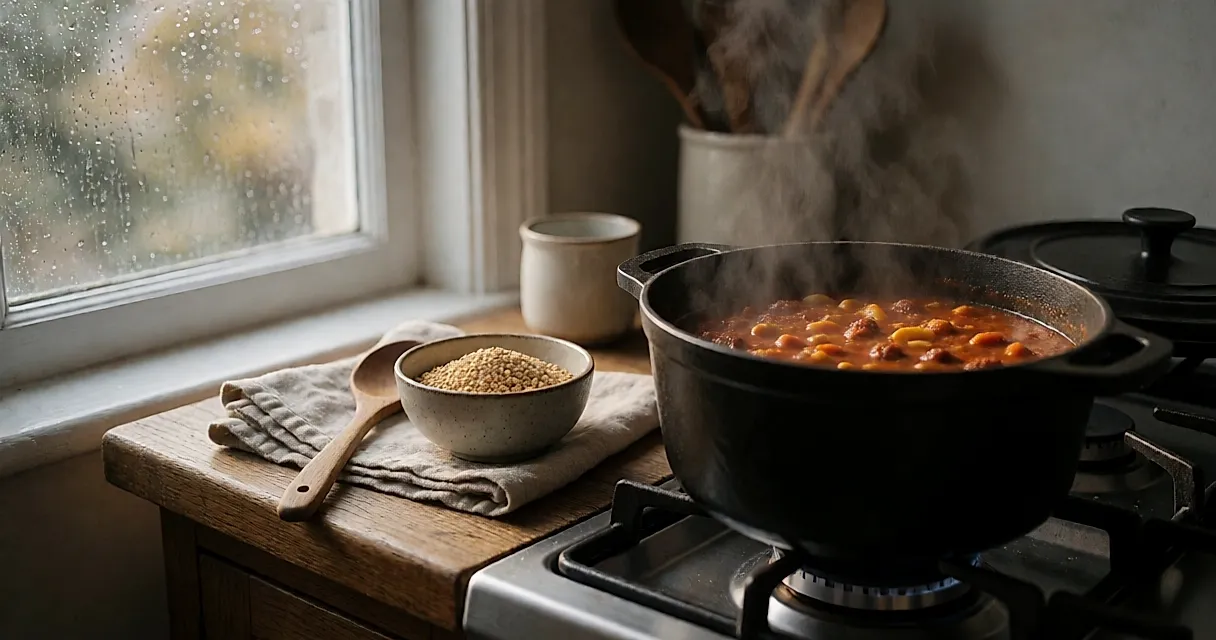
It is 7pm, the October rain has set in for the week, and a chilli simmering gently is starting to look like a life plan. The catch is the pack of beef mince, whose price seems to have been taking evening classes in finance. This is the moment when a discreet packet tucked between the lentils and chickpeas deserves a closer look: textured pea protein.
A powder that behaves like a solid
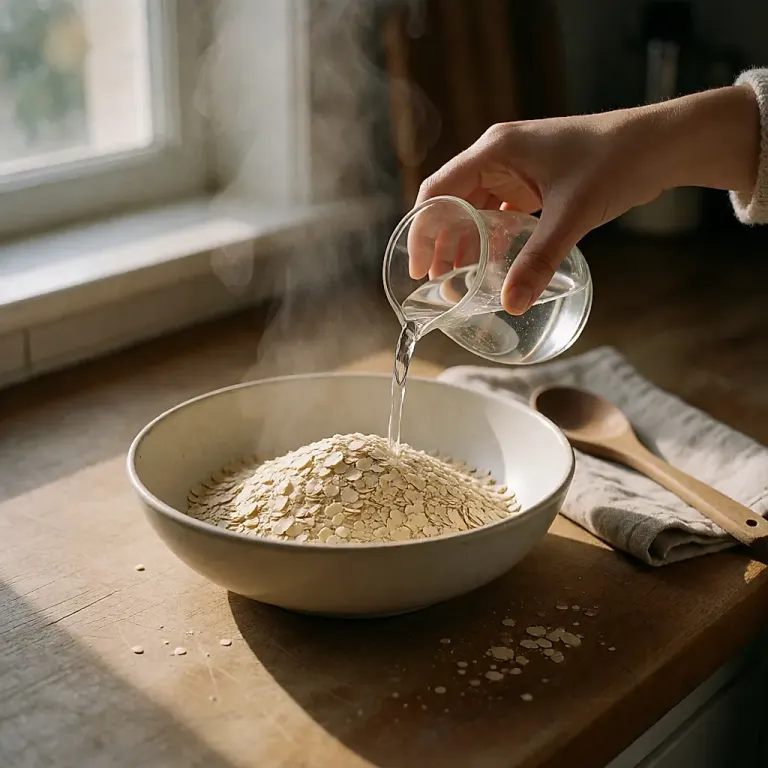
Dry, it looks like a jumble of irregular crumbs, slightly crunchy between the teeth — and it quickly becomes clear that it is not meant to be eaten as it is. The principle is simple: it absorbs liquid. Hot liquid, stock, leftover tomato sauce; in practice about ten minutes is enough for it to swell, change colour and take on a soft, slightly springy texture, with a little grain that catches the sauce. Too much water and it turns spongy; too little and it stays firm in the middle.
And let's be clear: this is not beef mince. It does not imitate it, and it does not pretend to be steak. It has its own category: textures that absorb, take on seasoning and hold together in a Sunday-night sauce without anyone reaching for the mincer.
Brown it, season it, and stop in time
First move: drain it, then press it gently. Pea protein left sitting in its broth will keep absorbing liquid and eventually dilute the dish. Next, into a pan with a little oil, an onion, garlic, smoked paprika or cumin, until it begins to brown. This is the step that builds flavour, because textured pea protein is neutral in itself. Neutral means it will take on anything; it also means a lightly seasoned dish will stay bland. Herbs, mustard, sun-dried tomatoes, nutritional yeast: this is where you come in.
Last point, and it matters: do not cook it for too long. Stirred in at the end of a chilli, a tomato sauce or a root vegetable hash — carrots, parsnips and celery, grated and then simmered — it keeps its bite. Forgotten over a low heat for forty minutes, it breaks down and loses its bite. Five to ten minutes before serving is its window.
On the plate: protein, fibre, and the right question
On protein, the label on the dry pack shows impressive numbers. But we eat rehydrated weight, not dry weight: everything depends on how much powder goes into the dish and how much liquid it has absorbed. In practice, a well-measured portion is roughly in the same range as a portion of cooked beef mince, without being equivalent gram for gram — and with a different nutritional profile, with no animal fats.
On fibre, this is the legume speaking, and not every preparation retains the same amount: the fibre figure on the label tells you more than the packaging does. In practice, this fibre plays a part in feeling full — an editorial rule of thumb that partly explains why a textured pea protein chilli can be as filling as a classic one. More plant proteins and pulses on the plate, without cutting anything out: that is a simple direction, and textured pea protein has a natural place in it.
What can go wrong
Three things, frankly. Taste, first: it is not a food that stands on its own, and anyone who tries it without seasoning is rarely convinced at the first attempt. Salt, second: some textured products already contain a lot, and a dish salted twice — the product, the stock, the soy sauce — quickly adds up. The ingredient list remains the best judge.
Then there is digestion. Like all legumes, pea protein can cause bloating and discomfort in people who are sensitive to it, especially if eaten in large amounts at once: it is better to introduce it gradually. If you have irritable bowel syndrome, ongoing digestive problems or a known allergy to legumes, speak to a healthcare professional before making it a habit.
Budget: buying loose or by the packet
In health food shops, bulk stores or the plant-based protein aisle of a supermarket, expect to pay somewhere in the region of £10 to £20 a kilo, depending on pack size, shop and location. Bulk is often the better value; a branded packet is the easiest to store. Half a kilo dry gives about one and a half kilos once rehydrated — enough for several Sunday evenings.
Nothing spectacular, and perhaps that is the best compliment you can pay it: a discreet ingredient that slips into autumn dishes, makes the meal lighter and the bill smaller, and promises nothing more than good food. For a first try, start with your usual chilli, half beef mince, half textured pea protein. See how you get on.
Textured pea protein is a food, not an appetite suppressant or a treatment. It belongs on a balanced plate, with vegetables, starchy carbohydrates and a little good-quality fat. If you have a legume allergy, digestive problems or are following a medically supervised diet, ask a healthcare professional for advice.
Comments
Your opinion matters: rate the article, react and reply to comments.
Comments are moderated; AI-assisted comments are flagged. Text emoticons (8-), :-), <3…) are automatically shown as images.