
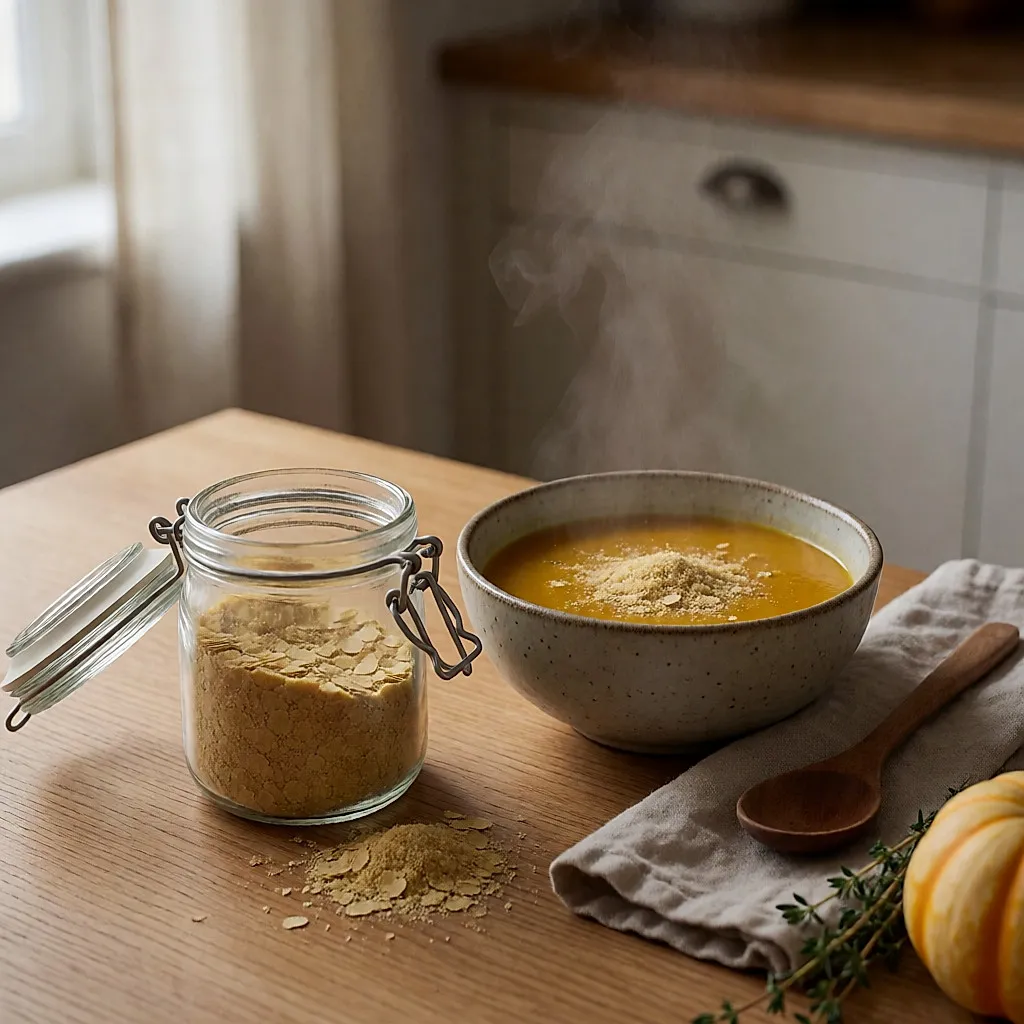
The bowl of squash soup is steaming, you stir it, and it's missing that little something that catches the palate. You don't fancy cream, and the grated cheese is finished: two spoonfuls of golden flakes, a stir, and dinner changes character. That's the plainest promise of nutritional yeast — flavour on a plate without weighing it down.
Flavour first, because that's what decides
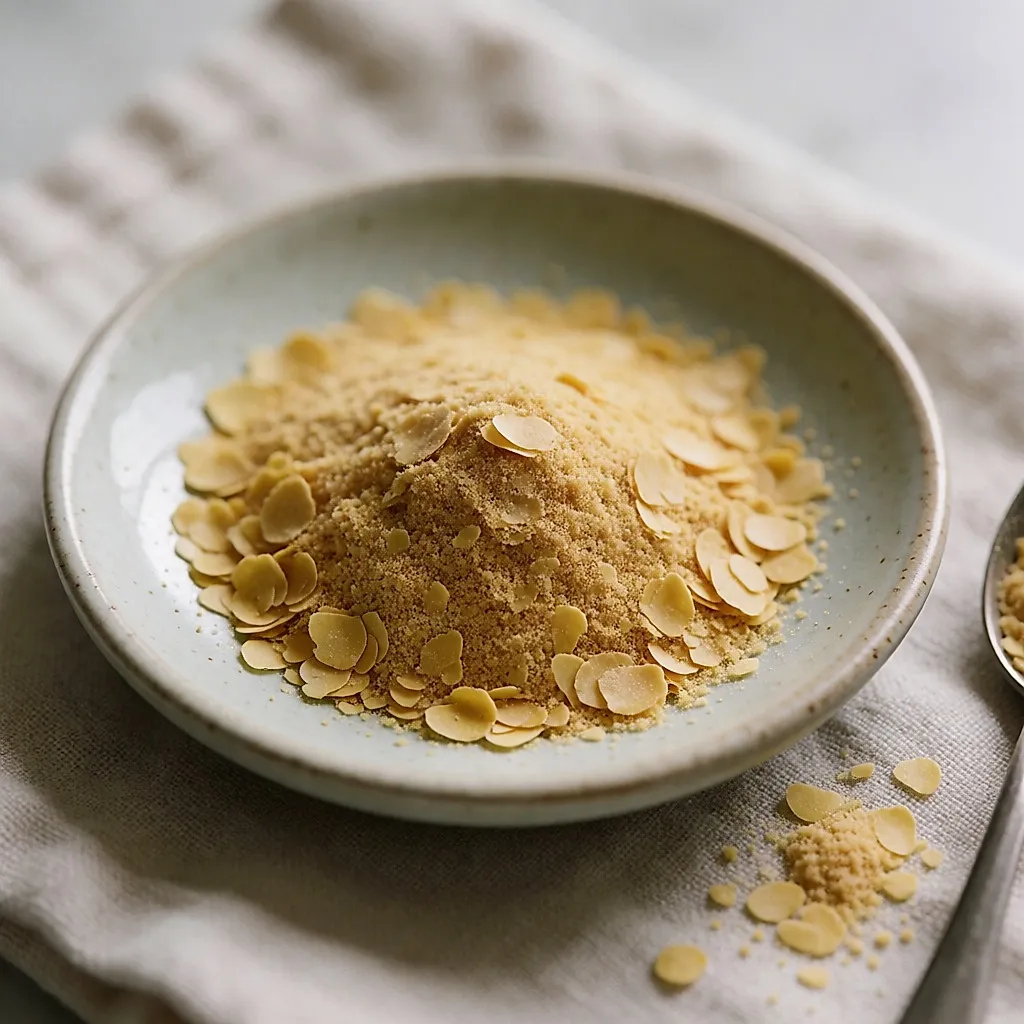
The first spoonful takes you by surprise. Beneath the flakes there's a note of toasted hazelnut and a depth that recalls mature cheese, without the fat or the salt of a bag of grated cheddar. Nothing like baker's yeast, which makes dough rise, or brewer's yeast sold as flakes for other jobs: here the yeast is cultured and then inactivated, and it exists purely to be eaten.
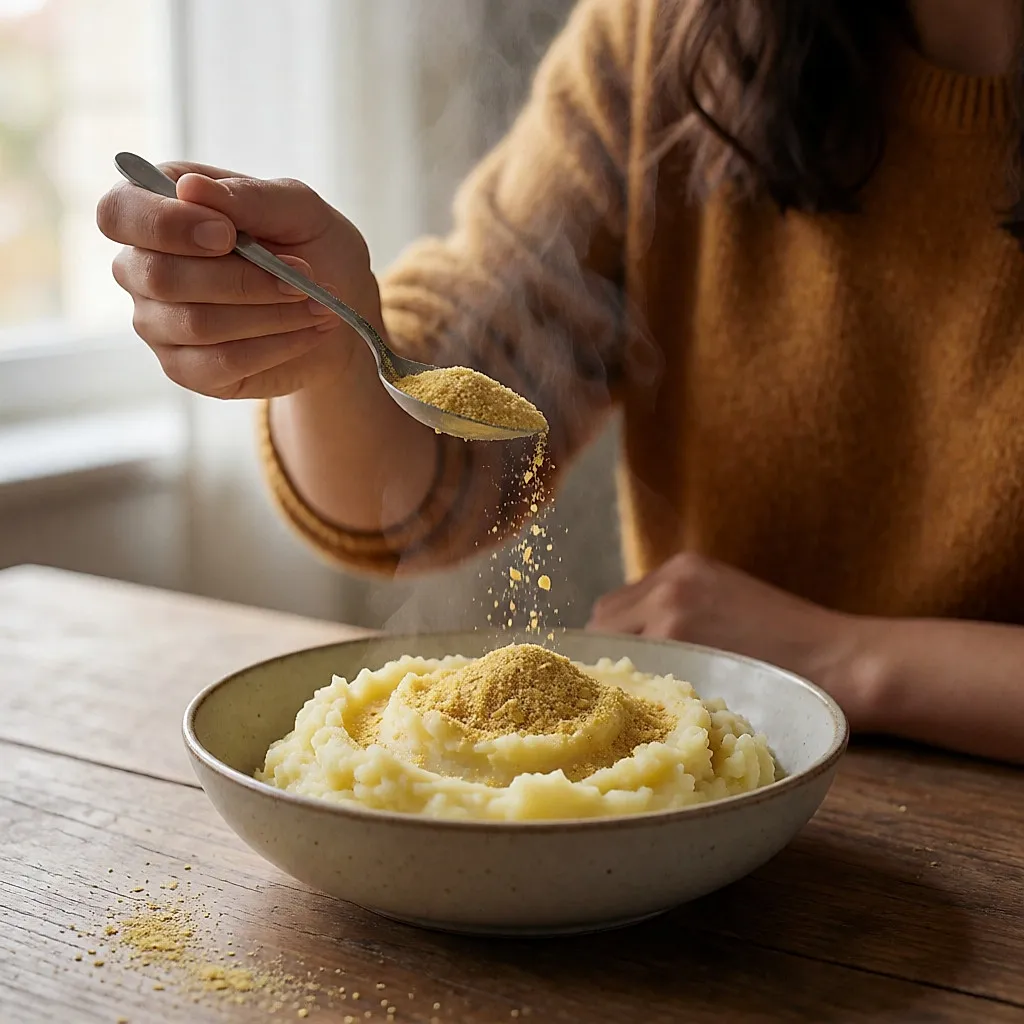
After that it's all about technique. You scatter one to two tablespoons over squash soup, mashed potato, scrambled eggs, just-drained pasta, roast veg or a Sunday-night bowl of popcorn. Stir, taste, adjust — that's the only rule. Start with a single spoon: the flavour is bold, and it's better to let it settle in gently than to swamp the whole plate. In a sweet dish, though, that fermented note jars; keep it for savoury food.
What's actually in the flakes
This is where it gets interesting. The flakes deliver a notable amount of plant protein for a mere seasoning, along with several B-group vitamins naturally present in yeast. In other words, a soup supper becomes a little less one-dimensional nutritionally, without touching quantities or butter.
Vitamin B12 deserves a caveat. The evidence so far suggests yeast doesn't reliably provide a usable form of it: it's the fortification that does the work. Hence the label to look for — "fortified with vitamin B12" — essential if you're vegan, and worth checking if you're vegetarian or your diet contains little of it. A fortified food contributes to your intake; it doesn't replace medical guidance: if you eat plant-based day to day, speak to a health professional or a dietitian, who can look at what suits you.
Choosing your tub without getting it wrong
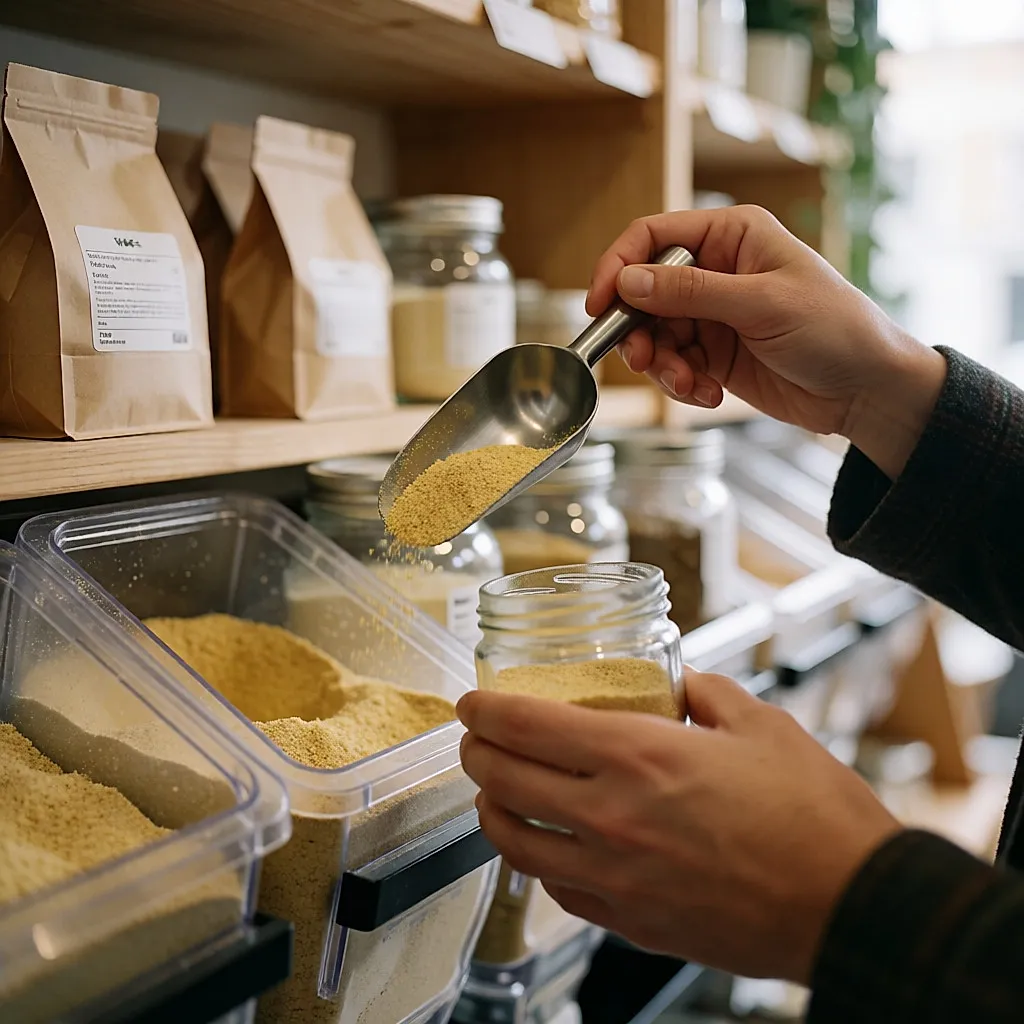
Three things to read on the shelf, in this order. First, vitamin B12, as we've just seen. Second, the ingredients list: the best product is often the shortest, ideally a single ingredient, with no additives or added flavourings — some tubs slip in salt or extracts that add nothing. Third, the packaging: a glass jar or paper bag recycles or reuses far better than plastic, and buying loose, where your shop offers it, lets you take just the amount you need.
The phrase to look for is this one: "fortified with vitamin B12". If the tub says nothing about it, you're buying flavour — which is a lot — but not a B12 contribution. Do also check that it really is nutritional yeast, and not a salted yeast extract or brewer's yeast: they're used for quite different things.

Budget
Expect around £7 to £13 for 200g in a health food shop or the free-from aisle of a supermarket. The price shifts with the city, the brand, the pack size and whether you buy loose or online. At a tablespoon a day, a tub lasts roughly two months: worked out per dinner, the gap against a pot of cream isn't as unfavourable as it looks.
In practice: the spoon and the jar
Sprinkle at the end of cooking, over the served dish: the flavour stays sharper and you adjust at the last moment. If you stir it into a hot preparation, mix it through well, or the flakes tend to clump into little lumps.
On storage, one habit does the trick: a well-sealed jar, kept dry, away from light. Moisture is the product's only real enemy — it makes the flakes clump into lumps that are hard to sprinkle. Seal it up, store the jar well away from the steaming pan, and keep a dry spoon for serving.
A tub on the table, a jar in the cupboard: that's a season of soups with no need for cream to be tempting. Take a spoonful, taste, let your palate decide — and if you've any doubt about your intake, the answer lies with a health professional, not on the shop shelf.
Sources
- NHS — Vitamins and minerals: Vitamin B12
- British Dietetic Association — Food fact sheets and plant-based guidance
- EFSA — European Food Safety Authority

Comments
Your opinion matters: rate the article, react and reply to comments.
Comments are moderated; AI-assisted comments are flagged. Text emoticons (8-), :-), <3…) are automatically shown as images.