

5.04pm. The light has dropped a notch, the document in front of you has stopped moving, and your hand knows the exact route to the drawer where the biscuit packet lives. That hollow feeling that turns up every autumn afternoon says very little about your willpower: it says a great deal about what happened at lunchtime. So what if the real dial to turn isn't the afternoon snack, but the plate you had at midday?
What's already decided long before the slump
One thing is fairly well established: protein and fibre are among the best-documented levers we have for feeling full. A midday plate built on white pasta and a bit of cheese fills you up at the time, then lets that fullness drain away fairly quickly — in practice, most people notice it an hour or two before dinner. There's nothing mysterious going on: it's simply a plate that bet on a single dial.
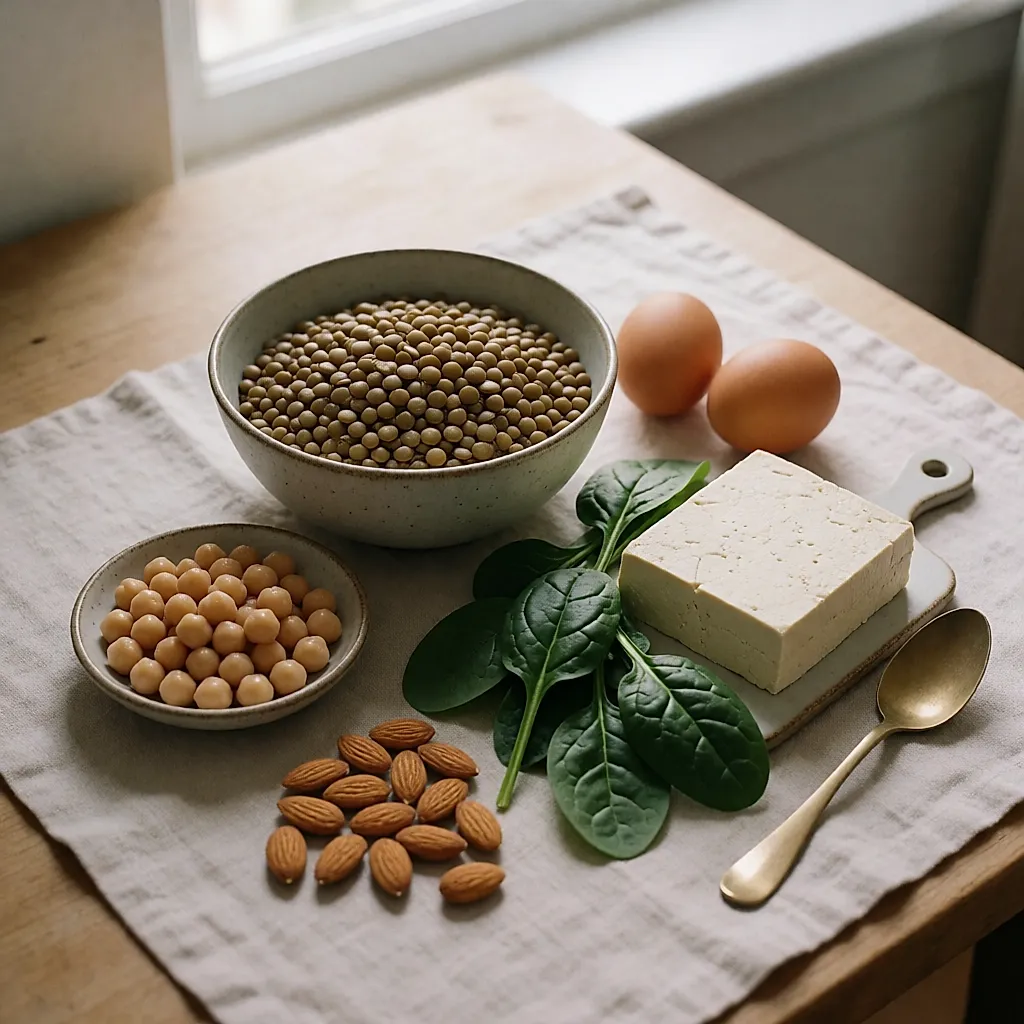
Government guidance points the same way. The NHS advises adults to aim for around 30 g of fibre a day, and France's food agency ANSES puts the reference protein intake for adults at about 0.8 g per kilo of body weight daily. In lunchtime terms, the two aren't in competition — they work together, and pulses bridge the gap between them. Protein comes from eggs, fish, tofu, meat and fromage frais. Fibre comes from vegetables, wholegrains and fruit.
The three dials on your midday plate
The first dial is the protein portion. You don't need a steak with every meal: a serving roughly the size of your palm is a useful rule of thumb, and lentils, chickpeas or beans do double duty — protein and fibre in the same mouthful.
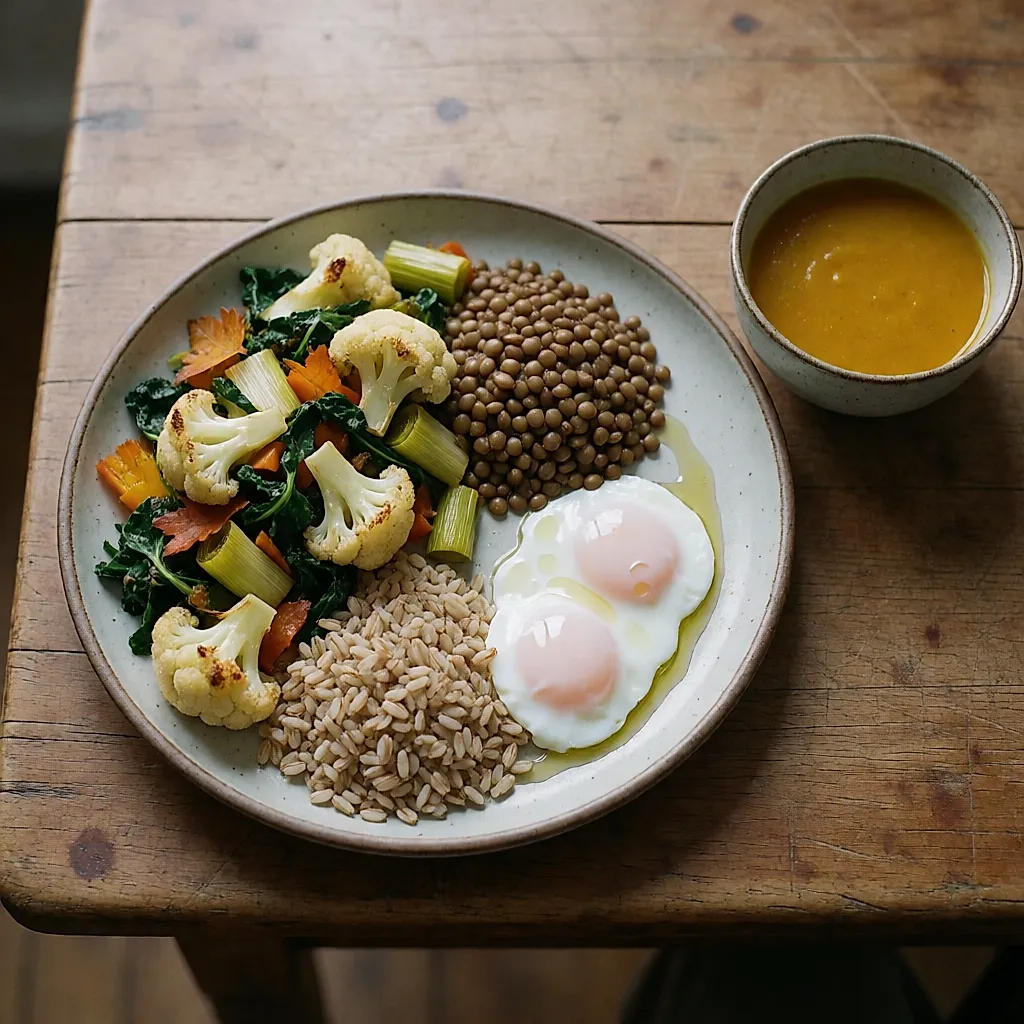
The second is fibre, which means vegetables. Half the plate: that's the easiest visual cue to remember, and it requires no arithmetic. The third is starchy carbohydrates — and that's where people slip up most. Cutting them out to "eat light" at midday is often the quickest route to a 5pm hunger pang. A portion about the size of a clenched fist generally goes the distance better than a piled-up plate.
What does that look like in a real October kitchen? Squash soup with lentils and a slice of wholemeal bread. A vegetarian chilli. A cauliflower bake with two eggs. Leftover roast squash, a tin of chickpeas, a drizzle of olive oil. All of it hot, on a plate, sitting down — rather than wolfed standing at the sink, which remains the most reliable way of noticing nothing about your meal at all.
And what about the timing?
If lunch lands at midday sharp and dinner at 8.30pm, you're covering eight and a half hours. The evidence available doesn't allow anyone to name an ideal hour — be wary of timetables that claim to have the answer. In practice, though, plenty of people find that pushing lunch back by 30 to 60 minutes changes the shape of the late afternoon. Try it for a week, keeping the contents of the plate identical: change the time and the food at the same time and you'll never know which of the two did the work.

One more distinction is worth holding on to, and it's slightly uncomfortable: hunger and a craving don't announce themselves in the same place. Real hunger builds gradually, sometimes comes with a rumbling stomach, and is satisfied by an actual snack — a piece of fruit, a handful of almonds, a plain yoghurt. A craving arrives all at once, demands sugar and crunch, and disappears the moment you leave the room. Odd, isn't it? It isn't a question of morality, it's a question of observation.
Autumn does half the work
For once, October is playing on our side. Squashes, cabbages, leeks, carrots and beetroot are all in season, naturally rich in fibre, and they lend themselves to long, slow, fragrant cooking — soups, broths, one-pot stews. A steaming plate takes longer to eat than a salad demolished in ten minutes, and taking time over your meal can also contribute to feeling full.
None of this needs a star ingredient or special equipment. Dried pulses, sold loose, remain among the cheapest proteins on the shelf, and a pot left to simmer on Sunday evening covers two weekday lunches with no extra effort — the kind of shortcut that makes a Monday morning noticeably easier to bear.
Feeling peckish in the late afternoon is entirely ordinary and isn't on its own a reason to see a doctor. But if the slumps come with dizziness, unusual tiredness, marked thirst or unexplained weight change, the plate is no longer the issue: speak to your GP or another health professional, who can look at the whole picture.
Saying that a hot, well-built lunch sorts out late afternoons for good would be overstating it — sleep, stress and physical activity all have a say, and no plate makes up for a four-hour night. But it's a lever you can adjust without buying anything, in a season when the urge for something warm arrives right on cue. Three dials, one hour, a week of observation: that's the whole programme. The biscuit packet won't disappear — it will simply wait a little longer, and sometimes not get opened at all.
Sources
- NHS — How to eat a balanced diet.
- ANSES — Dietary reference values and food-based dietary guidelines (cited for the adult protein reference intake).

Comments
Your opinion matters: rate the article, react and reply to comments.
Comments are moderated; AI-assisted comments are flagged. Text emoticons (8-), :-), <3…) are automatically shown as images.