
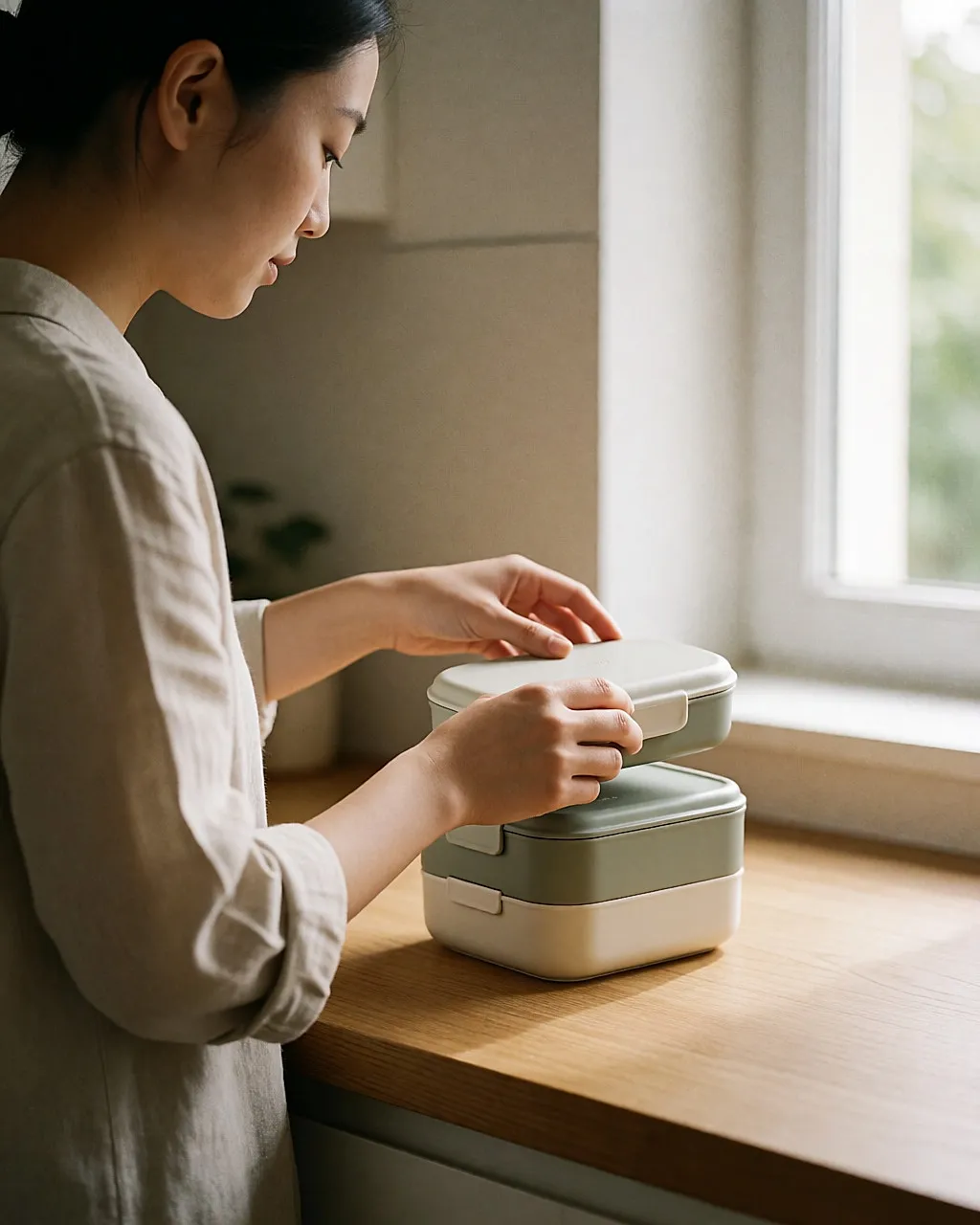
A bento is, first and foremost, a box. Compartmentalised, often rather good-looking, and somewhere to put your lunch before you dash to class or the office. On paper, it is nothing spectacular. Yet this Japanese habit has changed the midday break for many people. If the lukewarm canteen tray and its rubbery steak give you the shivers, you may as well make your own lunch.
An old tradition, a very current enthusiasm
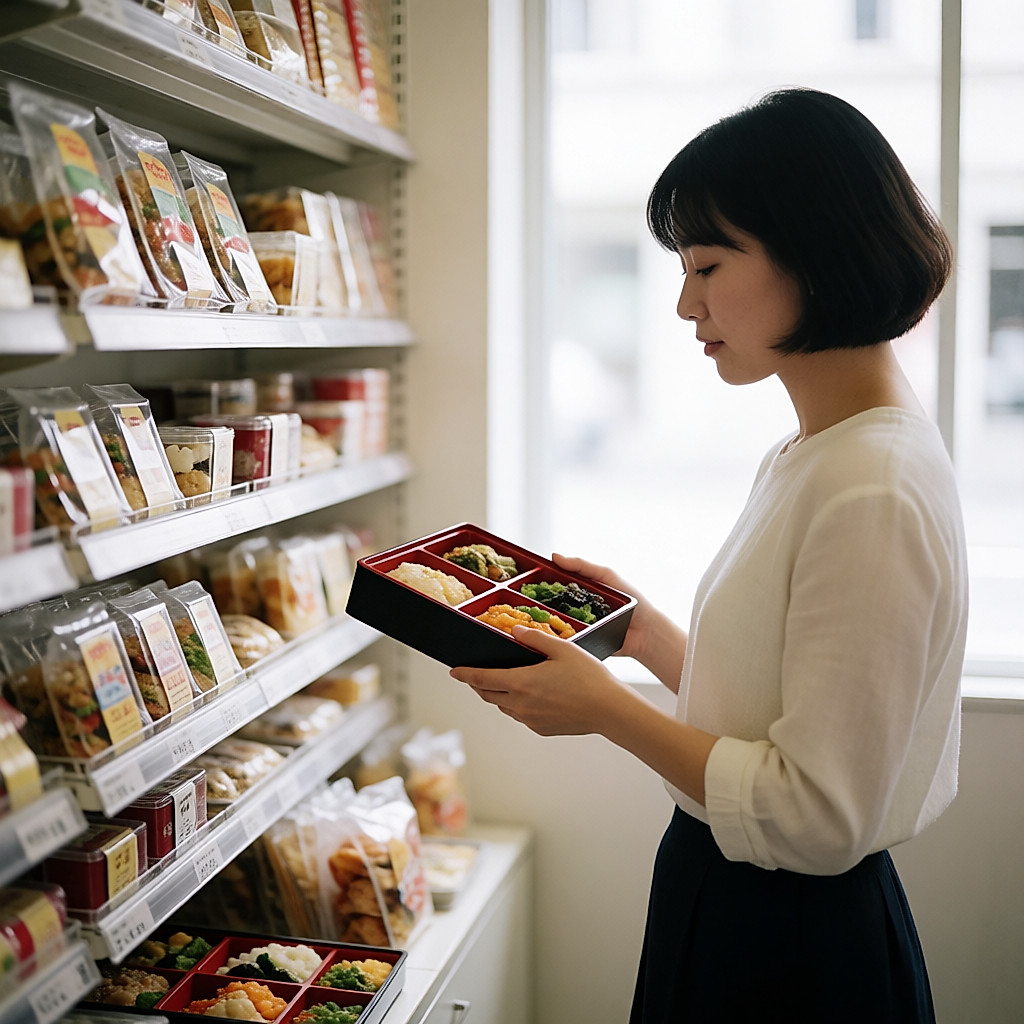
In Japan, bento has accompanied schoolchildren, office workers and even travellers since the Edo period; railway stations turned it into a speciality in its own right. In the US, the lunch box has played the same role for decades. In the UK, the habit arrived later, carried by social media, food blogs and a generation that cooks more than you might think.
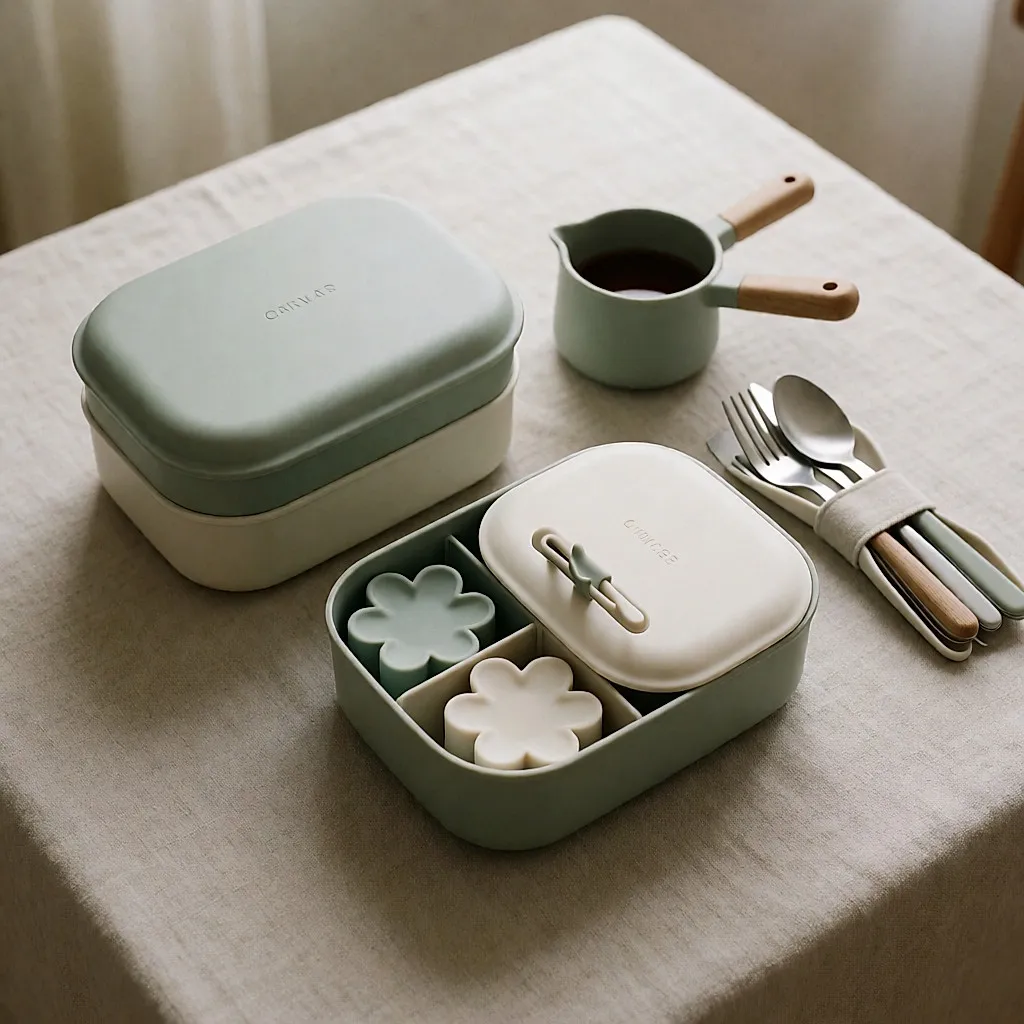
What has changed is as much the container as the contents. Two-tier boxes, colourful lids, little pots for sauces: the box itself has become a design object, and the meal inside it an exercise in composition. You stack, you arrange, you add colour — and before you know it, you are hooked.
Fill your box without making life complicated
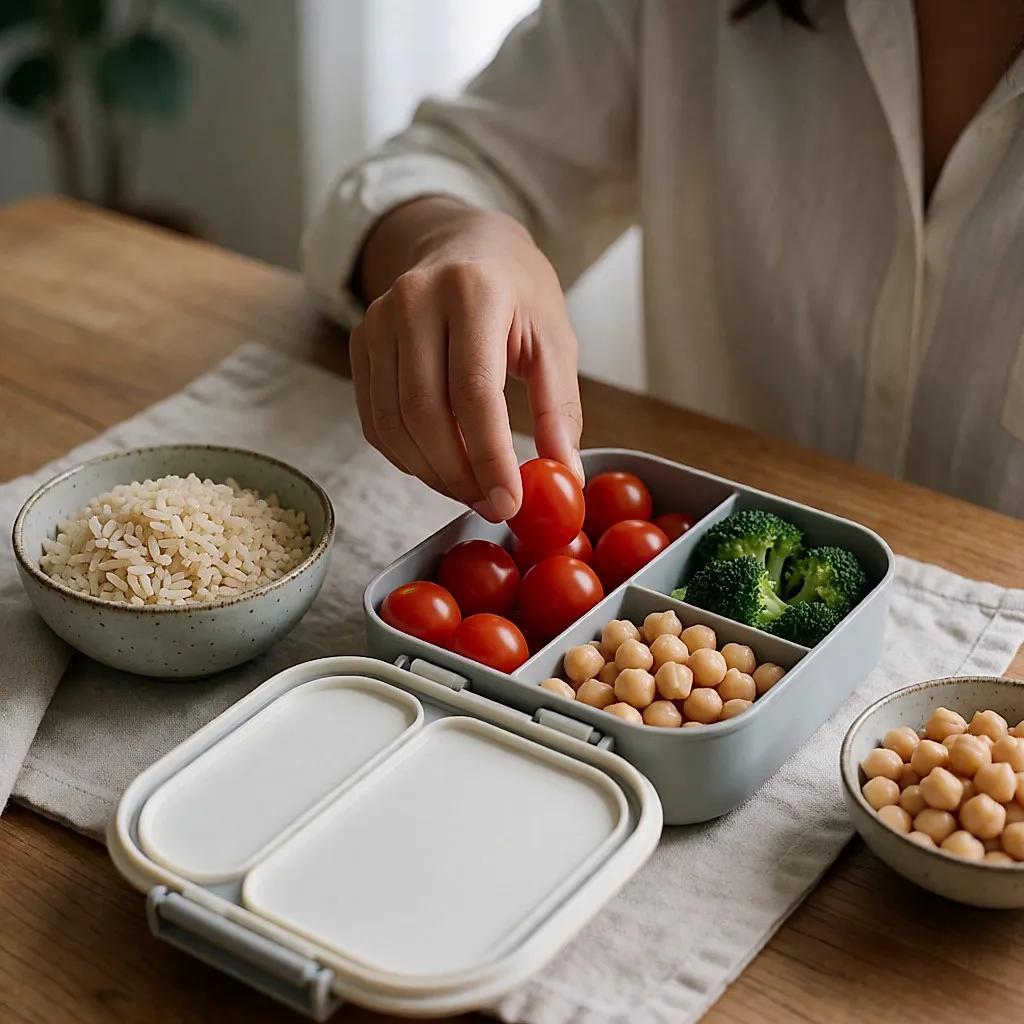
There is no need to aim for the perfect bento. A very simple base is enough: half the box vegetables, a quarter starchy carbohydrates, a quarter protein, and a piece of fruit on the side. The NHS Eatwell Guide advises at least five portions of fruit and veg a day and going easy on foods high in fat, salt and sugar.
Didn't cook the night before? Keep it simple. Raw veg, roasted vegetables, wholegrains, hard-boiled eggs, fish or pulses all cope well cold. Take sauces separately, or everything will end up swimming. And if you cook one extra portion in the evening, your box fills up in five minutes the next morning: in practice, it is that small move that makes the habit stick. Nothing spectacular, then, but an organisation that holds up over time.
Storage: the real food-safety issue
What we know, and what we do not yet know: the recipe matters less than the cold chain. A home-cooked dish usually keeps for up to two days in the fridge, in the coldest zone, at 5°C or below. Cooked rice that cools too slowly is a known risk factor, because certain bacteria multiply quickly at room temperature.
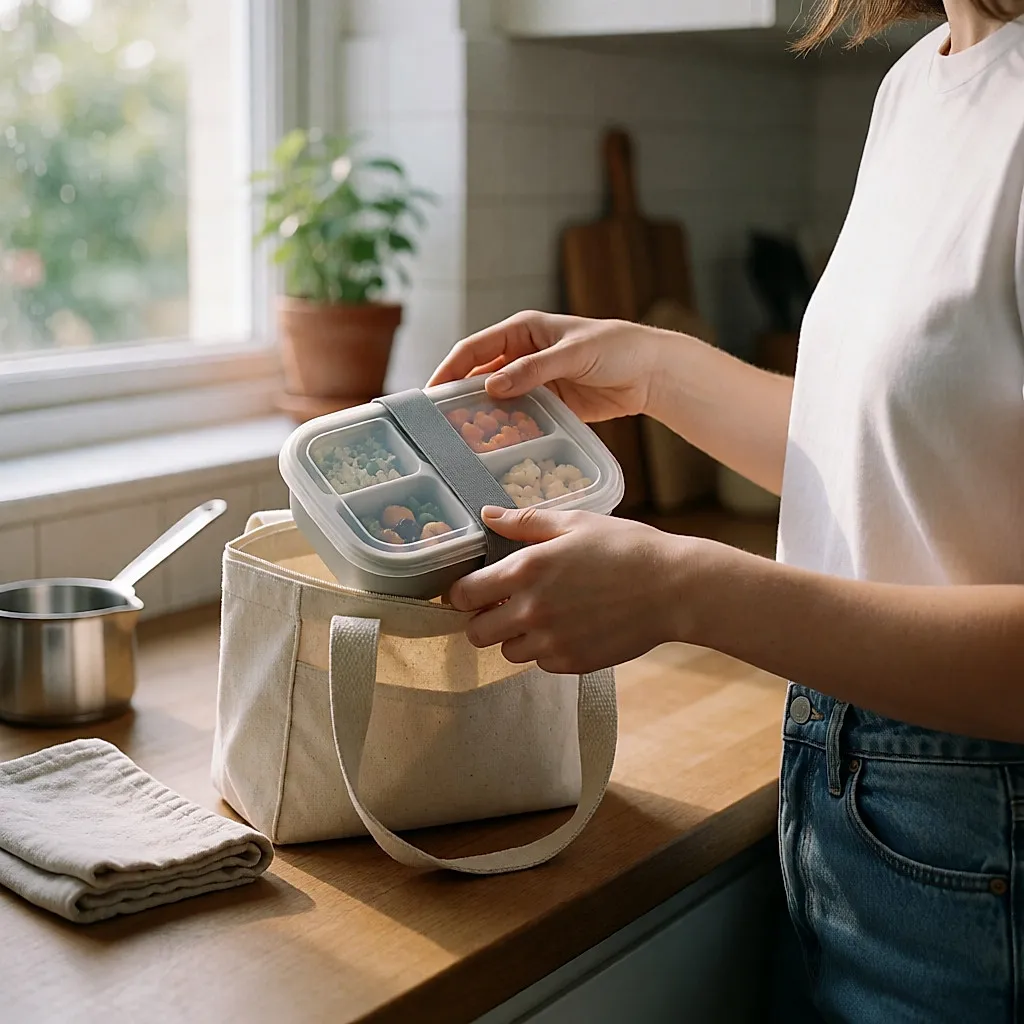
In practice, remember this: cool it for less than an hour at room temperature, then close and refrigerate straight away. Transport it in a cool bag with an ice pack, and reheat only once, until piping hot all the way through. Current evidence also suggests avoiding leaving a meal for hours in a hot car or overheated office. If in doubt about a food, bin it without a second thought. And if unusual or repeated digestive problems worry you, speak to a healthcare professional.
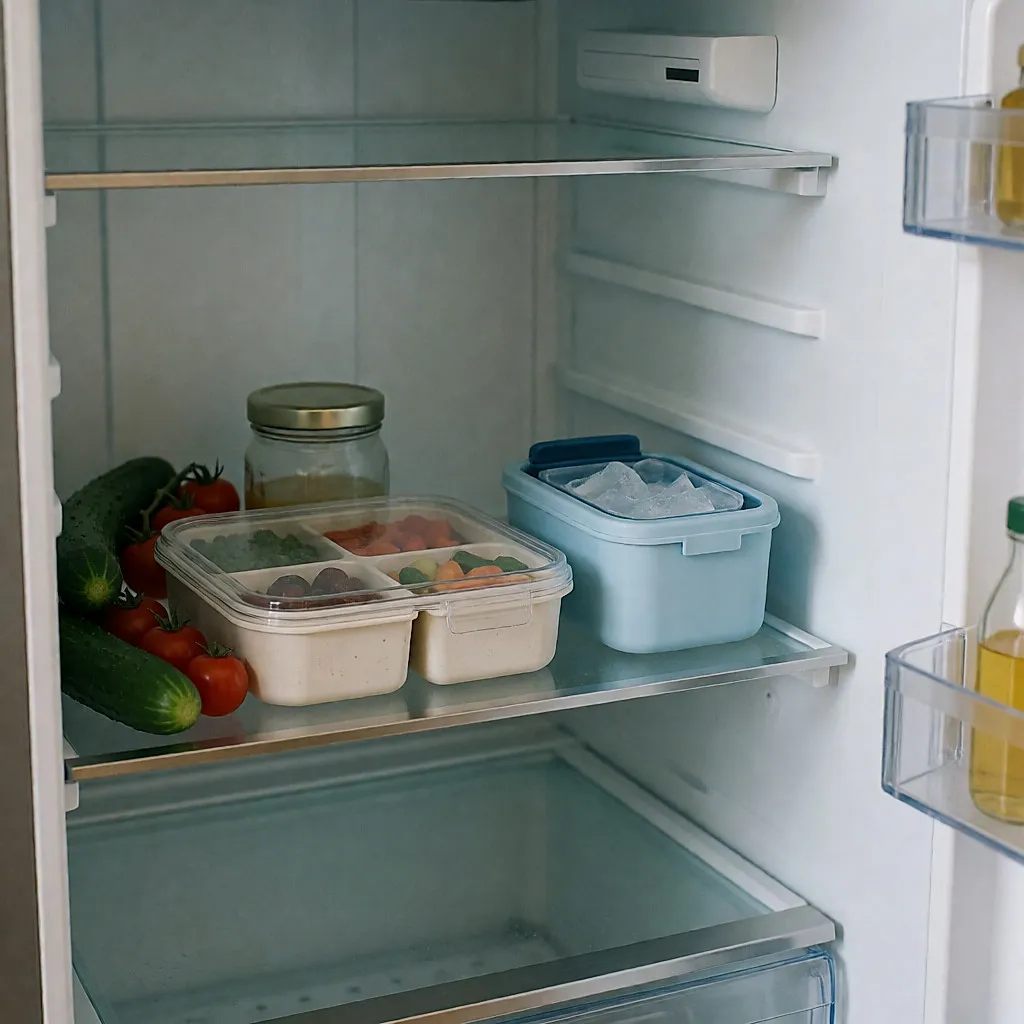
Four habits that protect your lunch
- Cool it quickly, then refrigerate straight away.
- Eat within two days.
- Transport it chilled, never loose in a bag at room temperature.
- Do not reheat the same dish more than once.
Choosing your box: material, leak-proofing and end of life
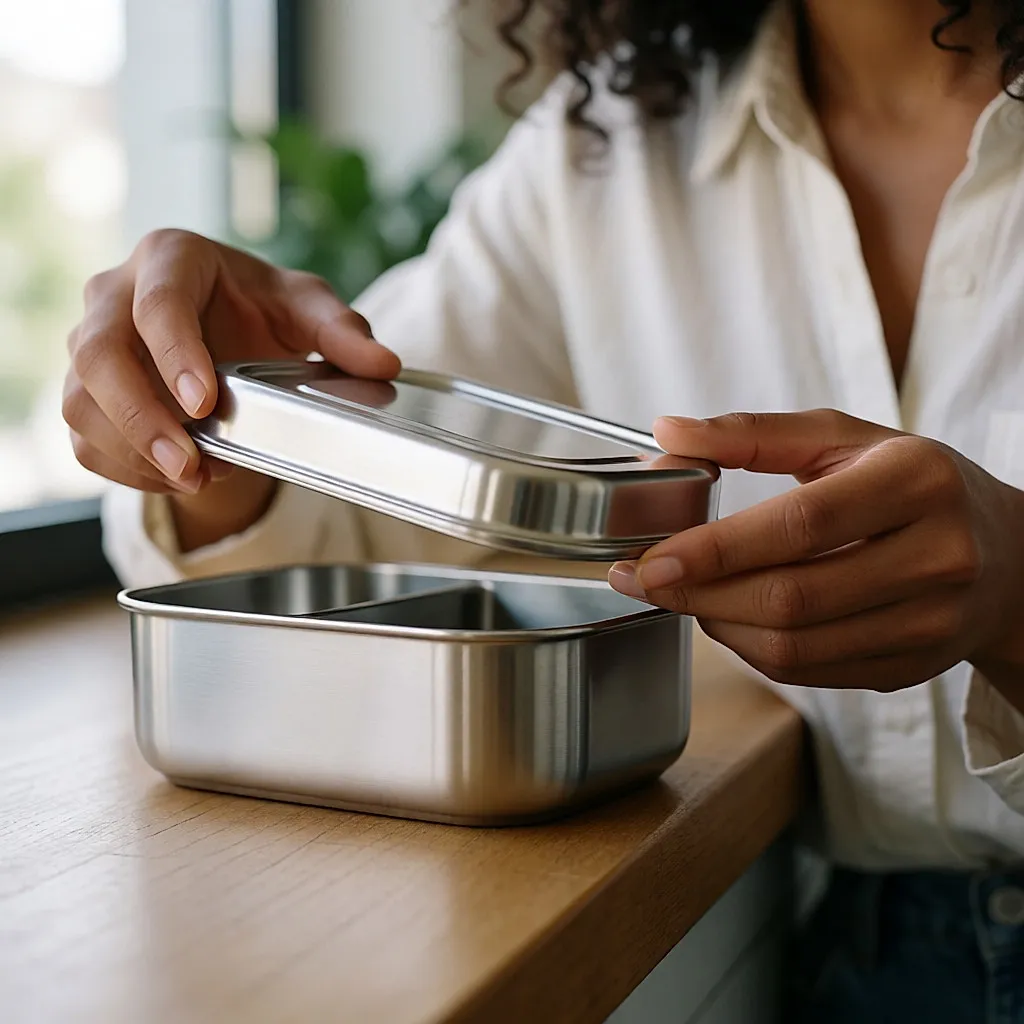
Stainless steel is inert, easy to wash and practically indestructible — or almost; it is heavier and not microwave-safe. Plastic, meanwhile, is light and often microwave-safe: look for a 'suitable for food contact' label and, for microwaving, the relevant symbol. One thing to know: in the UK, 'BPA-free' still means something, but not everything. BPA is banned in infant feeding bottles, yet it can still be used in some other food-contact plastics within strict legal limits. In France, by contrast, BPA has been banned in all food containers since 2015, which is why the claim has lost much of its punch there.
To limit the impact, it is better to look at three practical criteria than a green logo: removable seals sold separately, available spare parts, and a durable container (stainless steel, glass) or packaging made from FSC- or PEFC-certified cardboard. Bamboo boxes are charming, but check that their removable parts are dishwasher-safe to keep them hygienic. With plastic, polypropylene (PP, recycling code 5) is the most common choice for both hot and cold use.
Budget
In the UK, expect to pay around £18 to £40 for a branded compartmentalised box, and £22 to £50 for an airtight stainless-steel model. A set of small sauce pots is around £7 to £18, while a cool bag with an ice pack costs between £13 and £30. Prices vary with material, number of tiers, leak-proofing, manufacturing origin and availability of spare parts. You will find them in supermarkets, homeware or kitchenware shops, zero-waste shops, and online from bento specialists.
Sources
- NHS — Eatwell Guide and food poisoning advice.
- Food Standards Agency — food storage, food contact materials and bisphenol A (BPA).
- UKHSA — foodborne infections and prevention.
- Légifrance — French law no. 2012-1442 of 24 December 2012 on the suspension of the manufacture, import, export and placing on the market of food packaging containing bisphenol A.
- Monbento, monbento.com — French lunchbox brand; Bento&Co, bentoandco.com — specialist retailer.
Comments
Your opinion matters: rate the article, react and reply to comments.
Comments are moderated; AI-assisted comments are flagged. Text emoticons (8-), :-), <3…) are automatically shown as images.