
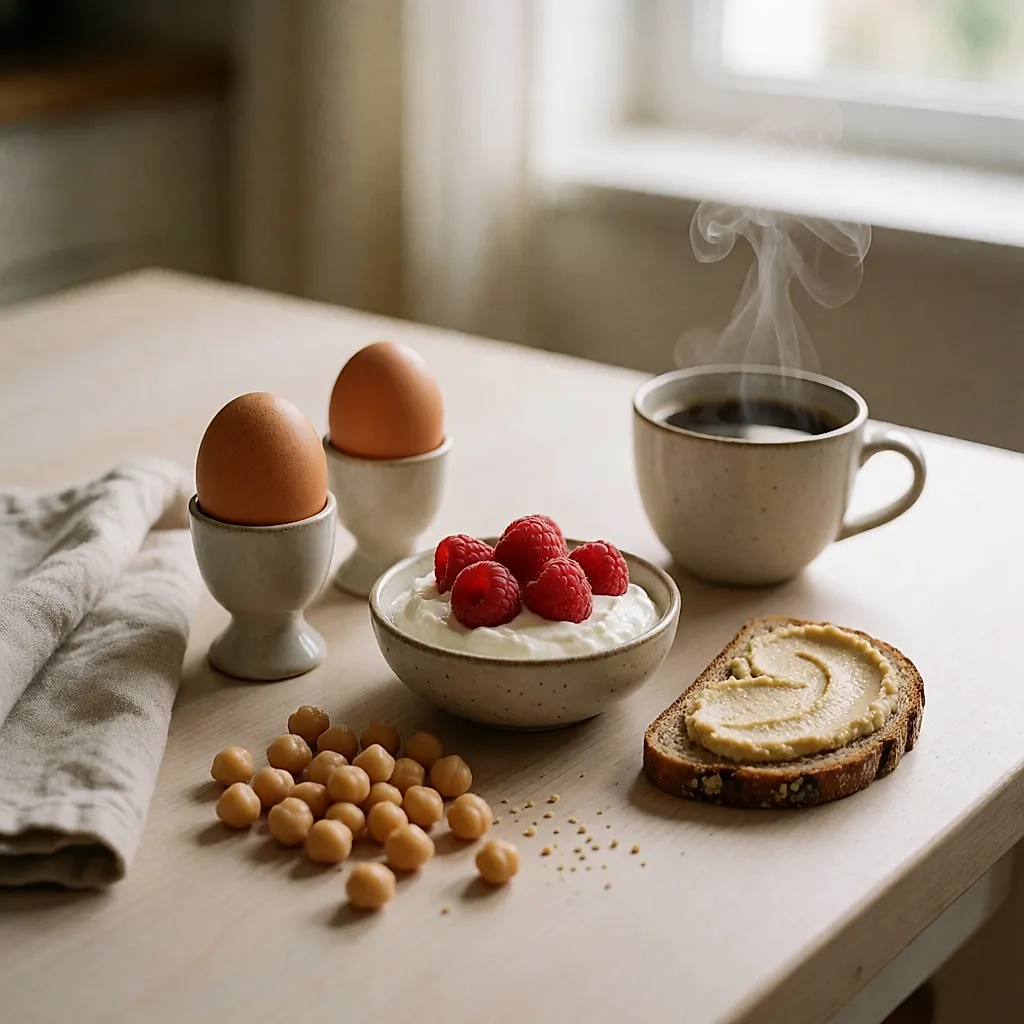
Monday, 8.12am. The bowl of cereal lasted until 10.30am, watch in hand. At the coffee machine, a colleague says she swapped her toast for two eggs — and her mid-morning hunger vanished with it. You raise an eyebrow. Then you remember it on Wednesday, when your stomach politely reminds you of its existence in the middle of a meeting. What if the first meal of the day didn't have to be sweet by default?
The sweet morning is mostly habit
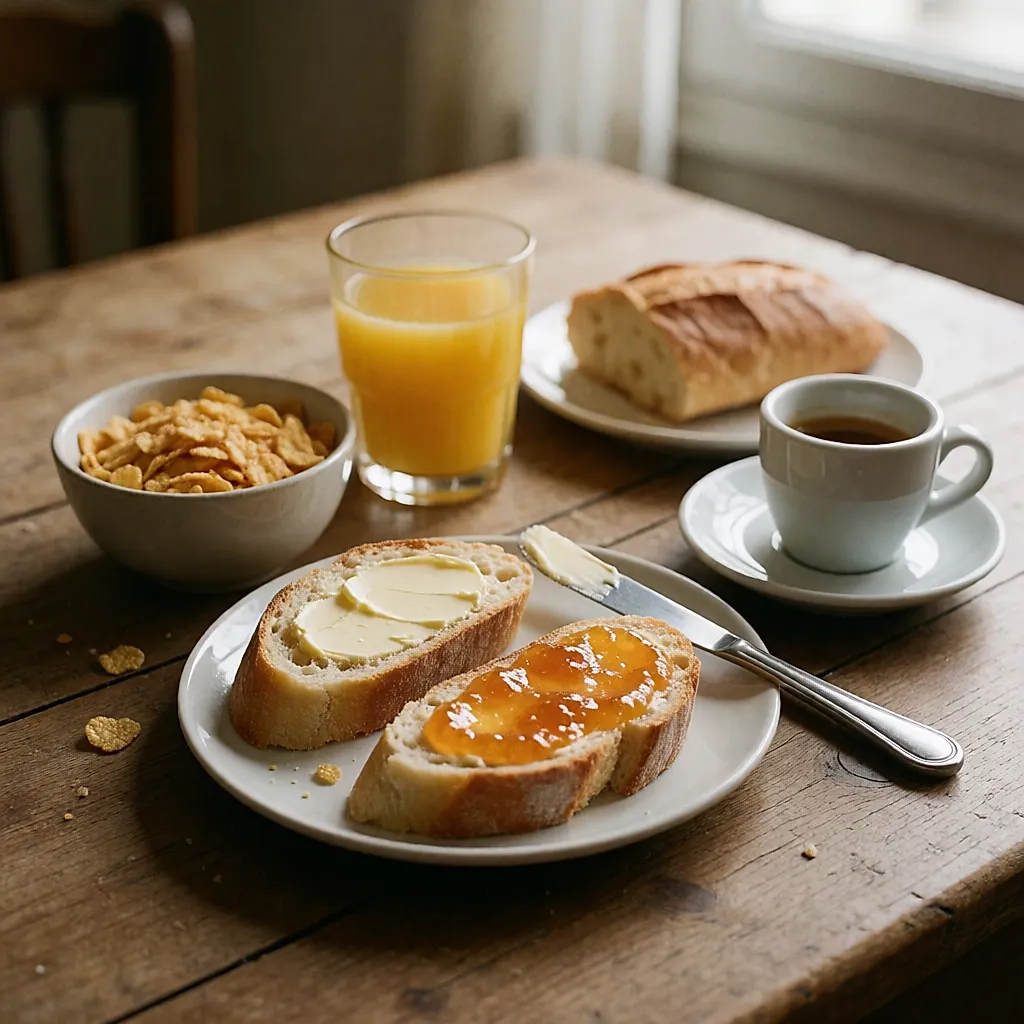
There's nothing innate about bread and jam. In France, breakfast was built around cereal, juice and toast — a cultural and industrial inheritance more than a physiological requirement. Other countries start the day with eggs, fresh cheese, pulses or even soup. It doesn't stop them living, or eating lunch.
What we do know is that protein plays a part in fullness, and that its distribution across the day is very uneven: breakfast often delivers little, while dinner takes the largest share. In France, ANSES, the national food safety agency, uses a reference intake of around 0.8 grams of protein per kilo of body weight per day for a healthy adult. Nothing there that demands turning your kitchen into a gym at sunrise. What we don't yet know is the effect of a consistently higher-protein breakfast on weight over the long term: studies give mixed results. Not an isolated lever, then — more a comfort setting.
What's on the shelves, and what earns a place in the basket
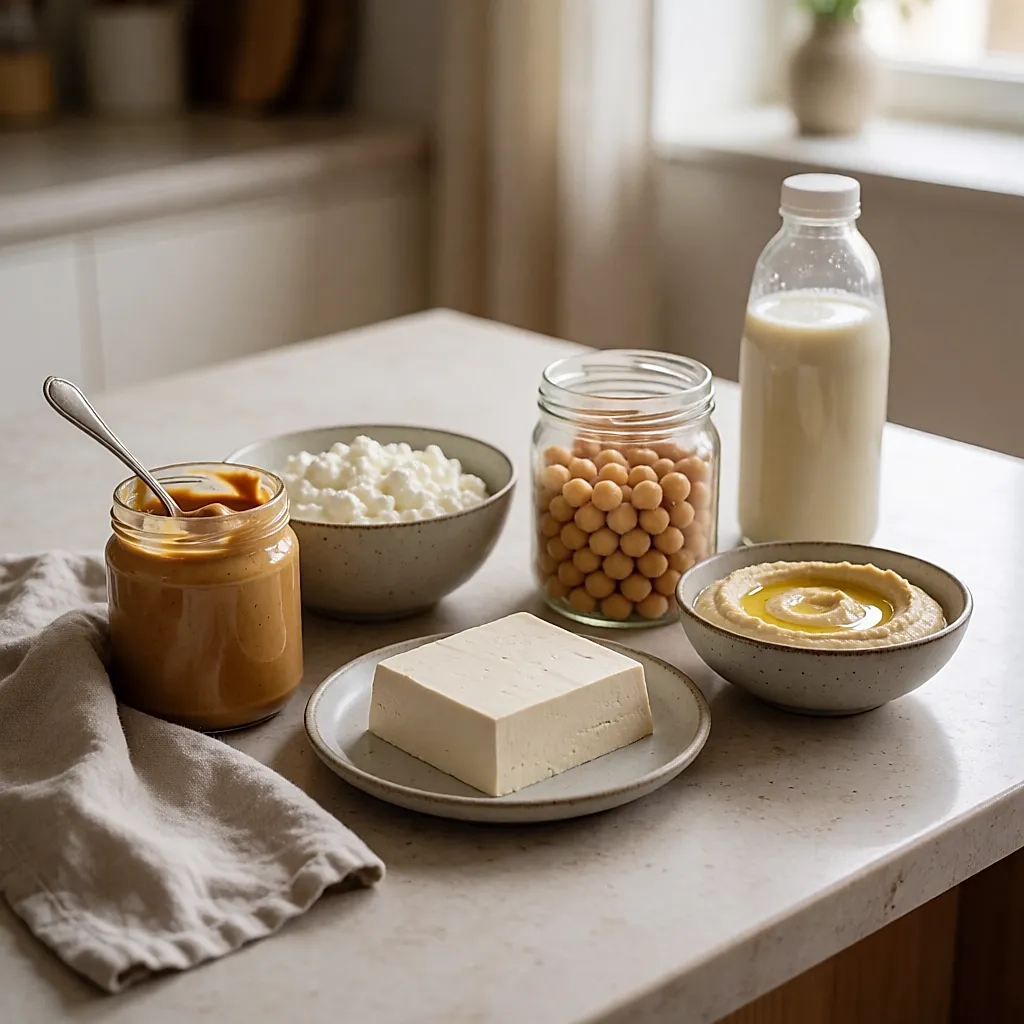
The range has moved on, and that's a good thing. In the chilled aisle, fromage frais, cottage cheese and ricotta slip easily into a bowl with fruit. On the plant side, silken tofu, fortified soya drinks and unsweetened nut butters — almond, peanut — offer options with nothing animal about them. And there's a family we always forget: pulses. Leftover lentils, hummus spread on a slice of rye, a few chickpeas crushed with olive oil, and suddenly the morning no longer feels like a snack.
Nuance, because there always has to be one: the 'enriched' formats arriving on shelves are not automatically better choices. The word sells; the ingredient tells a different story. A protein-enriched product can also be loaded with sugar or additives. The more modest pot next to it will sometimes do the job better, without making a fuss.
Build it around your hunger, not the photo
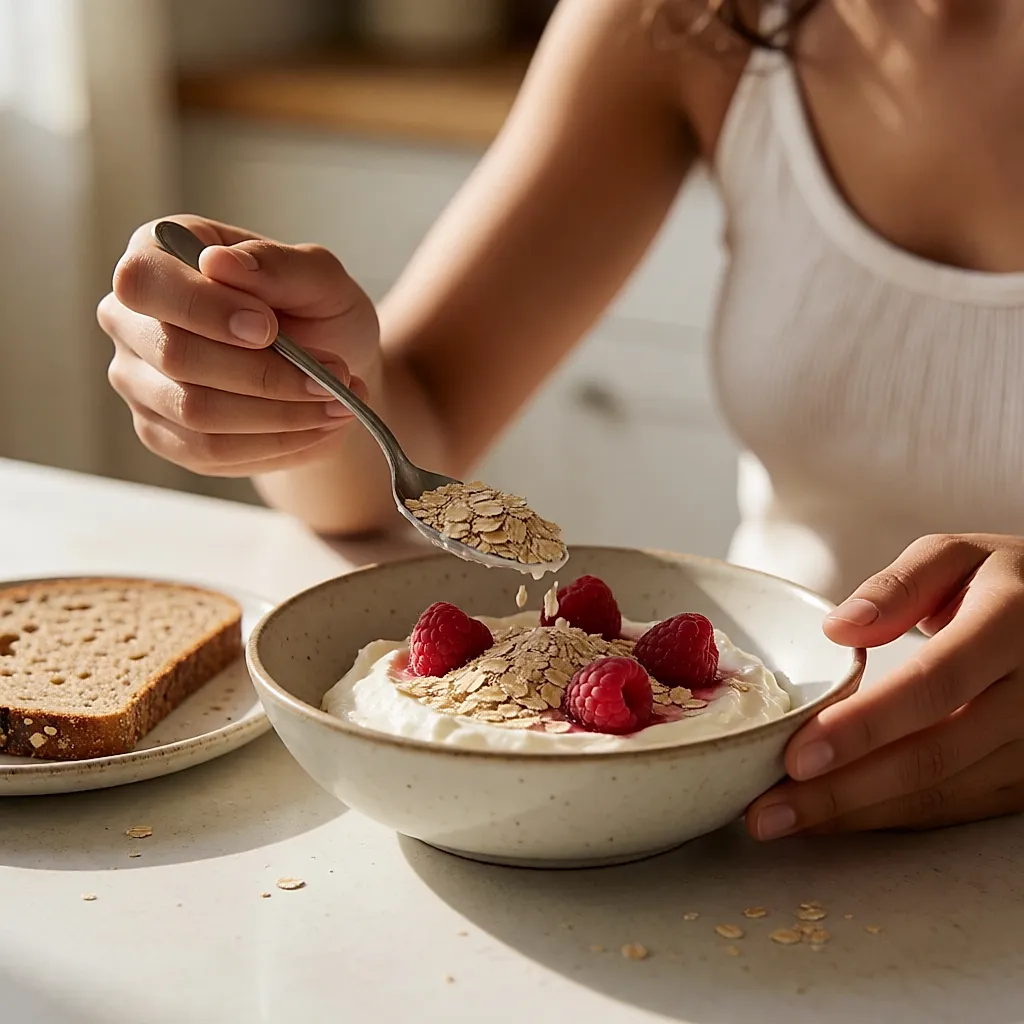
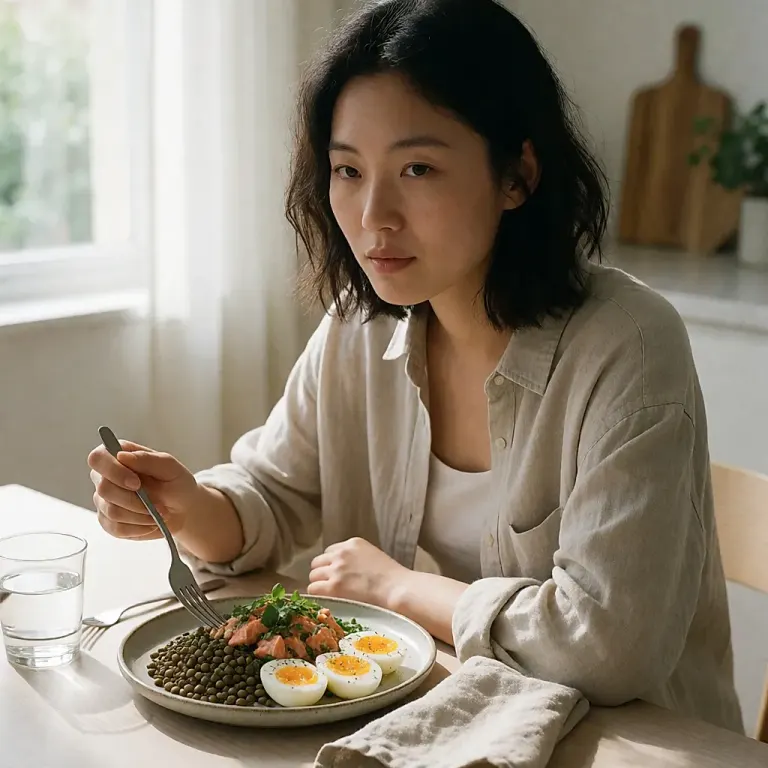
The simplest approach is a trio: a protein source, a whole grain, a fruit. Two eggs and a slice of sourdough, a bowl of fromage frais with oats, scrambled tofu on rye. Then adjust by feel: bird-like hunger on a Tuesday, add a piece of fruit; hiking hunger on a Sunday, go bigger.
Do you need to count every gram? Surely not. And if you're not hungry in the morning, don't force it: the body has no box to tick at a fixed hour, and breakfast swallowed as a matter of principle tends to sit badly. Better to delay — a protein snack mid-morning does the job perfectly well. In practice, remember this: the whole day is what counts, not just the first meal.
A two-week trial, then adjust
A practical marker from the editorial team, not a prescription: give yourself two weeks. Long enough to see whether the 11am hunger fades, whether lunch is no longer wolfed down, whether waking up still feels pleasant. There's nothing scientific in that — just a stretch long enough to move past the novelty, short enough not to impose a month of chore.

After those two weeks, three outcomes. If it suits you: keep it, varying the sources so you don't get bored. If nothing changes: go back to your toast without guilt; it has done nothing wrong. If it feels like a burden: stop — a breakfast that demands courage every morning is not a good breakfast.
The label talks: three words that give it away
In Europe — and in the UK under retained EU law — a food can only call itself a 'source of protein' if protein provides at least 12% of its energy value, and 'rich in protein' from 20%. It's a useful regulatory threshold to know: it separates the marketing argument from the actual contribution. So read the ingredients list as closely as the big number on the pack. If sugar is second on the list, the protein promise is mostly window dressing.
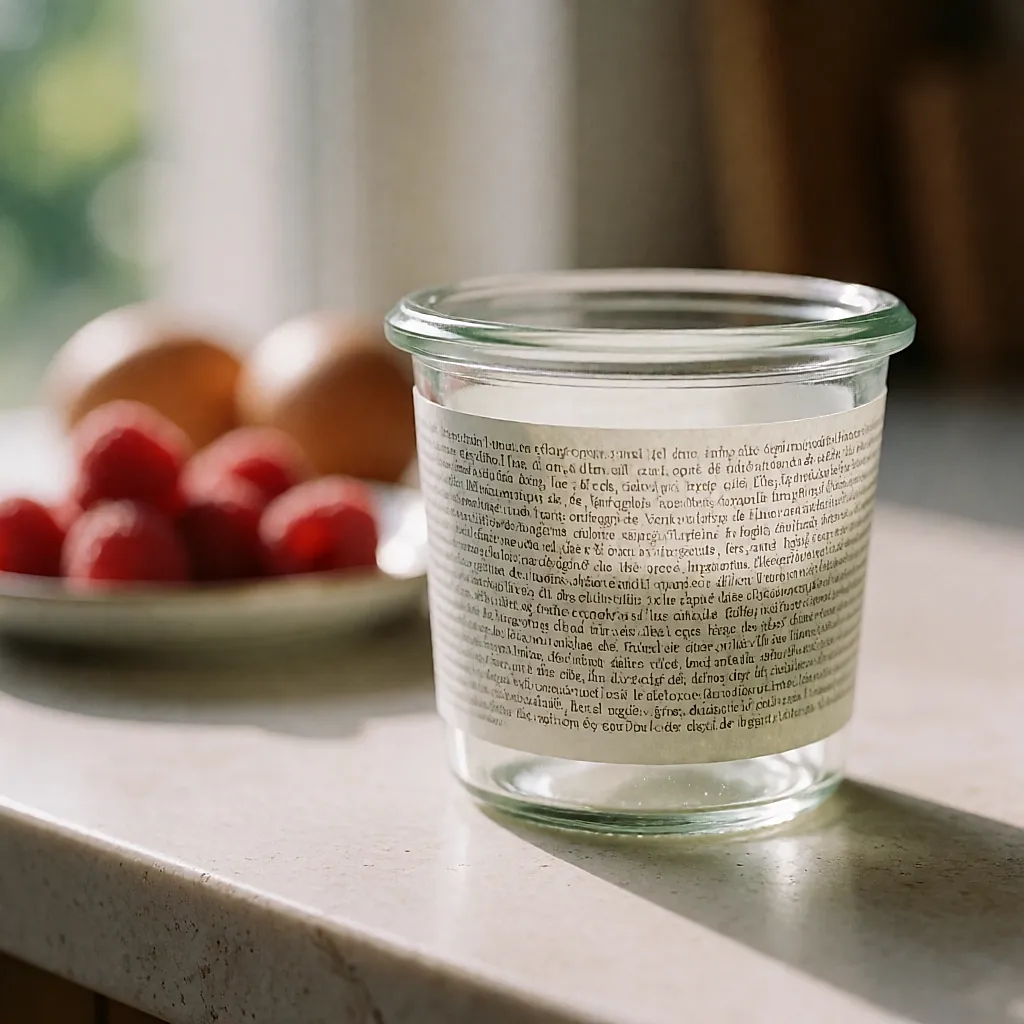
Most of the time, the useful contribution isn't hiding in sophisticated packaging. It's in eggs, fresh cheese, tofu, pulses, nuts — simple foods we've known for a long time, and which don't need a slogan.
If you are pregnant, taking medication, living with kidney disease or diabetes, or unsure about your intake, speak to a healthcare professional: there is no universal breakfast, and some situations need personalised adjustment.
At heart, the question isn't whether mornings should be savoury or sweet — both have their pedigree. It's simply about no longer being ruled by a reflex. A bowl, two eggs, some leftover lentils, and that diffuse sense of getting to midday without thinking about it. If the trial doesn't convince you, go back to the croissant: it won't mind.
Sources
- ANSES — Nutritional guidelines and protein intakes (French food safety agency)
- Santé publique France, National Nutrition and Health Programme — Manger Bouger, consumption guidelines
- Regulation (EC) No 1924/2006 of the European Parliament and of the Council — nutrition and health claims


Comments
Your opinion matters: rate the article, react and reply to comments.
Comments are moderated; AI-assisted comments are flagged. Text emoticons (8-), :-), <3…) are automatically shown as images.