
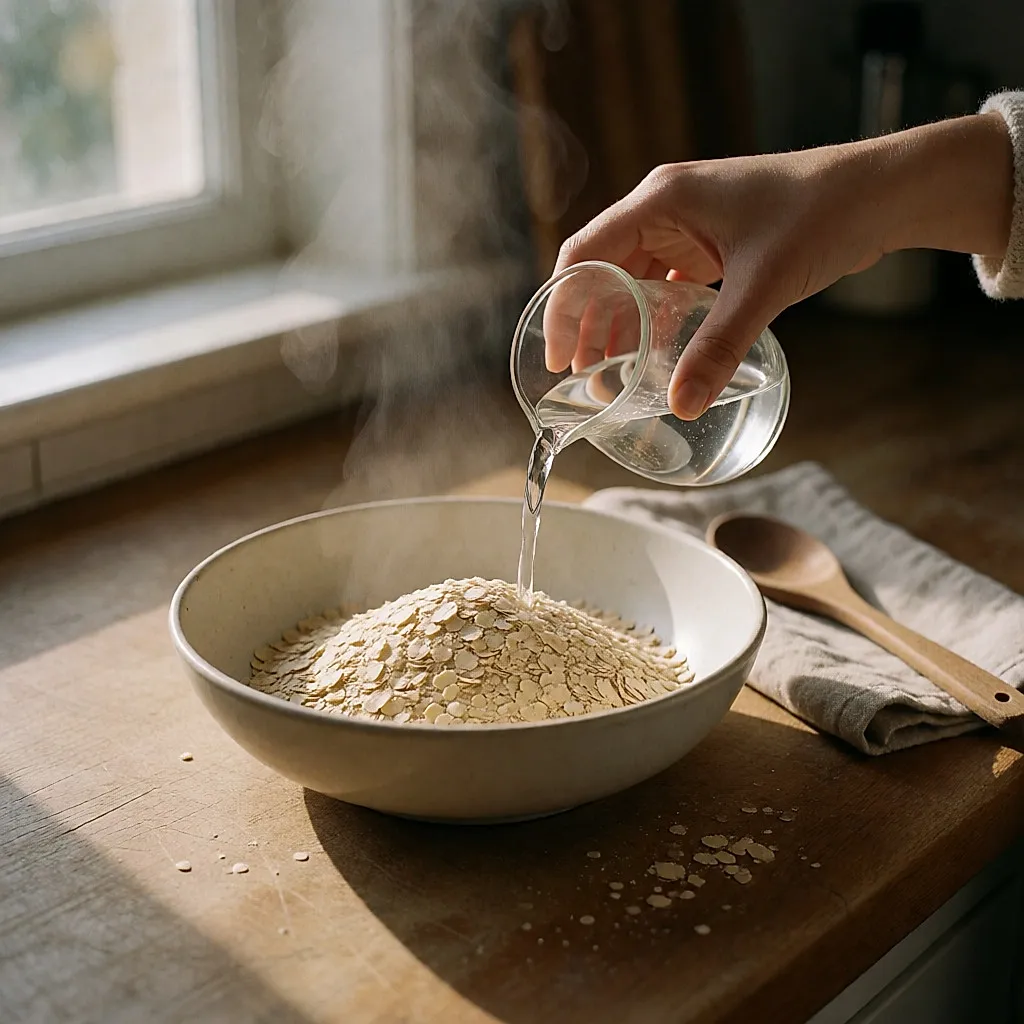
7.10pm. You open the cupboard, close it, open it again. Right at the back, a crumpled bag of textured pea protein has been waiting its turn for weeks. In practice, about ten minutes in hot water later, there's enough to fill a pan — and dinner sorts itself out, no arguments, no takeaway.
What happens when the hot water goes in
Dry, TPP — textured pea protein — looks like small, pale straw-coloured flakes: light, and more or less odourless. You cover them with hot water, sometimes stock, and wait — in practice, about ten minutes. The volume doubles, the texture softens into something between mince and crumbs. From there it takes on the spices, the sauce and the cooking fat without ever hogging the limelight.
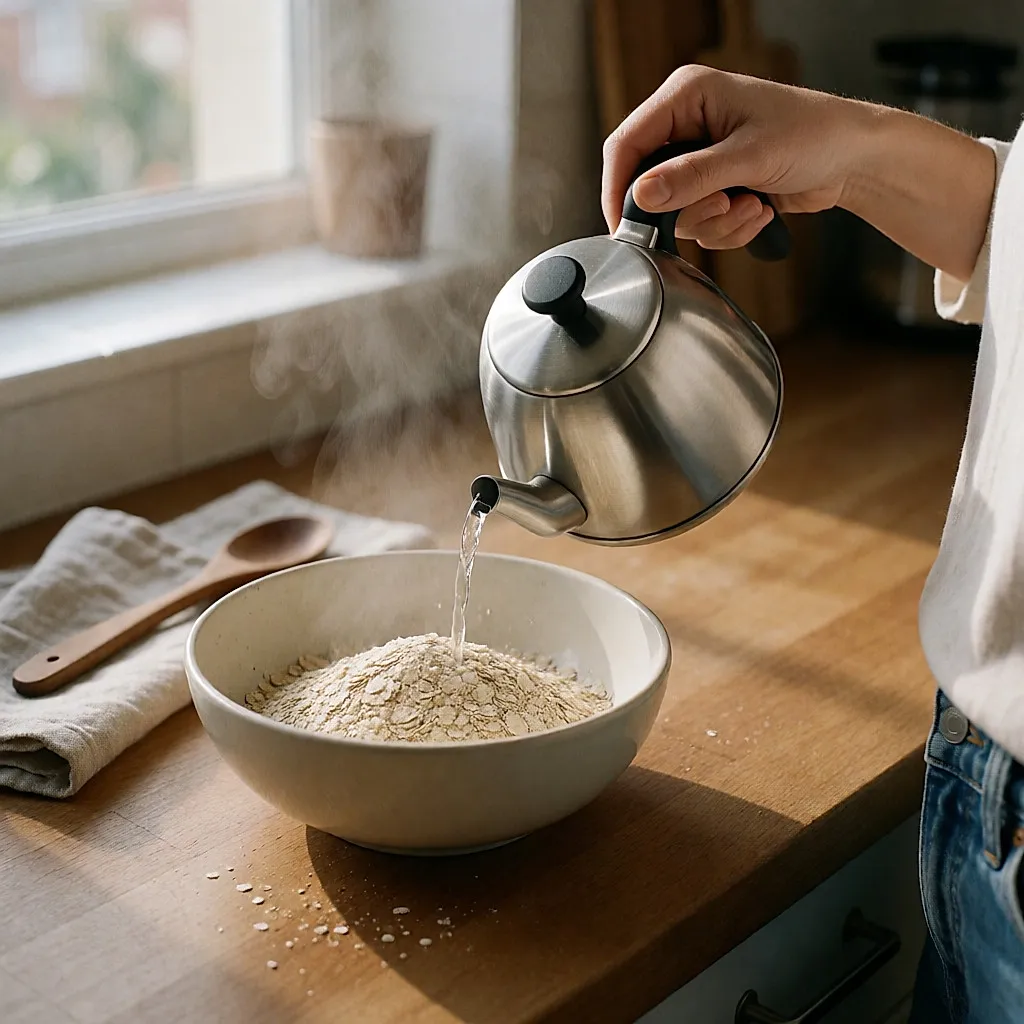
Two details change the result. First, press it well after draining: without that step, the water comes back out in the pan and the mix stews instead of browning. Second, the rehydrating liquid: vegetable stock instead of plain water, and the base picks up real flavour. The bag doesn't look like much. Those few minutes decide the rest though.
Why it earns its place on a weeknight
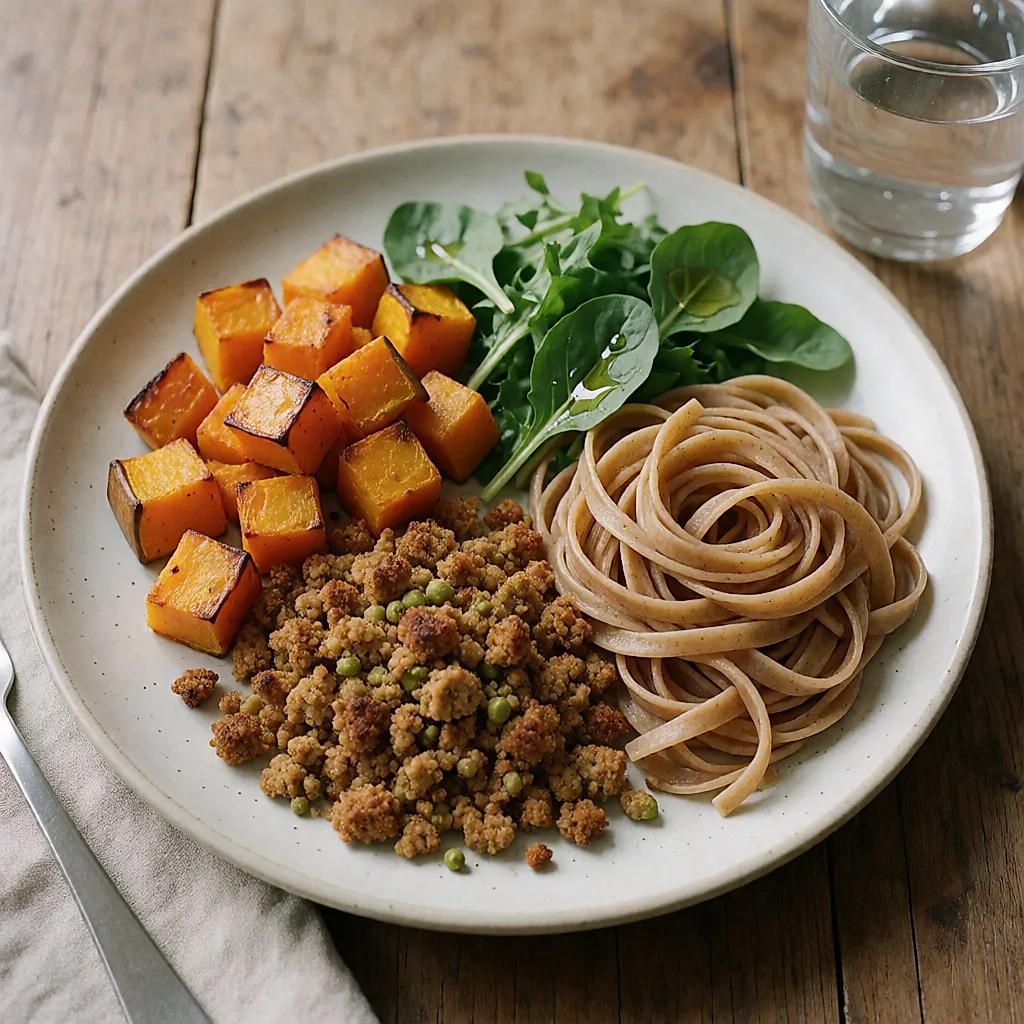
A good weeknight dinner usually comes down to three small things: few steps, a balanced plate, and the feeling of not going to bed heavy. On the plate, the guideposts don't move — a decent portion of vegetables, a portion of protein, some starchy carbs, preferably wholegrain. TPP plays the protein role, which makes it easier to vary your sources without reaching for meat every night.
No promises in that, let's be clear. It provides protein, like pulses, eggs or fish, and that's already a lot. On satiety, experiences vary from person to person: we're talking about feeling comfortable in the evening, not a measured effect. It isn't a diet food; it's a convenient one — and that distinction matters.
The one-pan dinner that rescues the evening
Soften a sliced onion in a little olive oil. Add squash cut into small dice — butternut, or whatever you have — and let it soften for five minutes. The drained TPP goes into the pan, then a tin of chopped tomatoes, a garlic clove, smoked paprika, cumin, a pinch of dried herbs. Salt, pepper, fifteen minutes on a low heat: you end up with a thick, deep-red sauce that plays bolognese without apology.
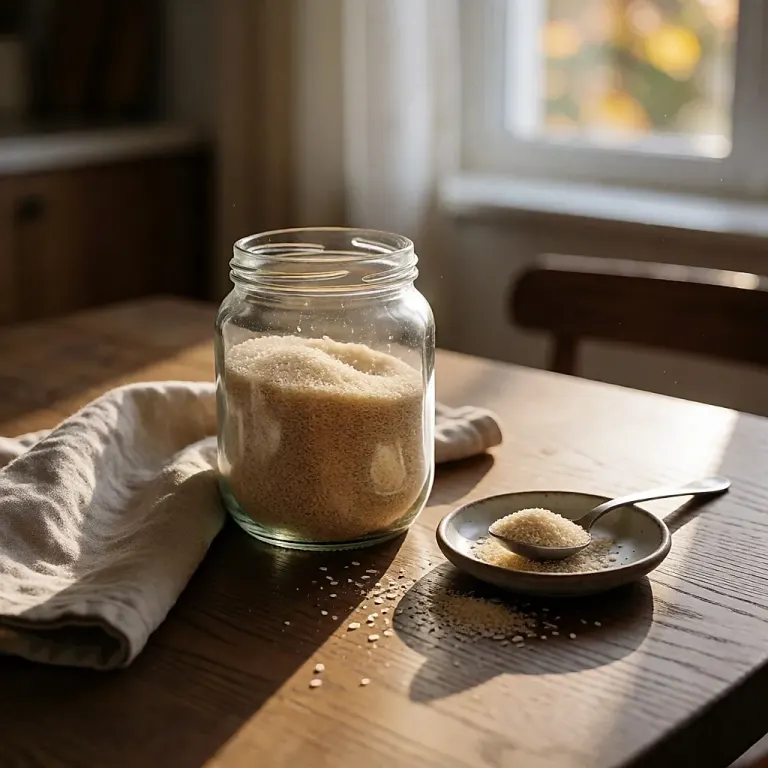
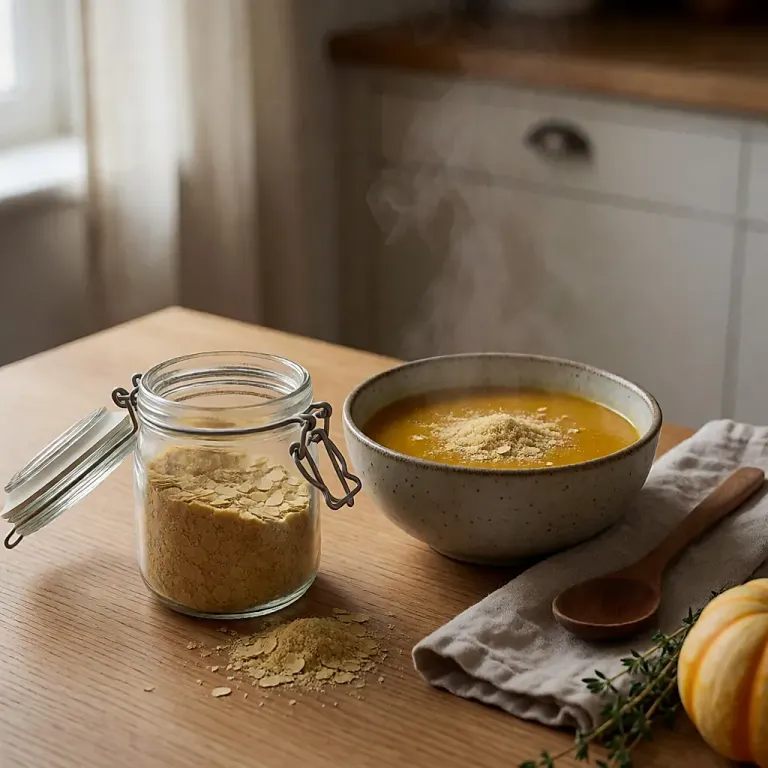
Serve it over wholewheat pasta, in a lasagne, on polenta, or simply with bread. A dash of soy sauce or a spoonful of nutritional yeast at the end of cooking adds that deep savoury note plant-based dishes sometimes lack. And the squash, as it breaks down, does the binding: it's what gives that soft texture of long-simmered sauces. Double the quantities, put half aside — batch cooking, sorted.
Cost
Expect around £3.50 to £5.50 for 500g in bulk or from health food shops, sometimes less at Asian grocers or in the free-from aisle of the supermarket, a bit more from some specialist brands — up to £7 or £8 a bag. The price per kilo stays modest next to beef mince, as long as you compare like with like: once rehydrated, TPP swells, and 500g covers several meals.
Where to find it? Health food shops and bulk-buy sections stock it more and more, often in self-serve bins — handy for trying a small amount before committing to a big bag. Online, specialist grocers sell it in multipacks, which brings the price per portion down. It's worth a look at the ingredients list: some brands are just pea protein, others add flavourings or colourings.
The batch-cooking reflex: rehydrate 200g of TPP once, on a Sunday, then drain and press. In practice, that's two to three days in the fridge in a sealed container — come evening, all that's left is to get the pan going. If in doubt, follow the pack.
What to keep in mind
TPP isn't a whole food: it's a processed ingredient made from isolated pea proteins. That makes it neither suspect nor miraculous — it simply doesn't replace a varied diet on its own. Pulses, wholegrains, eggs, fish, nuts: rotation is still the best ally of a balanced plate.
A more sensitive point next. If you're on medication, expecting a baby, or have kidney concerns or particular protein needs, the question of your intake deserves a proper conversation with a health professional — not an off-the-shelf answer found online. For everything else, this is cooking, and cooking is something you try.
The bag that stays in the cupboard
Nothing dramatic, then. But a dry good that sits out the whole winter without complaint, costs less than a steak, rehydrates while you get changed, and accepts pretty much every spice on your shelf. A cupboard staple in the most useful sense: the one you're glad to find on a Tuesday night, when it's already late and nothing's been planned.
Make your first pan with squash and smoked paprika, adjust the salt, and see what your palate makes of it. If the trial goes well, the next bag gets a dedicated spot — not at the back, but at the front, within reach. That's usually how good weeknight habits start: on an evening when nothing was planned.
Sources
- NHS — The Eatwell Guide
- Office for Health Improvement and Disparities — McCance and Widdowson's Composition of Foods Integrated Dataset (CoFID)
- Food Standards Agency — Food safety and nutrition advice
Comments
Your opinion matters: rate the article, react and reply to comments.
Comments are moderated; AI-assisted comments are flagged. Text emoticons (8-), :-), <3…) are automatically shown as images.