
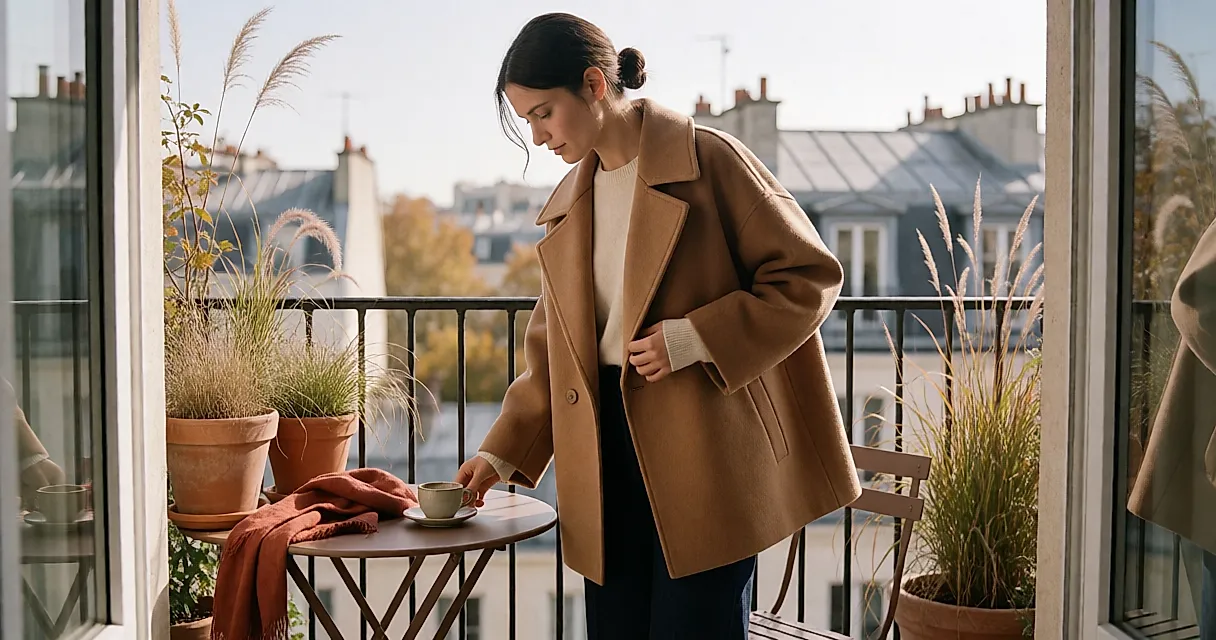
There are jackets that have had a career. They have waited with you in reception before an interview, spent a whole afternoon of meetings slung over the back of a chair, then, one November morning, landed at the back of the wardrobe between the winter coat and a gym bag. The suit hasn't disappeared, it has stopped calling the shots — and on the catwalks, the silhouette is taking up more room.
The suit is no longer the uniform
In offices, the two-button fitted jacket no longer seems to be the entry pass. Many meetings happen on video, with only shoulders and collar in frame, and the rest of the outfit belongs to private life. The result: the structured piece is no longer an obligation, it has become a choice. And once a jacket stops being a uniform, it can afford to behave a little less sensibly.
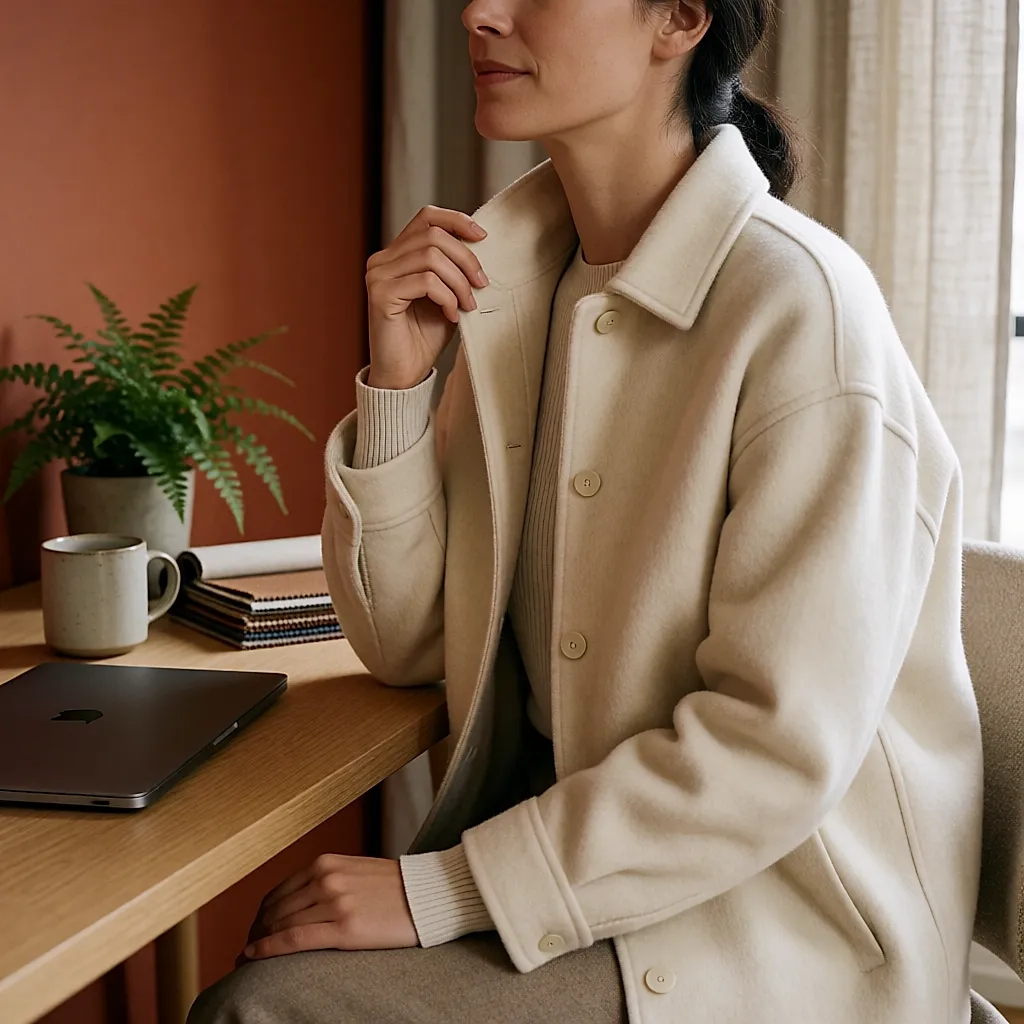
Should we burn the fitted jacket? No, of course not. What has taken its place are fine knits, well-draped cardigans, soft unlined jackets that look like thick shirts. We keep the line and lose the armour. The suit is no longer there to prove you work hard, but to show you have taste.
The shoulder gets wider and the structure moves house
On the catwalks, shoulders are extended, sleeves sometimes reach past the fingers, lapels open wide and jackets drop to the hip. From a distance, it looks as if everything has gone soft. Up close, it's the opposite: the structure has moved house. It leaves the pinched waist and takes refuge in the shoulder, in the weight of the fabric and in a length that holds itself up.
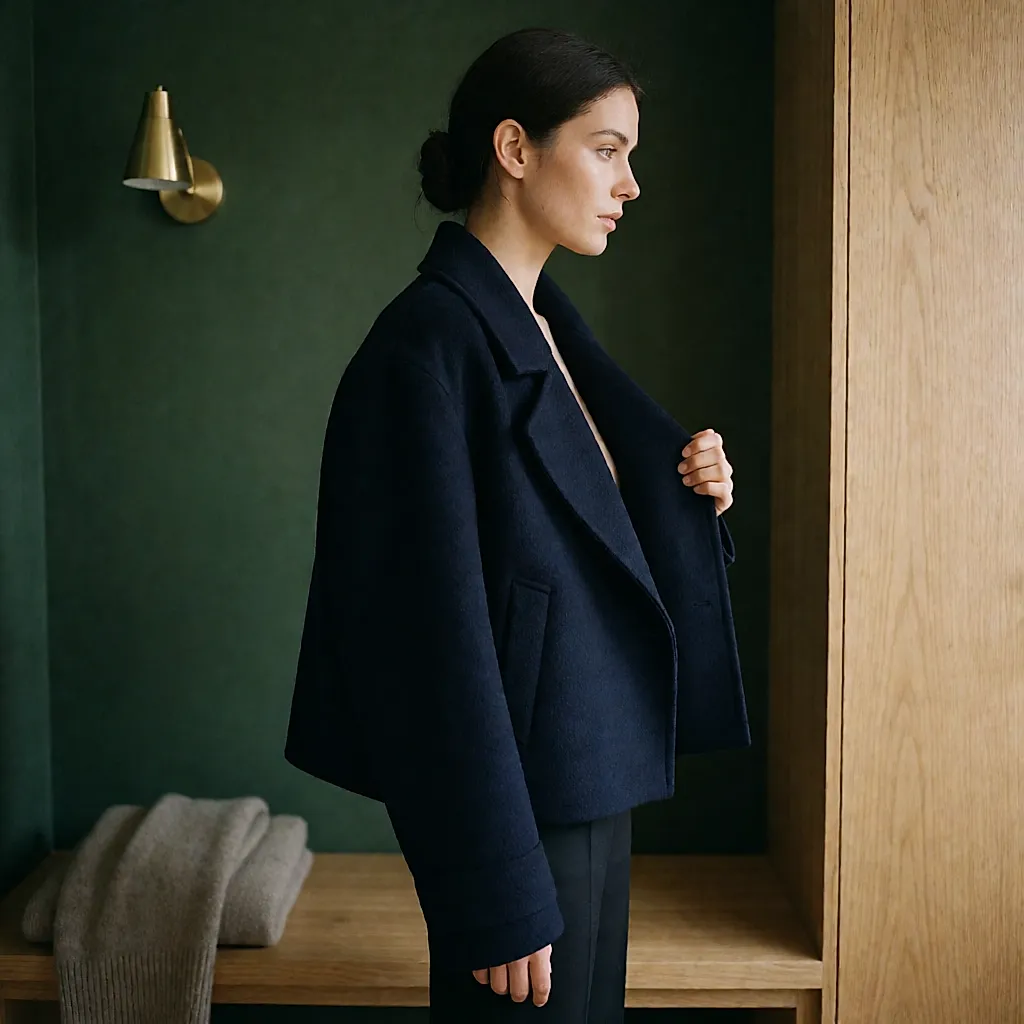
The question is how it works on you. The dropped shoulder is forgiving: it softens, elongates and suits petite frames looking for volume without being swamped. A structured shoulder gives presence — useful when you feel you disappear in a room. If you are petite, though, a very wide mid-thigh jacket can swallow you whole: go for a hip-length cut, or lean into the volume with straight-leg trousers.
How to wear it on Monday morning
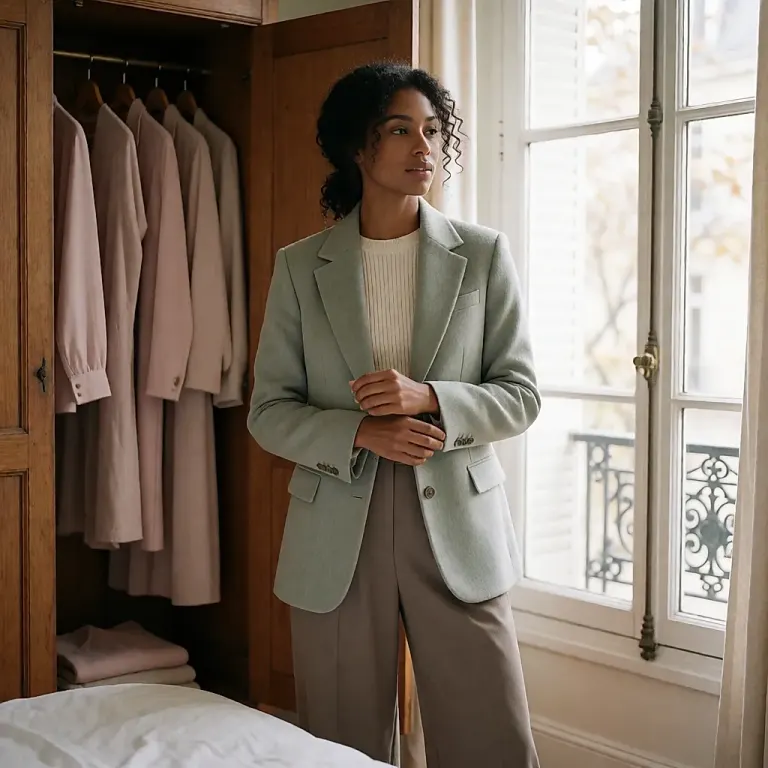
Wear the big jacket like a light coat: over a fine knit, a slip dress, straight-leg jeans and Derby shoes. Belt it if you want to mark the waist, leave it open with the sleeves pushed up if you need your hands. There is one rule: the drape has to stay clean, otherwise the jacket wears you rather than the other way round.
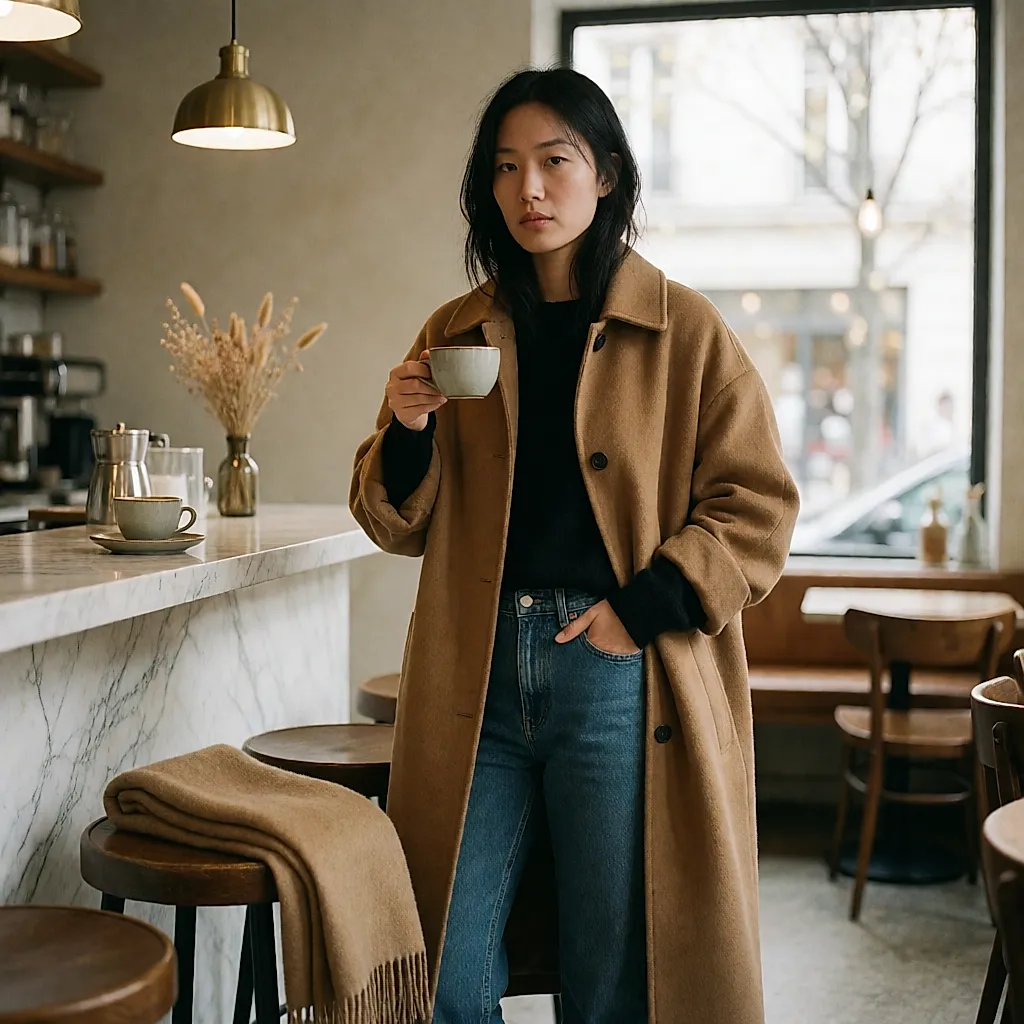
And crucially, it has changed hours. The suit clocked on from nine to six; today's jacket goes out to dinner. It moves from morning coffee to evening drink without going back via the nipped-in shape, and rescues a Sunday outfit as well as a Tuesday meeting.
Wool flannel comes back on duty
To hold a shoulder without stiffening it, nothing beats wool flannel: it has weight, hangs straight and ages well. Cotton gabardine does the job in spring, and crumpled linen handles summer — provided you accept creases, which is a lifestyle programme in itself. Check the label: a fully synthetic lining will make you sweat when you wear a jacket for eight hours, and the synthetic fibre content of the main fabric also deserves your attention before you get to the till.
For care, a structured jacket dislikes repeated dry cleaning and wire hangers: brush it, air it for a day, hang it on a wide hanger, and save dry cleaning for stains and the end of the season. A detour to a charity shop can be worth it: a well-cut 1990s men's jacket, with the sleeves altered, often costs less than a badly cut new one.
Before you pay, three questions: can I raise my arms without the shoulders riding up? Does the sleeve stop at the wrist, or on the back of the hand? And above all, will this jacket work with three outfits I already own? If the answer is no, alterations can rescue the first two — never the third.
What to budget
Expect roughly £70–£180 on the high street, often in wool blends; £220–£450 for a predominantly wool jacket with a decent lining and traceable production; beyond £500, you are paying for the fabric, the cut and the name. Second-hand, £25–£100, alterations not included.
What makes the price vary? The fabric, the number of pieces to assemble, where it is made and the city where you buy it. Remember alterations: £20–£50 to take up sleeves or take in a waist, at a local tailor or through the retailer's service.
If you keep only one, choose a plain wool, slightly oversized, camel or navy: it is the least tiring to wear and the easiest to have altered. If you want a more considered purchase, a black nipped-in jacket with an impeccable cut remains useful — provided you accept that it no longer tells the same story. In short, the structured jacket isn't dead: it has just changed jobs!
Comments
Your opinion matters: rate the article, react and reply to comments.
Comments are moderated; AI-assisted comments are flagged. Text emoticons (8-), :-), <3…) are automatically shown as images.