
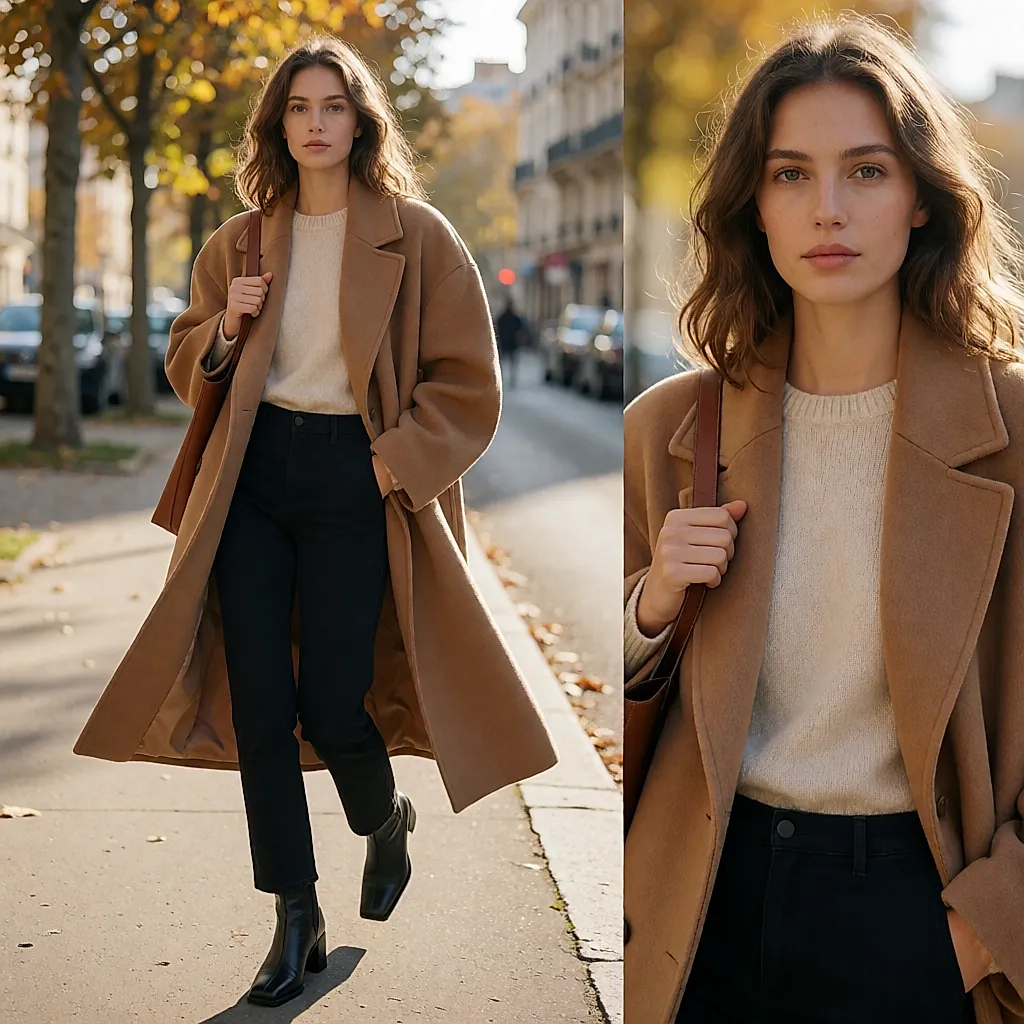
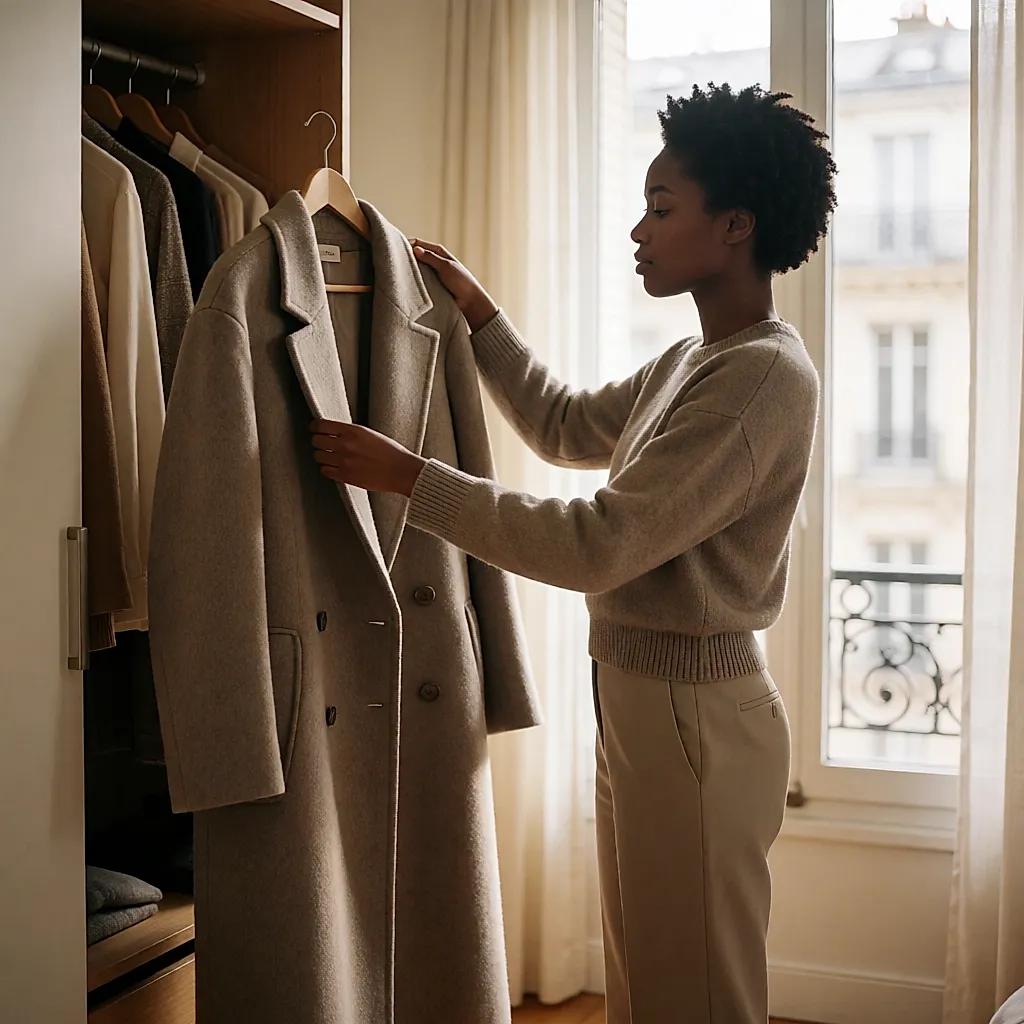
The coat had everything going for it: generous shoulders, a beautiful drape, the look of floating effortlessly. In the hallway mirror, it floats. Full stop. Nothing disastrous — volume doesn't fail because of your body shape; it fails because of the styling. Three checks are enough to put it right.
Pick one place for the volume
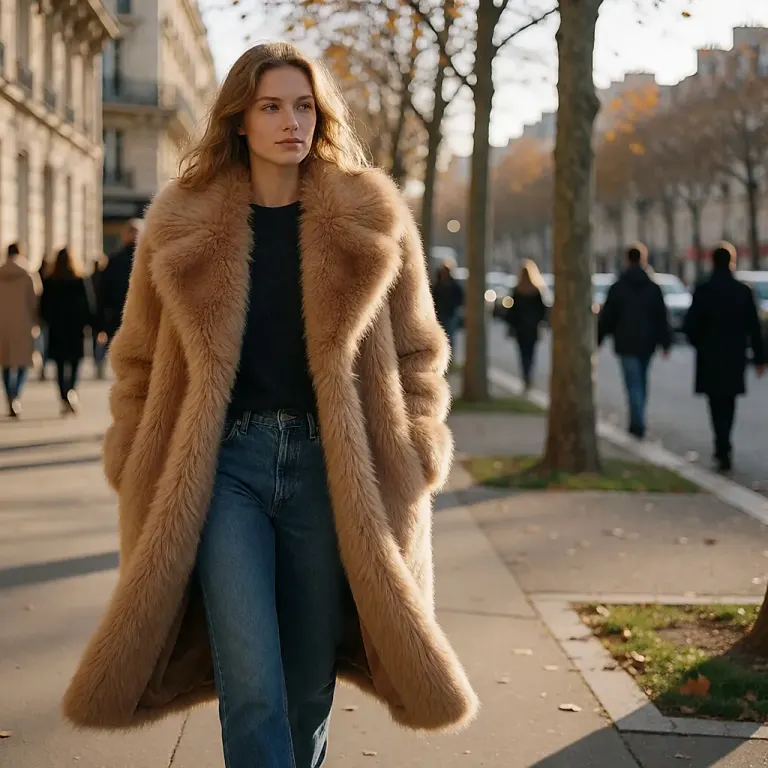
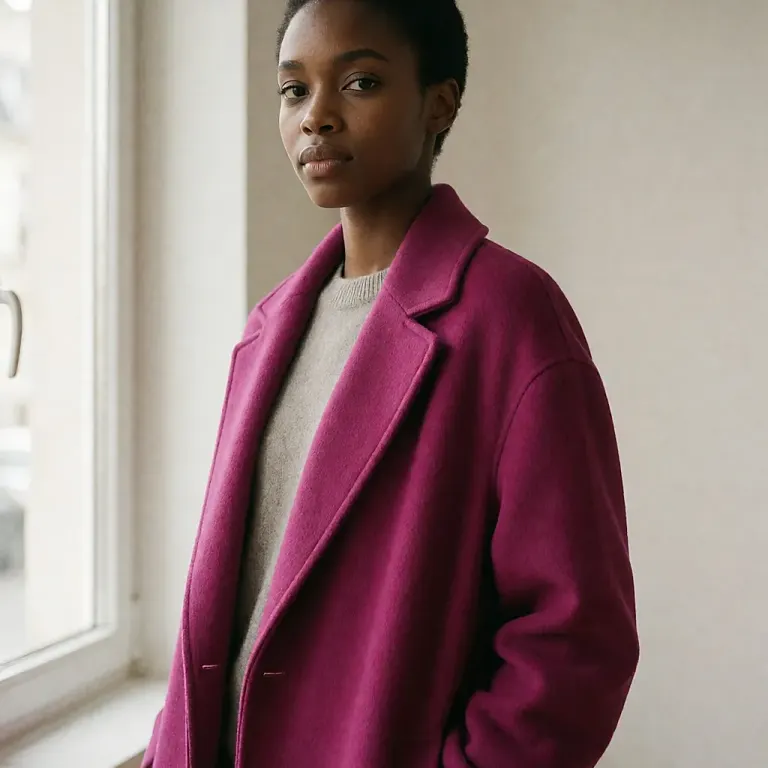
This season embraces pieces that take up space: oversized jumpers, rounded shoulders, trousers that graze the floor. Seen like that, you want to pile it all on — and that's exactly where a silhouette gets lost. Layering works when it tells a story, not when it just adds up.
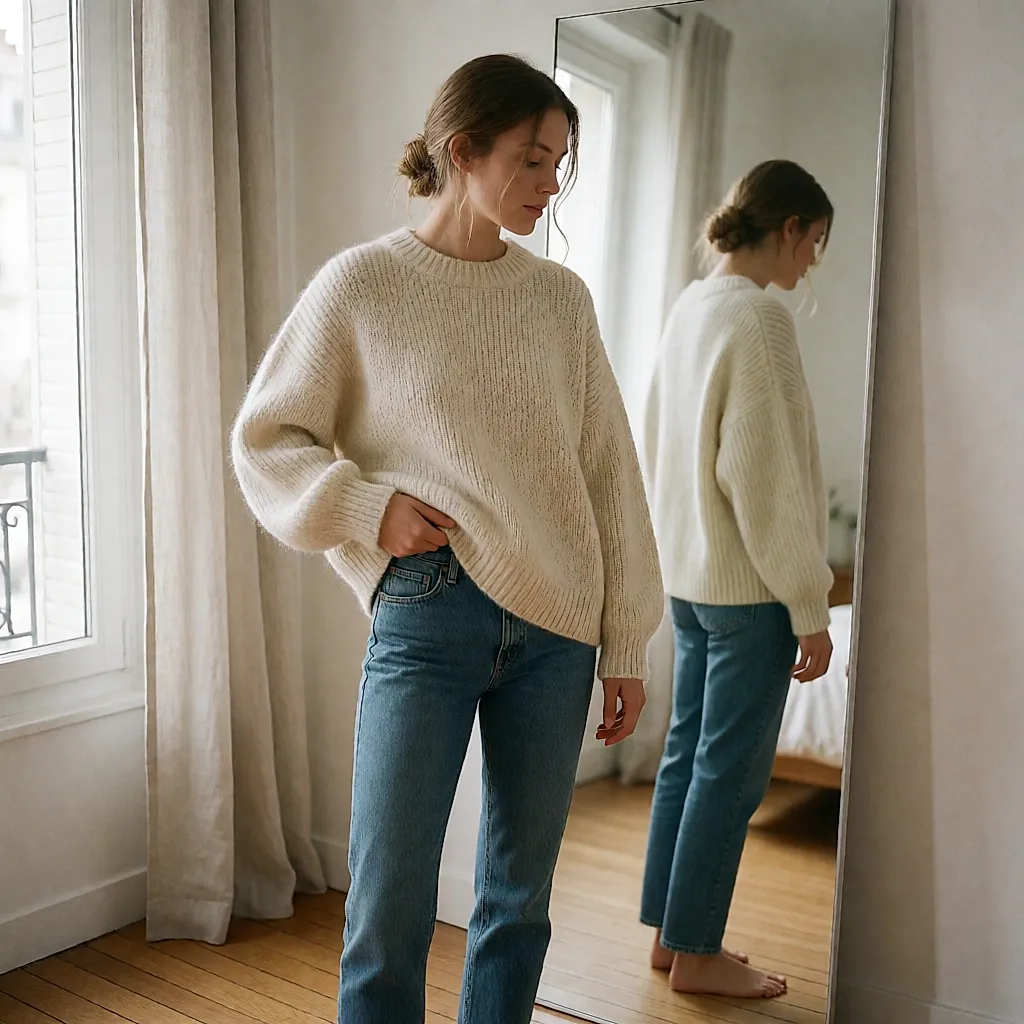
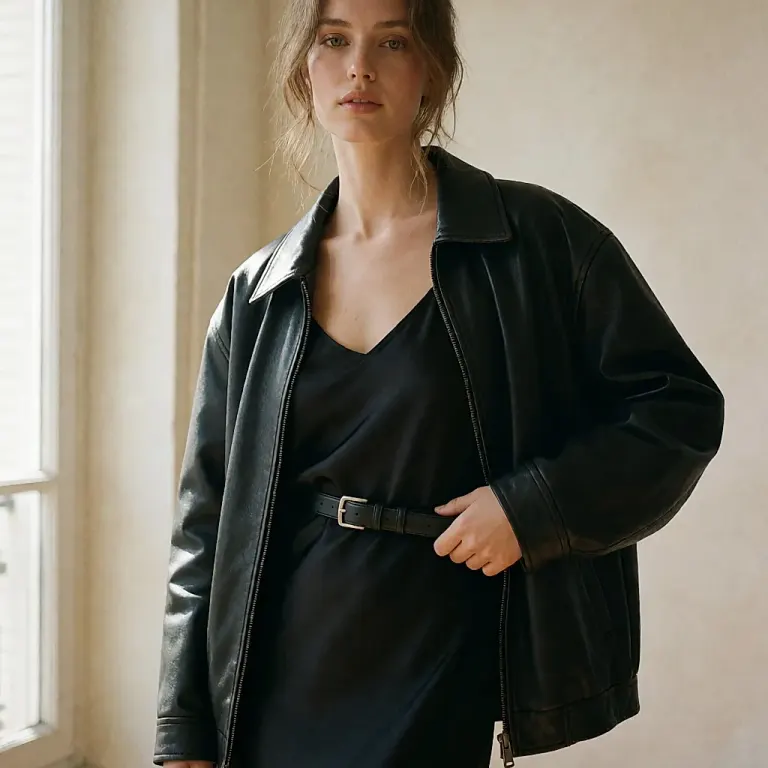
Choose one focal point: the top, the sleeve or the leg. A roomy jumper calls for a bottom that follows the body's line — straight trousers or raw denim. Wide-leg trousers demand the opposite: a top close to the bust, tucked in or cropped, so the waist stays readable. As for a balloon sleeve, it's already doing the work — keep everything else simple, otherwise it's a fanfare.
What grounds it: the lower half, weight, the shoe
Volume without grounding is a sheet on a washing line. What holds a silhouette starts from below: the fabric of your trousers or skirt and the way it falls. Thick wool, flannel, gabardine with body — these fabrics have weight and hang straight. A light fabric in a wide cut clings to the calves and ruins everything. Check the composition while you're there: a high synthetic content changes the drape and how it wears over time.
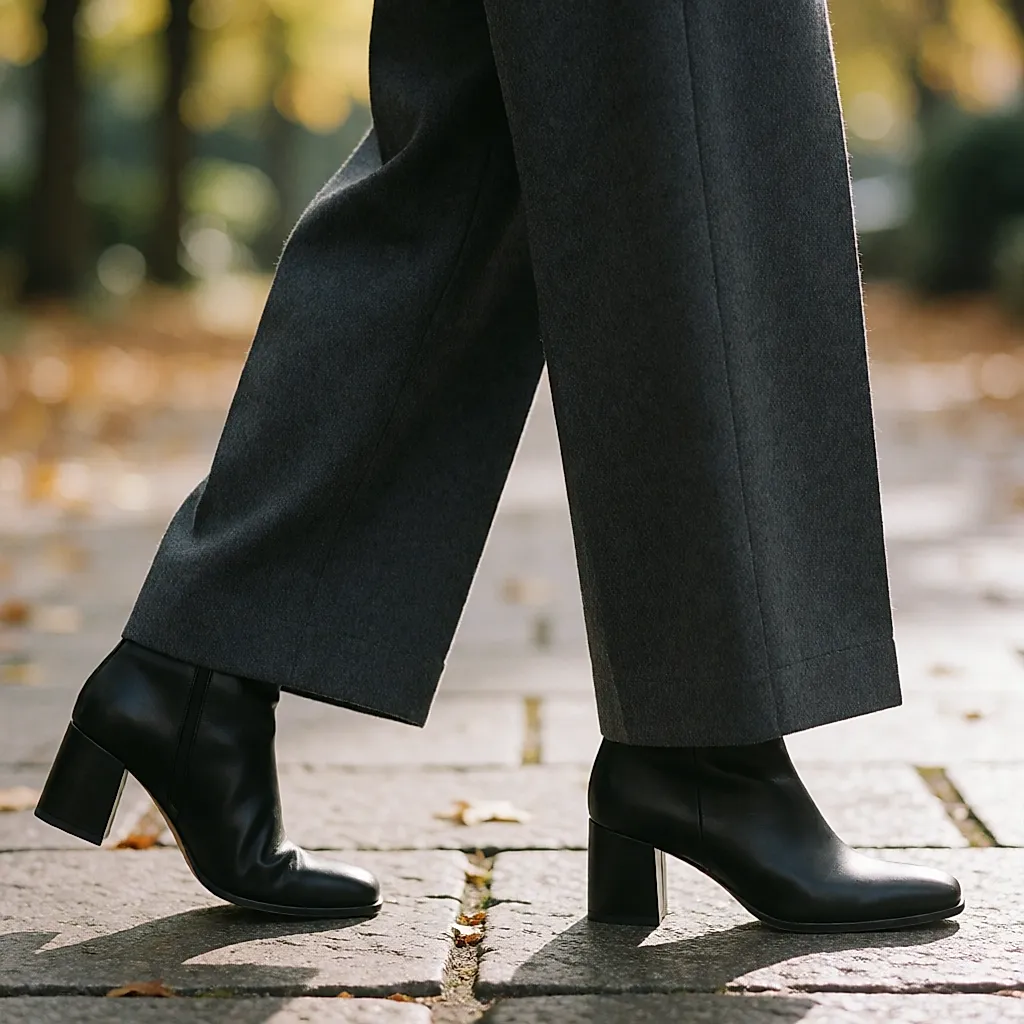
The second lever is the shoe. A square-heel boot, a chunky-sole loafer, a slightly substantial Derby: these plant the silhouette on the ground. A delicate ballet flat under very wide trousers, and the trousers run off without you. What's called the height of the shoe has nothing to do with heel height — it's the surface area of the sole, and how the hem meets it.
Three changing-room checks
First question: where does the volume start? Find the exact point where the piece moves away from the body. If two pieces move away at the same level, you're not wearing an outfit, you're wearing a tent. One focal point, just one.
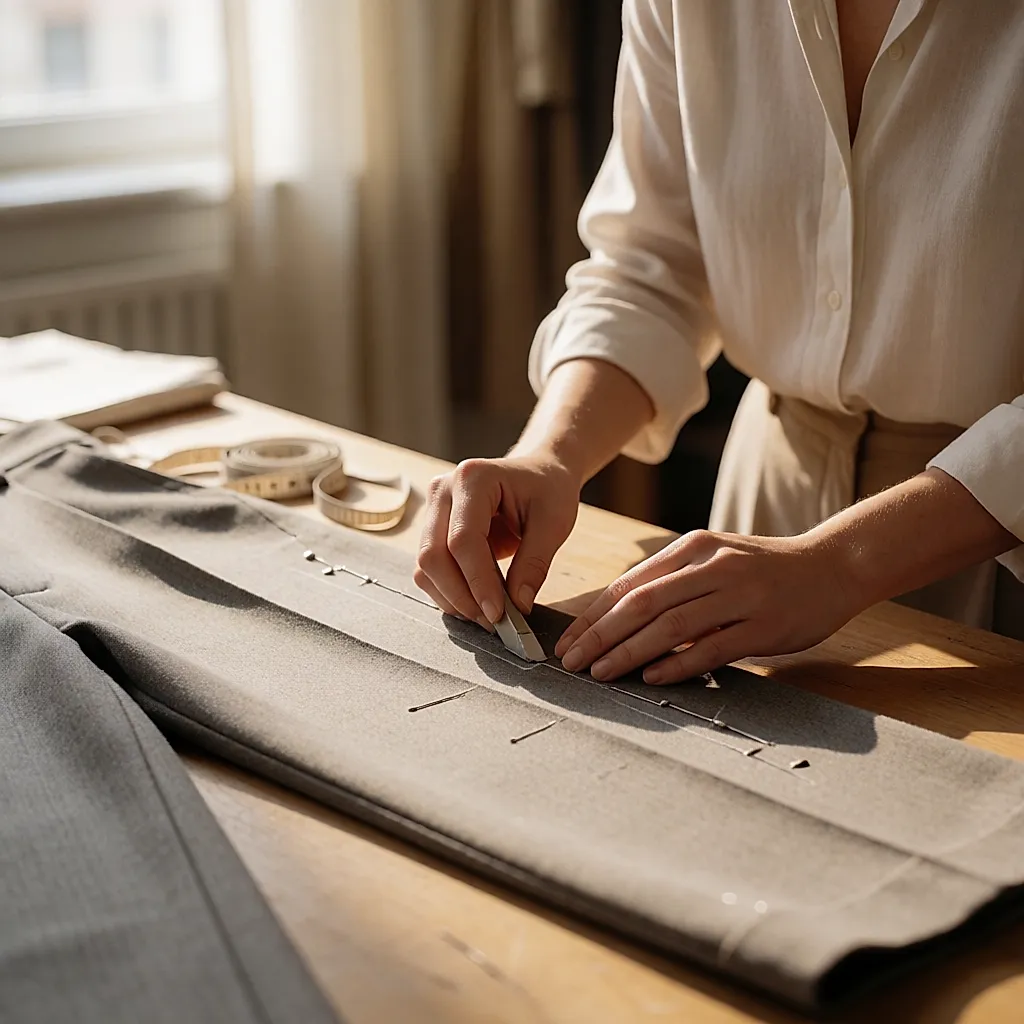
Next, where does it land? Volume should stop on a line you've chosen: top of the thigh, ankle, wrist. Also look at where the hem cuts the leg — a touch too low or too high, and the silhouette suddenly shortens. It's often a hem alteration, the most ordinary and cheapest, that solves it.
Last, the only check that never lies: does the look hold up when you walk? Take three steps in the changing room, sit down, lift your arms as if reaching for your bag. A piece that settles itself back into place is a good buy; a piece you have to hold with one hand will never leave the wardrobe.
Drape needs looking after. A voluminous jumper should be brushed, aired and rested for a day between wears — hung on a wide hanger, or folded if it's heavy. That's what stops it sagging at the shoulders, and losing exactly what you bought it for.
Budget: where the money actually works
Volume is the category where you can spend a lot for a mediocre result. As a rough guide, allow around £60–£180 for a wool jumper that drapes well, £80–£250 for wide-leg wool or flannel trousers, and £100–£300 for a pair of square-heel boots that will last. These ranges shift depending on the city, the brand and how much wool is actually in the mix.
At the more affordable end, second-hand is unbeatable for coats and thick knitwear: charity shops and resale platforms are full of roomy pieces nobody dared to wear. And keep a little back for local alterations — often £15–£30 for a hem, £20–£45 for a simple take-in. That small outlay changes more than yet another purchase.
The whole season comes down to this one adjustment
Once your eye has learned the trick, everything speeds up. You spot in three seconds the piece that will throw the outfit off balance, and you put back without regret the beautiful coat that grounded nothing. Volume stops being a gamble and becomes a decision, and the wardrobe oddly gets lighter as the cuts get wider.
If you remember one thing: it's not the number of roomy pieces that makes the look, it's where you decide to stop them. One focal point, a bottom with weight, shoes that ground. The rest is style — and that can't be bought.
Comments
Your opinion matters: rate the article, react and reply to comments.
Comments are moderated; AI-assisted comments are flagged. Text emoticons (8-), :-), <3…) are automatically shown as images.