
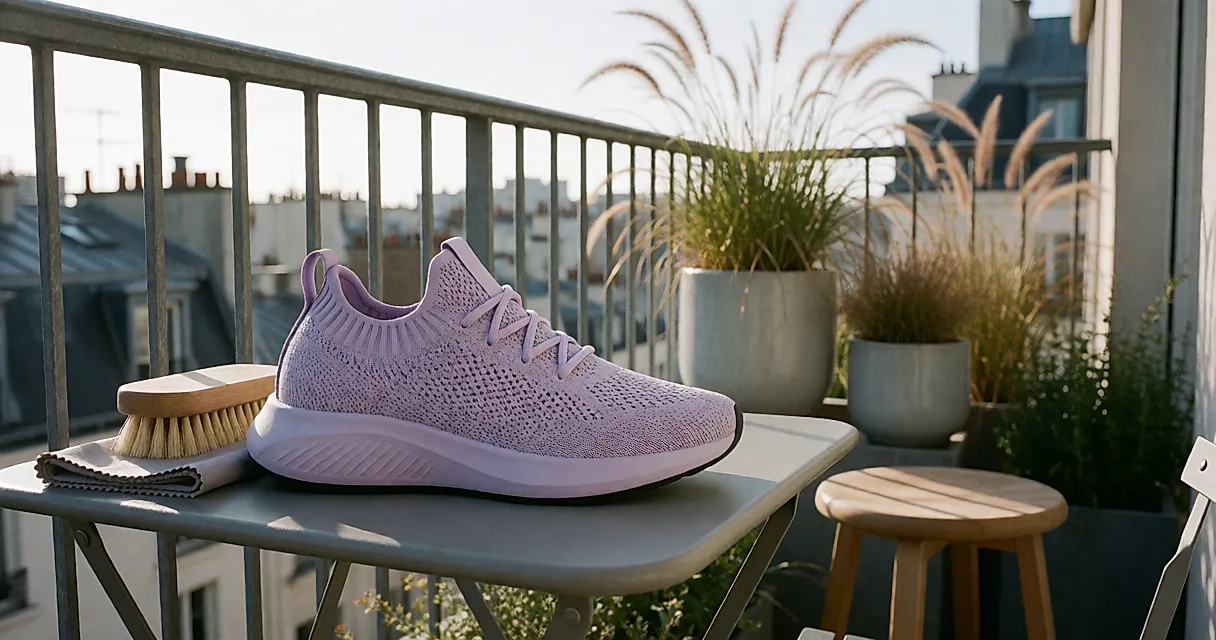
A canvas trainer can be scrubbed like a shoe; a knitted one is closer to a piece of lingerie. There are no reinforced seams to scrub and no leather to feed, just loops of yarn that dislike hot water and hard brushing. Even so, you can bring it back to looking decent without turning it into a collapsed slipper.
Why a knitted upper is less forgiving than canvas
On a classic upper, you can quickly see where to rub: seams, reinforcements, matte patches. On knit, everything is material. The technique is not a wash but a gentle brushing — short, precise and, above all, stopped before the fibres relax. Why? Because knit is a series of loops: too much water, too much rubbing or a hot drying session, and the upper can become misshapen, pill or lose its drape. On wool, hot water and friction can also cause it to felt; on blends, pilling and sagging are often the risks.
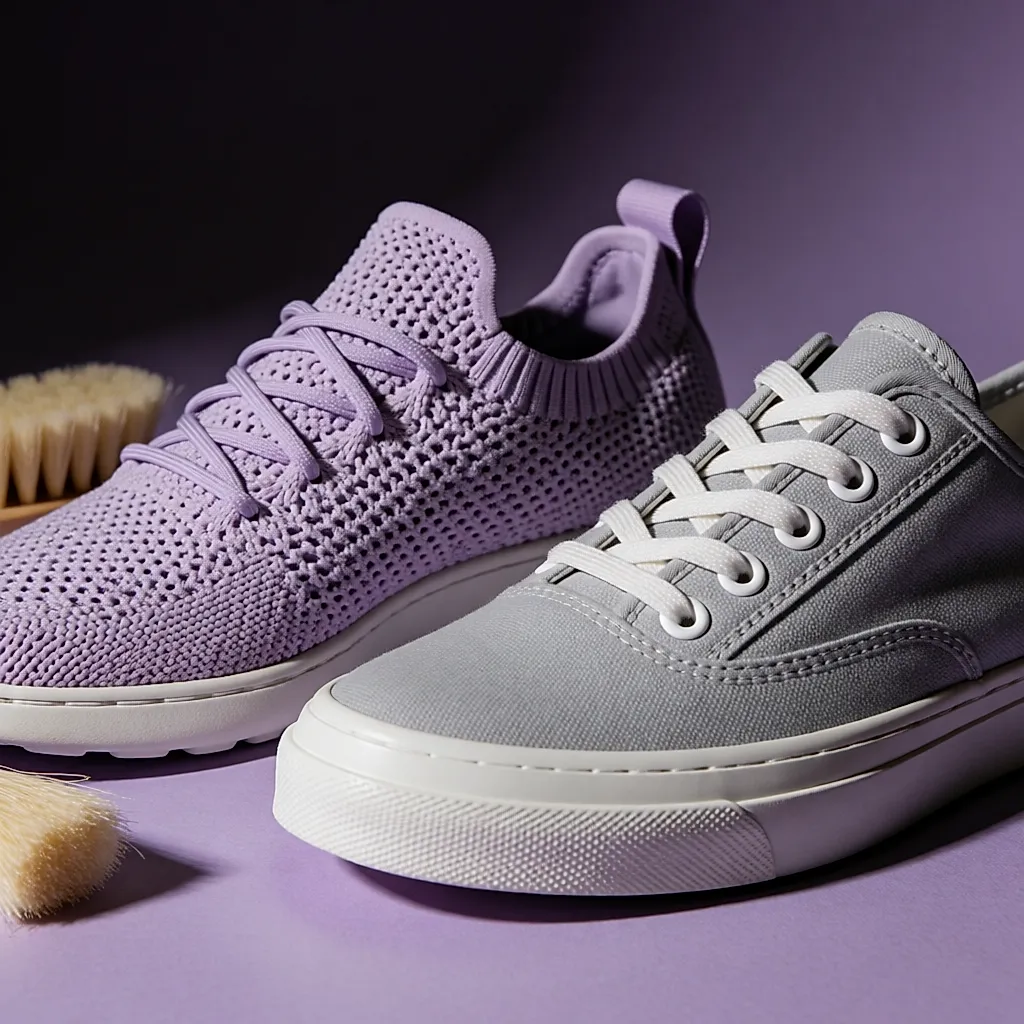
A useful habit: look at the label before getting out the heavy equipment. Merino wool, cotton, linen, sometimes a small proportion of synthetic fibre for structure — you do not need a textiles degree, just a clear idea of what you are dealing with. And if the upper is already soft, do not expect it to become new by magic: care preserves, it does not rebuild.
The right technique: little water, working with the knit
Start dry. Remove the laces and insoles, then brush the upper with a soft brush or a soft toothbrush, in the direction of the knit: from top to bottom, without going back and forth as if you were scrubbing a pan. This first pass removes dust, salt and small residues that would otherwise turn into paste when they meet water. Ask yourself: are your trainers simply dusty, or actually stained? The answer changes the method.
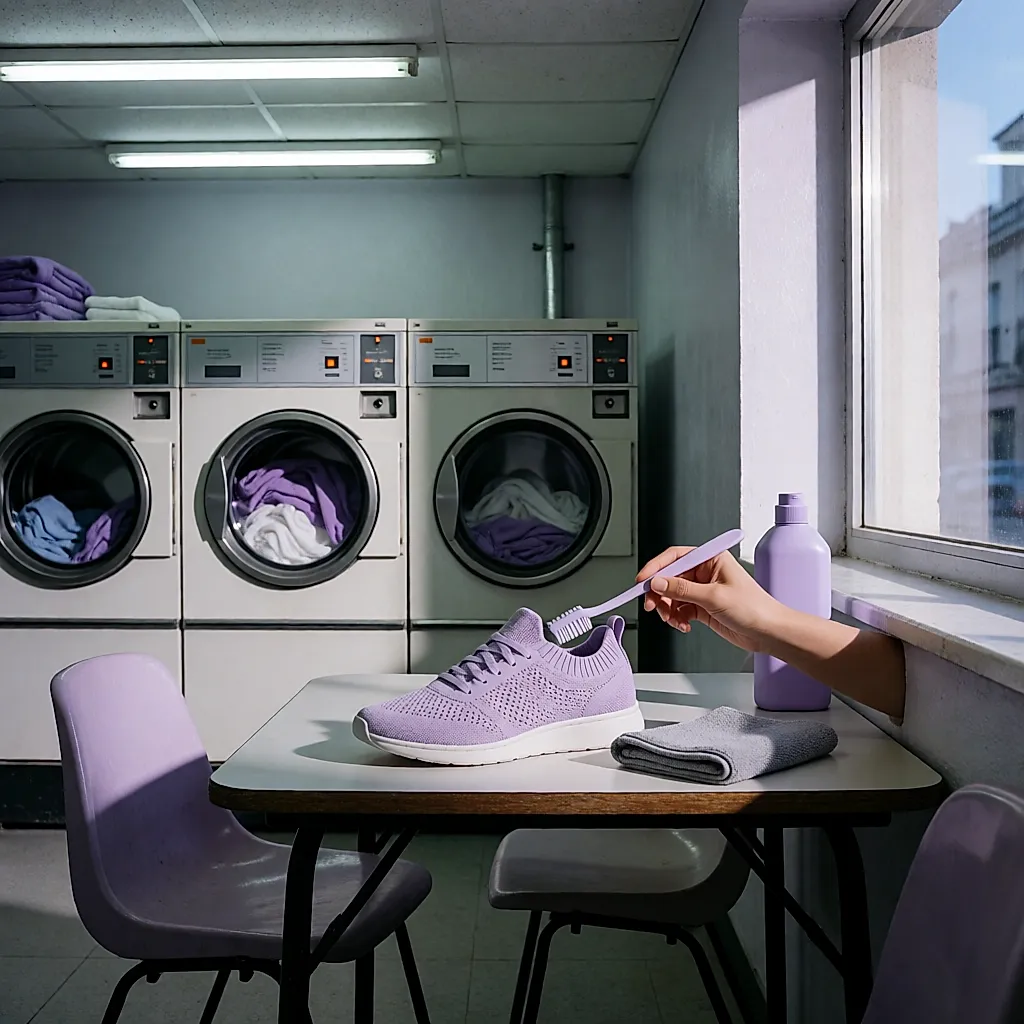
For a stain, blot — do not drown it. Use a microfibre cloth that is barely damp, a drop of mild unscented soap, and very light, small circular movements over the area. Rinse the cloth, not the shoe, then blot with a dry corner. Laces can be washed separately in a mesh bag; the upper cannot, unless the manufacturer says otherwise. This method is not suitable for leather, nubuck or very dirty uppers: take those to a cobbler or a specialist cleaner.
Plain white paper is your best ally: stuff the upper with it, without packing it too tightly, to absorb moisture and keep the volume while it dries. Never newspaper: the ink can migrate.
Drying: patience is what preserves the shape
This is where many pairs lose their silhouette. Never on a radiator, never with a hairdryer, never in direct sun: heat sets deformations and can stiffen the knit. Leave the pair to air in a ventilated room, away from a heat source. Leave it until the upper is completely dry; change the paper if it is soaked.
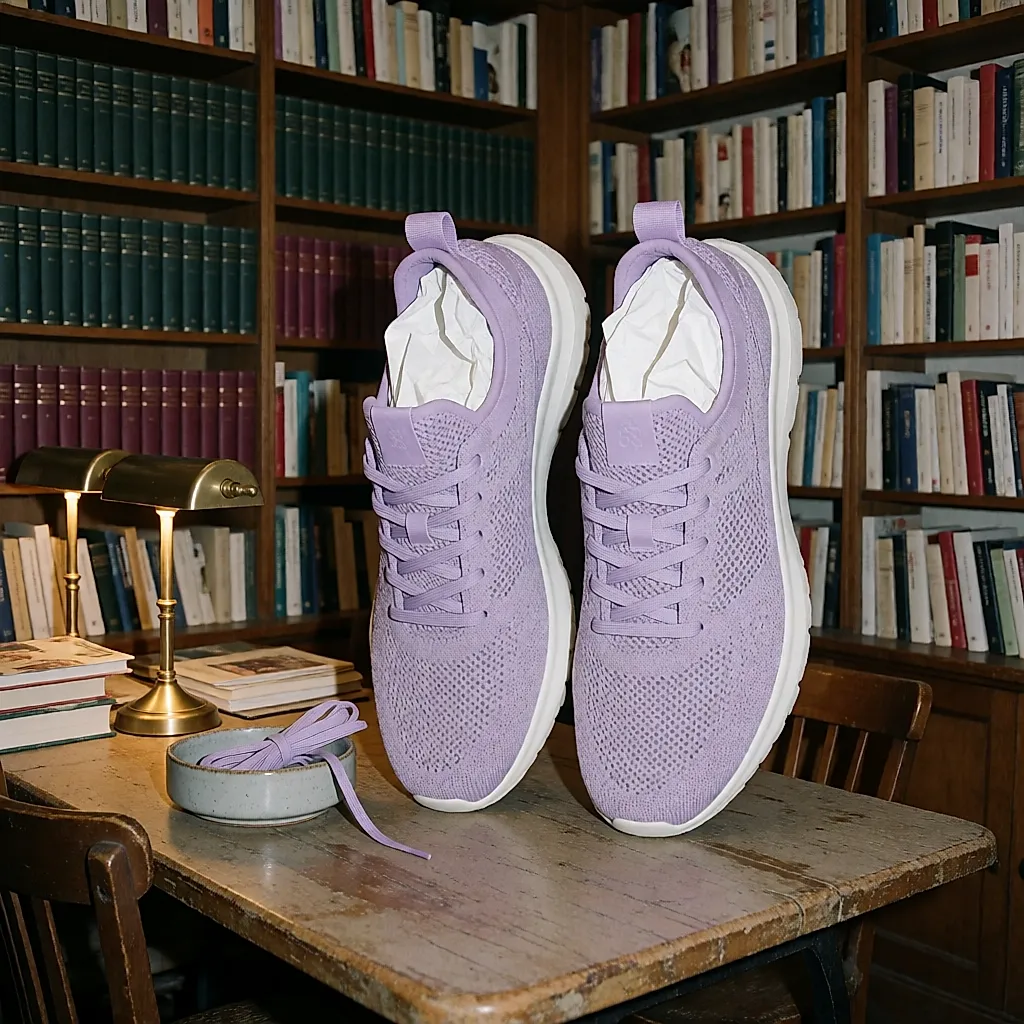
In a hurry? That is the moment to bring out another pair, not the hairdryer. A damp knitted trainer stretches when worn and loses its shape more easily. Once dry, brush very lightly in the direction of the knit to lift the fibres, then put the insoles and laces back. The look often returns without any special product — just a little method.
Everyday care: less often, done better
The best prevention comes down to one habit: a quick, regular dry brush, especially after a dusty or wet outing. This keeps dust out of the knit and avoids the big clean that tires the upper. Store pairs away from light and rotate them — a pair worn every day sags faster than one that breathes between outings.

The washing machine? As a rule, it is rarely a good idea for a knitted upper: the drum roughs up the structure and the drying that follows does the rest. If your pair has already sagged, no trick will firm it up for long; good care, however, will stop it from getting worse. It is a bit like a favourite jumper: the more you look after it, the longer it holds.
Budget: from a toothbrush to a specialist
Do you really need a dedicated kit? You do not need a £60 kit to deal with a knitted upper. Expect to pay around £1 to £3 for a new soft toothbrush, £8 to £20 for a soft brush and a suitable soap from a hardware shop, supermarket or online; a microfibre cloth often costs £2 to £5. Prices vary with the range, the format and where you buy — there is no need to aim for the most expensive kit for three steps.
If the pair is heavily stained or the upper feels fragile, a professional can take over: expect £15 to £35 for a clean, depending on the city, the treatment and the condition of the shoe. At that price, do the maths: on a cheap pair, home care is often enough; on a pair you really love, a specialist can be worth it.
In the end, a knitted upper needs less product than restraint. Little water, brushing in the right direction, cold drying: that is the routine. Your trainers will not say thank you, but their shape will.



Comments
Your opinion matters: rate the article, react and reply to comments.
Comments are moderated; AI-assisted comments are flagged. Text emoticons (8-), :-), <3…) are automatically shown as images.