
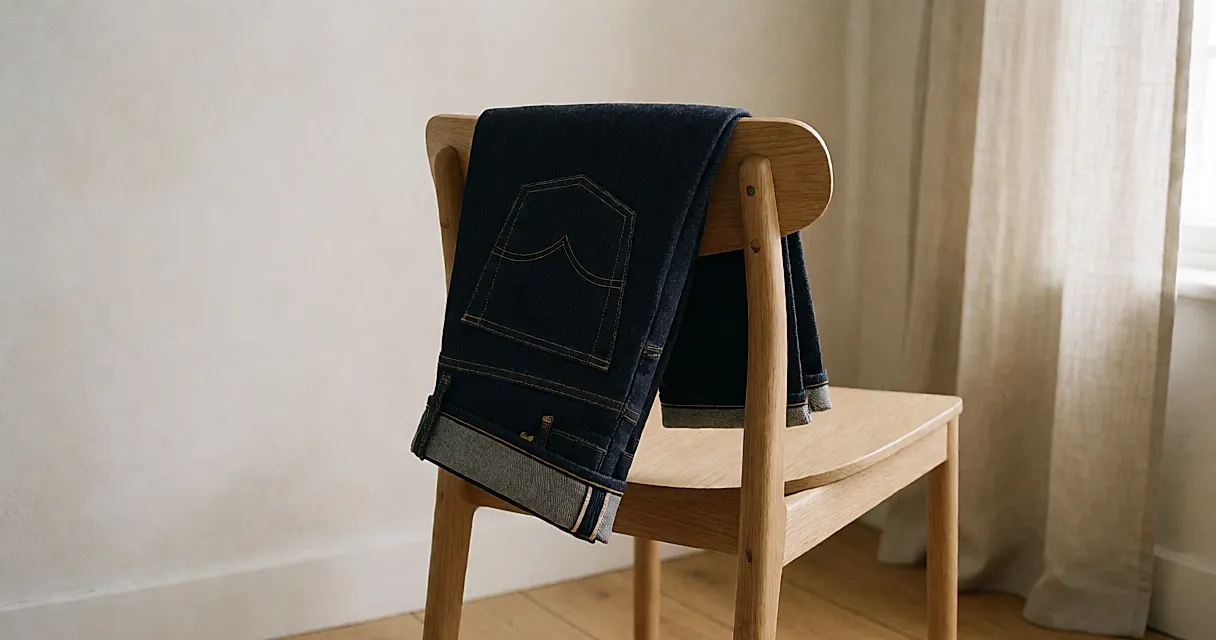
A beautiful piece of Japanese cloth can leave you turning the jeans over and over, card already in hand. That is what happens with pieces that carry a reputation for craft: they make you feel as if you have been handed the key to a very exclusive club. Except a Japanese jean is not automatically worth more just because it comes from Japan. It is worth what its cloth is worth — and that is exactly where things get interesting.
What Japanese craftsmanship puts into the cloth
It all comes down to the spinning mill, the looms and the indigo vats, not the label on the outside. This is not a matter of three styles lined up side by side, but of three links — cloth, dye and construction — and that is the chain you are paying for.
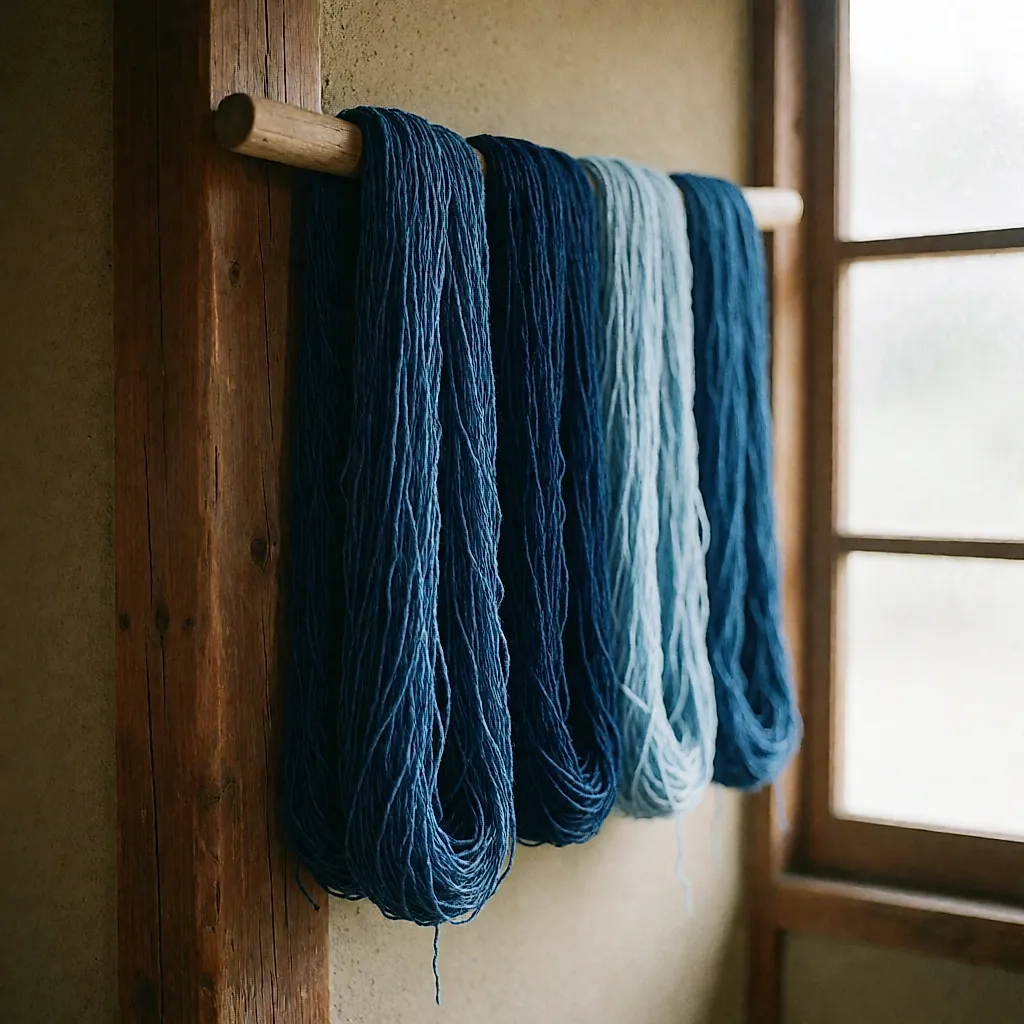
Japan has been weaving denim since the 1960s, in the Okayama region around Kojima, on shuttle looms that produce narrow widths. It is slower and more expensive, and you can feel it: the cloth has a particular hand, a density that develops a patina rather than wearing out. The result? A visible selvedge inside the trouser leg, and a fabric that lives with you rather than against you.
Raw, washed or the middle way
Raw is the most honest option: no treatment, an indigo that lightens with every wear and wash, creases that form exactly where you bend your knee. It takes patience, and a first soak that can spring surprises — some raw denim moves, and it is less forgiving than a fabric that has already been washed. Washed denim has already lived in for you: softer, more predictable, less ceremony. In between, 'one wash' finishes stabilise the cloth without removing its ability to develop a patina.
How to decide? If you like to see a garment evolve and you will wear it often, raw is a good ally — especially in winter, when its weight keeps you warm. If you want jeans that feel comfortable from day one and a more relaxed look, washed does the job. And if your wardrobe is already full, a 'one wash' is often the smart pick: it avoids the nasty surprise of the first wash.
Fit comes before the label
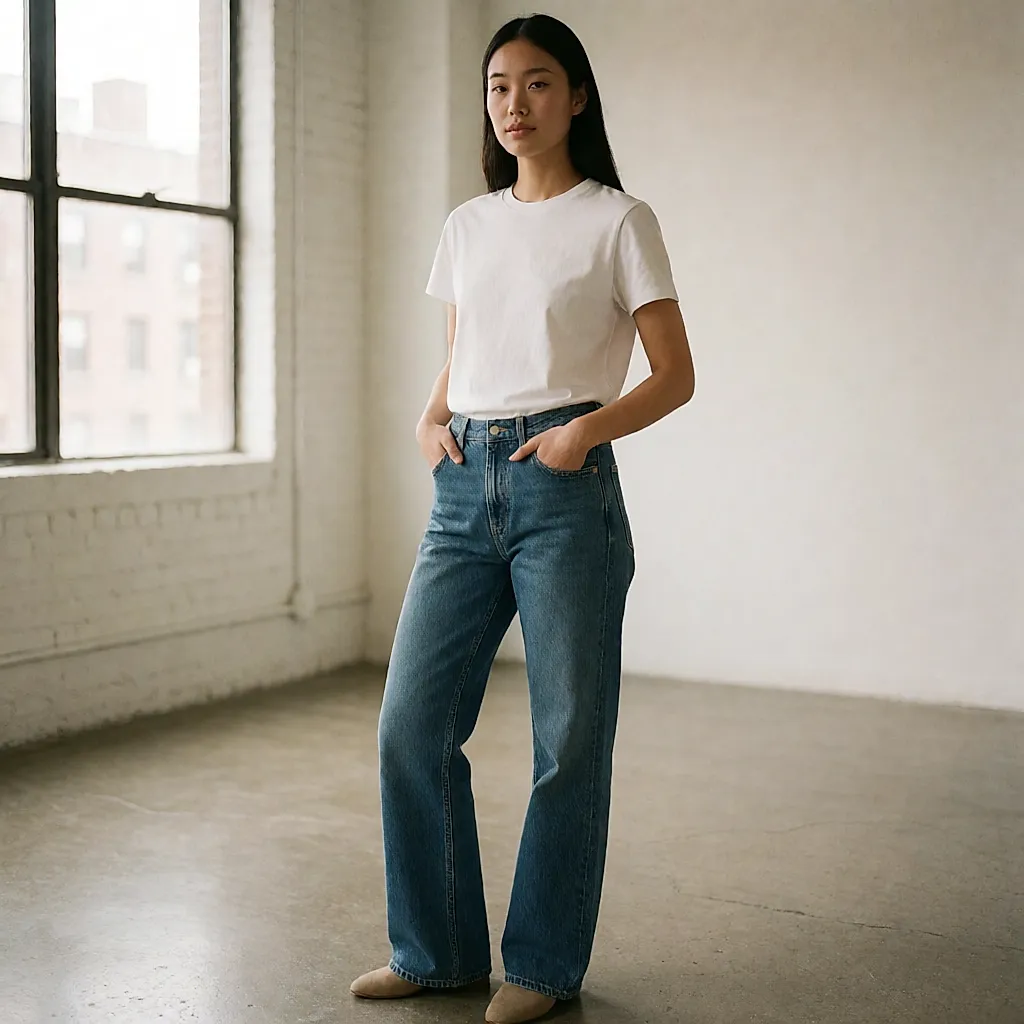
A very well-made Japanese jean in a fit that does not suit you is still a jean that does not suit you. Before you swoon over the selvedge, look at the silhouette: a mid-rise straight leg is the most versatile, Monday to Sunday depending on what you wear with it; a high-waisted wide leg lengthens the leg and embraces volume; a tapered cut gives room at the thigh without flaring at the hem. This is not about trends; it is about how the jean falls.
And let's be honest: a very stiff raw denim is not the best choice for a first Japanese jean if the discomfort of the first few weeks puts you off. Equally, very wide cuts will not forgive a badly placed crotch seam. Try them on, sit down, climb the shop stairs: the jeans should follow you, not tame you.
Budget: what you are really paying for
As a guide, expect to pay around £150–£300 for Japanese selvedge jeans, depending on the maker, the weight of the cloth and where you buy them. The most worked pieces — natural dye, a sharp cut — go beyond that, while some Japanese cloths sold by larger retailers come in at around £80–£150. What shifts the price? The type of loom, the dye, the construction and the point of sale. Do you have to spend £300? No, but at £80 expect a lighter cloth and fewer finishing touches.
Where to find them: at a specialist denim shop, which often offers hemming (£10–£25, sometimes free with a purchase), at a concept store, or directly from Japanese brands' own websites — in which case factor in customs charges. And as a smart buy, second-hand sites are full of Japanese denim that has already developed a patina, often at half price, for anyone happy not to be the first to wear it.
Three details to check before you pay: the selvedge, an indicator of cloth woven on a narrow loom — not a guarantee of quality in itself; the weight, often given in ounces, with a mid-weight cloth suiting almost everything and a heavy weight best kept for cold months; the composition, with a simple rule of thumb: 100% cotton develops a better patina, a little elastane adds comfort but ages differently. Always check the share of synthetic fibres on the label.
Ultimately, a Japanese jean is a lovely story of thread: makers who take care over the cloth, the dye and the construction, and you inheriting a piece to wear for years. So the right question is not 'how many labels?' but 'which fit, which weight, which dye for your actual life?' Answer that, and you can buy with no regrets — even if, let's admit it, a beautiful label always has a certain effect in the mirror.
Comments
Your opinion matters: rate the article, react and reply to comments.
Comments are moderated; AI-assisted comments are flagged. Text emoticons (8-), :-), <3…) are automatically shown as images.