
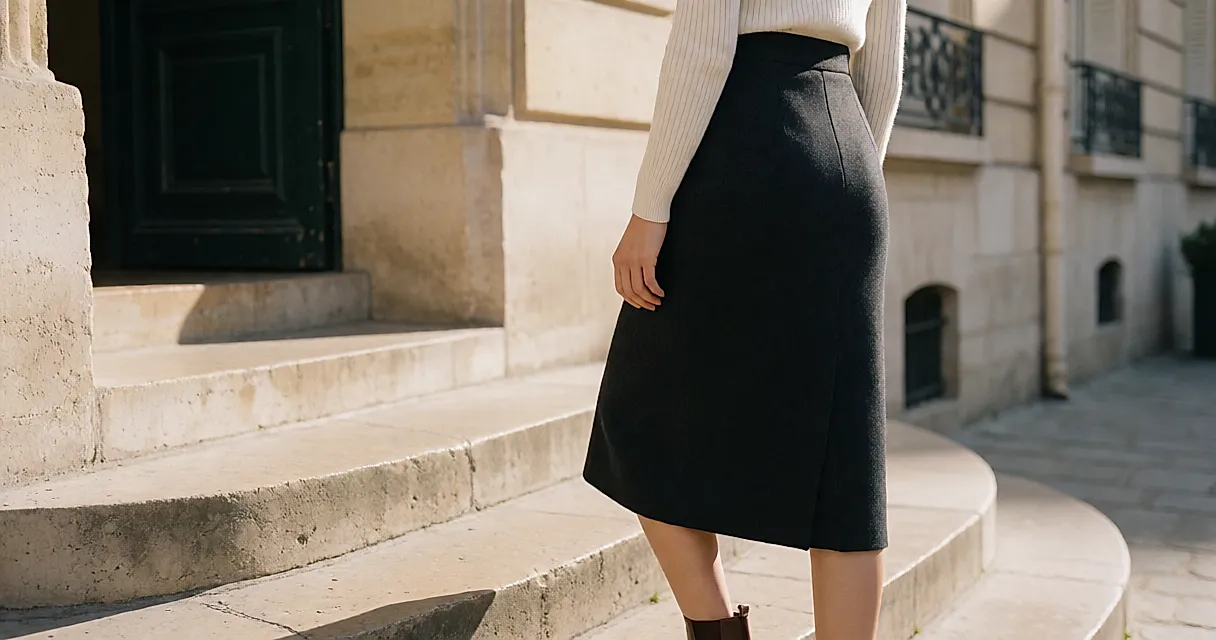
You are three steps from the platform edge when your skirt decides how you walk. Not the length: the split. A few centimetres less fabric in the right place and you take the stairs as if they were nothing; in the wrong place, you shuffle along in tiny, self-conscious steps. The straight skirt is back on the catwalk, and with it comes an old question that keeps getting asked the wrong way.
The length is the part you can see
For a few seasons now, the straight skirt—high-waisted, with a clean drape, often called a pencil skirt when it narrows—has been reappearing on catwalks, worn with a tucked-in jumper, boots and an oversized blazer. In shops, the conversation still circles the same point: midi or knee-length? That is the visible part of the problem. The part that matters is invisible when you are standing still in front of a mirror.
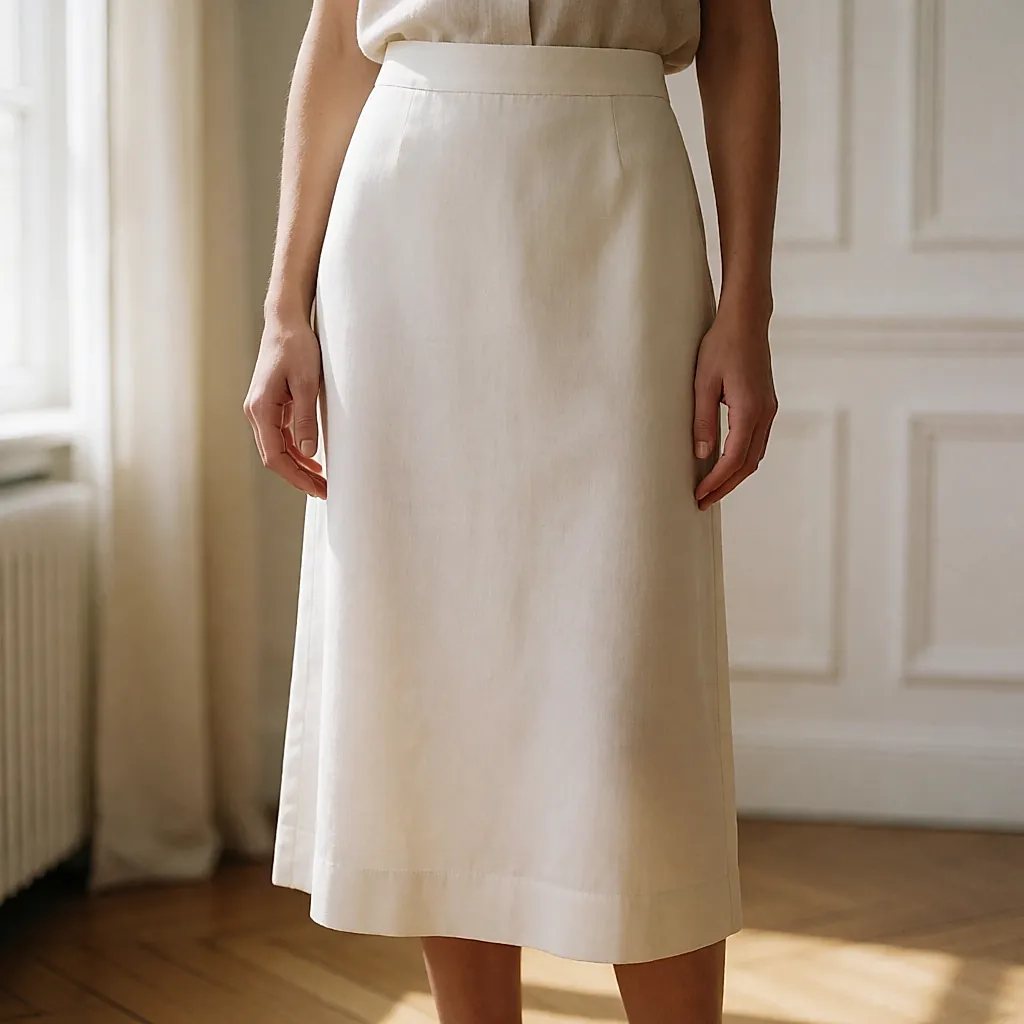
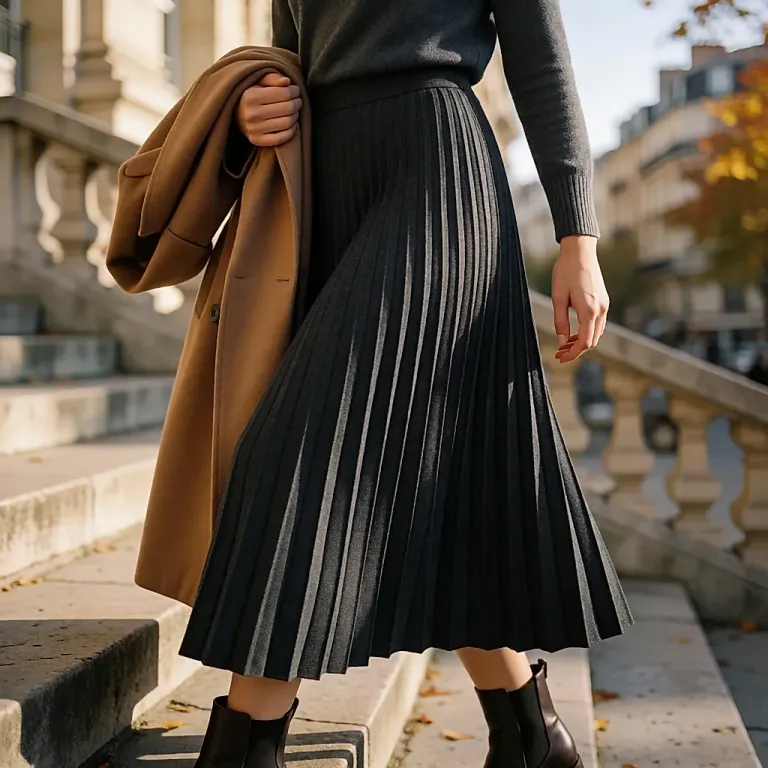
A straight skirt is a tube. A tube and two legs in the same space make for a permanent negotiation. What lets you walk is almost never the width of the skirt: it is what has been designed to let the stride through. The walking pleat—the recessed pleat set into the back, which opens as you step forward and closes when you stop. A split at the front, back or side. An inserted panel that slides. Or a bias cut, which gives movement without splitting anything at all.
Take two skirts of the same length and width. One has a proper walking pleat, the other has none. You will walk easily in one and take tiny steps in the other. The whole difference between a wardrobe piece and a decorative object lies there.
The only test that counts
Fitting-room mirrors lie. They show you a silhouette standing still, legs together, stomach held in, in a posture nobody holds for long. A skirt is judged in motion. So walk—ten real steps, the kind you take on a Monday morning when you are running for the bus, not the model walk you instinctively adopt in front of a mirror.
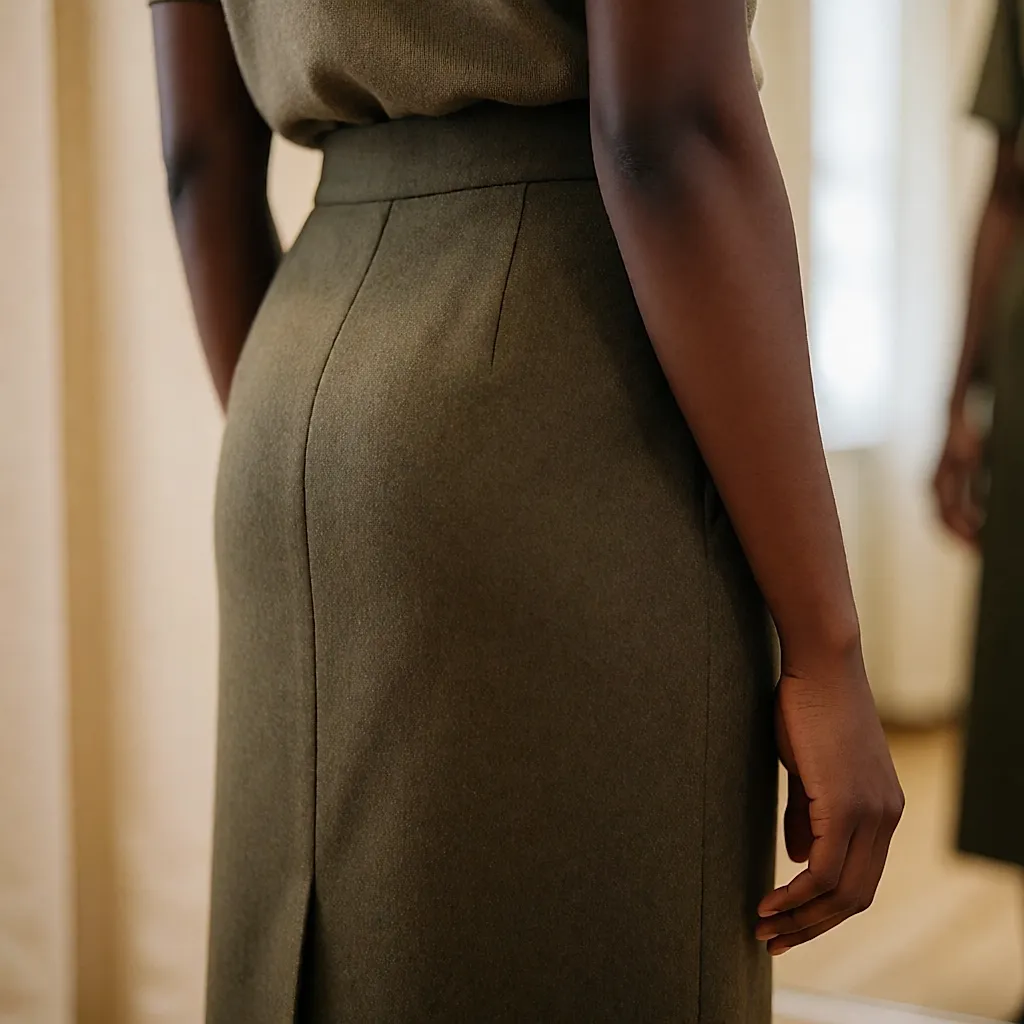
Then climb an imaginary step, sit down, stand up. If the skirt accordions over your thighs, if you have to shorten your stride to avoid feeling the seam, the problem is neither your leg length nor your size: the split does not open enough, or the fabric is pulling. One detail shows up clearly in the fitting room: look at the folds that run from the zip towards the hips. If they fan out as soon as you step forward, the skirt is too close-fitting there, and a hem alteration alone will not fix that.
Fabric, drape and the hem that follows
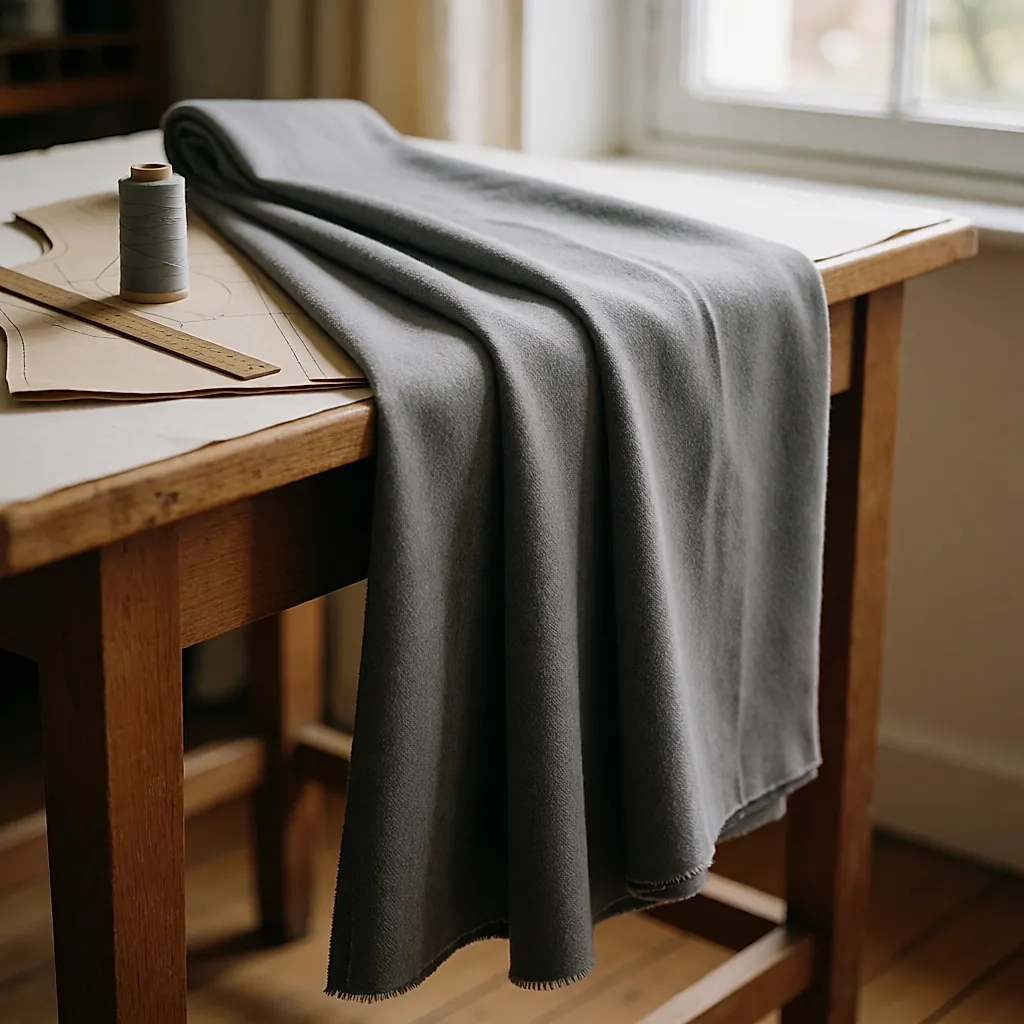
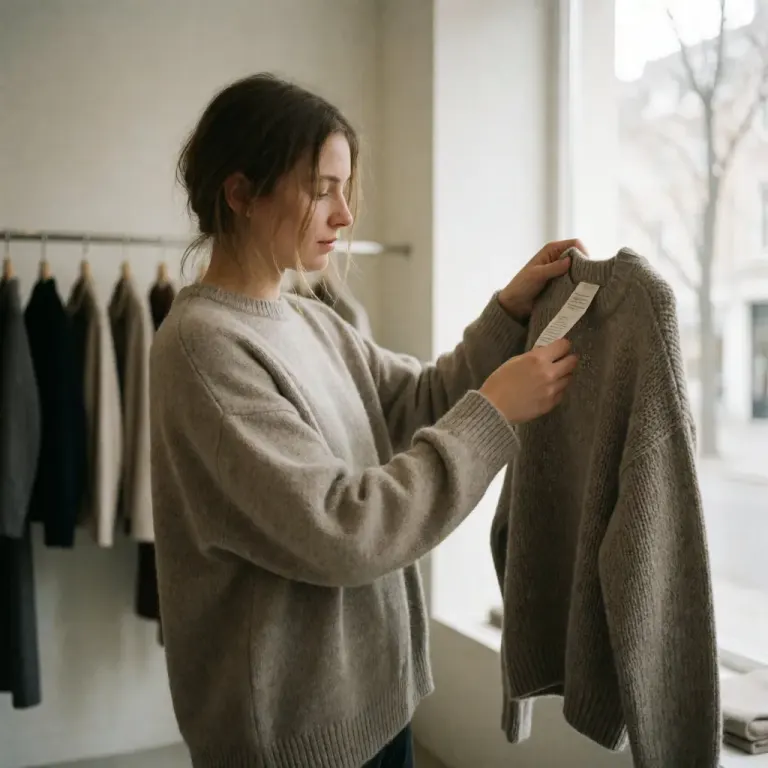
A thick wool keeps its line without clinging; a wool crepe falls more softly and is more forgiving; a cotton gabardine keeps a smart look for the office; linen creases, but it comes into its own in summer. Conversely, the stiffer a fabric is and the less natural elasticity it has, the more central the question of the split becomes—it is mechanics, not aesthetics. A fitting-room habit: check the fibre label, so you know what you are dealing with for the seasons ahead.
Second check, less glamorous but worth it: the height of the split. Too low, and it does nothing; you will walk as if on eggshells. Too high, and it changes the point of the skirt and will commit you to a very specific head-to-toe look. Look for the one that opens exactly when your leg moves forward—no earlier, no later.
At the tailor's, a hem can be redone, a waist taken in, and a split can often be lengthened by a few centimetres by reworking the seam, when the lining and seam allowances allow it. Always ask before buying: some fabrics will not take it.
The four-move test, in the fitting room: ten real steps, one step up, one sit-to-stand, then a look at the folds running from the zip. If any of the four fails, try a size up or a different cut before giving up on the straight skirt.
What real life decides
A straight skirt and a pair of jeans have one thing in common: they do not forgive improvisation. On a morning of Tube, stairs and meetings, a well-placed split does all the work and nobody notices a thing—which is exactly the point. For a day spent mainly sitting, a slightly longer skirt with a walking pleat at the back will be more comfortable than a short skirt split at the front, which gapes as soon as you lean over the back of a chair.

Conversely, for a dinner where you stay seated for ninety minutes and walk fifteen metres, the constraint disappears: you can treat yourself to the tightest pencil skirt in your wardrobe, the one that will never know the joys of cycling. A split straight skirt is a yes for the office and the city; a pencil skirt with no split is best saved for evenings and car journeys.
Budget
The range is wide, and that is a good thing. In charity shops, vintage shops or resale platforms, expect to pay roughly £10 to £40 for a straight skirt in wool or cotton—check the condition of the seams and lining, often the first thing to give. In mainstream ready-to-wear, a decent cotton gabardine or wool-blend skirt usually sits around £60 to £150. For a good heavyweight wool, a worked tailored cut or soft leather, the price tends to rise to around £200 to £450.
Add alterations, which often make a real difference: £15 to £30 for a simple hem, £20 to £40 to shorten or lengthen a split, a little more to take in the waist. A local seamstress or town-centre alterations shop will offer this service—ask for a quote first; it is three minutes well spent. And remember that a skirt already in your wardrobe, lightly altered, generally costs less than a new one.
So the next time you are hesitating between two lengths in front of a mirror: walk. The mirror will show you the look; your stride will tell you the truth. And if the skirt follows you home, put it through the Monday-morning test before you cut off the tag—not after.
Comments
Your opinion matters: rate the article, react and reply to comments.
Comments are moderated; AI-assisted comments are flagged. Text emoticons (8-), :-), <3…) are automatically shown as images.