

Third email in, first sip: the tea already has that lukewarm tang of disappointment. The heating's on, the air is drying out everything in its path, and the mug by the keyboard goes cold faster than the working day passes. Which is precisely where a thermos flask stops being something for fell-walkers and becomes an everyday object. The catch is finding one that holds its heat without trading plastic for some other nasty surprise.
Double walls, 18/10 stainless steel: what's really going on inside
It comes down to a simple idea: two walls, with a vacuum (or an insulating layer) between them that slows the passage of heat. That double wall is what keeps a scalding drink hot for hours, and what keeps the outer surface comfortable to hold — your hands will thank you. Manufacturers often quote spectacular times, measured in conditions far calmer than a Monday morning commute. In practice, remember that insulation is really a question of build quality, not of promises on the label.
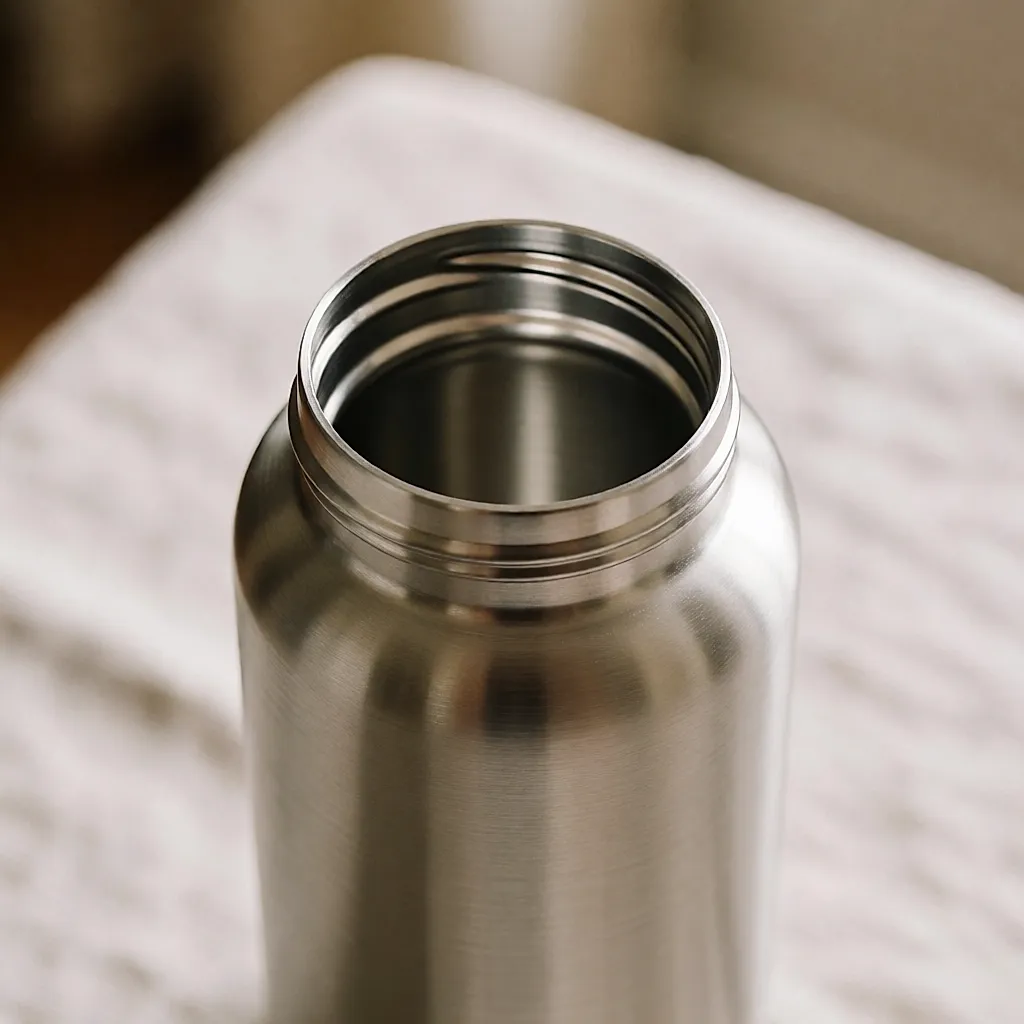
As for the metal, 18/10 stainless steel denotes a grade of stainless containing 18% chromium and 10% nickel: a metallurgical specification, not a sales pitch. This family of steels resists corrosion and takes on odours only lightly. Above all, the inner vessel is bare metal: your hot drink has no plastic coating to sit against for hours on end. Materials intended to touch food are covered by UK and EU regulation — in Britain, the Food Standards Agency oversees compliance — which is no reason to stop keeping your eyes open when you buy.
The real sticking point is the seal
We talk about stainless steel, we argue about brands, and very often it's the seal that decides everything. Food-grade silicone or cork: the first is flexible and watertight, but warps over time; the second has the charm of a natural material, with sealing that can be trickier and ageing that comes faster. A tired seal and it's leaking in your bag, a soaked bag lining, a notebook going crinkly at the edges. It's also the seal, more than the steel, that carries yesterday's smells.
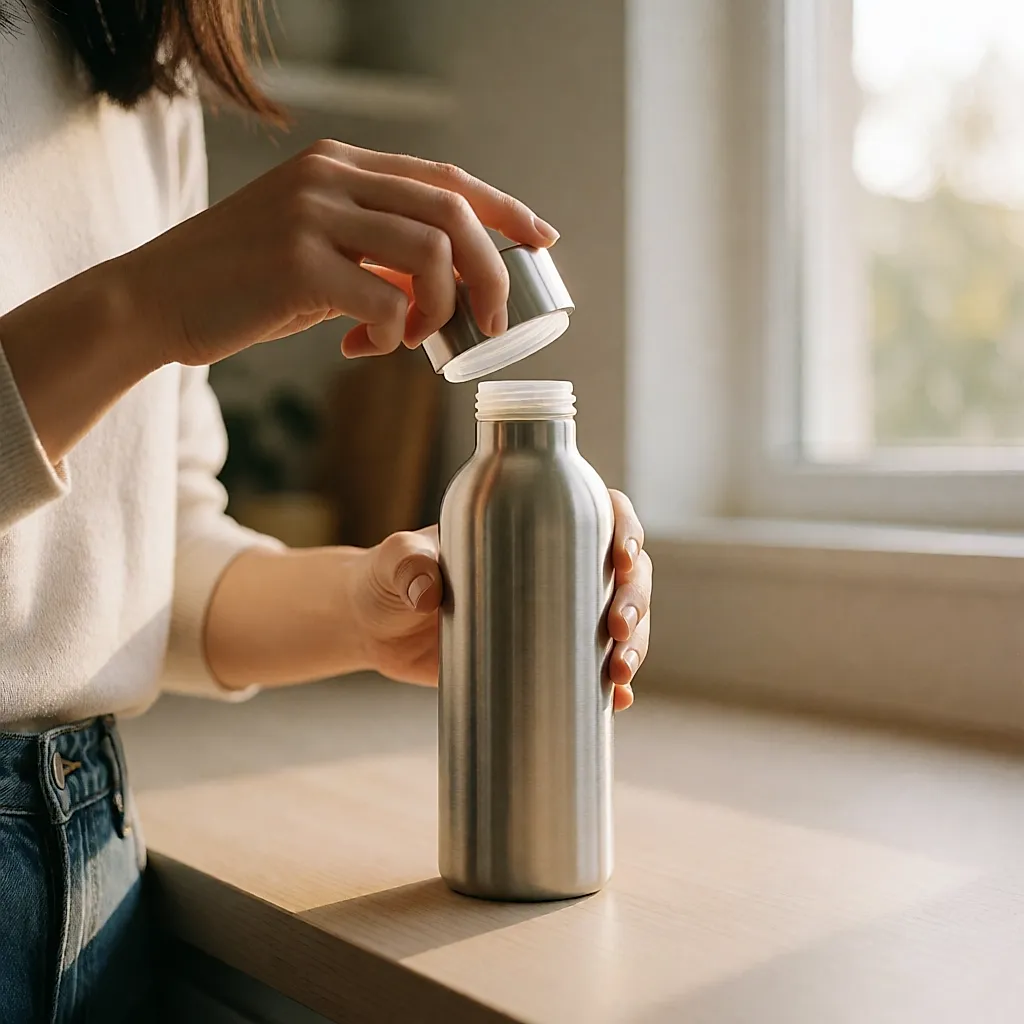
Hence a criterion that doesn't look like much but matters a great deal: the seal should come out and be replaceable on its own. A flask whose lid is sealed as a single unit becomes a flask to bin the moment the seal gives up — a bit rich for an object meant to replace disposable cups. Check that detail before falling in love with a colour.
350 or 500 ml: picking the right size
Capacity isn't a logistics detail, it's a lifestyle choice. 350 to 500 ml is the usual range: 350 for a mug carried in a handbag or a coat pocket, 500 to see you through a morning at a desk without getting up. Beyond that, the flask gets heavy and gets left at home — a shame for something meant to come everywhere with you.
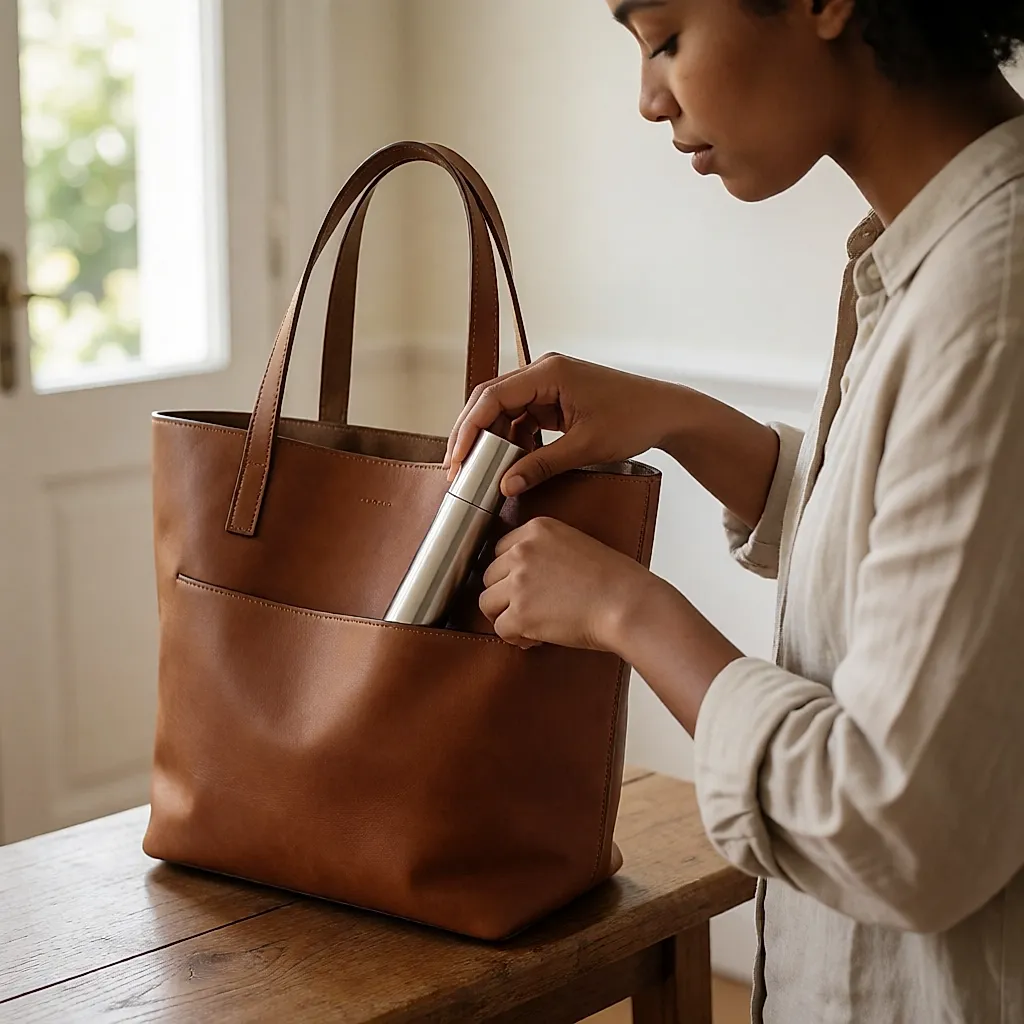
Look at the neck, too. A wide opening can be washed by hand, with a sponge or a bottle brush, and lets the inside dry without trapped moisture. A narrow opening is easier to drink from on the move, but needs a bottle brush and patience. Screw lids generally seal better than clip-on caps; and a carry loop proves its worth as soon as both hands are full. As for very hot liquid, caution still applies: you don't drink scalding tea while running for a bus.
Before committing, do the tea towel test: fill it with water, close it, shake it over the sink, then lay it on its side on a cloth for a few minutes. A single bead of water means a badly seated seal — sometimes a quick fix, sometimes not.
Looking after it, without miracle products
Hot water does the bulk of the work. For stubborn smells or tea stains, bicarbonate of soda remains the classic: hot water with bicarbonate, leave it to work, then rinse thoroughly. White vinegar helps shift the mineral deposits left behind by tap water. The lid itself should be washed separately, without a long soak, and left to air-dry open. As for the dishwasher, stick to what the manufacturer says: some models cope, others see their seal turn white within a few cycles.
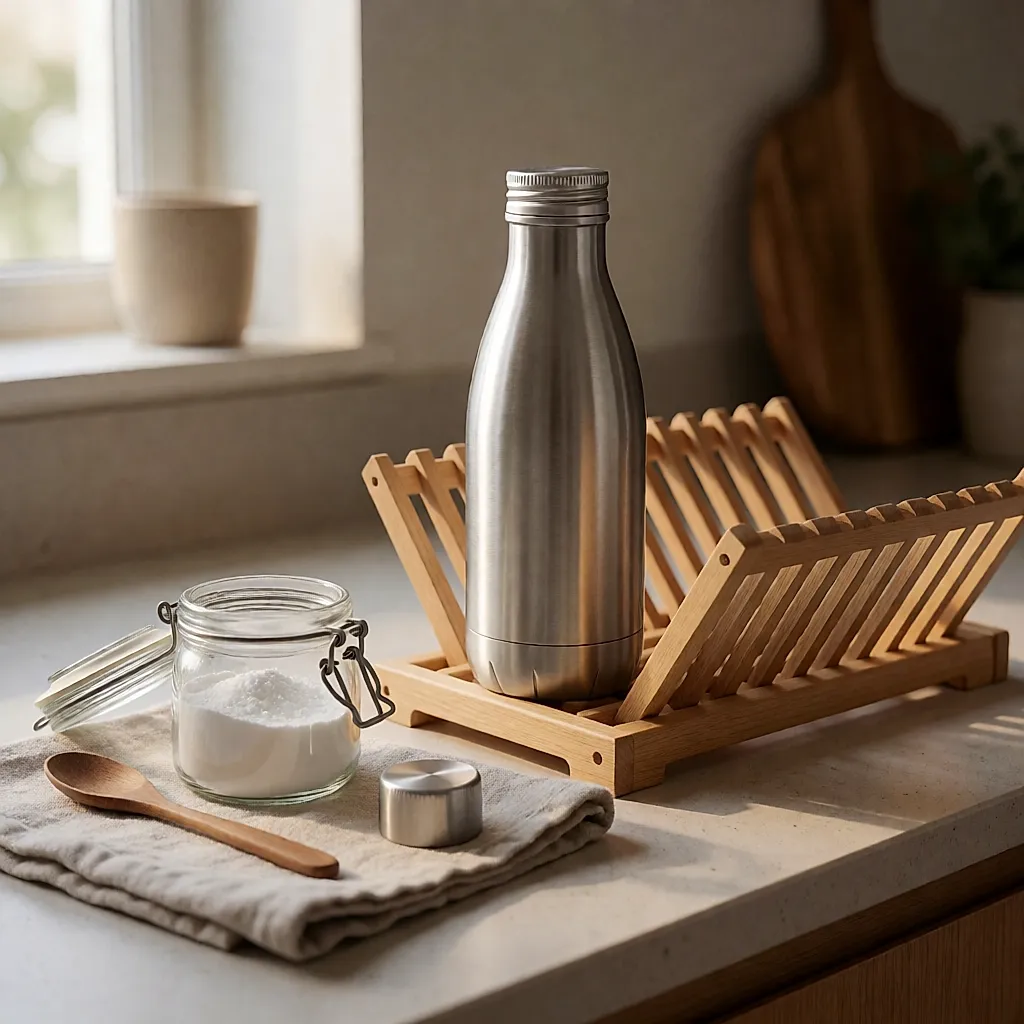
What to avoid: the freezer (metal dislikes repeated temperature shocks), fizzy drinks in a sealed flask, and filling a flask that's come in from the cold with boiling liquid. Three simple rules, no magic promise — just a flask that lasts.
Budget
Expect to pay somewhere in the region of £15 to £35 for a serious model in the UK. What pushes the price up: capacity, real insulation quality, the lid, the finish, the brand. Below that range you'll often find single walls or non-replaceable seals; above it, you're mostly paying for design and the name. A spare seal costs a few pounds and can add years to the object.
As for where to buy, hardware shops and ironmongers remain a safe bet, with the advantage of being able to handle the thing and check that the seal comes apart. Outdoor and sports shops carry the widest range, zero-waste and health-food shops often stock them alongside their refillable containers, and the supermarket will get you out of a fix cheaply. Take the time to open it, lift it, unscrew it: the flask you keep for ten years is rarely the one you chose in thirty seconds.
Then there's the real reason to bother: a hot drink within reach, in a container you reuse, wash and keep, and that little ritual of your hands wrapped round warm metal when November sets in. If you have a question about your hydration — pregnancy, ongoing treatment, intense exercise — that's one for a healthcare professional, not the accessories aisle.
Sources
- European Union — Regulation (EC) No 1935/2004 on materials intended to come into contact with food, 2004.


Comments
Your opinion matters: rate the article, react and reply to comments.
Comments are moderated; AI-assisted comments are flagged. Text emoticons (8-), :-), <3…) are automatically shown as images.