
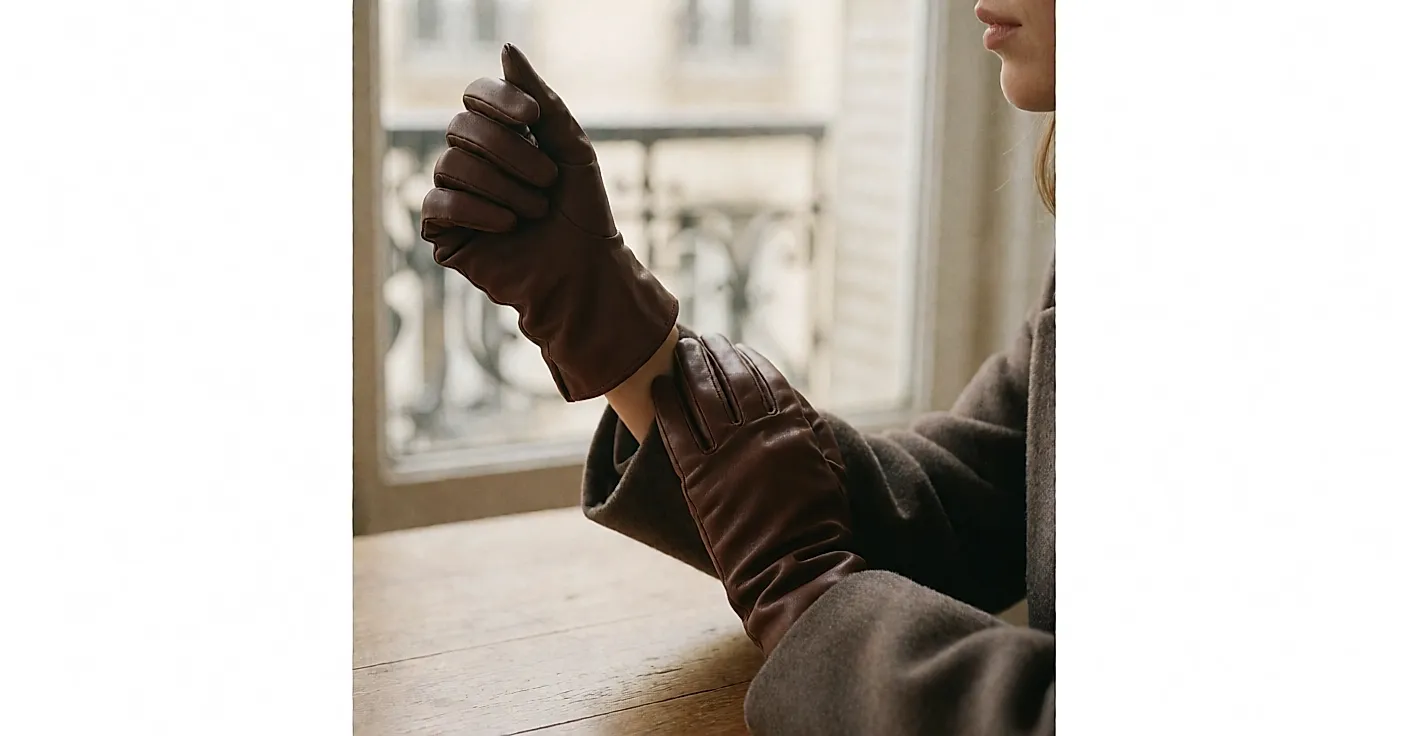
You know the scene: the parcel arrives, the gloves look beautiful, and the first time you reach for your keys your fingers swim around as if you are wearing rubber washing-up gloves. The gloves have not done anything wrong — the size you chose has. A good pair does not follow the label; it follows the hand. You can check that with three simple moves, standing in the shop with your coat still on.
A size is a guide, not the whole truth
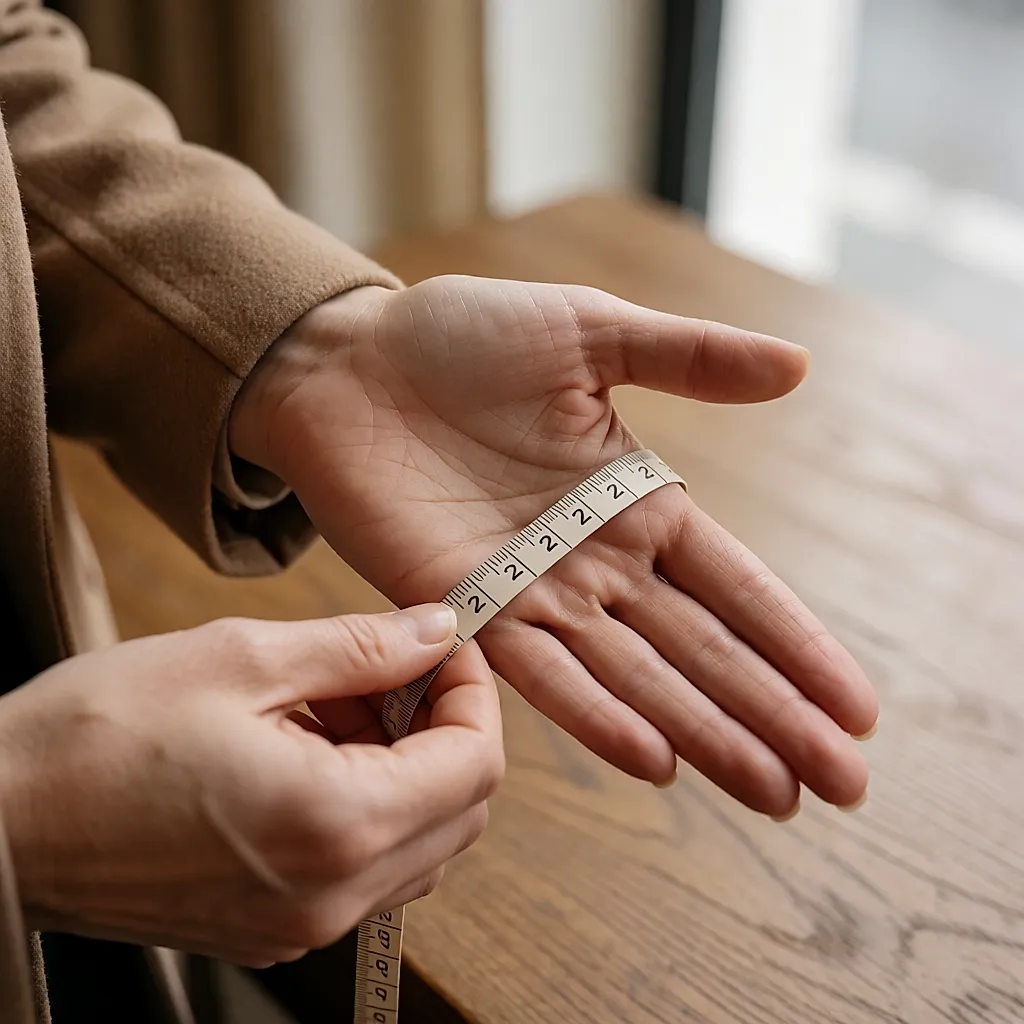
In practice, glove sizes are usually given as a number, often with half sizes, and a 7.5 from one maker will not necessarily match a 7.5 from another. Hence the rule that saves you: measure, do not guess. The palm circumference is taken with a tape measure around the palm, just below the knuckles, without pulling tight — on your dominant hand, the one that holds a pen and a travel card. Why that hand? Because it is the one that puts strain on the seams.
If you are torn between two sizes, the material decides for you. A cashmere-lined glove needs a little more room than an unlined one; very supple leather will give with wear, while firmer leather keeps its shape. And if a shop assistant swears it will 'give', be wary: a glove that is too tight across the palm is unlikely to become comfortable just by being worn in; you may wear it twice and then leave it at the back of a drawer.
Three simple moves will tell you the truth
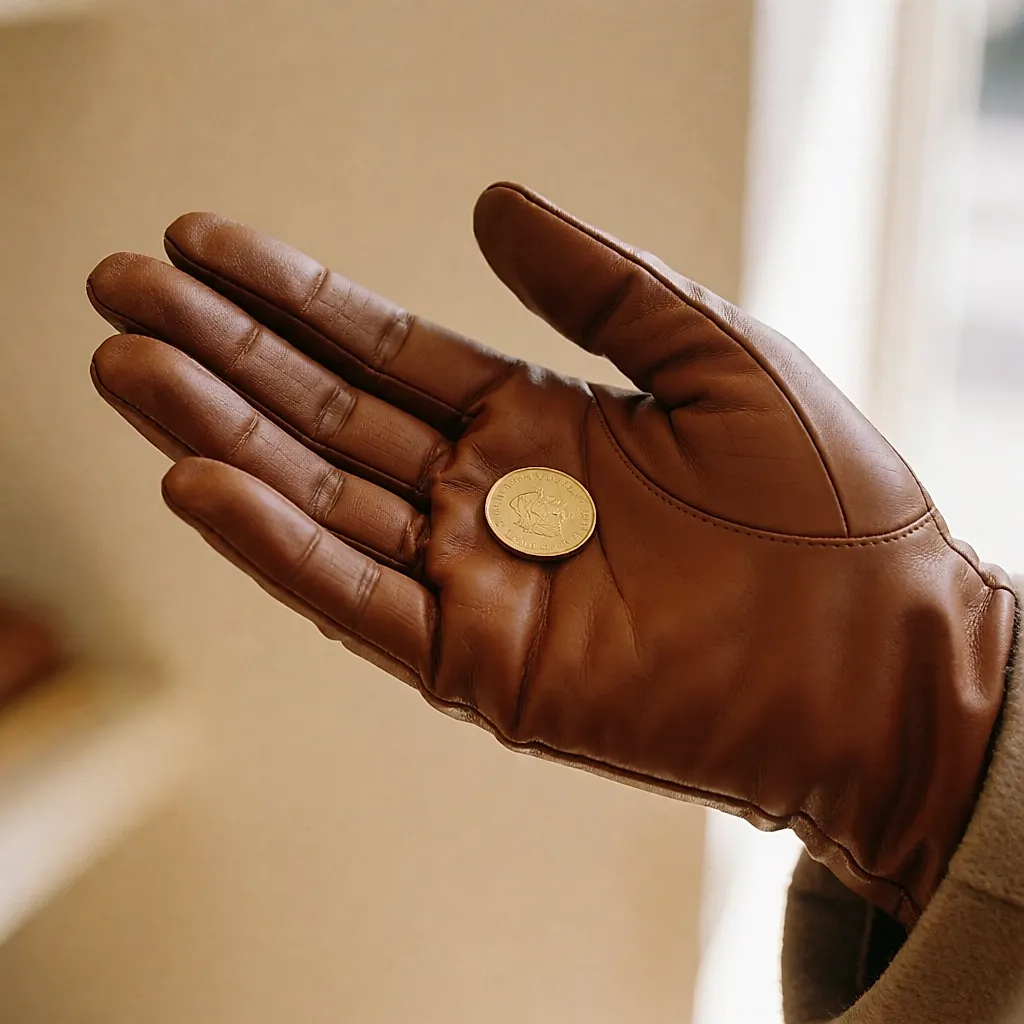
First move: make a fist. Look at the web between the fingers. If the material pulls taut like a tent, it is too small; if it gapes and forms a little bridge, it is too large. Second move: roll your thumb, then pretend to pick up a coin — the thumb should move without dragging the whole glove with it.
Third move: look at the fingertips and the wrist. There should be a whisper of room at the end, not half a finger of emptiness; the cuff should cover the wrist without gaping. In practice, try gloves on later in the day, when hands are slightly swollen: the glove that feels snug in the morning may feel too tight by evening.
The three-step test
- Measure your palm circumference with your hand open, without pulling the tape tight.
- Make a fist and inspect the web between the fingers: no tent, no bridge.
- Roll your thumb and check that it does not pull on the rest of the glove.
Lambskin or kid leather: two ways of ageing
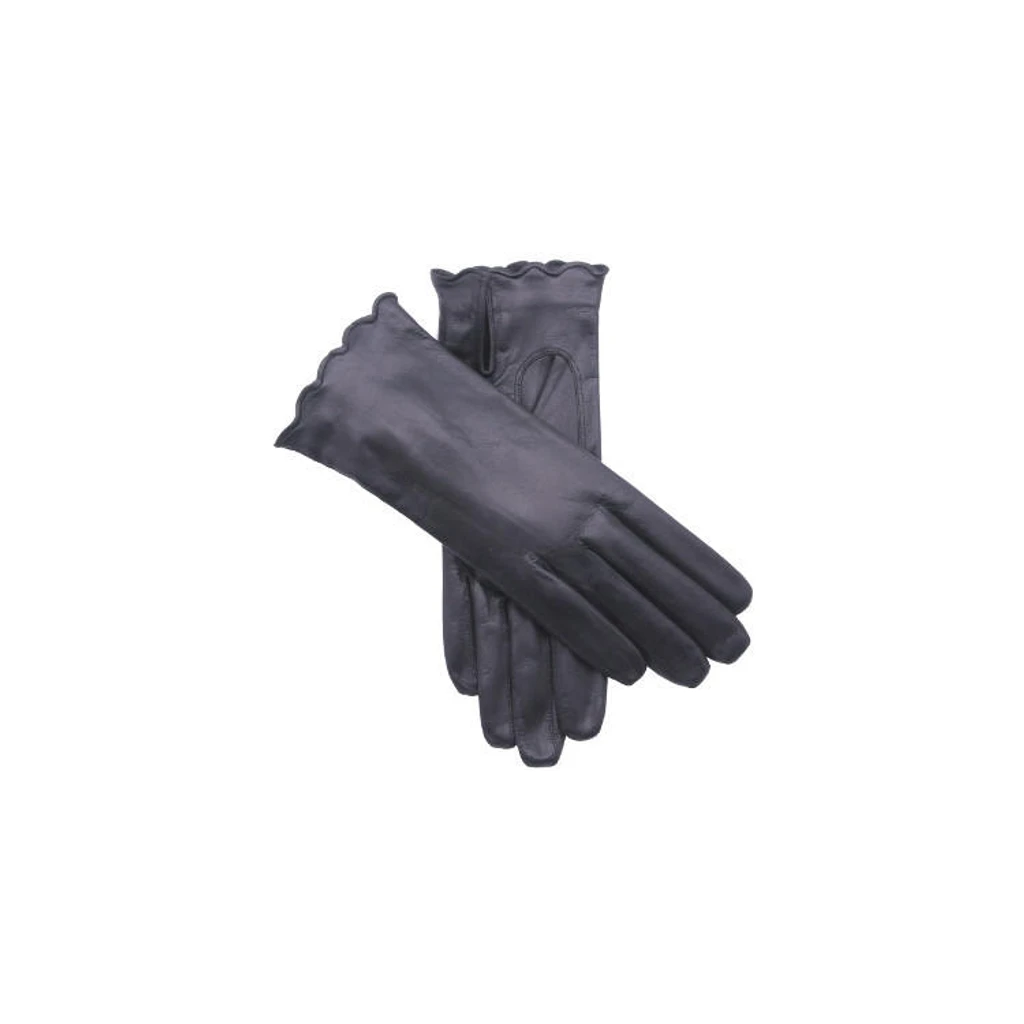
Lambskin is the softer option: fine leather, supple feel, quick to patina. It is the glove for city commutes and evenings when you are not doing much with your ten fingers — it marks quickly and can prove fragile on wet handlebars. Kid leather has grain and structure: it develops a patina without losing shape, resists rubbing better and ages like a good pair of shoes.
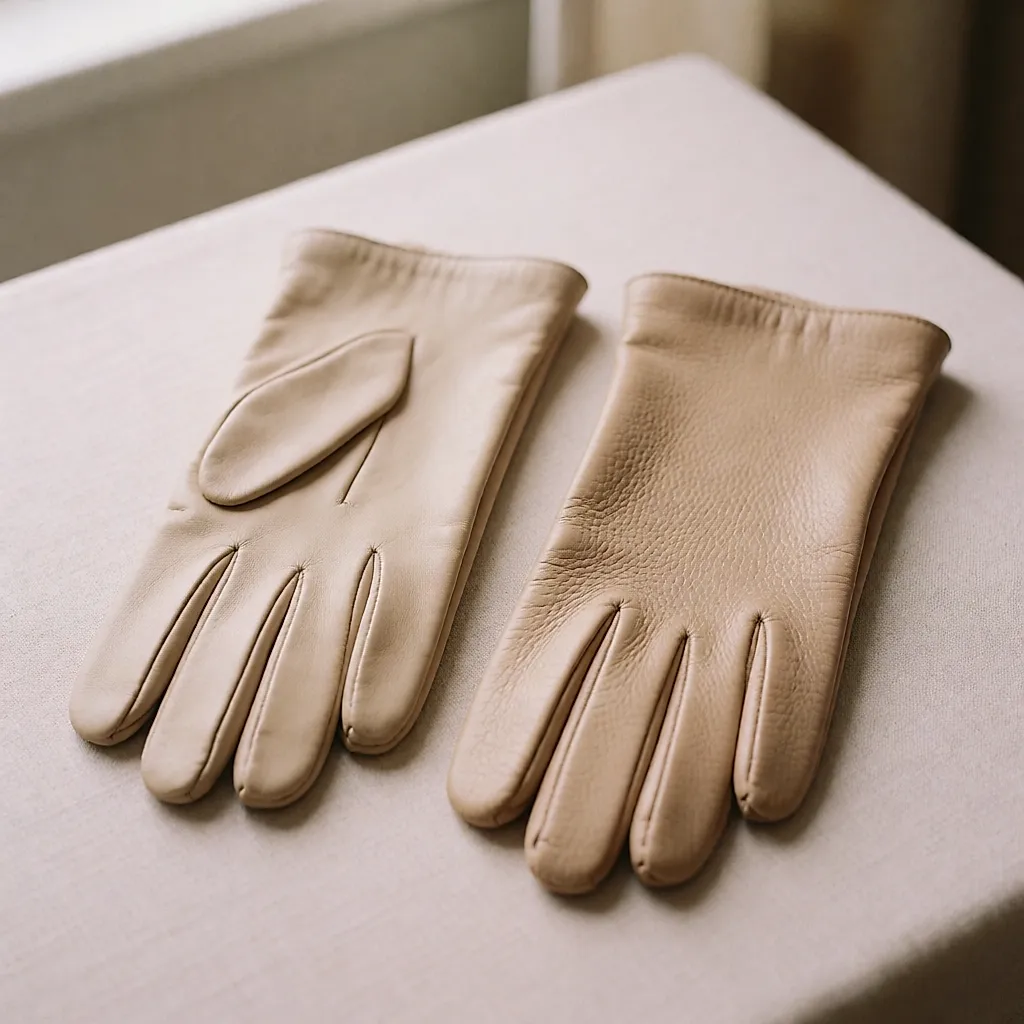
Then there is the lining, often overlooked. Silk: it slips on easily, feels light and adds warmth without much bulk. Cashmere: warmer but thicker, and you need to accept the extra room it takes up. Unlined: your hand sits as close to the leather as possible, ideal for driving or rummaging in a bag. Keep an eye on the label, too: a proportion of synthetic fibres in the lining can change breathability and how well the glove holds its shape.
Budget
Is it really worth spending more? As a rough guide, expect to pay around £40–£80 for a silk-lined lambskin pair from a local leather-goods shop or online, £90–£200 from a glover for hand-stitched kid leather, and upwards of £250 for made-to-measure. What changes the price: the lining, the stitching, the city and the stockist.
Where to find them? Specialist glovers, leather-goods shops, department stores, markets and charity shops for vintage pairs. For a first purchase, an unlined lambskin pair is enough to get you through autumn; for a damp winter, cashmere-lined kid leather may stand up better. And if the budget is tight, a well-chosen vintage pair — strong seams, intact lining, supple leather — can look very good indeed.
Looking after them is an art in itself
Leather does not like hot water or radiators. Clean gloves with a soft, dry cloth, air them away from a heat source and store them flat or filled with tissue paper. Do not wash them: wipe them, let them breathe, and avoid rolling the pair into a ball at the bottom of your bag.
If a seam gives way, do you throw the pair away? Certainly not. A cobbler can repair it, often for less than a new pair. It is also the more considered approach: wear, care, repair, keep. A pair that develops a patina without gaping at the fingers is an accessory you end up forgetting about — in the best possible way.
The right glove, in the end, is the one you do not feel. For everyday, silk-lined lambskin; for town and damp winters, kid leather; for really cold weather, a cashmere lining, even if it means going up half a size. The mirror tells you nothing; your hand tells you everything.

Comments
Your opinion matters: rate the article, react and reply to comments.
Comments are moderated; AI-assisted comments are flagged. Text emoticons (8-), :-), <3…) are automatically shown as images.