

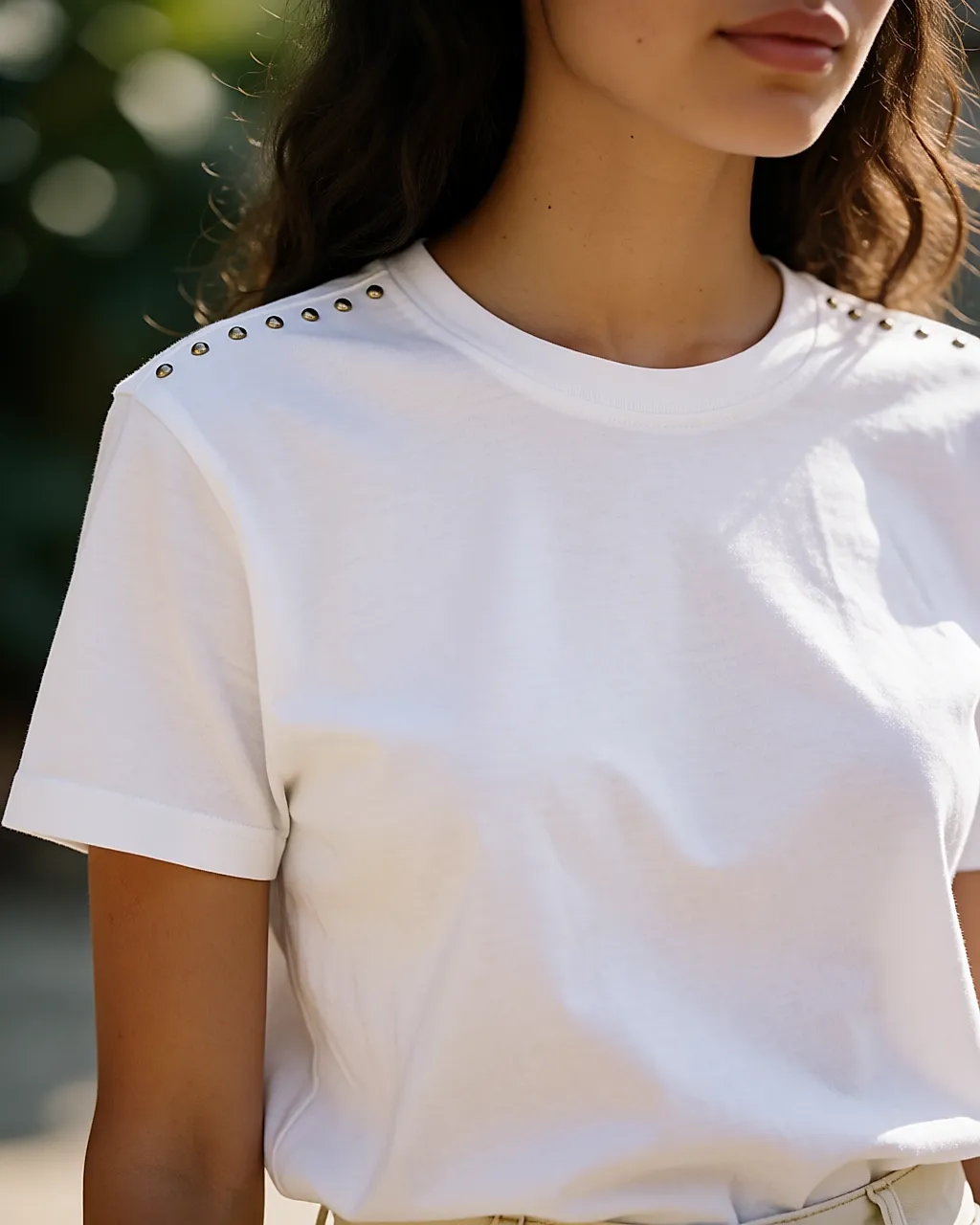
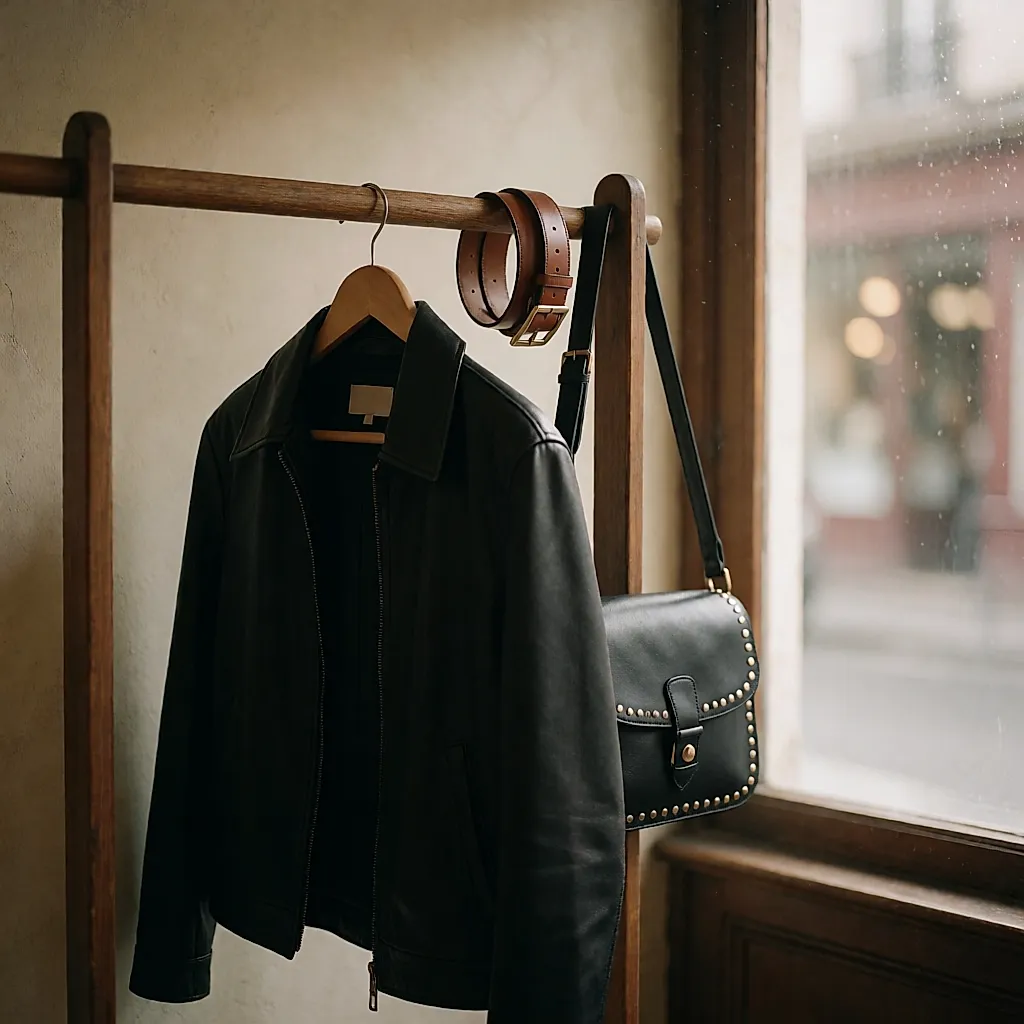
What transforms a leather piece without altering its cut? Studs. For a long time this small detail was tied to cowboy boots and Western belts with gold buckles—and that is exactly what dated it. Today's version keeps the idea but leaves the costume in the wardrobe: smaller studs, spaced further apart, often tonal—brushed steel, matte black, aged brass—placed where the eye lands first. Neckline, cuffs, boot panels, bag-handle attachments.

The result? A biker jacket that felt too sensible gets its edge back, a belt found in a charity shop finally gets an outing, a pair of slightly dull ankle boots gains some character. No change to the silhouette, no new wardrobe required.

Studs change the material, not the cut
This is the point to take on board before you start. A stud doesn't alter a piece's cut or drape: it changes the perceived texture. On smooth leather it adds grain; on aged leather it highlights the signs of wear rather than erasing them. Hence the classic trap: overloading. One statement piece per outfit is plenty.
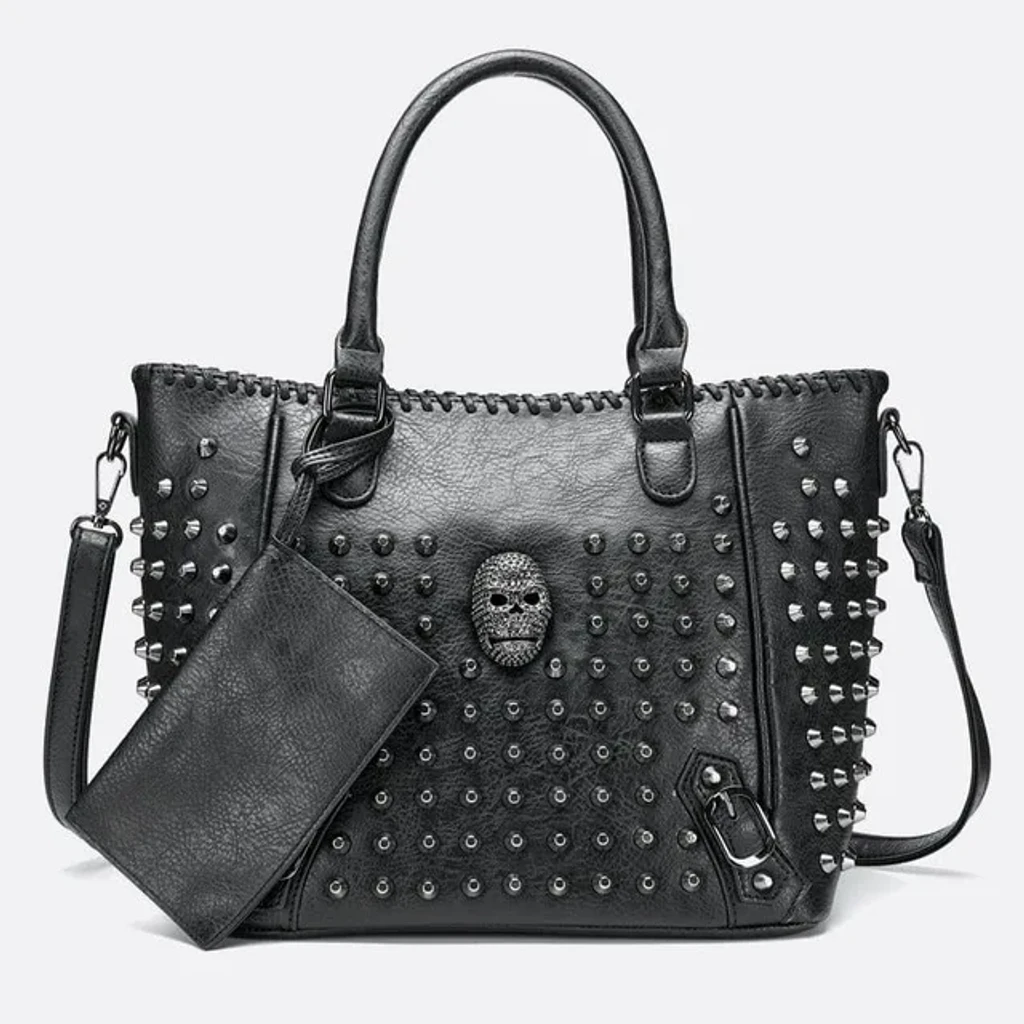
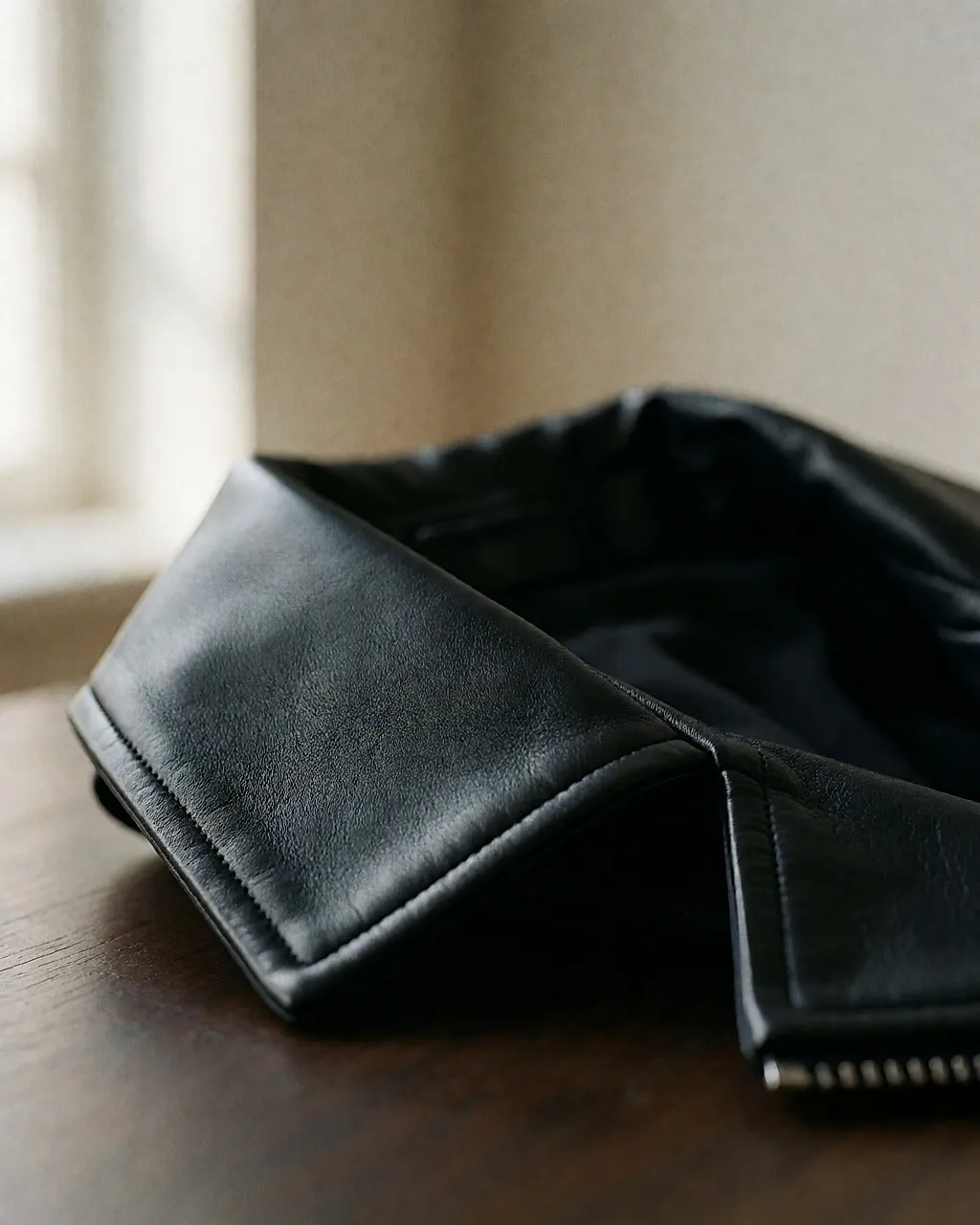

If your jacket is studded at the neckline and lapels, keep everything else quiet: raw denim jeans, a plain knit, boots with no extra detail. And if you want a full-on look, stick to one metal tone—all silver or all gold—otherwise the eye has nowhere to settle.

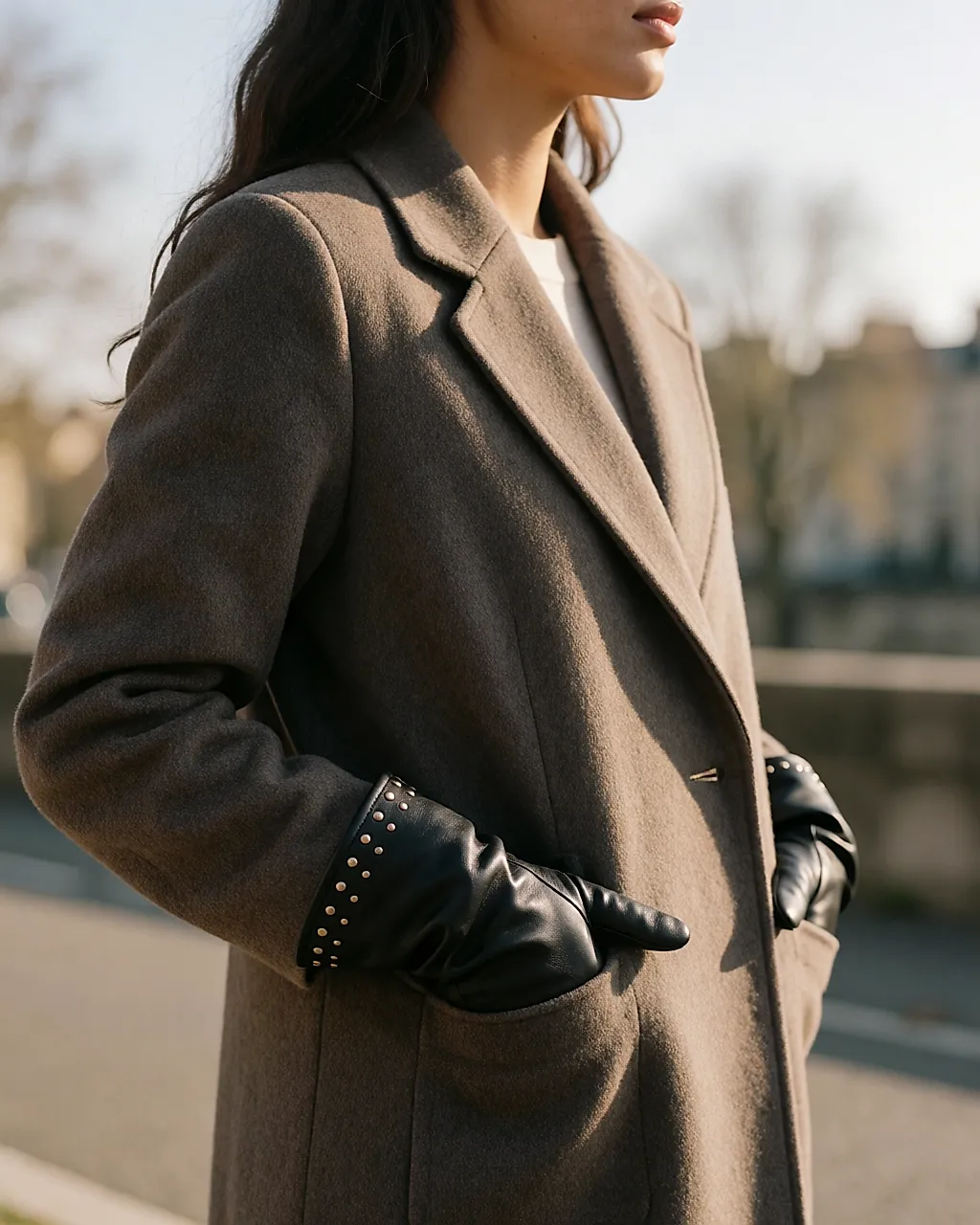
Which leather pieces suit studs best
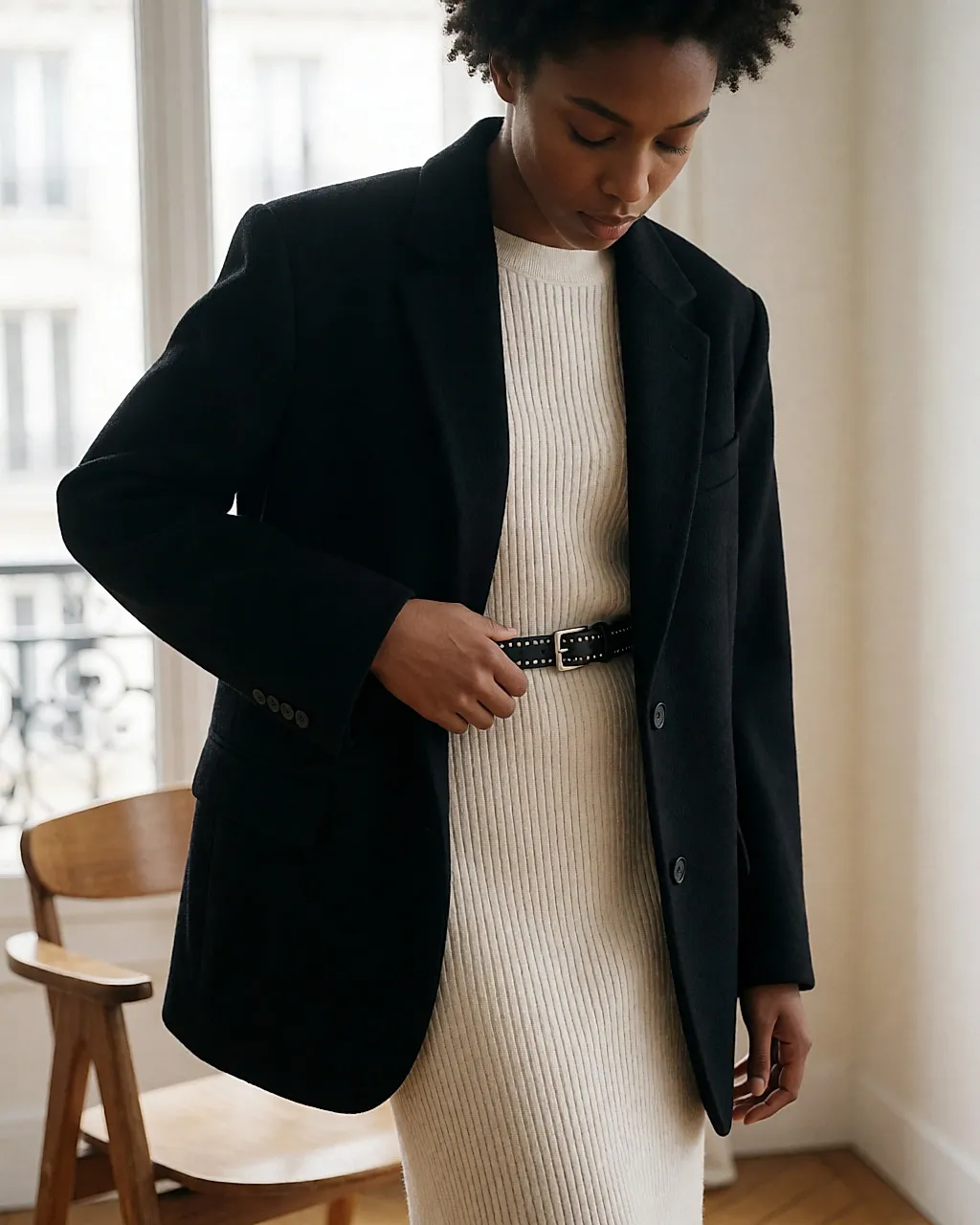
Where to start? A fine studded belt, no question. It cinches a tunic, breaks up the line of a midi dress, marks the waist under an oversized blazer. Choose one supple enough to follow the waist without digging in.
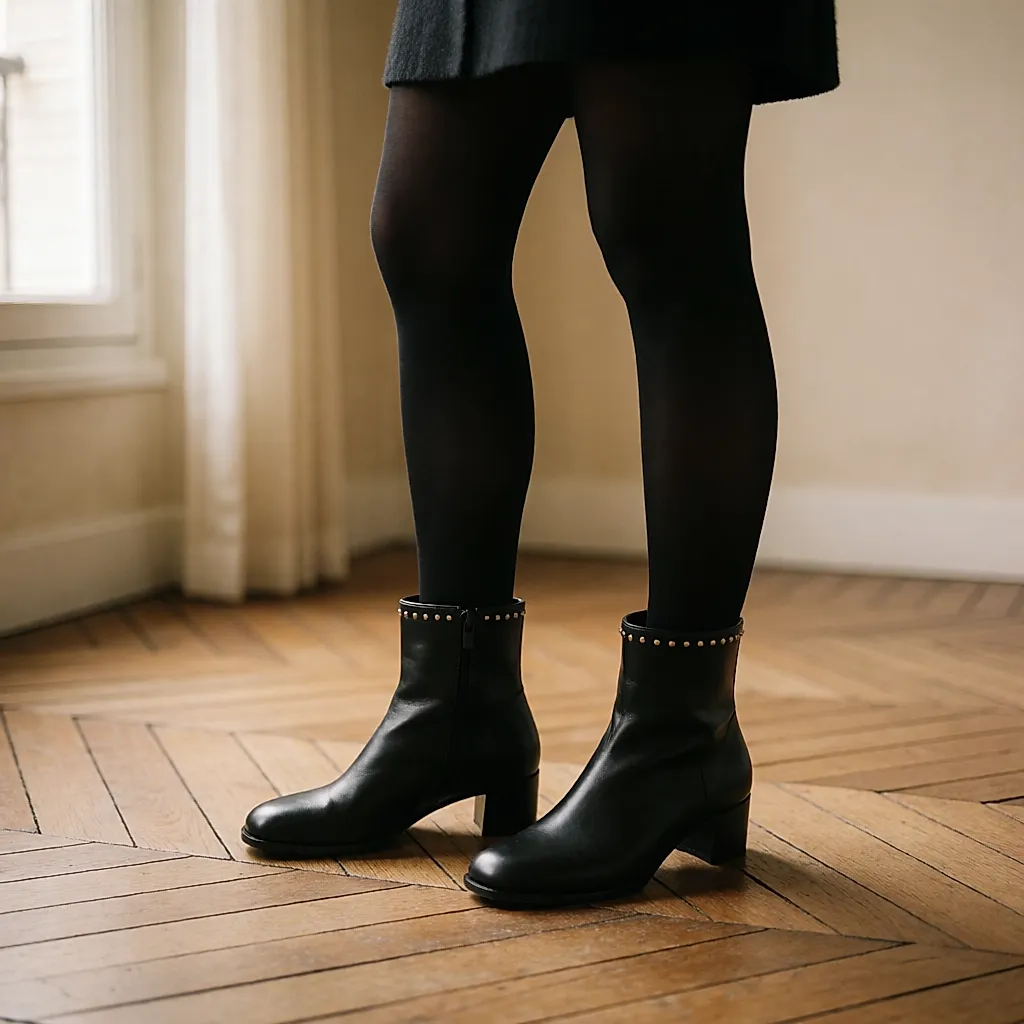
Ankle boots next. A few studs at the collar or strap wake up a plain pair, provided the lines stay simple: rounded toe, small block heel, ankle shaft. Worn with opaque tights or under straight-leg jeans, they lengthen the leg without weighing it down.

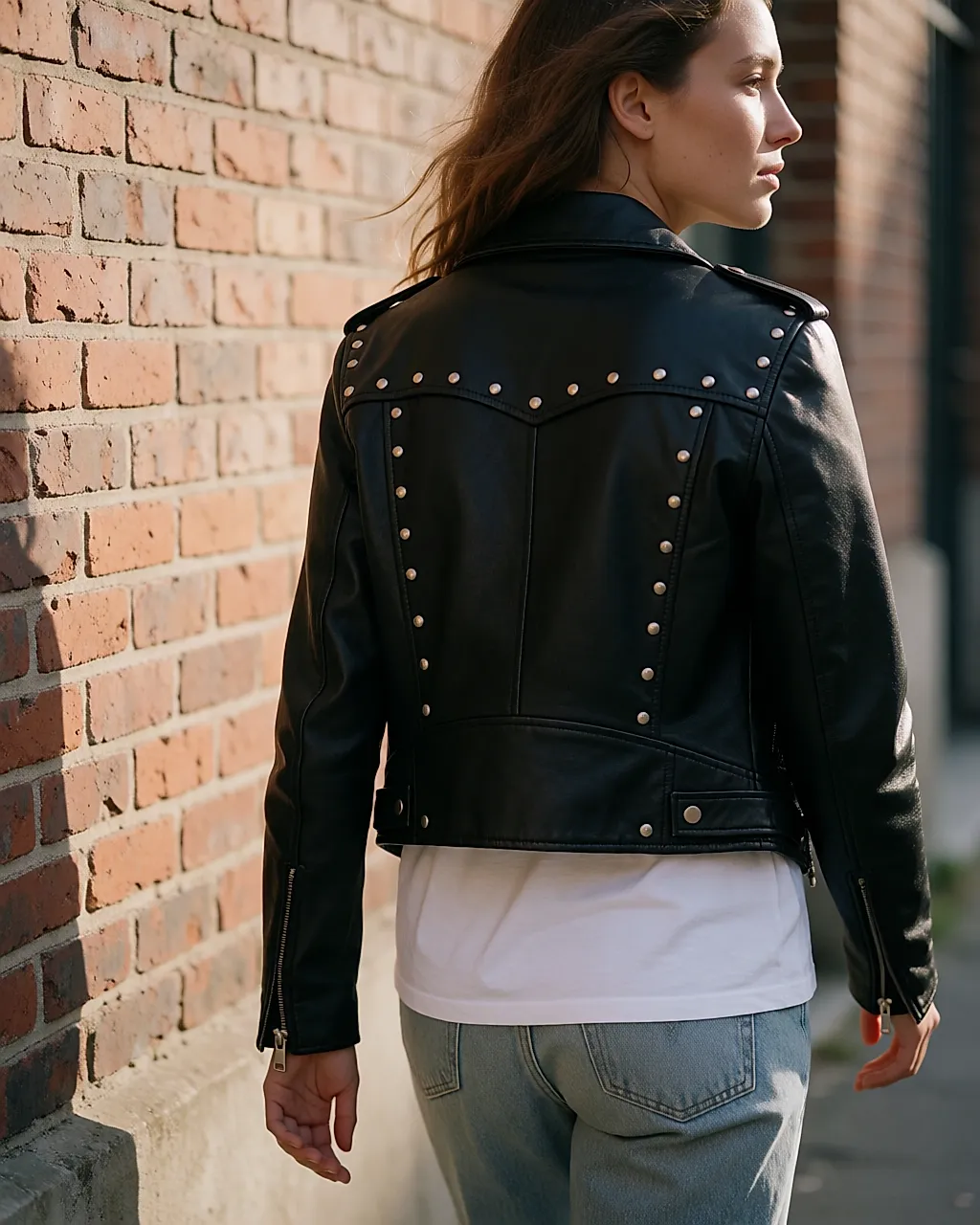
The biker jacket, meanwhile, works as the main event. Keep layering minimal underneath: a plain T-shirt, faded jeans for contrast.
The simple DIY route to studded leather
It's often the cheapest and most understated way to do it, because it gives an existing piece a new life.

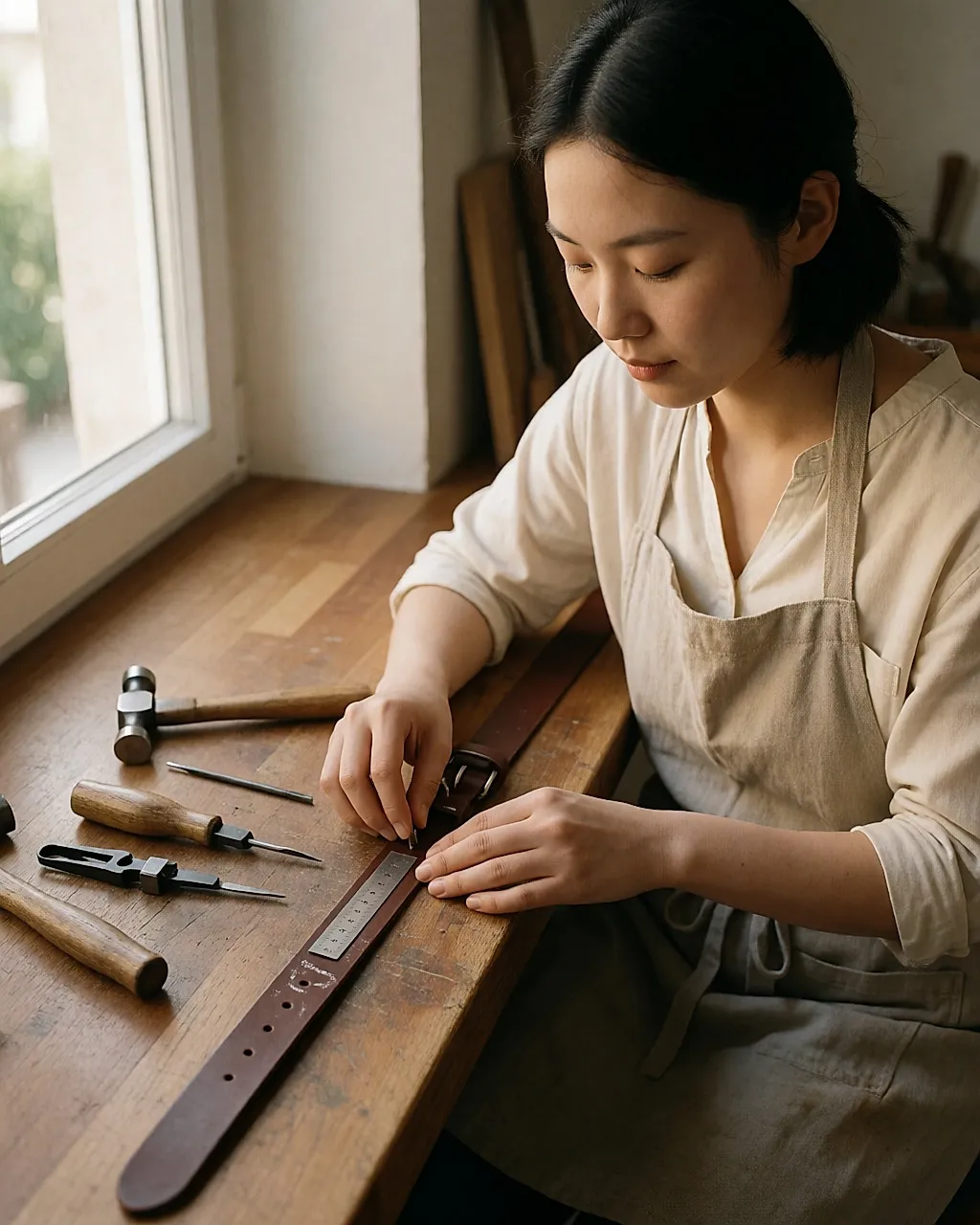
- Mark the position with chalk and measure the gap between studs with a ruler: uneven spacing is immediately obvious.
- Make a hole with a punch or awl; thick leather needs a proper hole punch.
- Set rivet studs with a setting tool and a hammer, on a hard wooden block, after testing on a scrap first.
- Check the reverse: the folded prongs shouldn't catch the lining or your skin.

It's irreversible—a hole in leather won't close up again. On a lined jacket or a boot, ask a leatherworker or cobbler to do the fitting.
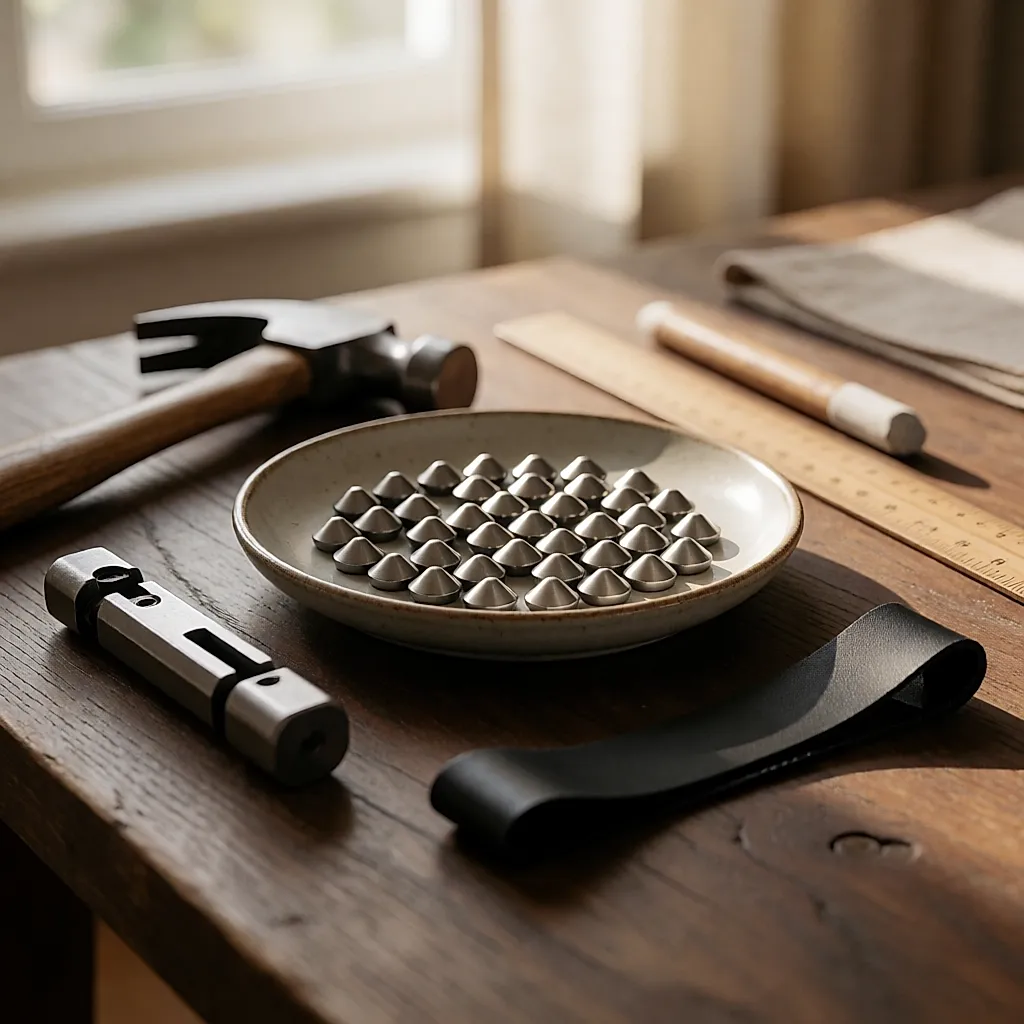
Before you buy, look at what you already own: an inherited leather jacket, a belt that's too big, a pair of boots that look a bit dull. Three pieces that need nothing more than a packet of studs and an hour's attention. Studding is rarely a purchase—often a second life.

Material: what you can really check
No label makes a leather piece planet-neutral: farming and tanning can carry a heavy burden, and metal studs can complicate end-of-life disposal. What you can look at, however:
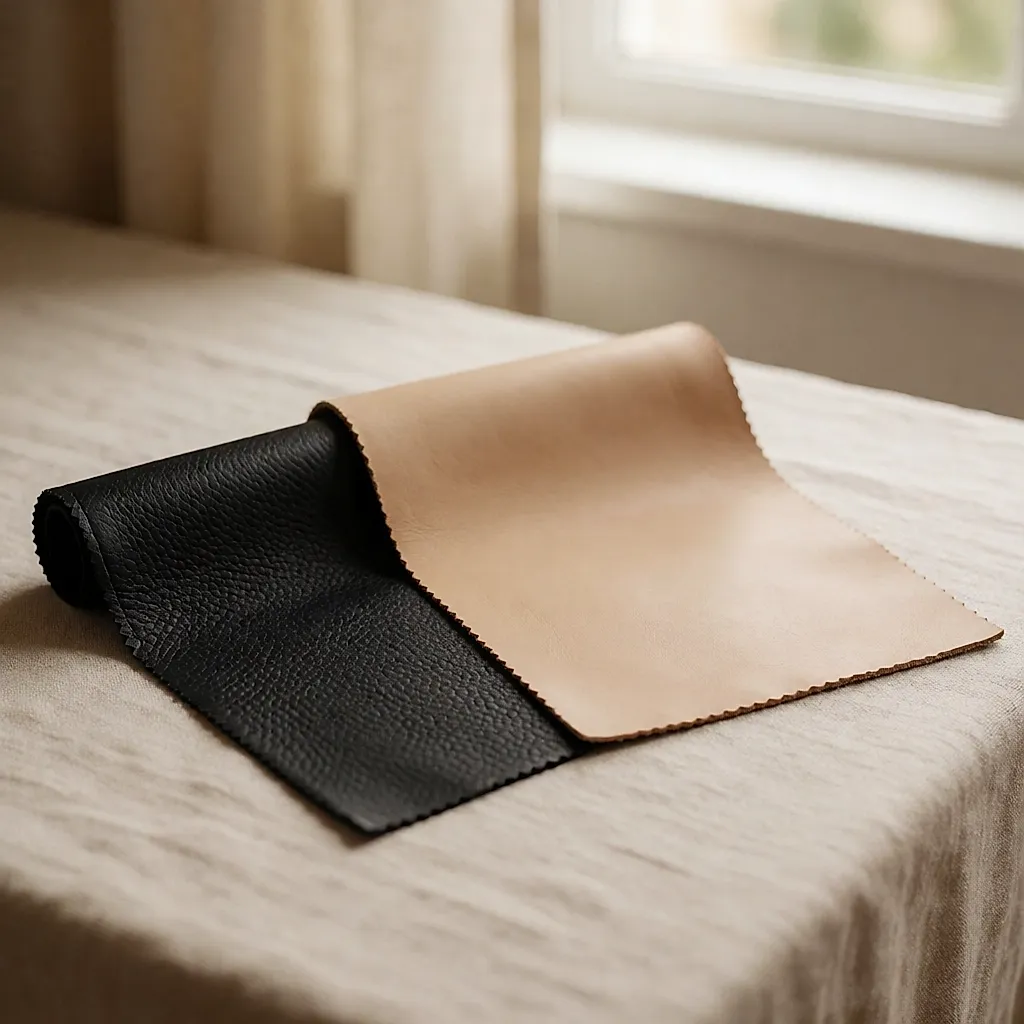
- vegetable tanning, using bark tannins, rather than chrome tanning;
- a tannery certified by the Leather Working Group, a standard that assesses water, waste and chemical management—it's a supply-chain certification, not a finished-product label;
- European or local manufacturing, which is easier to get repaired;
- second-hand, often the lightest option: the production has already happened.
The trade-off, plainly put: at a low price, you'll often find corrected-grain leather or synthetic. Synthetic avoids farming, but it peels and often ends up without a recycling route. Better-quality leather, kept for ten years, costs more once and lasts far longer.
Budget
As a rough guide, expect to pay around £20–50 for a studded belt on the high street, and £50–130 in full-grain leather from a leather goods specialist. Studded leather ankle boots or Western boots usually sit between £90 and £220 new, and £25–80 second-hand. A studded biker jacket is typically £180–520 new depending on the brand, and £35–130 pre-owned. A packet of rivet studs costs a few pounds at a haberdashery, and fitting by a cobbler or leatherworker usually costs £20–50.
What shifts the price: leather quality, where it was made, the metal used for the studs and where you buy. There's more choice online and on the high street; the best value is often found in charity shops, on resale platforms and at local leather goods shops, which can also carry out repairs.
Sources
- Leather Working Group — tannery certification standard covering water, waste and chemical management, leatherworkinggroup.com
- WRAP — environmental impact of textiles and clothing, wrap.ngo
- Recycle Now — UK guidance on recycling clothes and textiles, recyclenow.com


Comments
Your opinion matters: rate the article, react and reply to comments.
Comments are moderated; AI-assisted comments are flagged. Text emoticons (8-), :-), <3…) are automatically shown as images.