
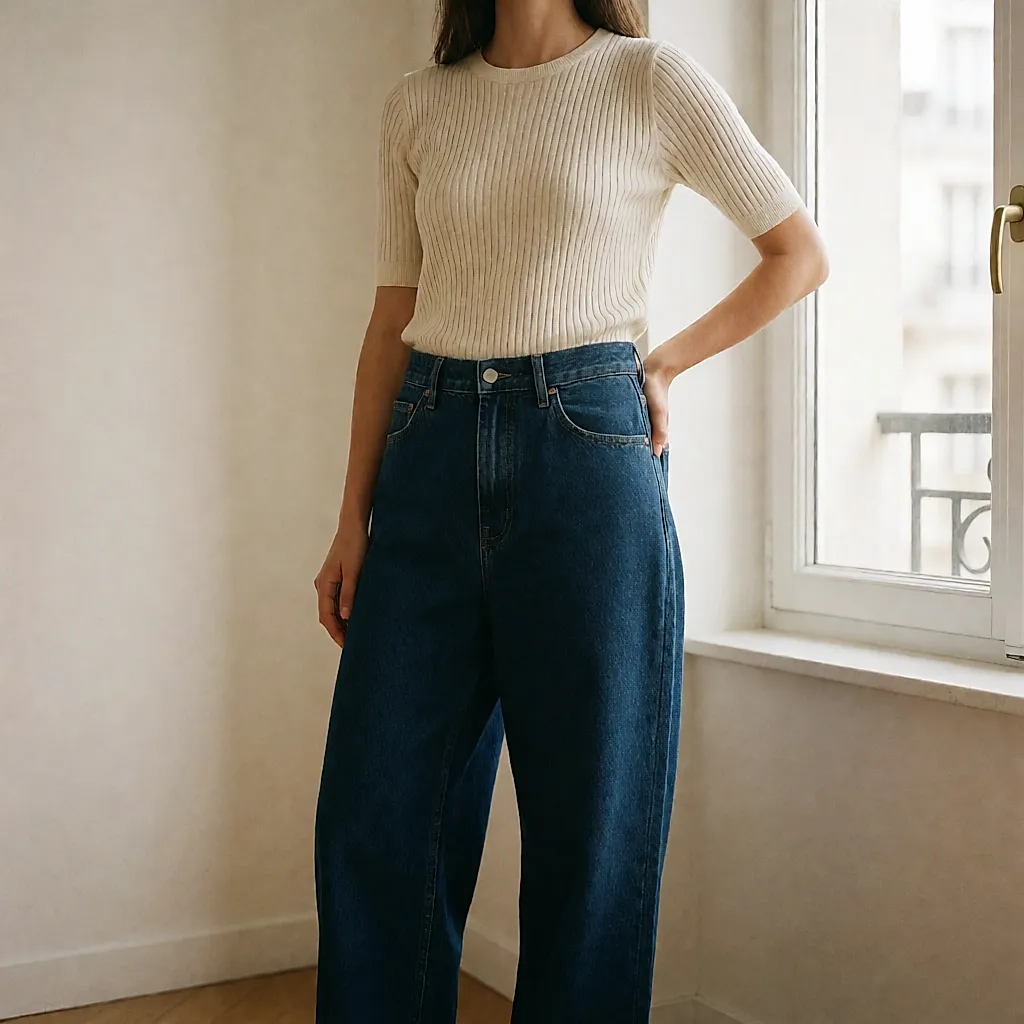
A pair of jeans, normally, has to be broken in: you tug at the waistband, lower yourself onto a chair with care, and three weeks later, they're finally yours. Knitted denim does the reverse — it fits right from the first wear. Only that instant comfort tells you nothing about what comes next, and that's where the fabric gets genuinely interesting.
A knit, not a woven fabric
Classic jeans are built on a warp and a weft: threads crossed tightly on a loom into that twill that scratches at first and then softens with age. A knit works differently: the yarn loops through itself, as in a jumper. To conjure the illusion of denim, you rely on indigo-dyed yarns, a jacquard pattern, sometimes a faded print and fake topstitching. From three metres away, nobody can tell the difference. Up close, at thirty centimetres, the surface is softer, almost velvety, and the fabric far more supple.
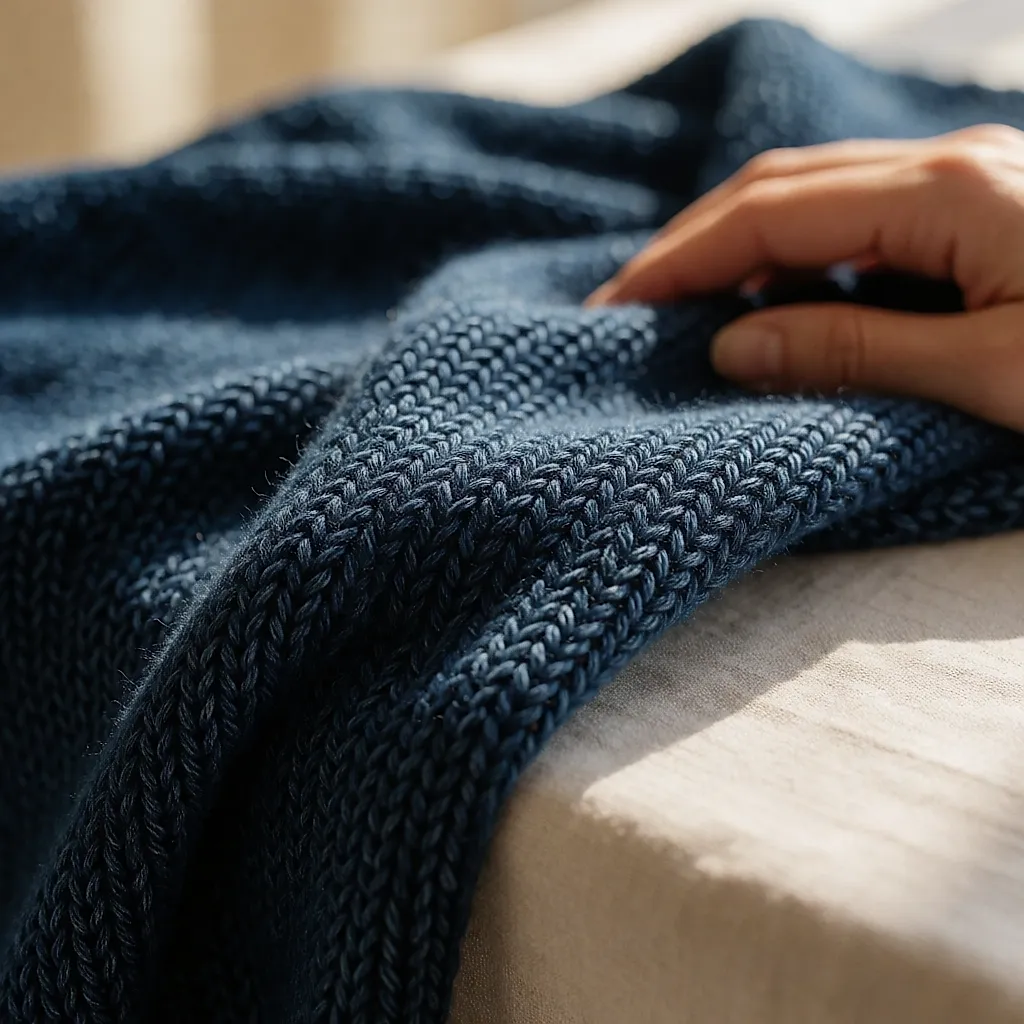
Beware the misleading cousin: plenty of cheap 'jeggings' are knits plumped up with synthetic fibres to hold their stretch, and that's not the family we're interested in here. The reflex is a one-liner: turn over the label. Cotton as the main fibre, ideally organic, a touch of elastane for recovery, and you know what you're getting. If synthetics are leading the charge, the feel against the skin won't be there.
How a knit changes the drape
Woven denim builds a silhouette: it holds itself off the body, marks the break at the calf, gives the hips structure. A knit, by contrast, hugs — the drape turns fluid, with no angles, plus that soft blur that follows movement. On a wide leg or a soft straight cut, the drape is beautiful. On a very architectural line, though, forget crisp creases behind the knee or that tailored look.

Which explains its success with anyone who can no longer bear stiff denim: days at a desk, endless trains, Sundays on the sofa. It's also an ideal travel piece, folding into three and refusing to crease. But if what you love is the fade drawn by wear — whiskers at the hips, marks behind the knee — look elsewhere: the colour does lighten, yes, but softly, like watercolour.
With wear, a knit has its limits
Its weak point is always the same: friction. Crotch, seat, hem, the corner of a pocket where your phone presses — those are the areas to watch. Add a claw clasp, a bunch of keys, a bike saddle: a knit snags more readily than a tightly woven twill. It's not a hidden fault, it's the logic of the structure, and it shapes how you wear it: knitted jeans are for weekends and working from home, not for a day of climbing in and out of vans.
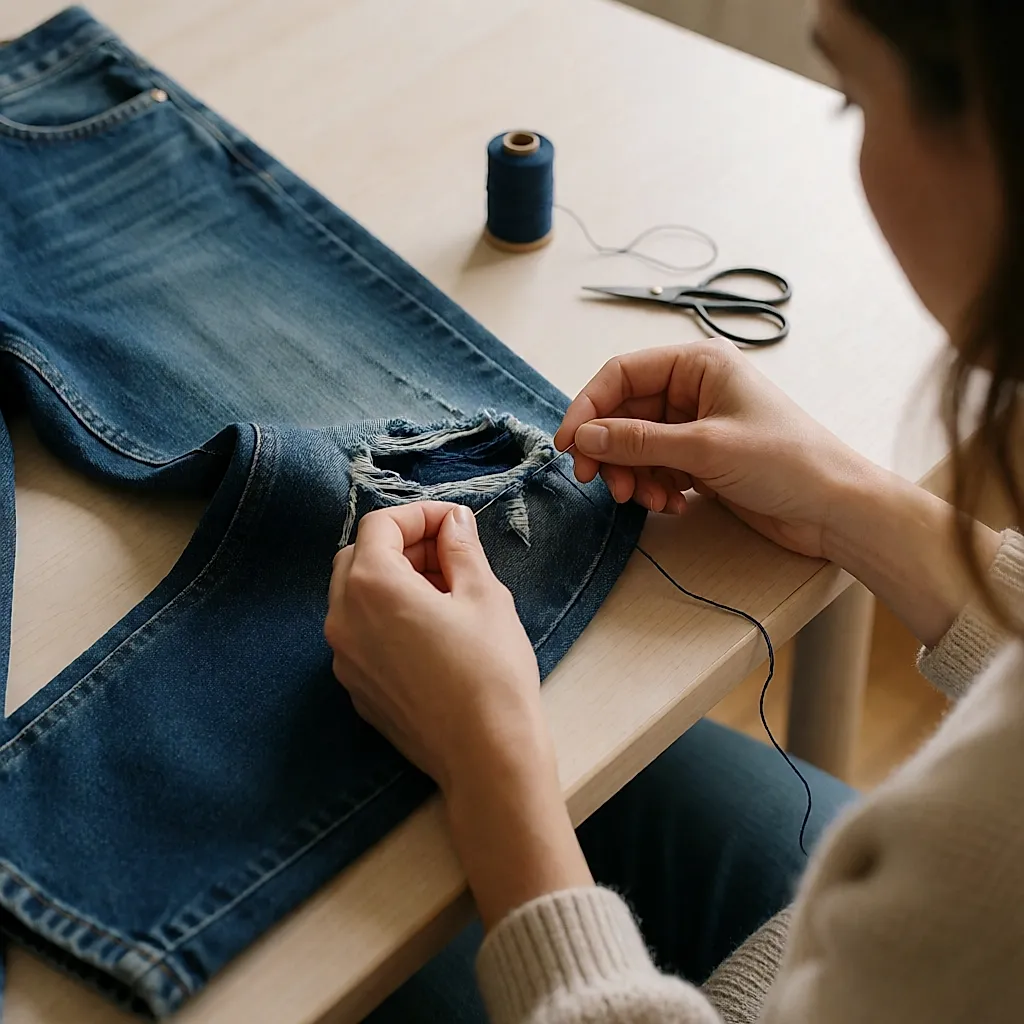
The patina, meanwhile, is lovely: the indigo slips away in patches, the piece becomes as soft as a much-worn sweatshirt. The only snag is recovery — without elastic fibre, a knee can stretch out and stay marked. So don't yank on the hem to get them on, keep the piece for a long time, and if a tear does happen, know that denim houses such as Nudie Jeans have made repairs their signature.
Washing: cold, inside out, flat
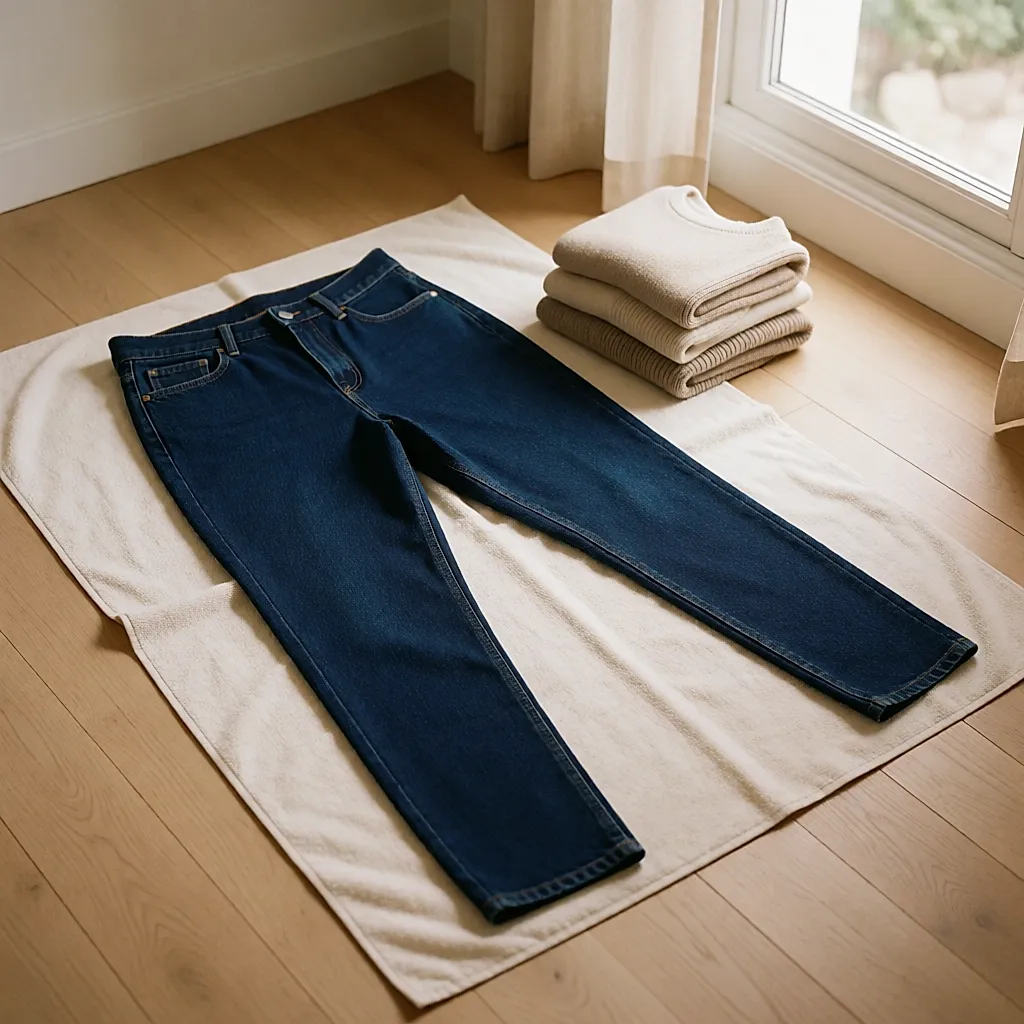
A knit is washed like a jumper, not like a pair of jeans. Cold, inside out, gentle cycle, minimal spin: heat and the drum are its two enemies. Skip the tumble dryer, which distorts and shrinks, and dry flat on a towel, never hung up. Wet, a knit is heavy, and gravity does the rest.
Another thing to know: indigo talks. On a cream sofa or a pale car seat, it can leave a mark in the first few wears — the scenario that infuriates, usually on the day the parcel arrives and you're off the next morning. So wash it alone or with dark items, and space out the washes: between them, a night in the open air is often enough to freshen the piece.
Before you buy, three thirty-second checks: hold the knit up to a lamp (too loose, and you'll spot it straight away), read the fibre composition line by line, and inspect the back of the seams — a well-finished knit doesn't curl at the hem.
What to pay
Distribution is still narrow, and that's almost good news: this piece isn't on every street corner. The playground is Japanese houses that treat indigo like a living material — Kapital, in Kojima, has made it a signature. Alongside them, a handful of European labels do soft denim, mostly in multi-brand shops and concept stores. The most singular pieces often come out of collaborations between a knitwear house and an indigo workshop: low-key, ones to keep an eye on.
Expect around £25 to £60 for fast-fashion versions, often heavily synthetic, best kept for light wear. From £75 to £150, you're into mid-range pieces sold in multi-brand shops, mostly cotton, with a drape that convinces. From £220 to £400 at the Japanese labels, you're paying for the indigo dye, the fineness of the knit and careful making. Secondhand, expect £35 to £110 depending on the brand and the condition. Prices rise with the city, the shop and the rarity, so it's worth comparing before you commit.
That leaves the real question: is it for you? If you want trousers that wear like a sweatshirt and forgive long days, it's a good buy — as long as you accept that it ages differently and has to be washed like knitwear. If you dream of crisp creases and fades that tell a story, stay loyal to woven. If in doubt, try them: a knit is judged in thirty seconds, by putting it on, sitting down, then walking towards the door.


Comments
Your opinion matters: rate the article, react and reply to comments.
Comments are moderated; AI-assisted comments are flagged. Text emoticons (8-), :-), <3…) are automatically shown as images.