

You'll have clocked them this summer — on noses at pavement tables, in opticians' windows, in holiday snaps. Round frames, oval frames, the odd pair that looks frankly lunar: they're back in force, and with them a whole vocabulary of soft shapes, ombré tints and warm materials. If you're in the market for a new pair, or still torn between a fine metal rim and chunky acetate, here's the 2026 eyewear wardrobe at a glance — and how to navigate it without dropping a month's salary.
Rounder, softer frames
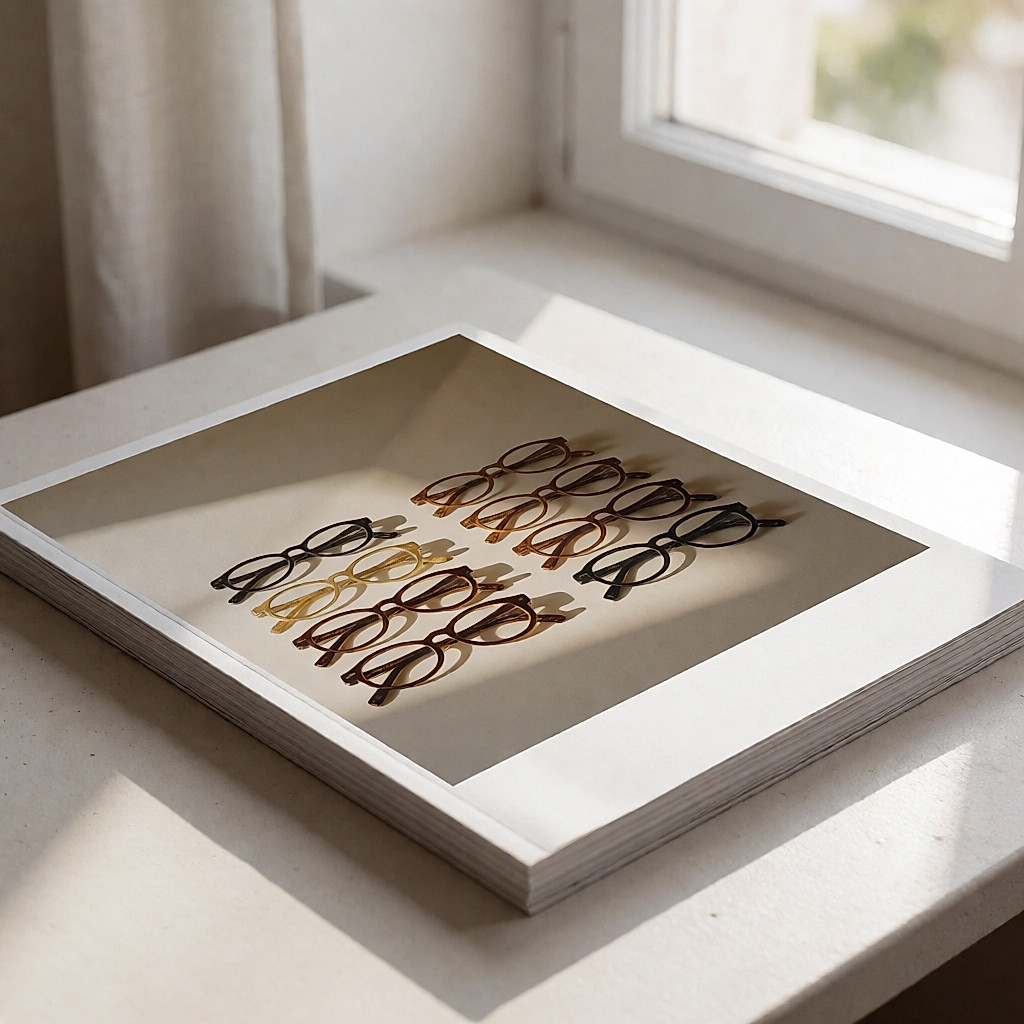
The shift starts with the silhouette. Angular rectangles are being quietly shelved, and so are rigidly straight arms: in come rounded shapes, gently stretched ovals, softened butterfly frames. This kind of frame rounds off the face, breaks up a strong jawline and works as an accessory in its own right — not just a tool for correction. Arms are twisted, metals are given a patina, lenses come tinted in green-to-red or orange-to-pink gradients — enough to lift a plain outfit in seconds. Sport-chic is in on the act too, with ultra-light metal or slim acetate frames and clean, crisp lines along the arms — casual-chic appeal guaranteed.
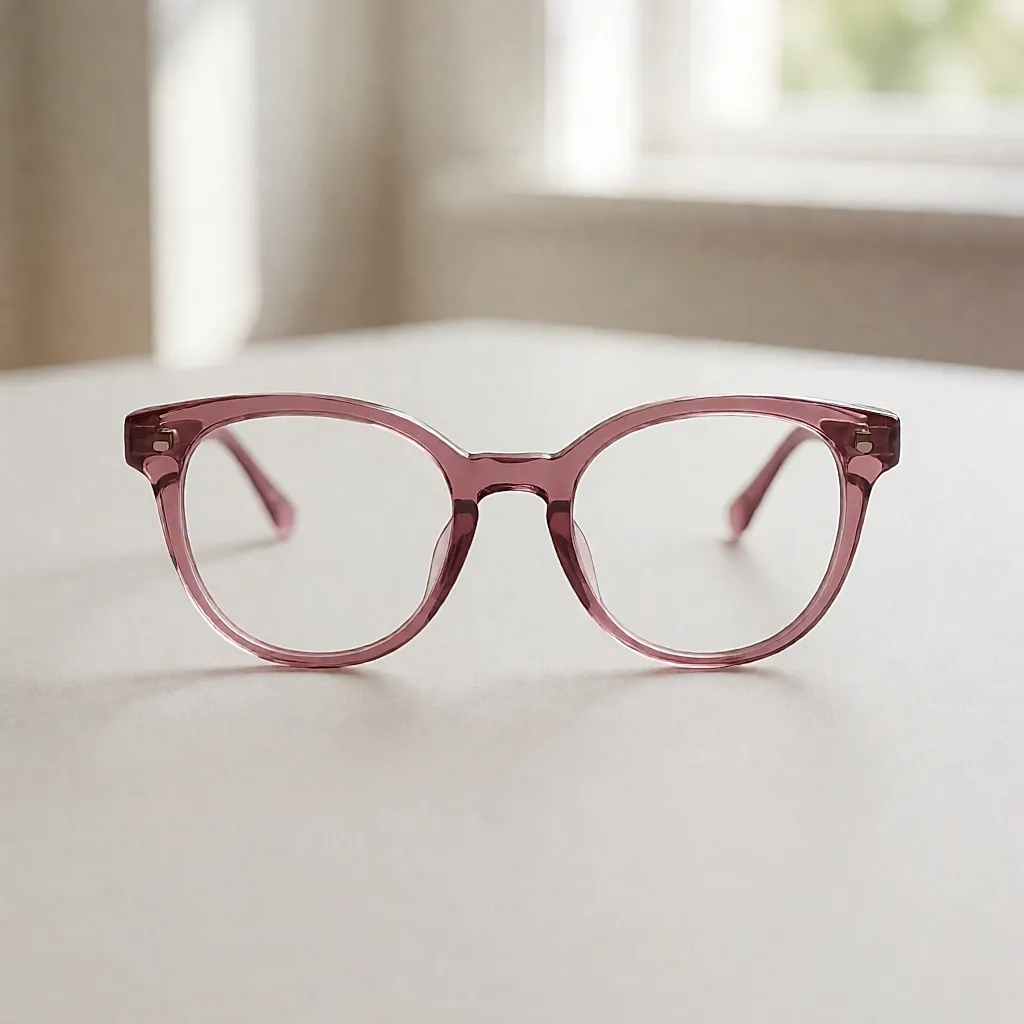

On the technology front, interchangeable clip-ons are still around — several shapes that clip over the lens so you can switch up your look without buying another pair. But the real playground has moved on to photochromic lenses and magnetic sunglasses: one frame, several uses, no pile-up of cases.
Acetate and quality materials
At several brands, crystals and tiny metal studs dress up twisted arms. The aim is the precious effect — the look of real tortoiseshell — without the price tag. Acetate has established itself as the star material: light, warm to the touch, it can be worked into endless shades and sits beautifully on the nose. Good news for anyone who reads the label: acetate comes from plant cellulose, often cotton or wood pulp, and that's a criterion that increasingly weighs on the choice of a frame. Some brands go further, with recycled acetate, bio-acetate or bio-sourced materials, plus trade-in schemes for old pairs.
A word of caution, though: not all acetates are equal, and the word "bio" isn't always regulated. Look at where the material comes from, whether the model can be repaired and whether spare parts are available — that's usually where a frame's real durability is decided.


What's in style this season
If you've dug an old round pair out of a family drawer, you're not swimming against the tide: round and oval frames really are back, worn just as well with a full tailoring look as with jeans and a T-shirt. Acetate is very much present, fine metal is returning on minimalist models, and tinted lenses come in ombré or smoked versions. Clip-ons, meanwhile, have largely given way to magnetic sunglasses and photochromics, which are simply easier day to day — you keep one frame and swap the lens.

The real change may be in how we choose: fewer pairs hoarded, more well-thought-out pieces that get repaired rather than replaced.
A too-tight arm won't make itself felt in thirty seconds — but give it five minutes and it will. Check too that the frame doesn't slide down when you tip your head forward: that's the detail that saves you endless adjustments.
Budget
On the budget front, reckon on roughly £30 to £70 for a frame alone at entry level, £100 to £250 in the mid-range, and often £300-plus for designer labels or heavily worked acetate. Lenses are extra: from £40 to £150 for simple single-vision, and more for varifocals or thinned lenses. Prices vary by city, optician, frame material and type of correction.
Where to find them? At the optician, often as a package with lenses included and fitting on the spot; online for basic frames, provided you check the pupillary distance carefully, along with the returns policy and whether you can get the frame adjusted locally; and in beauty halls, concept stores or specialist boutiques for sunglasses and statement pieces. Don't overlook second-hand and trade-in platforms either — some brands take back used frames to refurbish. NHS optical vouchers can help with the cost if you qualify (for instance, if you're under 16, over 60, or on certain benefits), and some workplace or private health schemes will top that up — check what you're entitled to before you choose.
Sources
- Silmo Paris — international optics and eyewear trade show (silmo.fr)
- NHS — help with health costs, including optical vouchers (nhs.uk)

Comments
Your opinion matters: rate the article, react and reply to comments.
Comments are moderated; AI-assisted comments are flagged. Text emoticons (8-), :-), <3…) are automatically shown as images.