

You've done the maths already, admit it. Platinum blonde means one evening of wanting it and months of recovery. A fringed bob, three months of regrowth before you can say "on second thoughts, no". A wig, on the other hand, goes on, comes off, and leaves nothing behind. On the catwalks and in music videos it has shed its costume status to become a statement piece like any other - ready to be pulled out of the wardrobe the moment you fancy a different silhouette.
You're trying a hairstyle, not becoming someone else
A wig isn't just for playing a part. It lets you test a cut, a colour, a length before you go to the hairdresser, or just for one evening. Let's be honest: the trap is going straight for twelve shades lighter and three lengths longer. For a first outing, stay within one or two shades of your own colour, with a texture and a fall close to what you already know. You accessorise afterwards - headband, clip, scarf - and the full look comes together on its own.

Synthetic or human hair?
On materials, two big families split the market. Synthetic fibre first: affordable, easy to care for, endless textures. Its limit? The fall, often stiffer, and a sheen that can be too obvious. Heat-resistant versions will take a warm iron - never very hot straighteners, or the fibre will melt. Human hair next: density, shine and feel closer to the real thing, trimmable and partly recolourable by a wigmaker. Expect to pay several times the synthetic price for that more believable look.
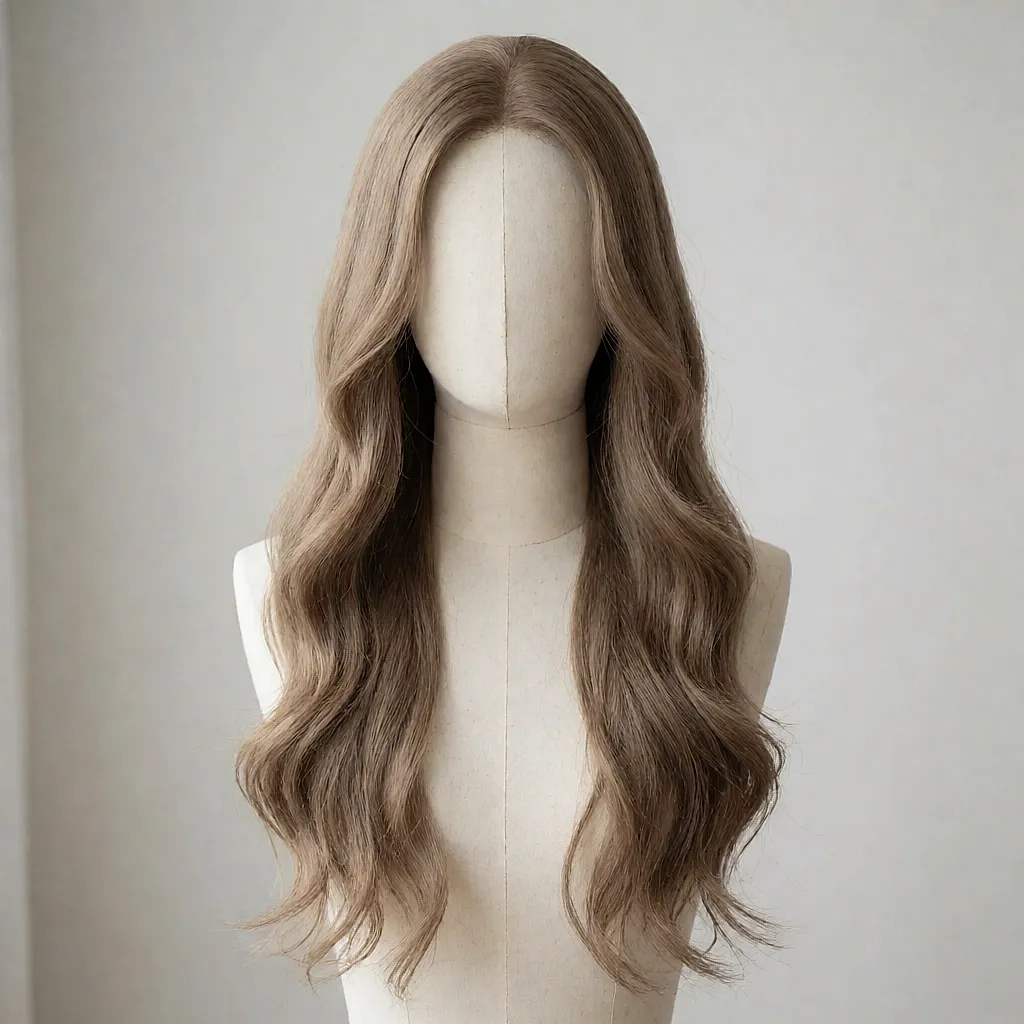
Let's say it up front: as far as we know, there's no European organic label for human hair, and where it comes from is often unclear. A "100% natural human hair" wig at a surprisingly low price is worth a few questions to the seller - provenance and traceability included.
What sells the illusion
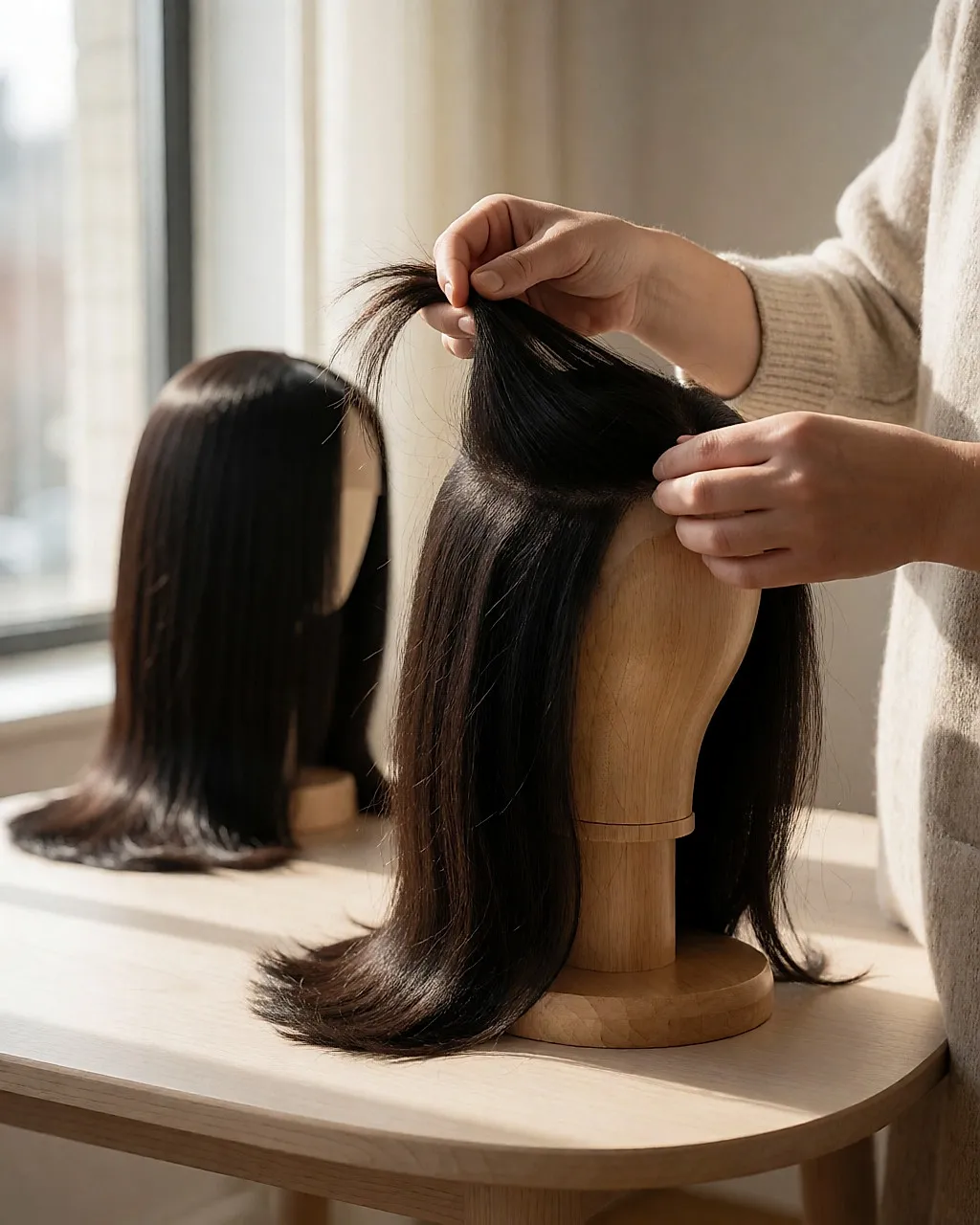
The cap carries far more weight in the finished look than you'd think. A fine mesh or a lace front gives you a believable parting; a thick cap shows right at the hairline, and that's where the illusion falls apart. The cut matters just as much: a few layered strands around the face break up the helmet effect, and a quick visit to a hairdresser used to working with hairpieces is enough to turn a wig into a hairstyle. On transparency: I haven't tried every wig on the market; what I describe comes from my in-salon fittings and from public sources.

The habit that makes the most difference. Keep your wig on a wig stand, never in a plastic bag. Brush from the ends up towards the cap, wash in cold water with a gentle shampoo, and let it air-dry: that's what helps most to keep it looking good, plain and simple.
::produit If you want to limit the impact. Choose a cotton or bamboo-jersey cap rather than thick nylon, cardboard packaging, and an Oeko-Tex Standard 100 certificate on the cap textiles - this label certifies that the textile has been tested for harmful substances, to defined thresholds, nothing more. The downside: end of life. A worn-out wig usually ends up in the general waste, with no dedicated recycling route; better to pick a hard-wearing, trimmable fibre than a bargain model you replace every six months. ::
What you'll pay
Prices swing enormously - here are the ballpark figures you tend to see in the UK:
- A decent synthetic: around £35 to £130, online or from a specialist shop.
- Human hair: from around £175, often £350 to £800 for long, dense or lace-front.
- Bespoke, plus fitting and adjustments in salon: £450 to £1,300.
- Upkeep, washing, trimming: £20 to £55.
What pushes the bill up: length, density, the type of cap, the fibre's durability and where the hair comes from. Worth knowing too: in the UK, some wigs can be prescribed by the NHS for hair loss linked to medical treatment - check with your GP and your local NHS wig service before you buy. For a first try, start with something under £100 and wear it for a whole weekend: you'll soon know whether the look really works for you.
Sources
- NHS - wigs and hair loss, prescription wigs.
- Macmillan Cancer Support - supportive care.



Comments
Your opinion matters: rate the article, react and reply to comments.
Comments are moderated; AI-assisted comments are flagged. Text emoticons (8-), :-), <3…) are automatically shown as images.