

You found the piece. The one that silenced the whole shop the moment you laid eyes on it: dense embroidery, threads that catch the light, a colour that doesn't need to try hard. And ever since, the same question has been hovering over the mirror — what do I wear it with? The answer is almost nothing. That's exactly where it gets interesting.
Neckline, shoulder, drape – three decisions, not thirty
Here, the line of the bodice is the ornament. First decision, the neckline: a boat neck draws a horizontal that visually broadens the shoulders — lovely on a fine frame, less forgiving if you already have broad shoulders. In that case, a V or a scoop neck lengthens the torso and rebalances without adding a thing. A high collar, meanwhile, needs light elsewhere: bare arms, a low back, or hair swept up to free the nape.

Second decision, the shoulder. An asymmetric piece, a single sleeve, a drape that rises: the line is already there, so there's no need to layer a wrap over it — especially on the side where the work shows. Third, the drape. Tight embroidery or a dense fabric holds the upper body on its own; underneath, a fluid skirt or a pair of trousers stops you stacking two volumes on top of each other. The opposite is true too: if the bodice is soft (silk, linen, crepe), the cut has to be impeccable — a shoulder seam that falls exactly where it should, a crisp yoke — and you need nothing else.
What comes off without regret
No necklace over an embroidered neckline. No big earrings under a high collar. No buckled belt on a waist that's already doing the work. No second print, no patterned scarf, no bag whose logo shouts louder than the piece. Long list? It frees up half your wardrobe, and half the dithering in front of the mirror.

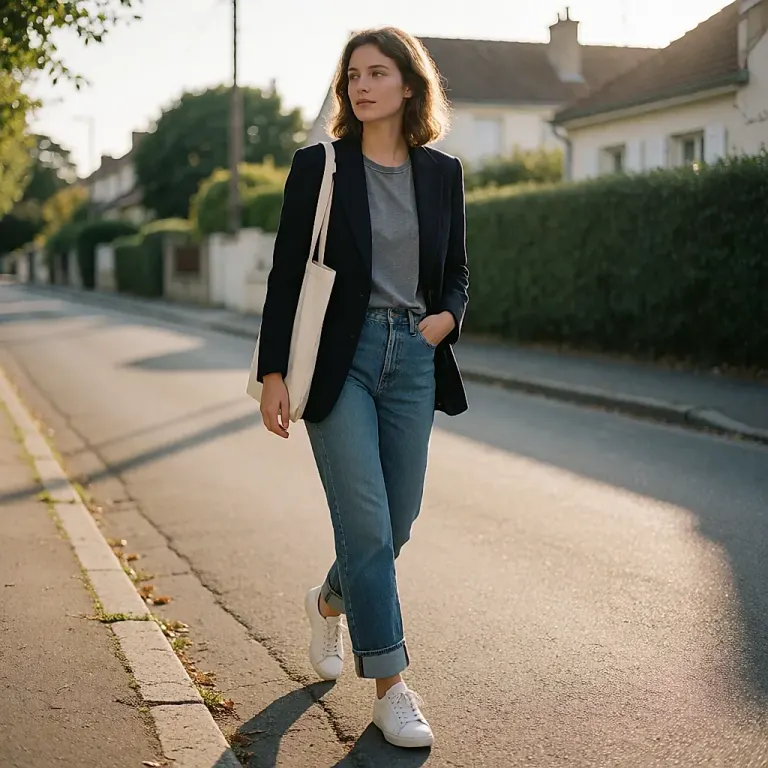
A few pieces stay, chosen carefully: tiny studs, a fine bracelet — one only — a plain leather bag, a pair of discreet shoes. And the details that really count, the ones nobody notices from across the room but that change everything: a hem at the right length, a waist taken in, fabric pressed. A piece that hangs properly often looks more expensive than an overloaded one.
The two-step test: step back, squint slightly and see what stands out first. If it's the piece, you're set. If it's the jewellery, take it off. If it's the way you hold your head, you've won.
Before you close the door
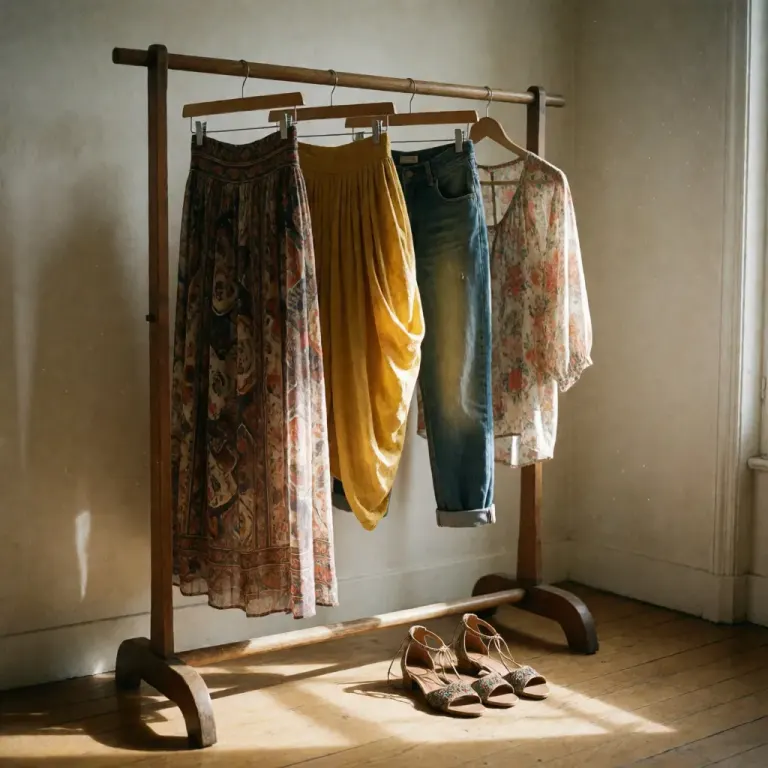
One last turn in front of the mirror, in daylight if you can — not just under the flattering bathroom light. Ask yourself what you see first: if the answer is "the embroidery", you've got it right. Lay the outfit out the night before, on a hanger, with shoes and bag waiting underneath; on the morning of the occasion, that small head start is worth more than any accessory.

And if doubt creeps back in as you head out, remember the simplest rule of all: the piece is already the party — all you have to do is let it in.
Budget
What you pay for an embroidered piece isn't fixed — it follows the density of the stitching, the fabric and the label. On the high street, count on around £30 to £60 for machine embroidery on cotton or a viscose blend; a small label, or a piece with tighter hand-work, usually sits between £80 and £150; genuine hand-embroidery on silk or linen climbs well past that. The city, the season and the upkeep shift the figure too — an embroidered piece often means dry cleaning, and any alteration (a hem, a waist taken in) adds a little more. Where to find them: high-street chains, online marketplaces, vintage and consignment shops, and end-of-season sales.

Comments
Your opinion matters: rate the article, react and reply to comments.
Comments are moderated; AI-assisted comments are flagged. Text emoticons (8-), :-), <3…) are automatically shown as images.