
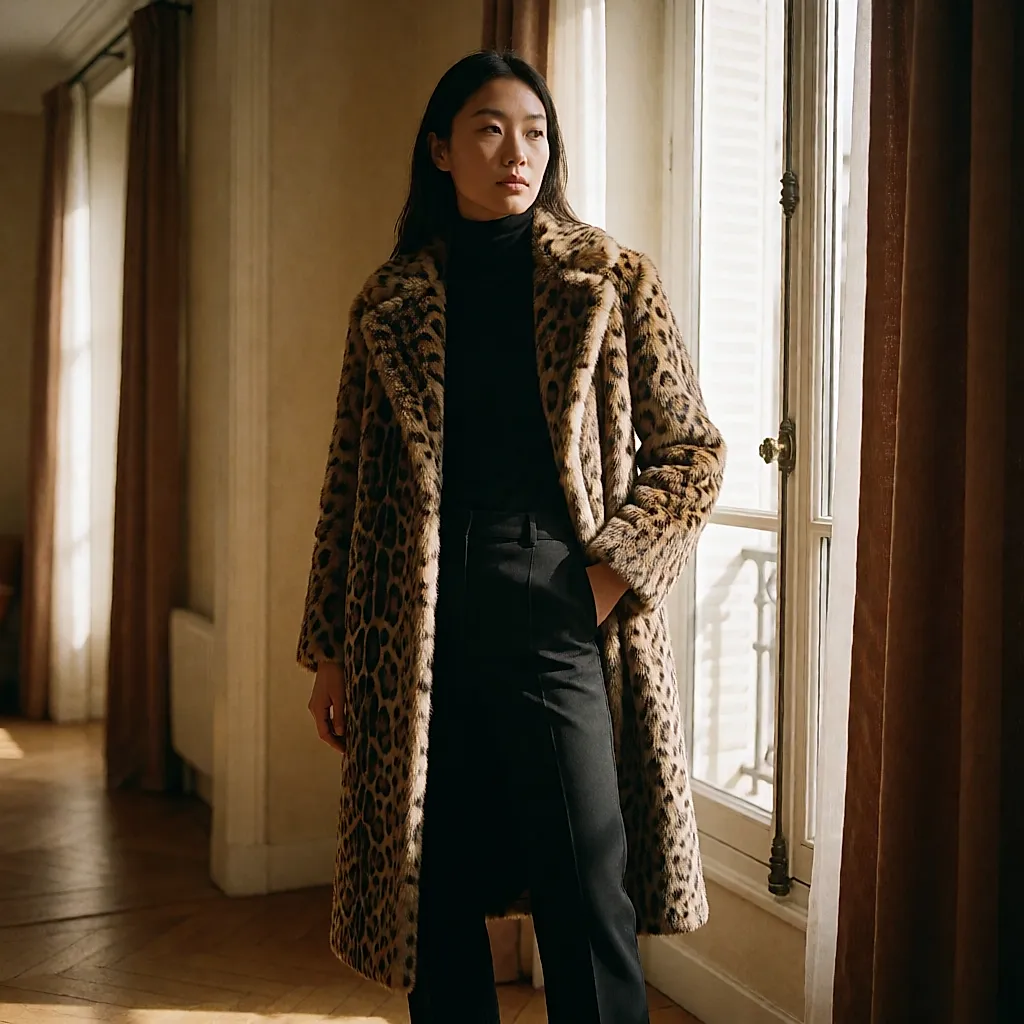
Somewhere in your wardrobe there's a leopard-print something you bought on a brave day and never quite made peace with. The kind of piece you try on in front of the mirror, decide it's brilliant, then put it away "for later". Good news: this autumn you won't need the courage. Animal print is no longer a gamble, it's a safe bet in the wardrobe — and this time it isn't hiding away in a discreet lining. It's out in the open.
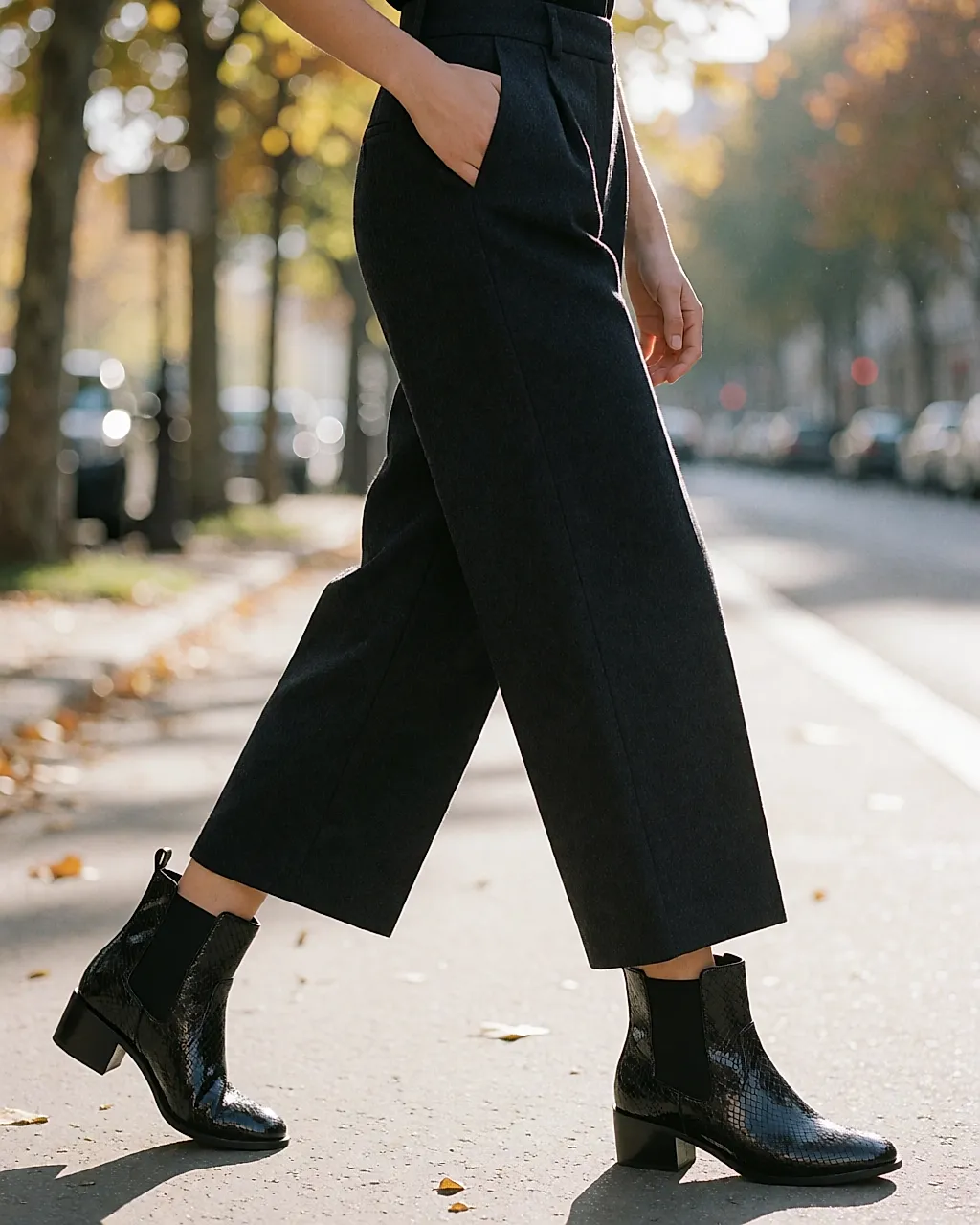
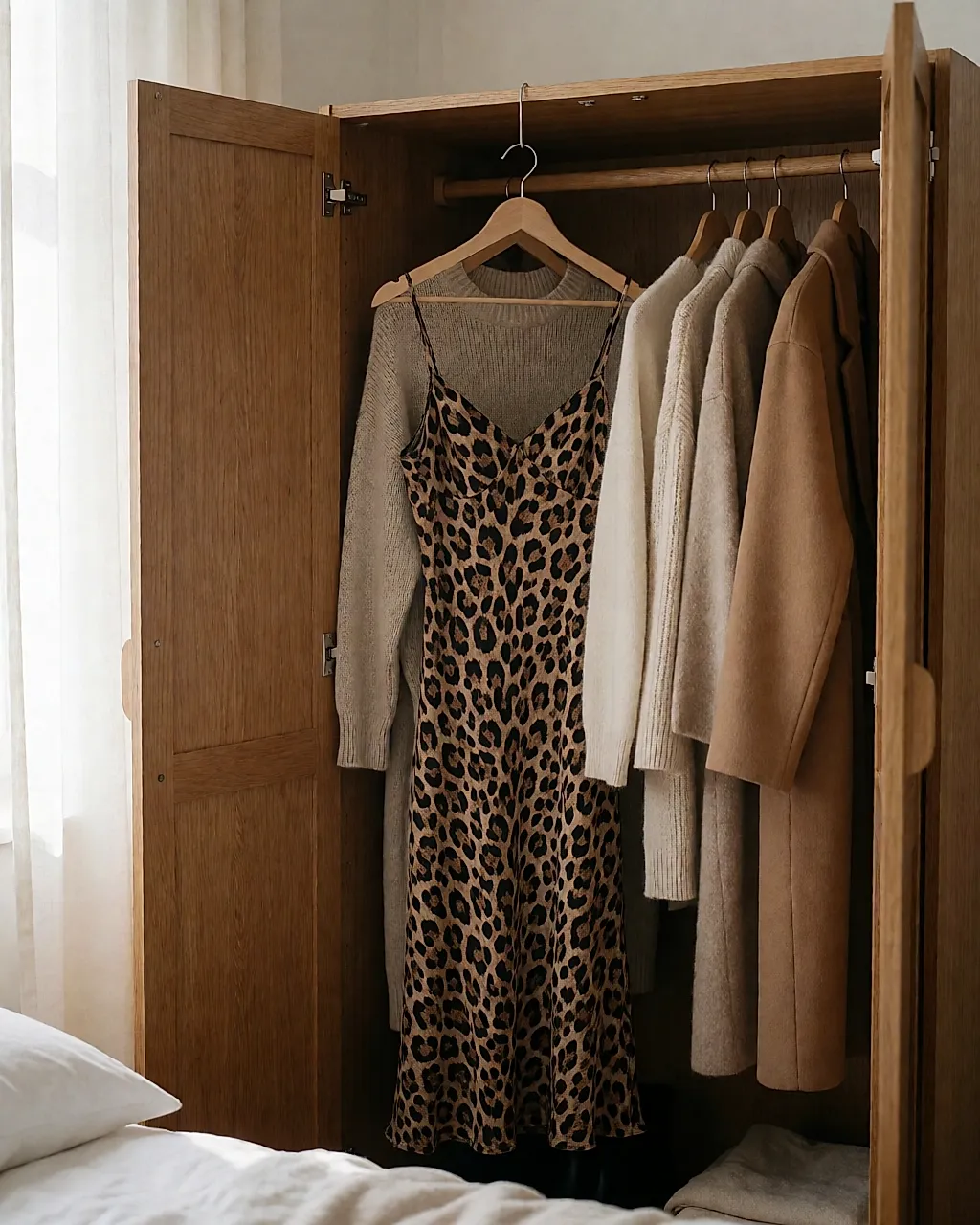
Out of the lining and into the light
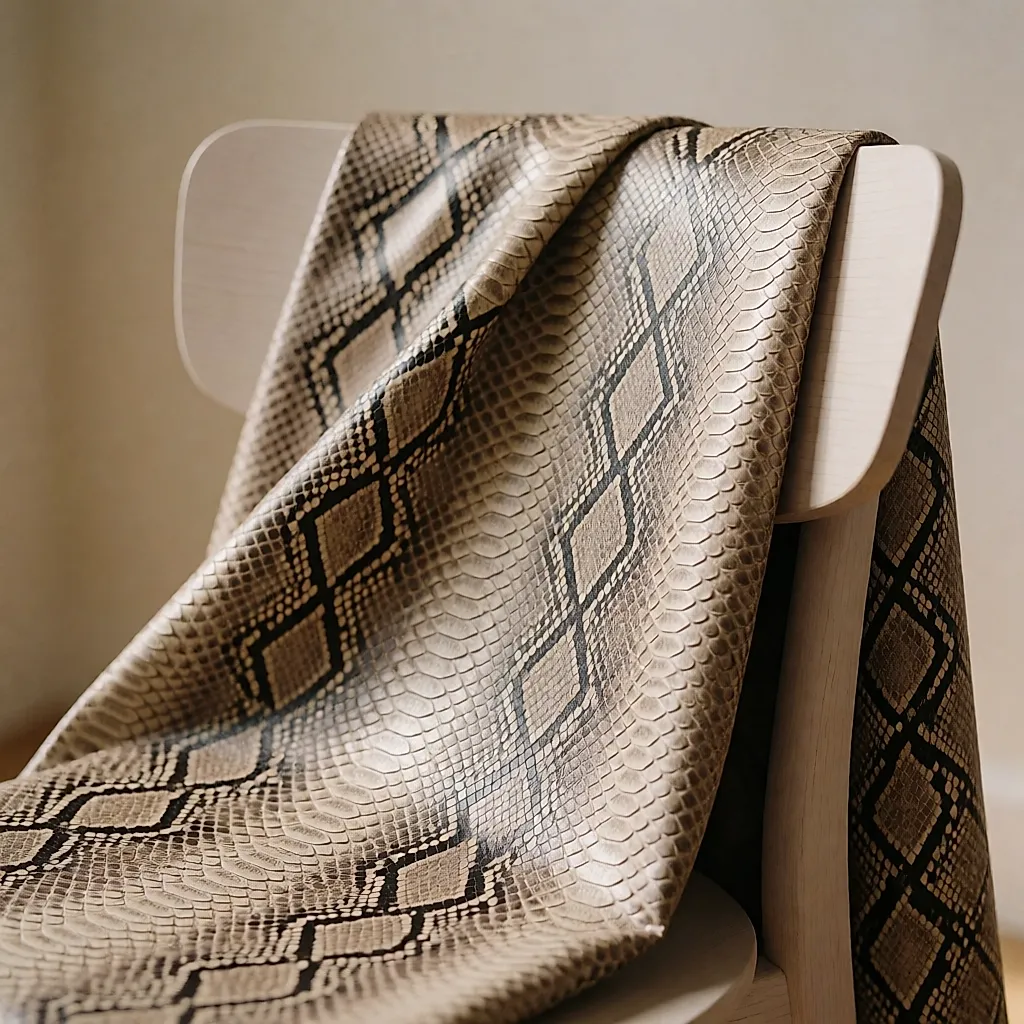
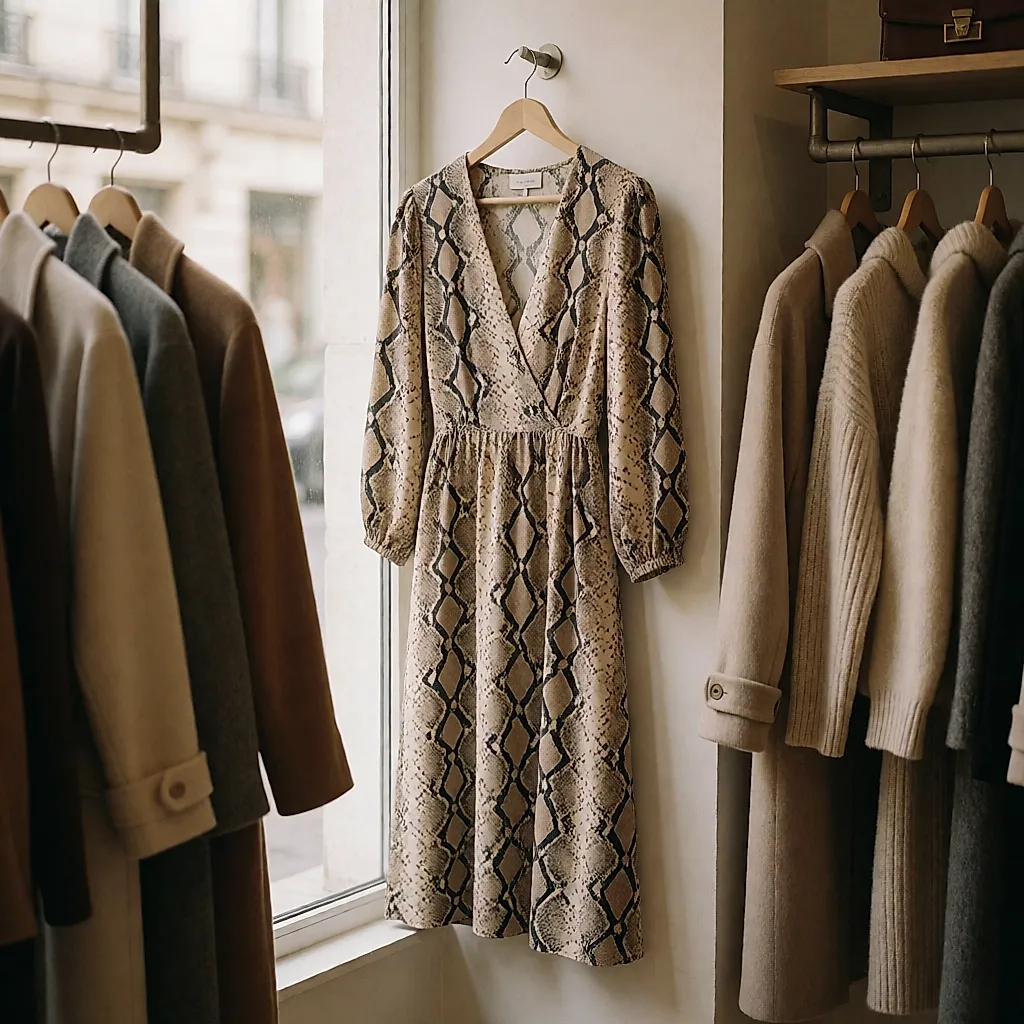
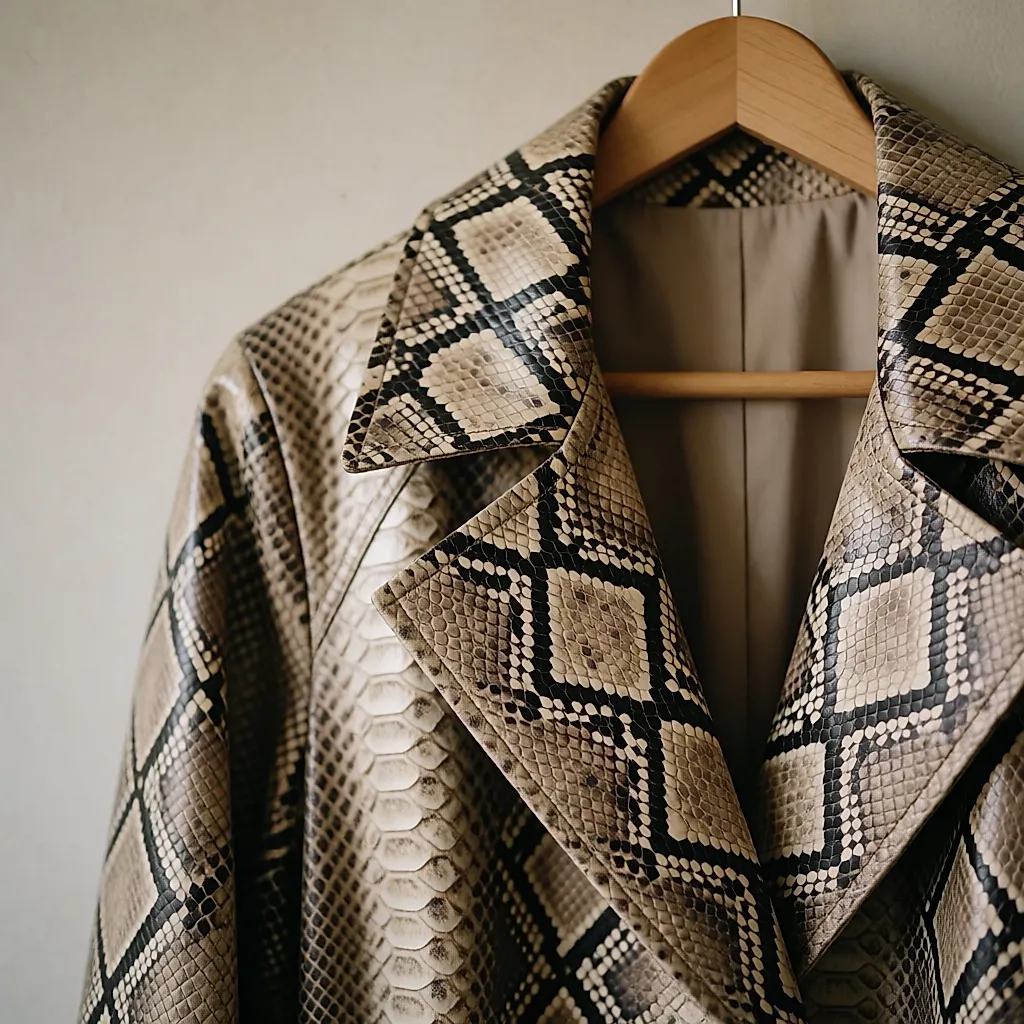
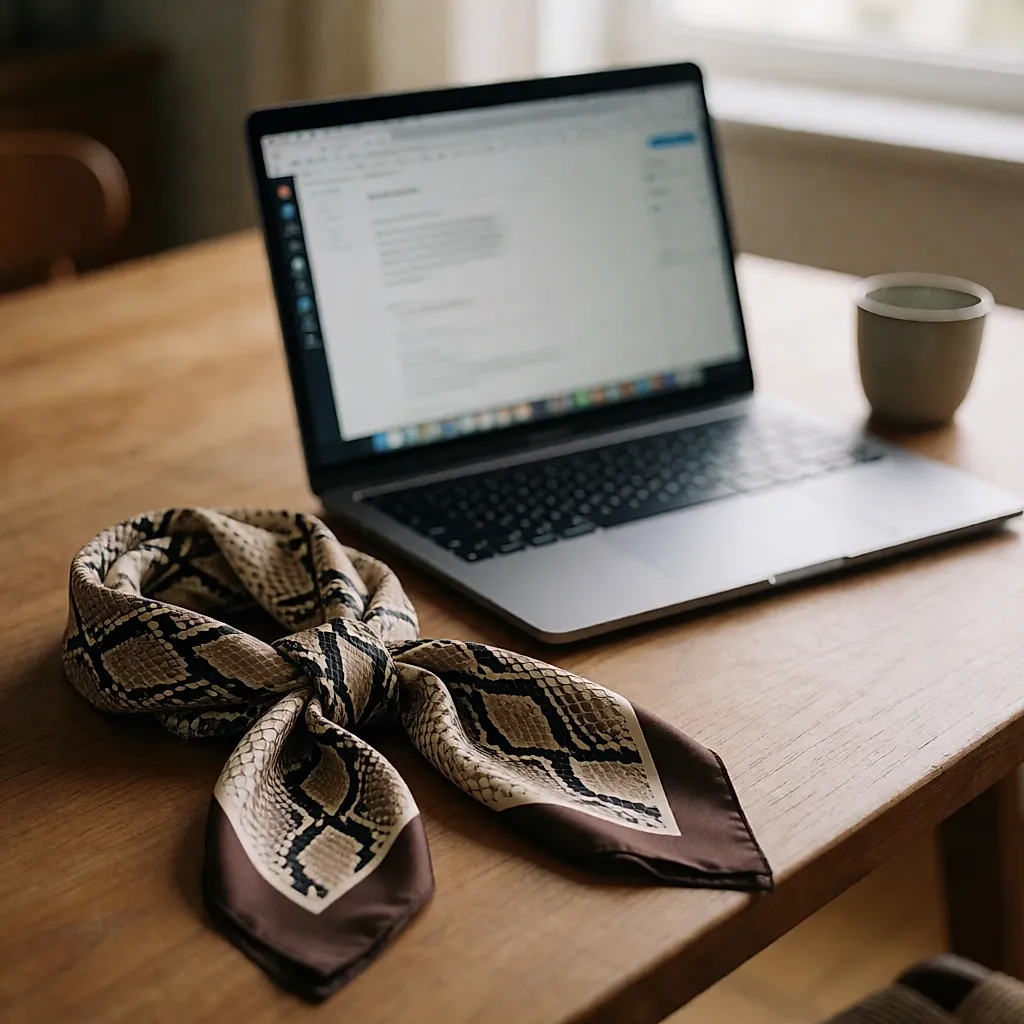
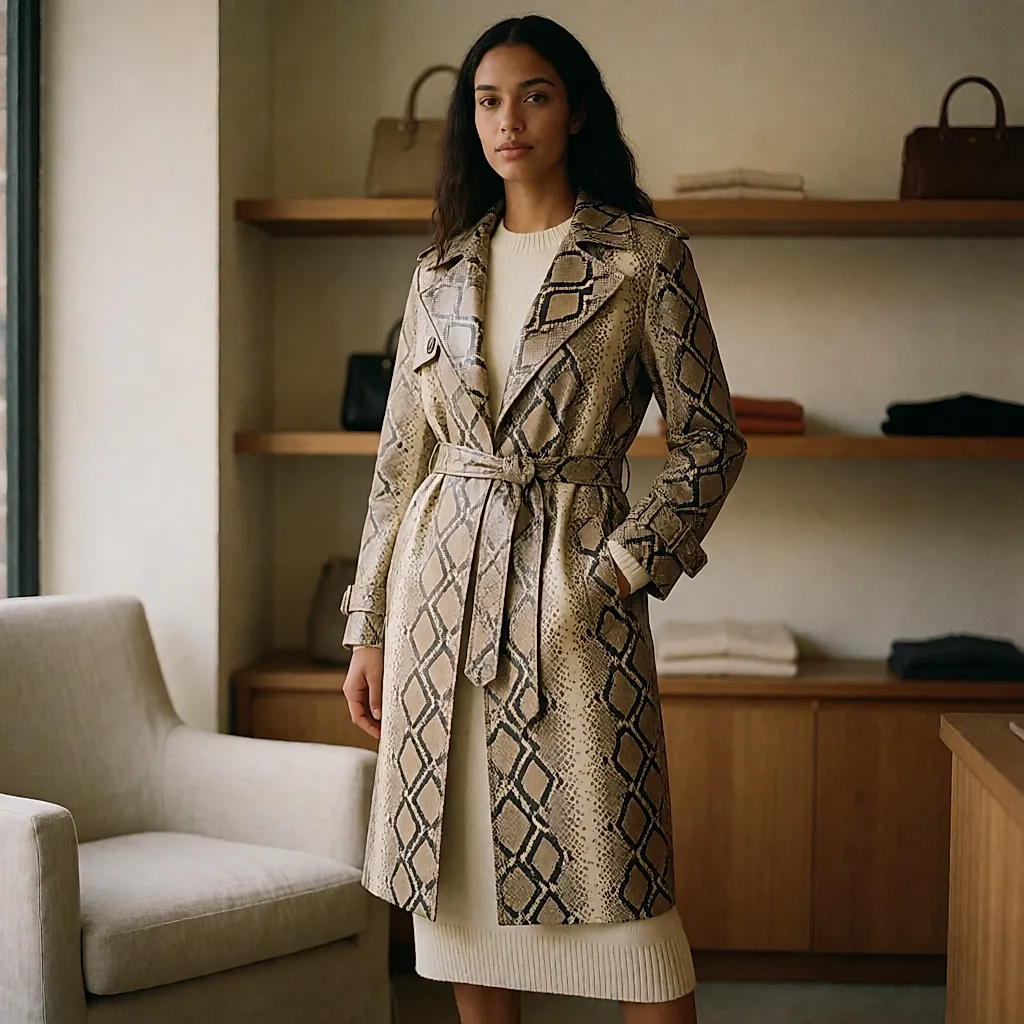
On the catwalks and on the high street, the print lands on statement pieces: leopard skirt, zebra blazer, python coat. The appeal is simple — it turns a whole silhouette into a look without adding anything else. On the fabric side you'll see plenty of fluid satin, chunky knit and textured faux leather: materials that play with drape and light, and that's precisely where a piece holds up or falls apart.
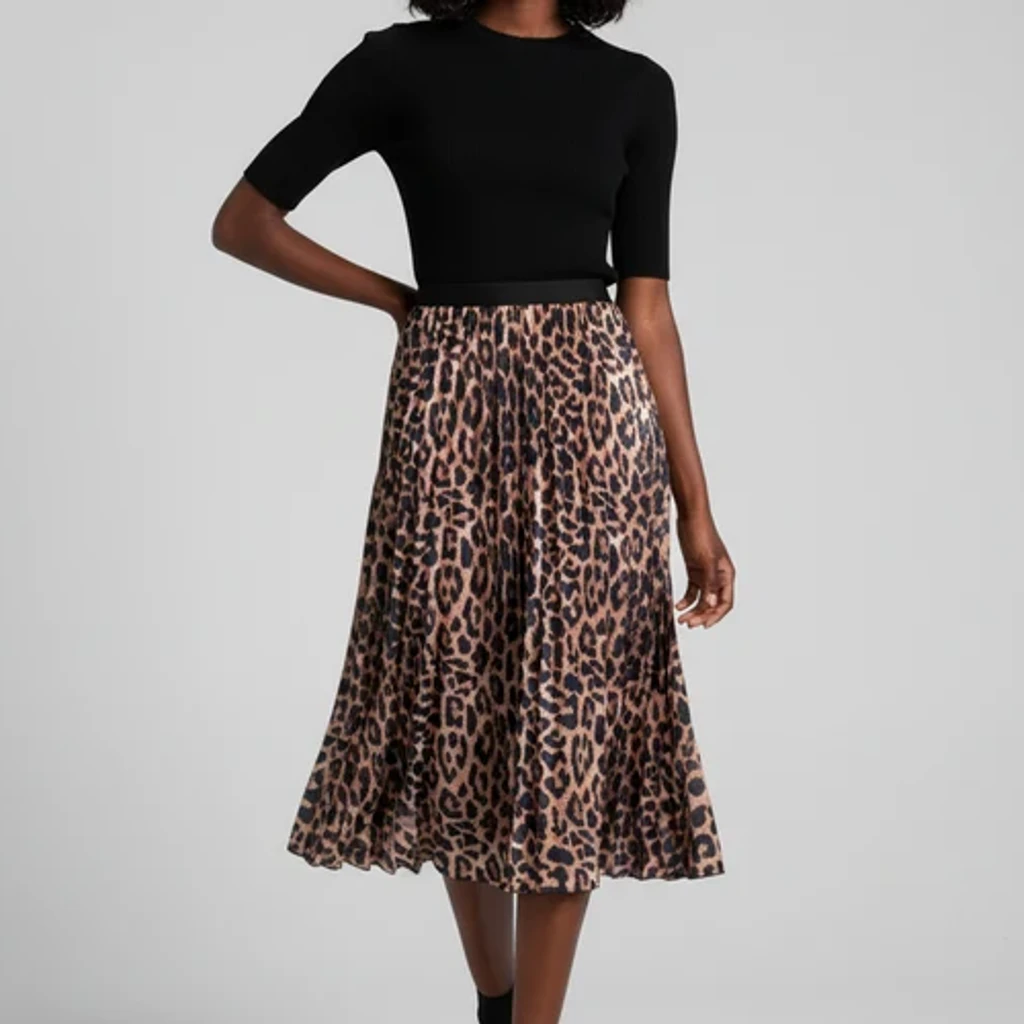
The real change is that it's no longer evening-only. Worn in daylight, animal print behaves like a graphic neutral: it sits happily with black, brown, camel and grey. On one condition, always the same — one strong print per outfit. Any more and the eye stops knowing where to land.
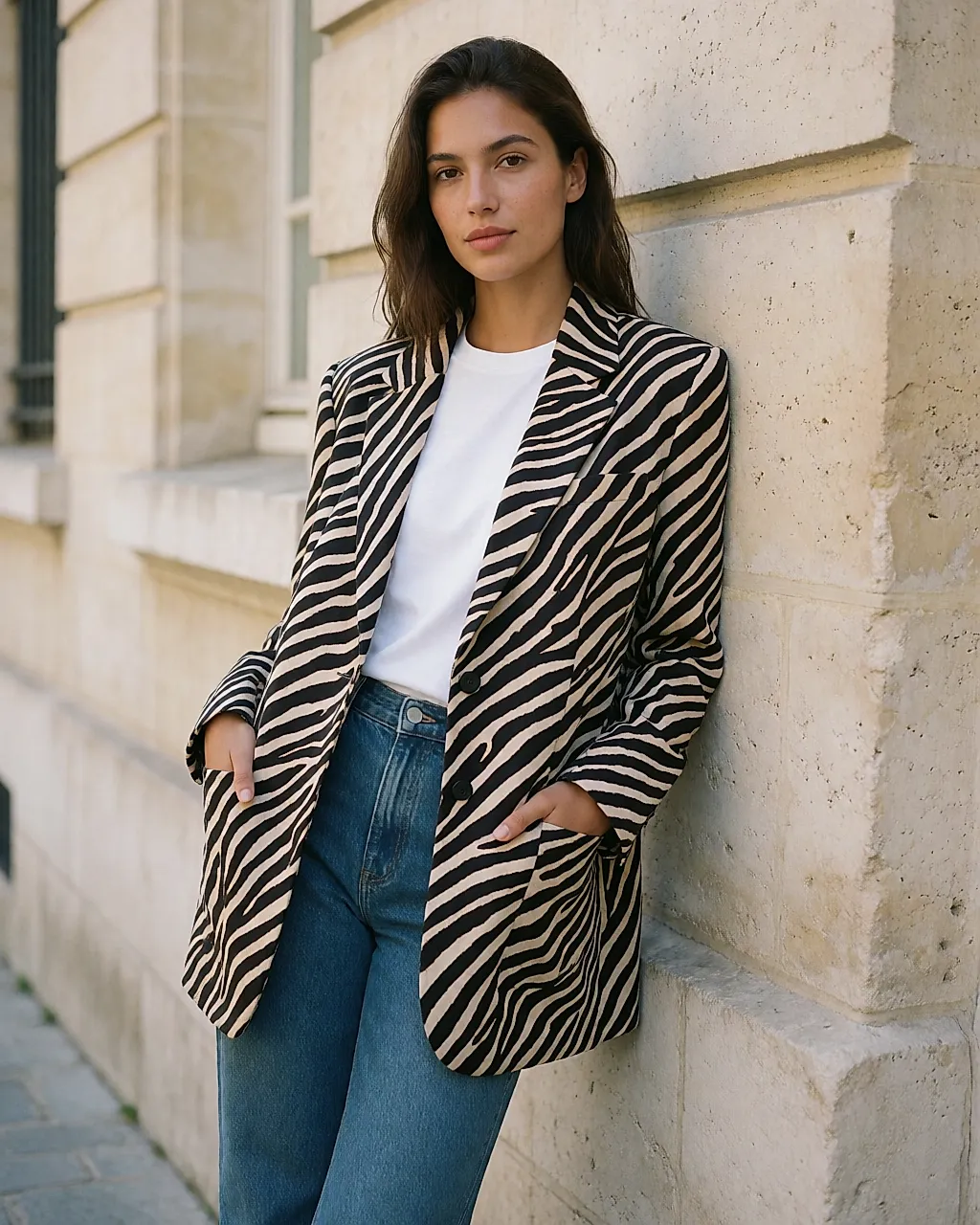
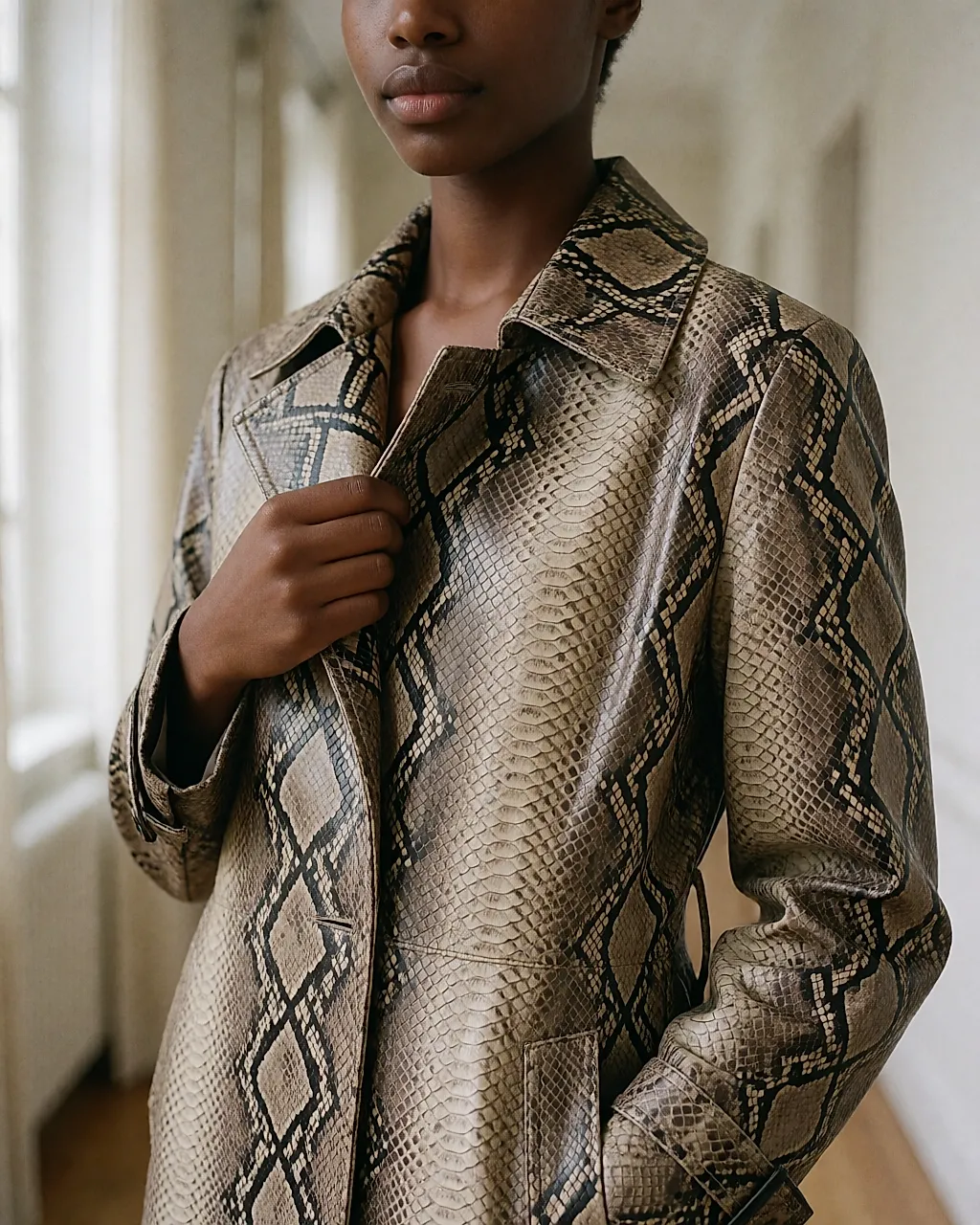
How to wear it without looking like you're in costume
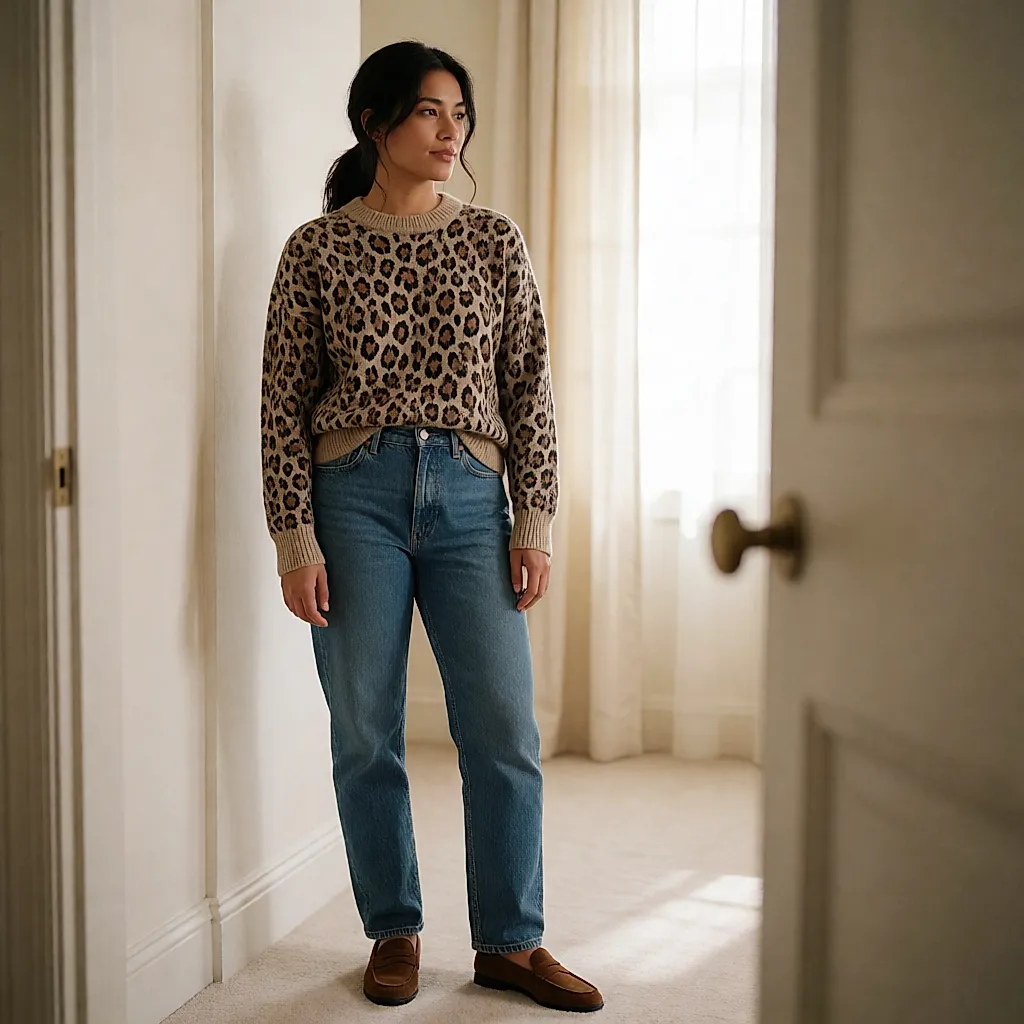
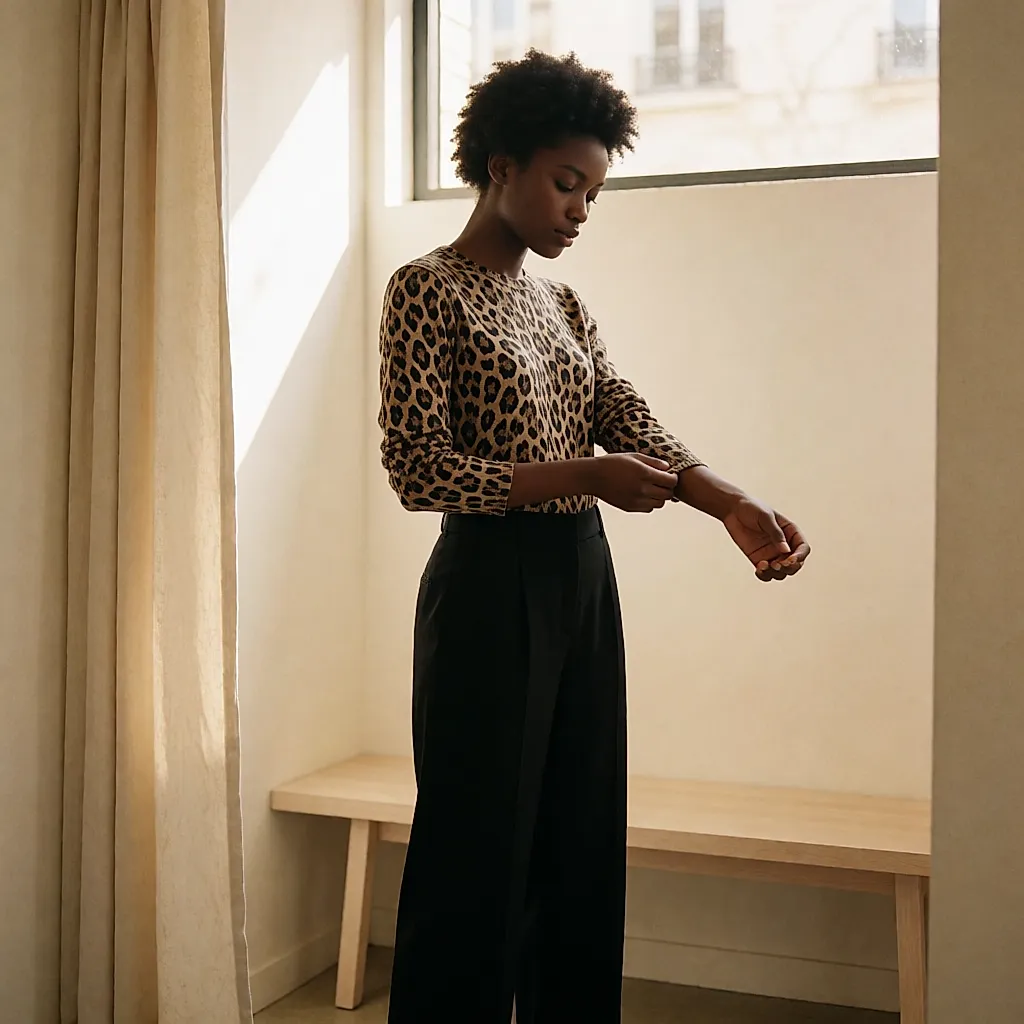
The trap isn't the print, it's the pile-up. Keep one printed piece and let everything else stay quiet: a leopard jumper with raw denim and loafers works straight away. Full animal print, from bag to shoes, tips into overload in three seconds.
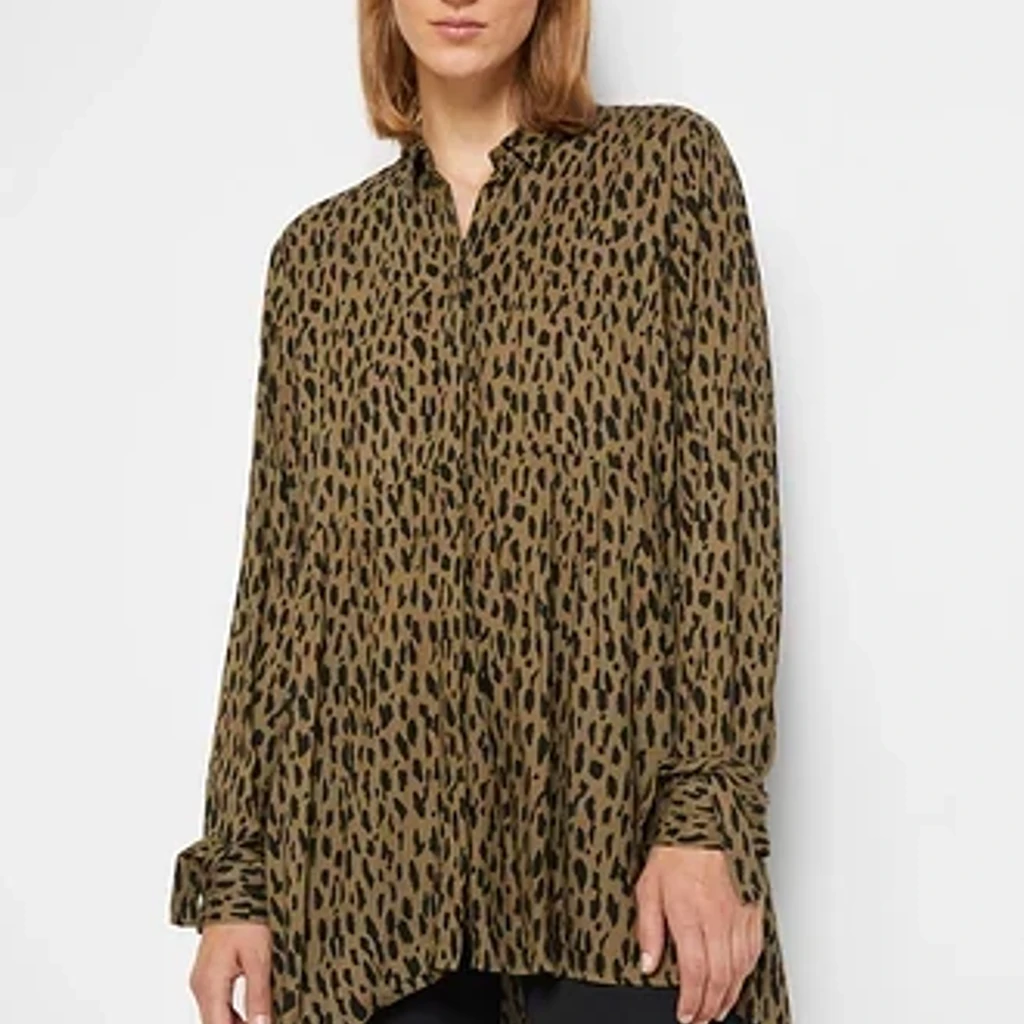
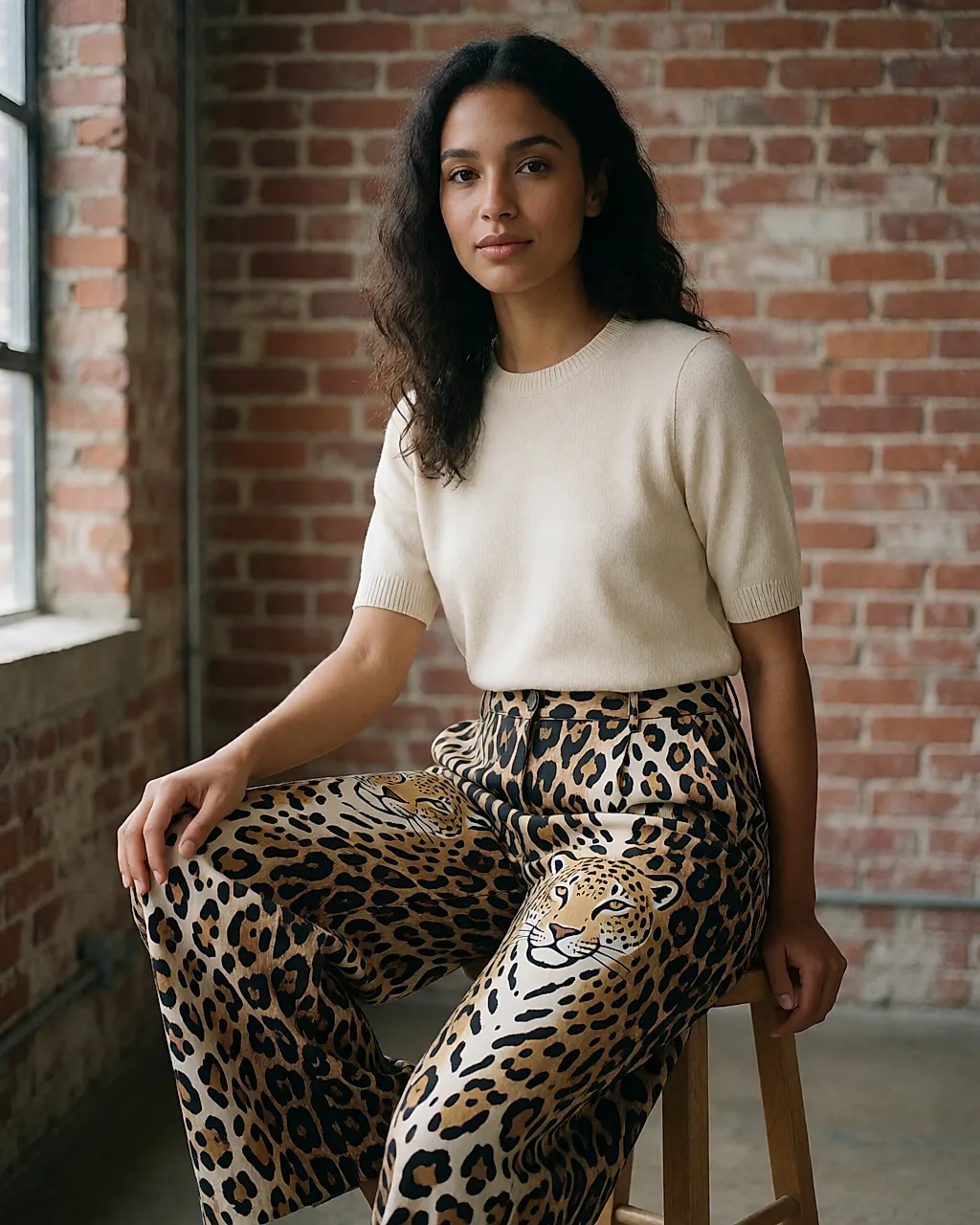
Think about cut and scale, too. A small print goes anywhere; a large panther takes all the attention. If you're unsure, pick the piece furthest from your face — skirt, trousers, boots — and keep the top plain. Layering helps a lot: a zebra shirt worn open over a white tee is easier to carry off than a head-to-toe leopard dress.
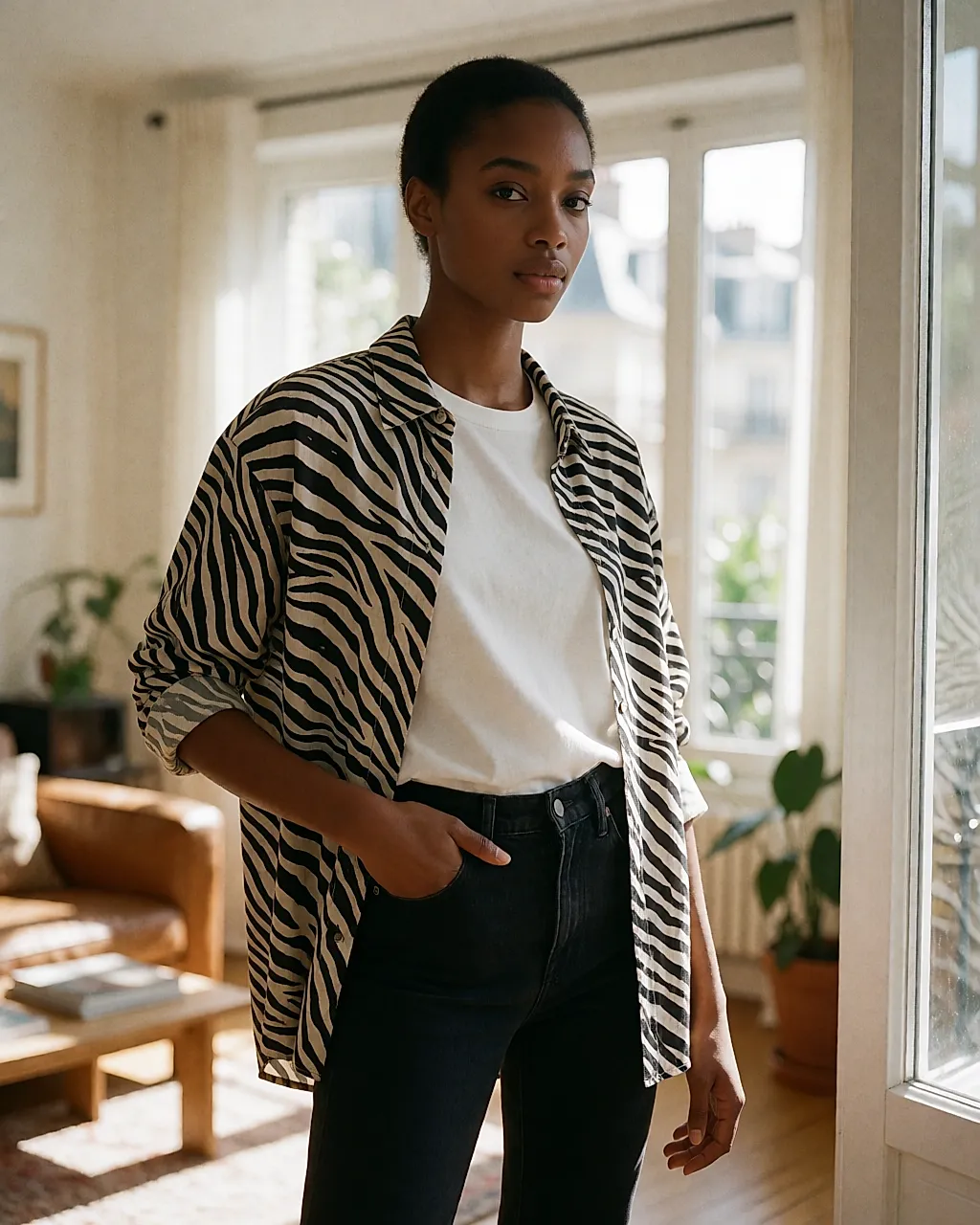
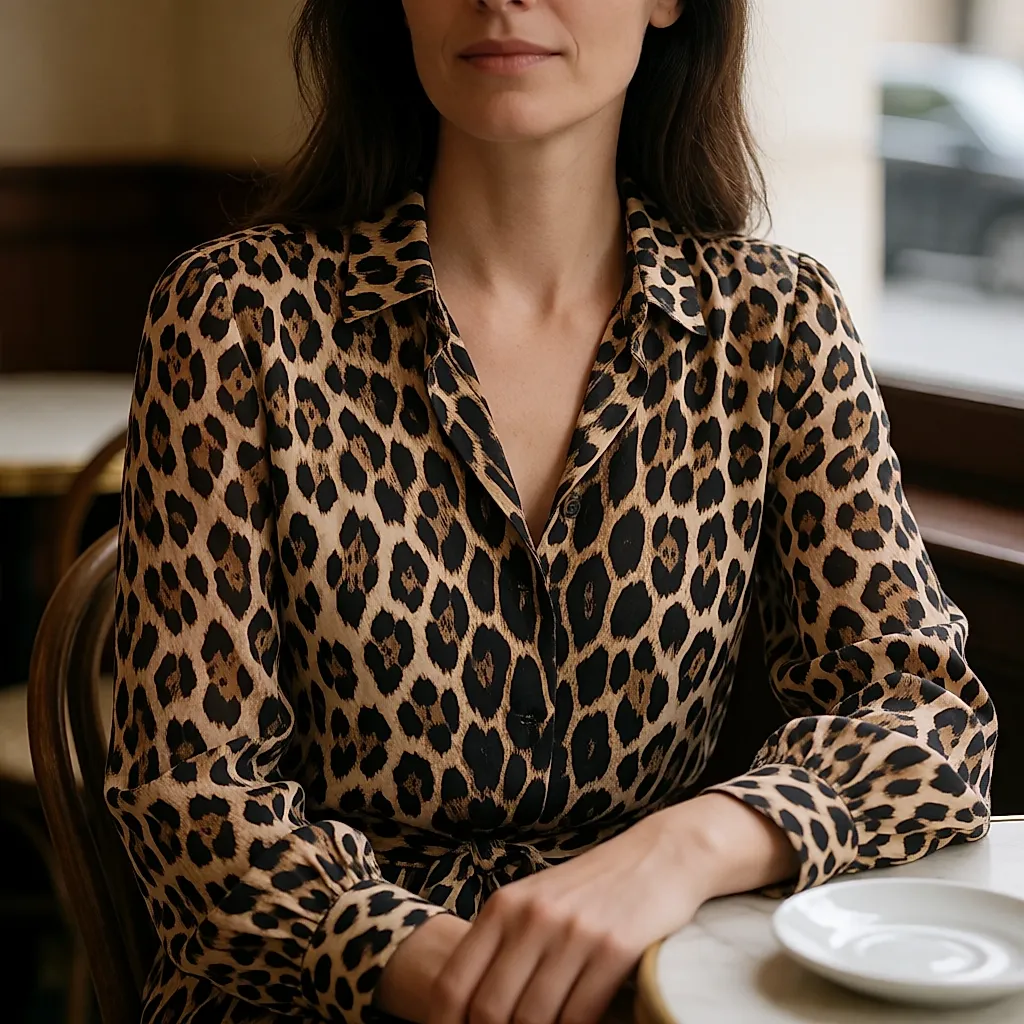
With accessories, stay in the same colour family. Black calms the print, gold wakes it up, red makes it more rock'n'roll. The final call is yours.
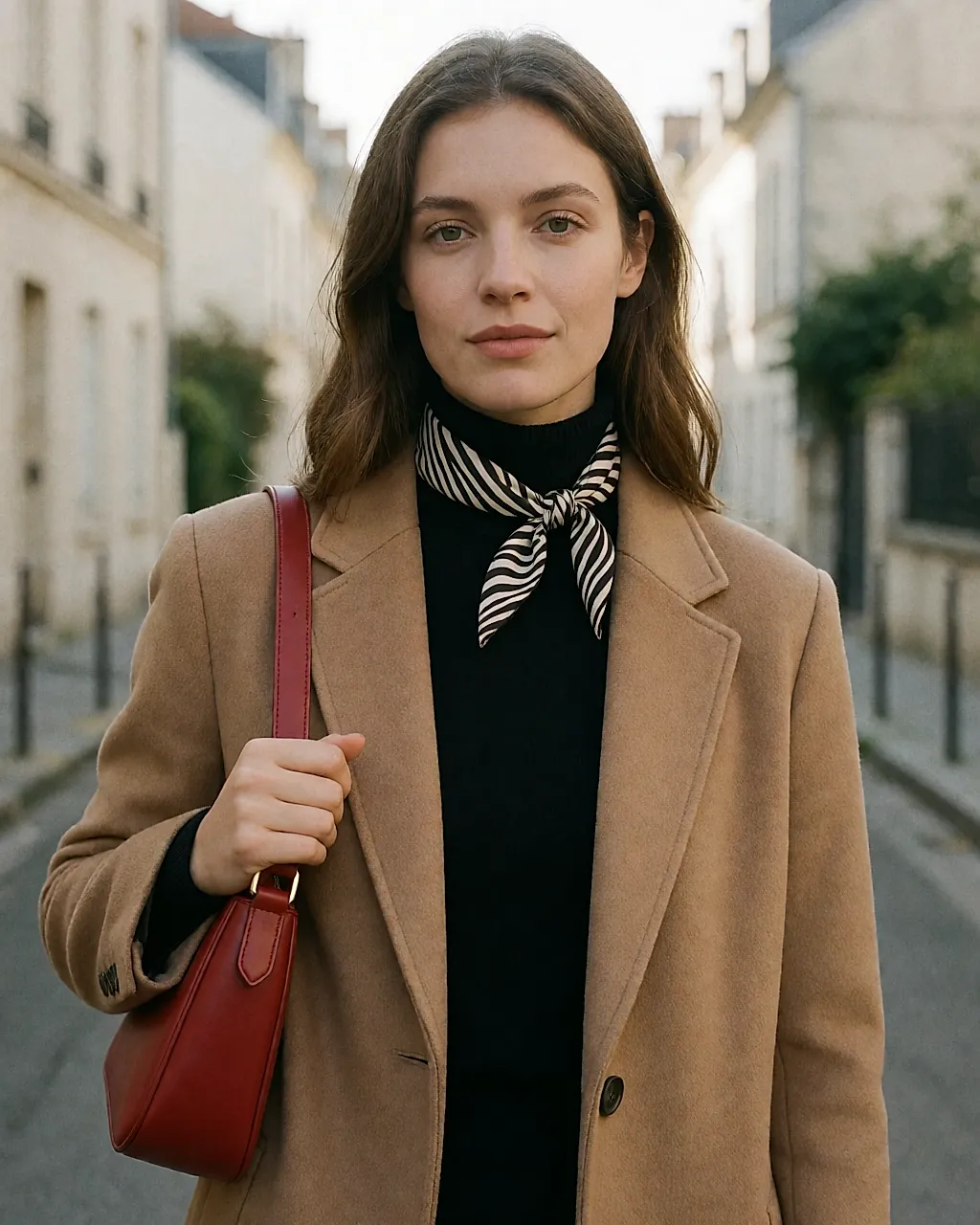
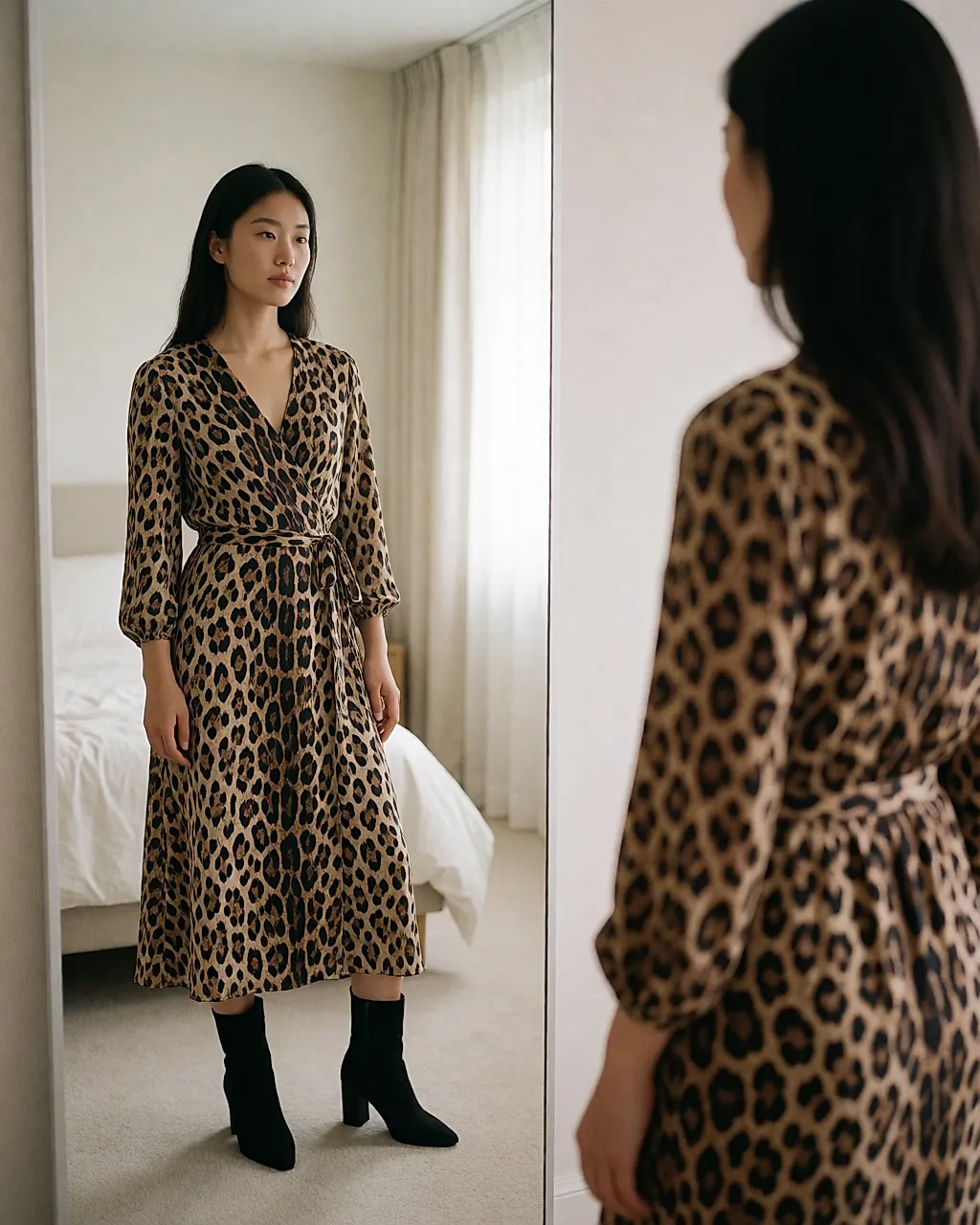
The three-second mirror test. Before you leave, step back two paces and squint. If all you can see is one block of pattern, it's too much: take off a printed accessory or switch the top for a plain one. Animal print is an accent, never a whole sentence.
Fabric and make: the part that really counts
An animal print looks great on the label, far less so over time if the fabric doesn't hold up. When it comes to composition, favour fibres that survive washing: GOTS-certified organic cotton, recycled polyester. Certifications don't all cover the same ground: GOTS sets requirements for organic textile production, while OEKO-TEX Standard 100 tests for harmful substances in the finished product. None of them makes a piece last forever, but they give you checkable reference points rather than promises.
Think about end of life as well. A piece you keep gets replaced less often, and in truth that's usually where the real difference is made. If the print is very bold, go for a classic cut and a solid fabric: you'll wear it for several seasons. And before you buy new, have a look at second-hand — animal print turns up there regularly, sometimes barely worn.
What to pay
The price range is wide. On the high street and at accessible brands, expect roughly £20 to £40 for a printed top or skirt. Mid-range sits closer to £40 to £90 for a well-cut piece. For a designer piece or a technical fabric, you'll comfortably go past £150.
What moves the price: the fabric (organic cotton and linen cost more than polyester), the finish (lining, seams, drape) and where you buy. Online prices are often lower, but you can't try anything on; in store, you may be paying for advice and alterations. Second-hand, the same piece can drop by half, sometimes more.
Where to find it: high-street names for entry prices, department stores and multi-brand boutiques for trying on, designers online for more worked pieces, resale platforms and local charity shops for the good surprises.
Comments
Your opinion matters: rate the article, react and reply to comments.
Comments are moderated; AI-assisted comments are flagged. Text emoticons (8-), :-), <3…) are automatically shown as images.